

An October 2026 explainer weighs later-life running, gradual training changes, fueling and knee health, with clear limits for injury recovery.





On October 19, 2026, The Independent republished an explainer from The Conversation about whether people can begin running later in life. Its answer was cautiously encouraging: age alone was not presented as a reason to rule running out. Instead, the article emphasized giving the body time to adapt through a gradual start.
The author was Hunter Bennett, a lecturer in exercise science at the University of South Australia. His practical suggestions included short walking and jogging intervals and enough food to support training and recovery.
This was an explanation of existing research rather than a newly announced clinical guideline or a new running trial. Its contribution was to put familiar concerns about aging and running into a more careful context.
For adults thinking about a first attempt at running, that distinction matters. For someone returning after an orthopedic injury or surgery, there is another question: how does general exercise information relate to an individual recovery plan?
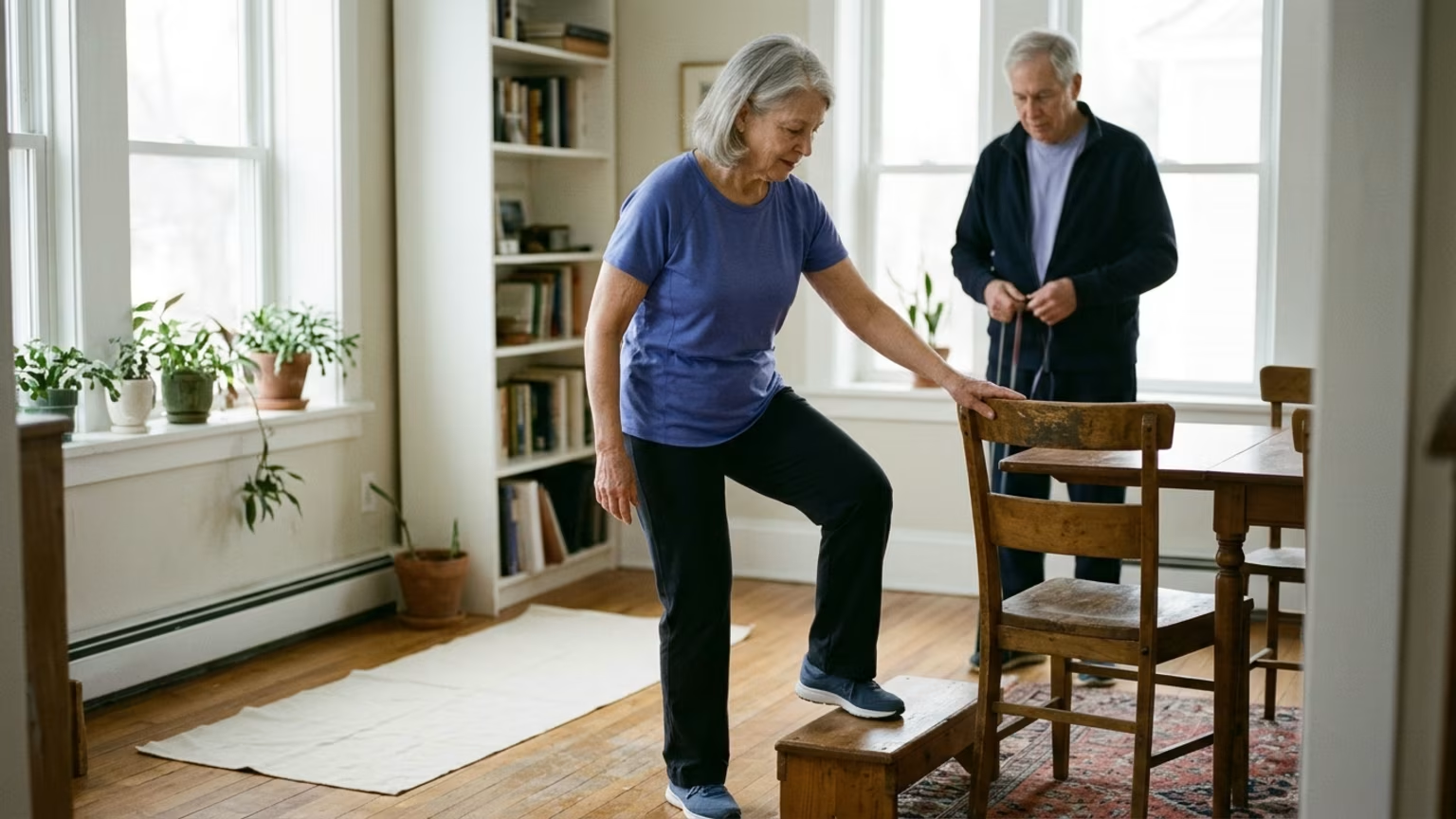
Bennett drew part of his reasoning from a 2020 study involving adults aged 65 and older who undertook high-intensity jump training. His article reported improvements in strength and function. It also described the training as safe and enjoyable.
That finding offers a useful starting point for discussing exercise in older age. It challenges the assumption that older adults are necessarily unable to adapt to demanding movement. But understanding exactly what the participants did matters when interpreting the result.
Running after injury was also part of the wider discussion that month. The October 1, 2026, article Running Injury Recovery: Tips to Plan Your Comeback framed its subject around injury recovery. That is a different starting question from whether someone can begin running later in life.
These topics overlap without being interchangeable. A person considering running for the first time is asking about a new activity. A person returning after surgery is also asking how that activity fits with recovery from a specific procedure. Evidence about age does not remove the need to distinguish between those situations.
Bennett explicitly noted that strong direct evidence on taking up running later in life is lacking. The jump-training study was indirect evidence, not a trial of older beginners following a running program. His view that a later-life start is likely to be safe and effective should be read as an expert interpretation of the available evidence.
The explainer's strongest practical theme was load management. In plain language, that means how much running a person does and how quickly that amount changes. Bennett described many running injuries as overuse problems associated with doing too much too quickly without enough time for adaptation.
His suggested starting point was short walk-and-jog intervals followed by gradual increases in running distance. The reasoning was to allow muscles and joints time to adjust to a new demand. The emphasis was on building exposure rather than proving fitness through an ambitious first outing.
The article also addressed a common concern about knees. It described cartilage thickness decreasing temporarily during a run and returning to normal a couple of hours afterward. That account offers a more nuanced picture than the idea that every run simply wears away knee cartilage.
Taken together, these points shift the discussion away from a single age cutoff. They direct attention toward the activity being attempted and how its demands change over time. That is a more useful frame than treating all older adults as one category.
The clearest study population described in the coverage was the group of older adults doing jump training. Bennett's broader suggestions about beginning running extended beyond that particular study.
For readers, it helps to keep several situations separate:
Those descriptions identify different questions. They are not categories that determine whether someone is ready to run.
For a beginner, the central question may be how to approach an unfamiliar activity. For a recovering runner, it may be how running fits with the condition being treated and the goals of rehabilitation. The article is most useful as background for understanding those discussions rather than as a way to place every reader on the same path.
The distinction also matters when reading a reassuring headline. A statement about the possibility of running in older age is broader than a decision about running at a particular point in recovery.
The practical message supported by Bennett's commentary is to value manageable exposure over rapid mileage gains. Walking and jogging intervals are the format he suggests for introducing running gradually. The article does not make speed or continuous running the first measure of success.
It also warns about abrupt increases in both running volume and frequency. Distance is therefore only part of the discussion. How often someone runs is another part of the training demand described in the article.
This connects with thinking about training load beyond distance alone. A progression is more than a mileage total. The useful question is what has changed in the activity being asked of the body.
Bennett's article suggests not adding more than “a couple of kilometres per week.” That wording deserves careful handling: it is general advice from the explainer rather than a universally validated injury-prevention threshold. It should not become a personal target or an automatic weekly increase for someone recovering from an orthopedic problem.
For readers, the practical value lies in the principle behind the suggestion. Gradual change allows time for adaptation. A precise-looking number should not carry more authority than the evidence supporting it.
Bennett also recommends eating enough to support running and recovery. His article discusses carbohydrates and protein as possible contributors to preventing some overuse injuries such as stress fractures. It notes that some research also suggests a role for calcium and vitamin D.
These nutrition points are suggestive rather than proof that particular foods or nutrients prevent injury. The article supplies no intake targets and does not establish a supplement plan.
The useful takeaway is that fueling belongs in the same conversation as training demands. It should not be treated as a separate concern that starts only after a problem develops. This fits the broader discussion of adequate overall food during recovery.
For someone facing competing online nutrition claims, that distinction can simplify the message. Supporting activity with enough food is the article's main point. Turning individual nutrients into standalone injury safeguards goes beyond its evidence.
The explainer offers concepts that can help readers describe their questions more clearly. Those questions might concern a new running habit or the relationship between training and recovery. They might also concern whether advice aimed at beginners applies after an injury.
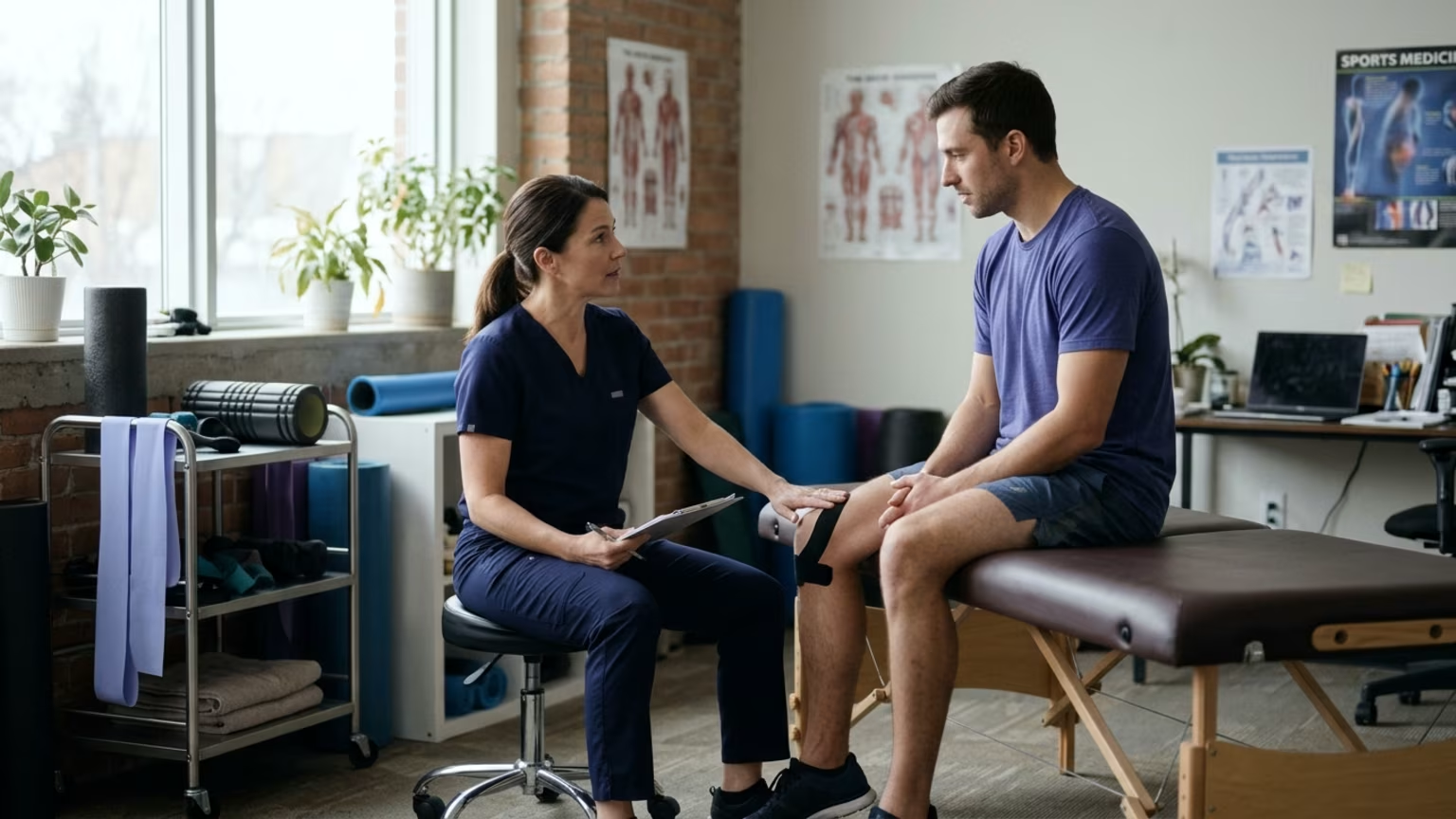
These are discussion points rather than a self-directed rehabilitation plan. Personal decisions about returning to running belong with the qualified healthcare professionals managing the relevant recovery. The article helps explain the subject without deciding the answer for an individual reader.
Several important questions remain open. The coverage does not establish the best running progression for older beginners or show how that progression should differ across orthopedic conditions. It also does not provide clinical clearance criteria or condition-specific timelines for resuming running.
Those gaps matter because “start gradually” is a broad principle rather than a complete recovery plan. Questions about the timing and form of a return need a more personal assessment than this explainer supplies.
The knee discussion also has a longer-term uncertainty. Bennett treated possible protection against osteoarthritis cautiously and said more research was needed. Temporary cartilage changes after a run do not by themselves settle what happens to a joint over years.
Finally, Bennett acknowledged that injury risk cannot be eliminated entirely. Gradual progression should not be read as a promise that every attempt at running will be trouble-free. Nor does his discussion suggest that every running injury has the same cause.
The clearest lesson is therefore about how to read the evidence. An encouraging interpretation can be useful without becoming a universal rule. The distinction between a study result and an expert's practical suggestion is worth preserving.
For an adult considering running later in life, the article leaves room for possibility without supplying a deadline. The meaningful change may be less about reaching a certain distance than about seeing running as something to understand carefully, rather than accept or reject on age alone.
Return-to-running decisions belong to the healthcare professionals overseeing recovery; ReboundBody supplies plain-language context for weighing exercise advice. For readers sidelined by injury or surgery, its independent coverage addresses conflicting claims about training and nutrition so recovery choices are better understood rather than treated as settled answers.

Follow ReboundBody for practical articles on injury recovery, rehabilitation, mobility and rebuilding strength. New posts turn research into clear ideas for the road back to activity after injury or surgery.




Read practical guidance on injury recovery, rehabilitation, mobility and rebuilding strength as you work your way back to activity.
Explore Resources