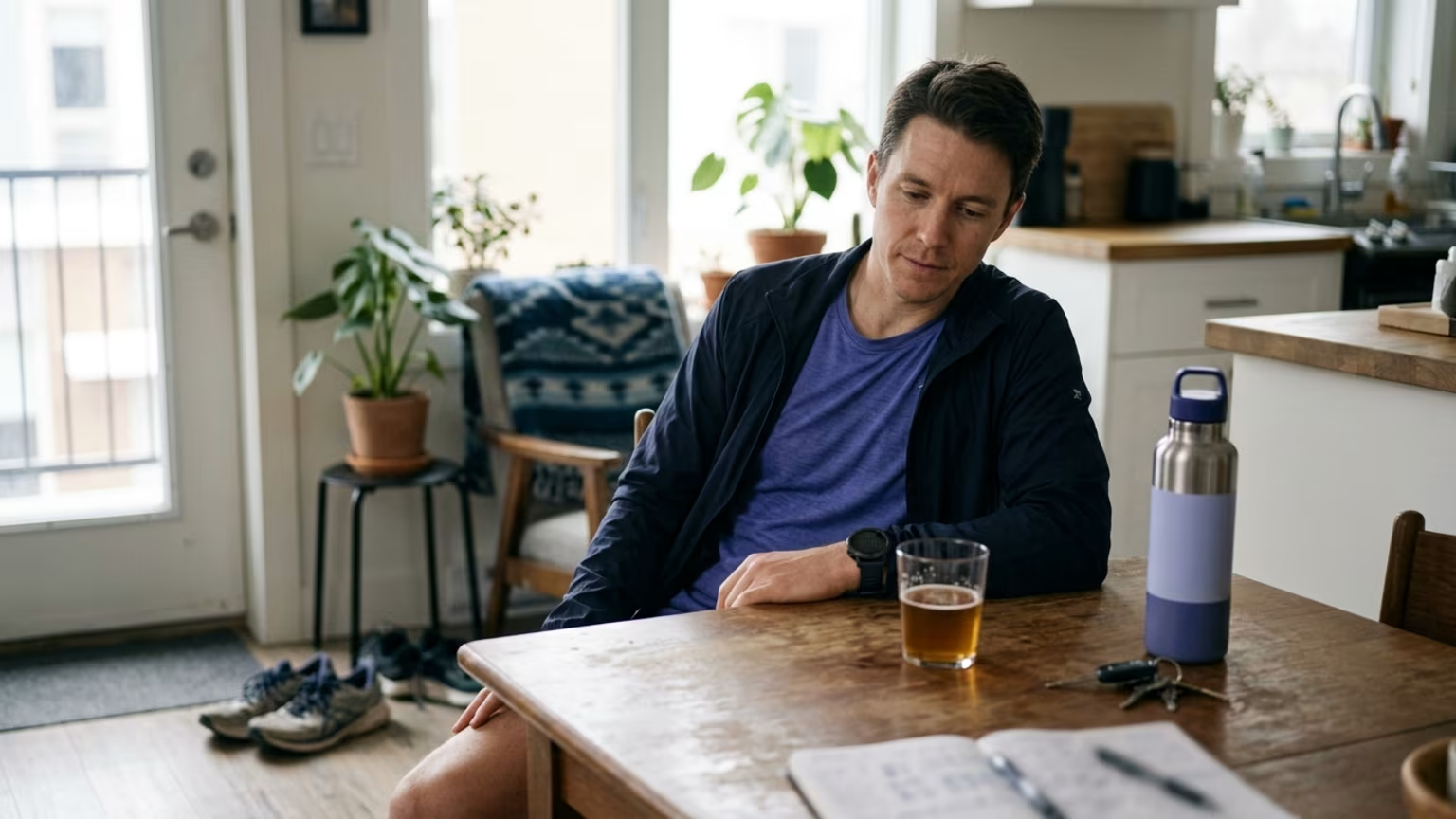

A Runner’s World report sets no universal alcohol maximum. Learn what its evidence says about sleep, hydration and training recovery after a setback.





On October 15, 2026, Runner’s World published a report about how much alcohol runners can consume before it affects performance. Updated October 16, 2026, the article did not identify a universal numerical maximum. Instead, its expert sources described potential effects on sleep, hydration, fuel availability and muscle adaptation.
That distinction is the central finding for readers sorting through alcohol advice. A headline promising a maximum can sound like a clear drinking allowance. The reporting underneath it offers something less tidy but more useful: an explanation of where alcohol may interfere with training and recovery habits.
For adults rebuilding activity after an orthopedic setback, the report raises relevant questions about everyday routines. It is best read as an interpretation of existing exercise research and expert opinion, not as a newly established clinical rule.
The evidence behind the report came from different kinds of exercise research. Runner’s World cited a systematic review of alcohol consumption after resistance exercise. It also discussed a small controlled exercise study.
According to the report’s account, the review associated post-exercise alcohol consumption with reduced muscle protein synthesis. This is the process of building muscle proteins. The review also described increased cortisol and reductions in testosterone and amino acids used in that process.
The small exercise study found reduced muscle protein synthesis under its experimental conditions. Together, these findings help explain why alcohol appears in discussions about muscle adaptation. They provide a physiological basis for asking whether drinking could interfere with the response to exercise.
The background matters because the latest development was a report bringing existing evidence together. It was not an announcement that researchers had established a new drink limit. Nor was it a change from one formal rehabilitation recommendation to another.
A useful reading separates the evidence itself from the experts’ interpretation. The studies concern measured responses to exercise. The advice in the article translates those findings into considerations for people planning their training.
Runner’s World organizes the issue around several parts of recovery rather than around a single drink count. Its experts discuss how alcohol may affect the night after exercise and the resources available for the next session.
The report says that even one drink within an hour of bedtime may negatively affect sleep quality, including REM sleep. For context, it describes one U.S. standard drink as:
Those amounts define what the article means by a drink. They are not a recommended intake or a threshold below which sleep is unaffected.
Sports dietitian Pam Nisevich Bede distinguishes falling asleep quickly from getting restorative sleep. In the report, she explains that alcohol can disrupt sleep architecture even when someone falls asleep more easily. Sleep architecture refers to the pattern of sleep across the night.
This helps clarify a common point of confusion: feeling sleepy after drinking and having good-quality sleep are not the same outcome. The report’s concern is about sleep quality, not simply how quickly bedtime turns into sleep.
The report characterizes alcohol as a diuretic, meaning it promotes urine production. Ron Maughan, an honorary professor at the University of St. Andrews, distinguishes a more dilute beer from a higher-proof shot when discussing this effect.
Bede makes a separate practical point: neither should be counted toward hydration intake. The distinction is between comparing the effects of different beverages and treating an alcoholic beverage as a recovery fluid.
These are related questions, but they are not interchangeable. A beverage having less dehydrating effect than another does not make it a hydration strategy.
Runner’s World reports that alcohol is metabolized before other nutrients. Its experts explain that this may delay nutrient availability and affect glucose regulation and access to stored fuel.
The report also connects alcohol with the muscle-building findings described in the earlier exercise research. This places the discussion beyond dehydration alone. Its broader message is that alcohol may interact with several parts of the recovery routine rather than acting through a single pathway.
The report addresses runners and training performance. The small controlled study it discusses involved eight physically active men who completed a strenuous combined exercise session and received an experimental alcohol dose.
That population and setting are important. Findings from that experiment should not be extended to all adults or treated as evidence about light drinking. The study does not establish the effect of a single drink or ordinary evening drinking.
The research also does not directly establish outcomes for people recovering from orthopedic injury or surgery. It does not show that alcohol delays healing after a particular procedure or causes a specific amount of lost rehabilitation progress. Adults in midlife and later life should not assume that the study describes their own recovery response.
This distinction is especially relevant when the word “recovery” is used broadly. Recovery after a demanding exercise session is not the same research question as recovery after surgery. Likewise, returning to everyday movement and returning to full sport are different contexts for interpreting training advice.
The most useful practical focus is the recovery routine rather than a proposed drinking allowance. Runner’s World’s experts identify sleep, food and fluids as priorities. For someone rebuilding movement, those topics offer a clearer basis for discussion than trying to find a supposedly harmless number of drinks.
Bede recommends avoiding alcohol for at least two days, ideally three, before an important workout, long run or race. She also suggests considering abstinence during heavy training blocks when pursuing peak performance. These are her recommendations for training and competition, not a proven universal threshold or a prescription for rehabilitation.
Her other suggestions include drinking earlier rather than close to bedtime if someone chooses to drink. She also emphasizes keeping food, fluids and sleep in good order. Those suggestions address the concerns described in the report; they do not establish a way to cancel alcohol’s effects.
For readers returning after an injury, the practical relevance is in recognizing which part of a routine deserves attention. Useful questions for a conversation with a qualified healthcare professional include:
These questions do not require assigning every tired morning or difficult session to alcohol. They help keep the discussion specific. A concern about sleep timing is different from a concern about food intake or readiness for demanding exercise.
Nutrition also deserves its own context rather than being reduced to what happens around a drink. ReboundBody’s discussion of food needs while activity is reduced offers related reading for that broader recovery question.
The report is a reason to examine how drinking fits around recovery habits. Decisions about alcohol during personal medical care belong with the treating healthcare team, which can consider the situation beyond a runner-focused article.
Runner’s World explicitly acknowledges substantial individual variation. It also notes that the evidence is limited and that alcohol-and-sport studies can be difficult to conduct. A measured change in muscle protein synthesis does not by itself establish the size of a change in running performance.
Important questions remain about how different amounts and timing affect different people. The report does not establish a dose that is harmless for everyone. It also does not provide a reliable way to predict an individual’s response from the findings it discusses.
Maughan offers a meaningful counterpoint to an all-or-nothing reading. He says some people can train while drinking without significant performance effects, provided drinking does not interfere with next-day training. His practical answer is to drink “not so much that it causes you problems.”
That is a judgment-based view rather than a numerical allowance. It leaves room for individual differences without dismissing the concerns about sleep and exercise recovery. The clearest interpretation is to take those concerns seriously while keeping the findings tied to the conditions actually studied.
Today, write down one question for your healthcare team: Could my alcohol timing be interfering with the sleep, food or fluids that support my recovery routine?
A numerical alcohol headline can obscure the underlying recovery questions, which ReboundBody addresses through clear explanations rather than medical promises. For active adults sorting through competing advice about drinking and physical rebuilding, its independent articles put research in context to support informed discussions with qualified healthcare professionals.

Follow ReboundBody for practical articles on injury recovery, rehabilitation, mobility and rebuilding strength. New posts turn research into clear ideas for the road back to activity after injury or surgery.




Read practical guidance on injury recovery, rehabilitation, mobility and rebuilding strength as you work your way back to activity.
Explore Resources