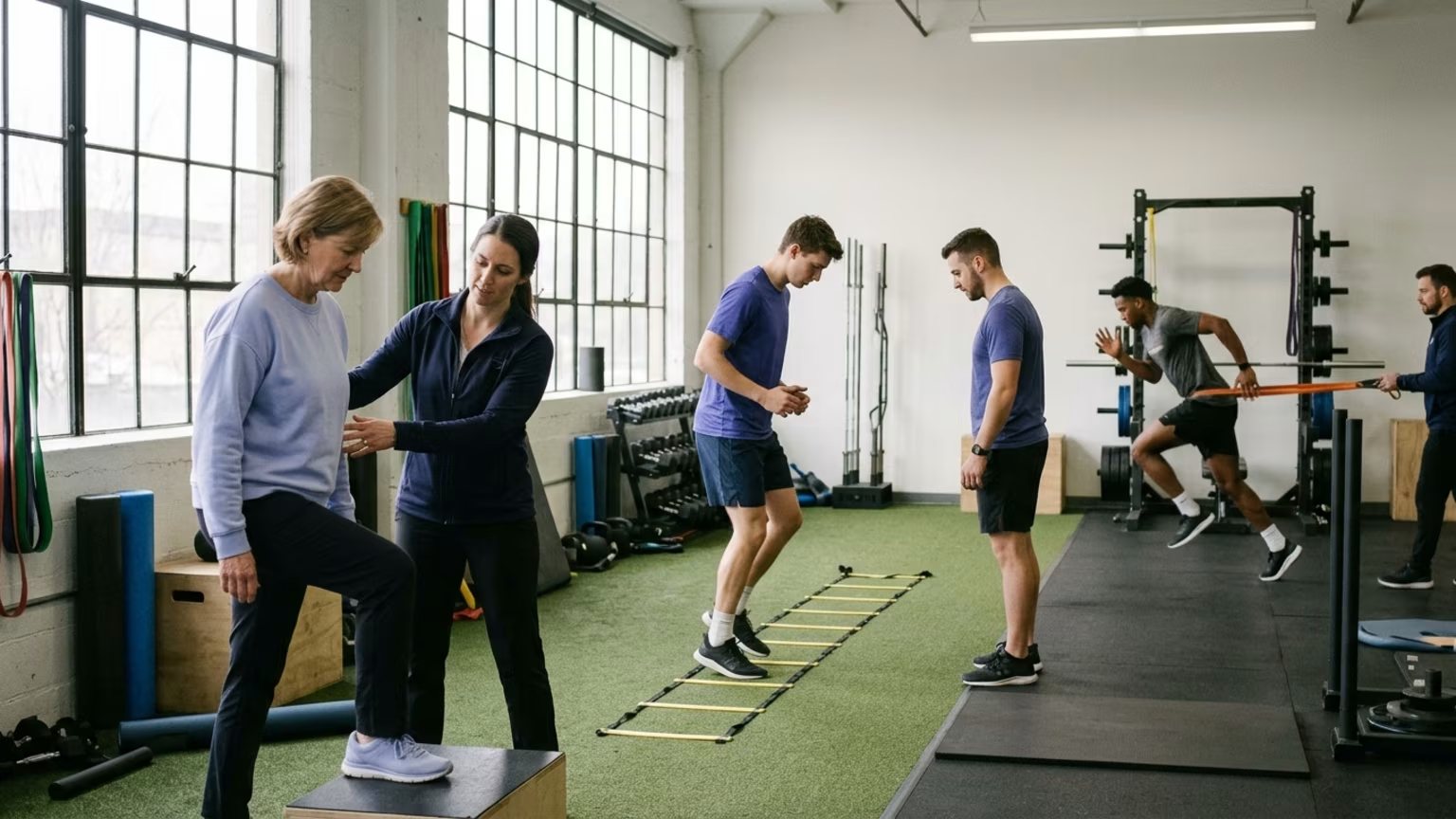

Understand the return-to-activity ladder, from daily function to sport, and why taking part again differs from regaining prior performance.





Returning to activity is a progression rather than a single finish line. A practical ladder starts with daily function, moves toward modified exercise and sport, and separates these from previous performance. The ladder describes goals; readiness for a specific next activity remains a question for an individual clinical discussion.
The central distinction comes from a summary of a 2016 international consensus. Its return-to-sport model separates return to participation, return to sport and return to performance. Resuming a sport does not necessarily mean performing at the level someone wants.
For someone leaving formal rehabilitation, the question is therefore more precise than whether they are back. It is which activity they have returned to and what level they are aiming for.
The answer depends first on the destination. Regaining everyday function is a different goal from resuming modified training. Resuming a sport is a different outcome from matching previous performance.
A useful way to apply the ladder is to begin with the activity that matters to the person. Someone focused on everyday movement does not need to define success through competitive performance. A recreational participant may want to distinguish taking part again from reaching a preferred level. These are ways to describe goals rather than medical judgments about readiness.
The injury and activity also matter when interpreting the framework. The consensus model supports a graded progression, not a universal timetable for every injury or surgery. Its summary reports limited evidence about the decisions and criteria used to guide return to sport. The available summaries also do not establish that the stages formally overlap.
A 2026 paper in Sports Medicine applies a related progression to football players after ACL reconstruction. That specific population does not establish a universal sequence for all orthopedic conditions or recreational activities. The available excerpt is too brief to assess the paper's methods or determine how much particular tests improve outcomes.
With those boundaries established, the practical value of the ladder is clearer language: name the destination before interpreting the word returned.
Everyday function gives readers a useful starting point. It is an editorial addition to this article's ladder, not one of the named stages in the consensus model. The formal sport-return stages begin with participation.
That distinction matters for adults whose immediate goal is ordinary activity rather than sport. A recovery discussion can begin with the everyday movement they want to regain. It does not have to begin with a training session or a competition.
A clear goal description can answer a few basic questions:
These questions organize the discussion without assigning a recovery deadline. They also keep a daily-function goal from being confused with a sporting outcome.
ReboundBody's guide to describing everyday movement as a recovery goal offers related context for this starting point.
The ladder is not a requirement to pursue every possible endpoint. For a person focused on everyday life, naming that goal is useful in its own right. For someone aiming to resume sport, daily function can be discussed separately from the later goals of participation and performance.
The difference is whether someone is taking part in modified activity below their target level or has returned to the sport itself. In the consensus-based model, return to participation includes modified activity or training while the person remains below the level they are targeting.
This gives a limited return its own name. Participation is not an all-or-nothing category in which someone is either absent or fully back. The model recognizes a place for taking part before the desired sporting endpoint has been reached.
Return to sport means the person has resumed the sport. The model still separates this from reaching the desired performance level.
For this article's practical ladder, unrestricted recreation or sport is a goal to name explicitly. It should not be assumed from the fact that some modified exercise or training has resumed. The distinction is about what activity is being described and what limits are part of that description.
A useful way to organize the language is:
Keeping participation separate from later sporting goals makes the word return more specific. When discussing progress, naming the activity and any current limits is more informative than using one broad label for the entire recovery journey.
Because participation describes taking part while performance describes the level achieved. The consensus model treats these as distinct outcomes. A person can have resumed their sport while still performing below the level they want.
In that model, return to performance means reaching the pre-injury level or performing above it. This is a definition of an outcome, not a promise that every person will reach it. It also helps explain why returning to a sport may answer one recovery question while leaving another open.
The Sports Medicine paper illustrates this distinction within football after ACL reconstruction. It describes progression through on-field rehabilitation, return to team training, return to competitive match play and return to performance. Returning to competition and returning to performance have separate places in that progression.
The useful lesson is about the wording of a goal. Resuming a familiar activity answers whether participation has returned. Matching a previous standard answers a different question about performance.
This distinction also helps clarify what someone means by full recovery. That phrase may refer to daily function, unrestricted recreation or previous sporting performance. Naming the intended outcome avoids asking one broad phrase to carry several meanings.
For readers considering later sporting goals, ReboundBody also discusses the difference between resuming activity and reaching a higher performance target. The central question remains which outcome is being discussed.
A useful conversation starts with the activity goal rather than a request for a rung number. The ladder's categories can help explain what you want to regain and clarify what your care team means by progress.
Questions to bring to a qualified clinician include:
These questions focus the discussion on the meaning of the goal and the reasoning behind a personal decision. They do not require the clinician to fit every recovery into identical stages.
If previous performance is part of your aim, naming it separately gives that goal a clear place in the conversation. If everyday function is the priority, that can be stated just as clearly.
The ladder is most useful as a set of goal descriptions. Daily movement provides a practical starting point. The sport-focused model then distinguishes participation, sport and performance rather than treating them as one outcome.
Today, write down the activity you want to regain and whether your goal is taking part again or returning to your previous level.
Choosing whether the next goal is daily activity, modified training or sport creates an information need that ReboundBody addresses through clear recovery writing. For adults unsure about life after formal rehabilitation, its independent articles explain movement and strength rebuilding to support understanding of that transition and better-informed questions for qualified healthcare professionals.

Follow ReboundBody for practical articles on injury recovery, rehabilitation, mobility and rebuilding strength. New posts turn research into clear ideas for the road back to activity after injury or surgery.




Read practical guidance on injury recovery, rehabilitation, mobility and rebuilding strength as you work your way back to activity.
Explore Resources