
A creatine study reported lean-tissue gains in healthy sedentary adults. Understand the findings, measurement limits and relevance to recovery.





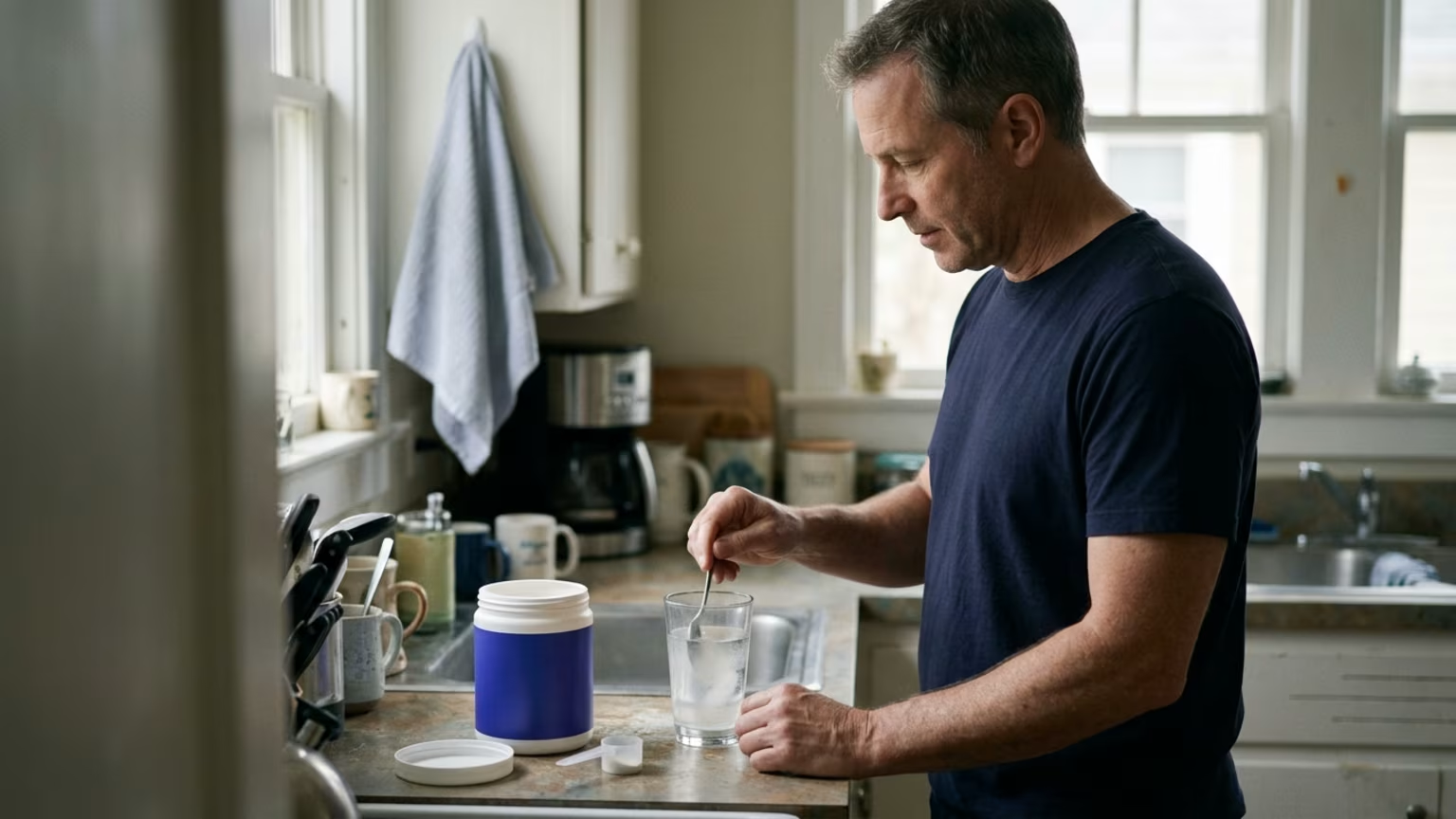
On August 11, 2026, the Journal of the International Society of Sports Nutrition published a study reporting lean-tissue gains among healthy adults taking creatine without a structured exercise program. According to Texas A&M University, those participants gained about 2.4 pounds of lean tissue over 12 weeks and improved leg- and bench-press strength.
That is a finding worth examining for adults interested in rebuilding physical capacity. It brings attention to a nutrition question that may feel especially relevant when usual exercise has been interrupted. But understanding its relevance starts with reading the study on its own terms.
The development is a research finding rather than a new rehabilitation recommendation. Its value lies in the question it raises about creatine and selected physical measures in sedentary adults. For readers recovering from a setback, the important task is to separate that question from decisions about their own return to activity.
Before this trial, Texas A&M reports that a 2025 analysis by Richard Kreider and colleagues reviewed 685 clinical trials. That review found no significant difference in reported side-effect rates between creatine and placebo groups.
This earlier work addressed reported side effects. The newer trial examined body composition and physical performance under different exercise conditions. Those are separate questions, even though both concern the same supplement.
A broad safety review does not establish that a supplement improves a particular recovery outcome. Likewise, an improvement in a physical test does not answer every safety question. Keeping these categories separate makes the new result easier to interpret without asking either study to do work it was not designed to do.
Texas A&M identifies Kreider as the trial's principal investigator and reports that he has studied creatine for more than 30 years. His interest in the findings centers on their possible relevance to muscle health as people age. That provides context for the research question rather than a personal recommendation for someone recovering from injury.
Texas A&M reports that 64 healthy adults aged 45 to 65 completed the 12-week study. Participants first chose whether to enter the structured exercise-and-diet program or remain in the non-exercise group. They were then randomly assigned to creatine or placebo within their chosen group.
That order matters. The creatine-versus-placebo comparison was randomized, but the exercise-versus-non-exercise comparison was not. Differences between people who chose the two paths could therefore affect comparisons across those paths.
The university reports two main sets of body-composition findings:
The structured program included resistance and aerobic exercise three times a week. It also included a diet intended to create a modest calorie deficit, according to Texas A&M. These details describe the research setting rather than an exercise or nutrition plan for readers.
The performance findings were not uniform. Texas A&M reports improvements in certain strength and time-to-exhaustion measures in the exercise-and-diet group. Yet creatine did not appear to add a benefit for aerobic capacity in that group.
This distinction is useful because “physical improvement” is not a single outcome. The trial measured several things and reported different results across them. A clear summary keeps the strength findings separate from the aerobic-capacity finding rather than treating all measures as interchangeable.
The non-exercise result adds a reason to investigate creatine outside structured training settings. It does not require turning the study into a broader claim that every aspect of physical capacity improved.
The participants were healthy and sedentary. They were not recruited because they were recovering from orthopedic injury or surgery, and the trial did not test rehabilitation outcomes.
That is the key population boundary for ReboundBody readers. Being sedentary and being temporarily limited by a physical setback are not interchangeable study categories. Someone may identify with the participants' age or low activity level while still having a very different health situation.
The study population also covered a specific age range. Its findings belong first to the healthy adults aged 45 to 65 who took part. Applying the result to other age groups would require evidence from those groups rather than an assumption based on the general theme of aging.
For readers, a useful distinction is between personal interest and direct evidence. A finding may be interesting because it concerns strength or body composition. Direct evidence for recovery would need to address the recovery situation itself.
The practical relevance here is therefore a research question about healthy sedentary adults. It is not evidence of faster healing, a shorter rehabilitation course or improved return to a particular activity after surgery.
For an adult rebuilding activity, the most useful response is to place the supplement question within the larger recovery discussion. This finding does not establish that creatine can replace progressive exercise, physical therapy or a clinician-directed return-to-activity plan.
Physician Clarinda Hougen, quoted in coverage of the study, said creatine “may be a useful tool” within a broader approach that includes resistance training and adequate protein. That approach also includes regular physical activity. Her framing places the supplement alongside other elements rather than presenting it as the whole strategy.
The same coverage advises discussing supplements with a healthcare professional during recovery. That conversation is particularly relevant when a person has health conditions or takes medications. The discussion should address the individual's circumstances rather than treat a study result as a ready-made prescription.
Useful topics for that conversation include:
These are discussion topics, not eligibility rules or a supplement protocol. The aim is to make the question more specific: is the interest in a body-composition measure or in a particular task the person hopes to resume?
That distinction also matters when considering how nutrition fits strength rebuilding. A reported supplement outcome and an individual's recovery goal should not be treated as the same thing.
A broader view of returning to activity in stages keeps the intended destination visible. For many readers, the meaningful question concerns ordinary movement or recreation rather than a research measurement alone. Thinking about the connection between rehabilitation and valued activities provides context for that distinction without changing anyone's treatment plan.
The central measurement question concerns the phrase “lean tissue.” A report in Men's Journal notes that the trial used DXA and did not separately measure body water or muscle size. The reported change therefore does not establish how much newly built muscle participants gained.
This is why the university's wording should remain intact. “About 2.4 pounds of lean tissue” is the reported finding. Rewriting it as a proven amount of new muscle would make a more specific claim than the measurements support.
The strength-test results remain relevant, but they answer a different question from the body-composition measurement. They describe performance on the tests reported by the university. They do not resolve what accounted for the lean-tissue change.
There is also a time question. The reported outcome comes from one 12-week study. It leaves open whether the changes persist over longer periods and whether similar findings would appear in further trials.
The exercise-and-diet arm raises another question about interpretation. It combined supplementation with training and dietary changes. Its results do not isolate creatine as a stand-alone rehabilitation strategy, and the outcome belongs to that combined research setting.
Further research could clarify the relationship among measured lean tissue and strength changes. It could also examine outcomes that directly concern people recovering from physical setbacks. Those would be different questions from the ones answered in this trial.
For now, the practical reading is straightforward. Keep the reported outcome attached to the population and measurements that produced it. Personal supplement decisions belong in a healthcare discussion that considers the person's goals and circumstances.
A promising result can be worth noticing without becoming the center of a recovery story. The fuller picture is still a person returning to movement, not simply a number changing on a scan.
Beyond interpreting this creatine study lies the transition back to everyday movement, which ReboundBody explains through its independent recovery coverage. For adults sidelined by orthopedic problems, uncertainty about leaving formal rehabilitation can blur what comes next; the site's writing puts recovery information in context with realistic limits to support understanding of that transition and conversations with a healthcare team.

Follow ReboundBody for practical articles on injury recovery, rehabilitation, mobility and rebuilding strength. New posts turn research into clear ideas for the road back to activity after injury or surgery.




Read practical guidance on injury recovery, rehabilitation, mobility and rebuilding strength as you work your way back to activity.
Explore Resources