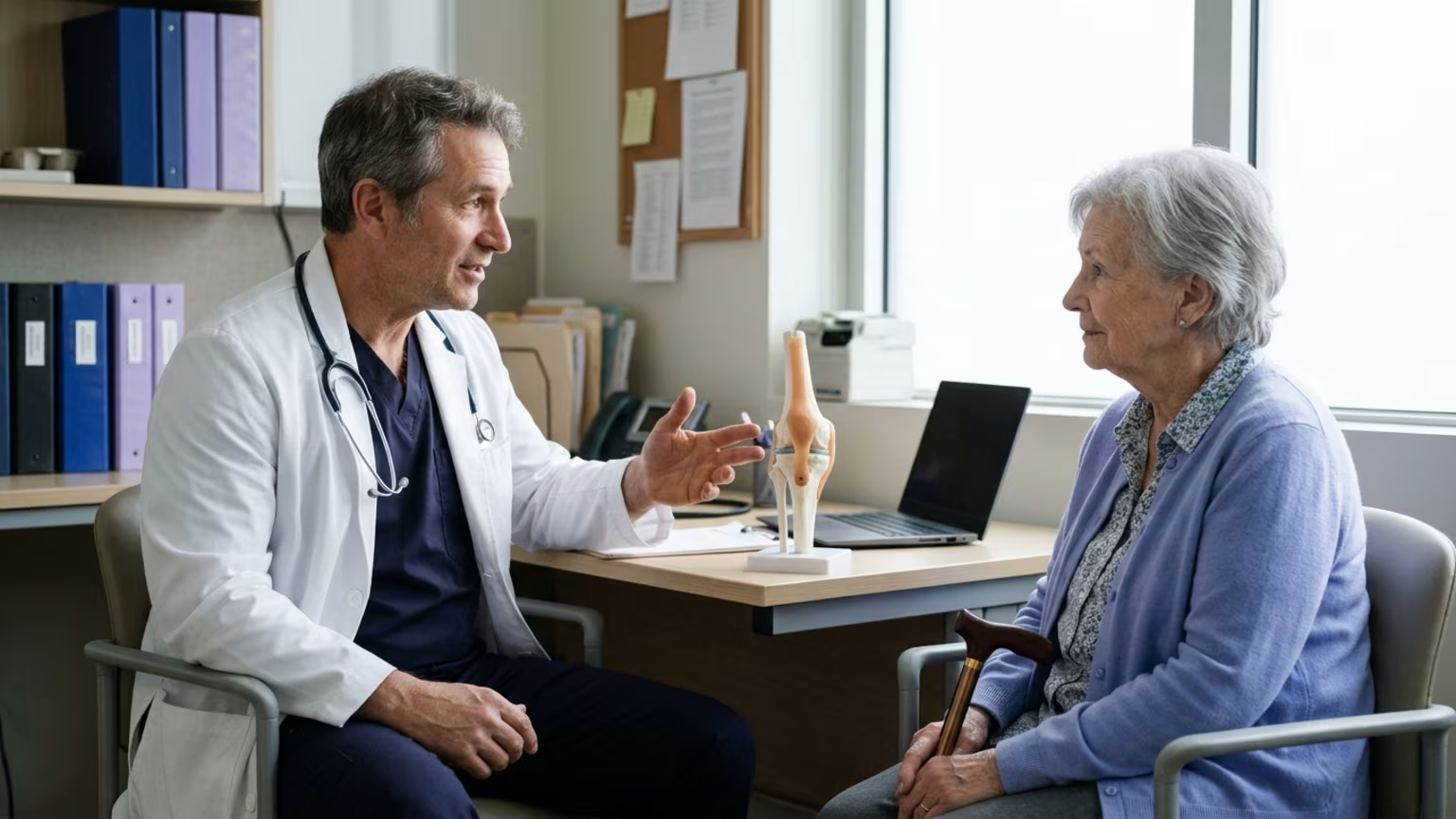

An orthopedic surgeon’s perspective on aging connects everyday strength with movement, nutrition and support, while keeping recovery limits clear.





On November 1, 2026, Yahoo Health published an article by Melissa Rudy of Fox News featuring orthopedic surgeon Dr. Vonda Wright. Wright discussed movement, strength, nutrition and practical support as parts of maintaining independence with age.
The report placed everyday function at the center of the conversation. Rising from a chair, climbing stairs and carrying groceries were examples of the abilities that strength can support. Wright also encouraged people to think about future independence before later life rather than waiting for those tasks to become difficult.
For adults rebuilding movement after an orthopedic setback, that focus offers a useful way to read the story. The central question is broader than how much exercise someone does. It also concerns what that activity serves and what support makes daily life manageable.
The November report drew on existing activity guidance and an older resistance-training study. Its discussion of strength was therefore part of an established conversation about function in later life rather than an entirely new finding.
Yahoo Health reports that the National Institute on Aging recommends muscle-strengthening activity at least two days per week for older adults. That guidance covers all major muscle groups and includes recovery time between sessions. The examples listed are resistance bands, hand weights and body-weight exercises.
The connection to daily life is important. In the article, strength is discussed in relation to getting out of a chair and managing stairs or groceries. This gives the recommendation a purpose beyond completing a workout. It directs attention toward the physical demands of ordinary routines.
The article also looks back to a small 1990 study. It reports that nine nursing-home residents who completed eight weeks of high-intensity resistance training increased muscle strength by an average of 174%. Improvements in muscle size and mobility were also reported.
That study supplies historical context for Wright’s view that advancing age should not end conversations about building strength. The practical focus of the current report is to keep physical capacity in view over time, alongside nutrition and access to help.
Wright’s contribution is to connect several parts of aging that can otherwise be discussed separately. Movement is one part of the picture. Food intake, beliefs about aging and support from other people also receive attention.
Wright recommends staying active and discusses low-impact options such as walking, cycling and water exercise. For people with hip or knee pain, the article mentions movement on land or exercise in chest-high water.
The story also distinguishes general movement from muscle strengthening by discussing both. That distinction gives readers a useful question to consider: does an activity mainly keep someone moving or does it also address the strength needed for a particular daily task? The article’s examples keep that question grounded in ordinary life rather than athletic performance.
Wright emphasizes adequate calories and protein as support for energy and muscle-building efforts. She describes seeing older adults eat less, including within her own family. This is her reported clinical perspective rather than a measured estimate of how common low intake is.
Yahoo Health also reports that the National Institute on Aging recommends protein-rich foods throughout the day. Examples include seafood and dairy. The article also names fortified soy products, beans and lentils.
The report notes that calorie needs vary with weight and activity level. For a recovery audience, the related issue is how to think about food intake when activity drops. Wright’s emphasis keeps nutrition within the discussion of rebuilding function rather than treating exercise as the only relevant factor.
Wright challenges the assumption that aging makes further gains in mobility or muscle impossible. Her advice includes thinking about future independence during one’s 30s and 40s. The emphasis is on planning ahead rather than viewing later-life function as a concern that begins only in old age.
Practical help is another part of her account. Wright recommends asking aging parents what assistance they need and looking into available support, including community programs. She describes arranging meal deliveries for her own parents when she could not shop or cook for them.
This broadens the meaning of independence in the story. Physical ability matters, but so does having an arrangement that makes daily needs easier to meet.
The report’s general activity guidance is directed toward older adults. Wright’s planning message reaches into midlife as well. She encourages earlier attention to mobility and strength rather than postponing the subject until a major decline.
The research population mentioned in the story is more specific: nursing-home residents who completed a resistance-training program. That group should remain distinct from the much wider audience reading general healthy-aging advice.
For adults recovering from an orthopedic injury or surgery, the strongest connection is the focus on everyday function. Standing up, handling stairs and carrying necessary items may be meaningful recovery goals. Those same tasks also appear in the article’s discussion of maintaining independence with age.
Family members are part of the intended conversation too. Wright’s support-planning advice concerns asking what help is wanted rather than assuming that physical training is the complete answer. Her account brings the person receiving help into that discussion.
A useful way to apply the report editorially is to translate broad themes into subjects for a healthcare conversation. This keeps the focus on understanding options rather than borrowing a general exercise schedule as a personal plan.
For example, the article supports questions such as:
These are discussion prompts, not a test of readiness or a required sequence. They connect the report’s themes to concerns that can matter during recovery.
Thinking in terms of functional goals alongside healing timelines also helps separate two questions. One concerns the ability a person hopes to regain. The other concerns how activity fits the current recovery situation. A healthy-aging article supplies context for the first conversation rather than making the second decision.
The report includes a clear safety boundary. Wright cautions against exercising through a new injury or severe pain. Yahoo Health also advises gradual starts for beginners and guidance from a doctor or physical therapist as needed.
For someone navigating an orthopedic setback, understanding the roles within an orthopedic care team provides related context for those discussions. Decisions about suitable activity remain personal clinical decisions.
The support theme has a different practical value. It makes room for direct conversations about help with food and other needs. In Wright’s example, arranging assistance was part of supporting her parents rather than treating every need as something they had to manage alone.
The article is an expert perspective, not a new clinical guideline or trial. Although its headline refers to five habits, the text explicitly numbers only “Mobility.” Strength, nutrition, mindset and support planning are themes in the reporting rather than a verbatim five-step prescription.
The resistance-training result also needs to stay within its original setting. A small study of nursing-home residents does not establish the strength gains that other older adults should expect. It also does not show what outcome a person recovering from surgery or injury would have with that training approach.
Several broader questions remain unanswered by the report. It does not establish which combination of these themes best preserves long-term independence. Nor does it show that following them prevents a future need for nursing-home care.
Wright’s meal-delivery account is a family example rather than evidence that the same arrangement suits everyone. Likewise, her encouragement to question assumptions about aging is a perspective on possibility rather than a prediction of an individual’s recovery.
The article leaves the details of post-injury and post-surgical rehabilitation unresolved. It does not supply a tailored progression for exercise or an individual nutrition plan. Those details require a different level of assessment from the broad prevention discussion presented here.
What remains is a grounded emphasis on daily life. Strength and mobility have meaning because of the activities they serve. Independence, in this account, also leaves room for help that allows those everyday choices to continue.
An independence headline can be mistaken for personal exercise clearance, so ReboundBody places broad recovery information within clear evidence limits. Its independent articles explain mobility and strength rebuilding for active adults navigating orthopedic setbacks, helping readers understand recovery concepts and the questions they may bring to qualified healthcare professionals.

Follow ReboundBody for practical articles on injury recovery, rehabilitation, mobility and rebuilding strength. New posts turn research into clear ideas for the road back to activity after injury or surgery.






Read practical guidance on injury recovery, rehabilitation, mobility and rebuilding strength as you work your way back to activity.
Explore Resources