

Learn how reduced activity impacts calorie needs during orthopedic recovery. We explain why balanced meals support healing better than extreme restriction.





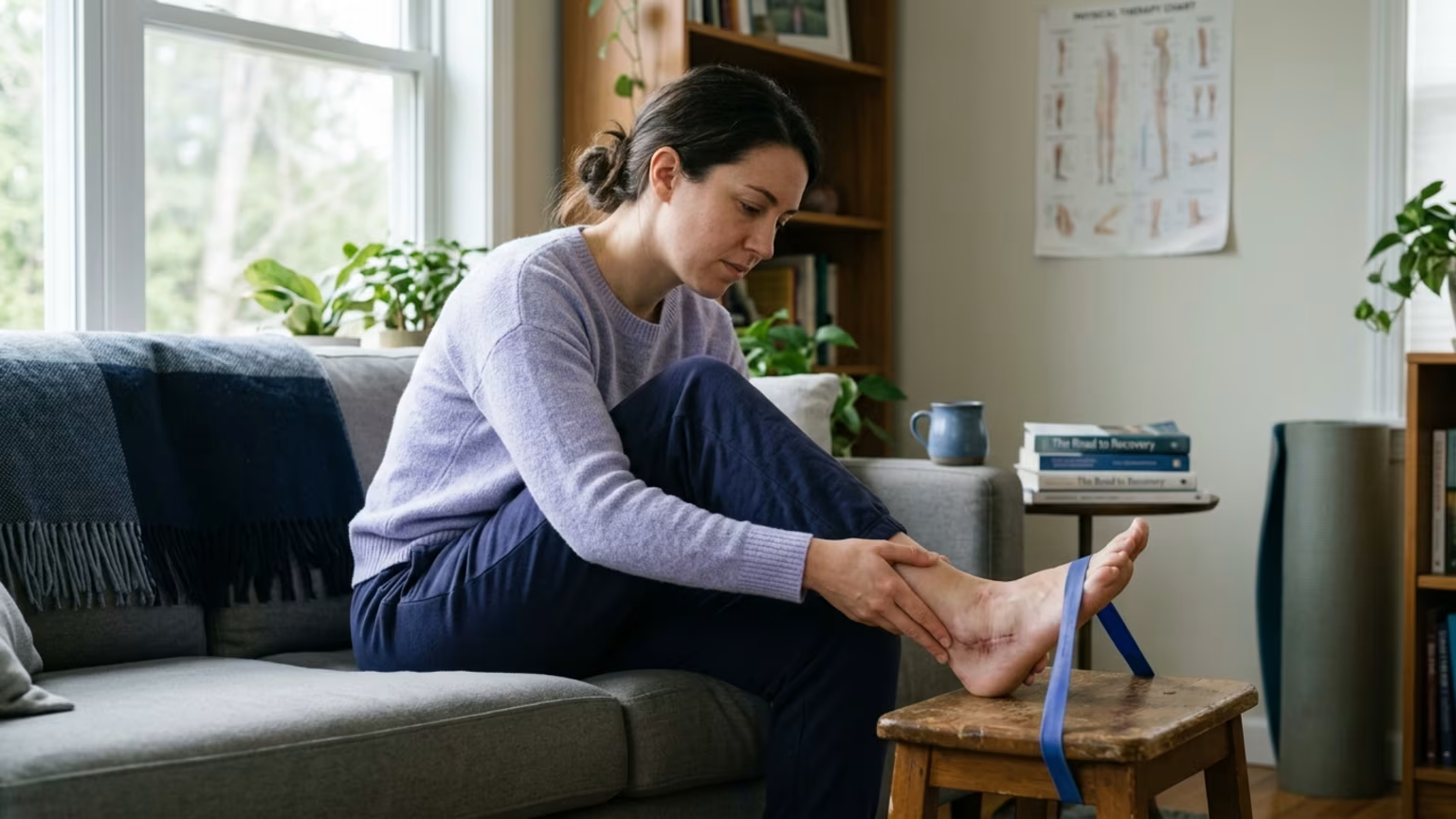
A person sits on the couch with a newly immobilized ankle, eyeing a full dinner plate. The mental math feels obvious: spending all day sitting means fewer calories burned. That sudden drop in daily physical activity creates an immediate tension. A quiet worry about unwanted weight gain clashes with the body's need for healing nutrients.
When an orthopedic injury or surgery suddenly restricts your mobility, the immediate instinct is often to adjust your diet downward. Active adults are highly accustomed to matching their food intake to their physical output. If you normally spend your days walking or lifting heavy weights, a sudden transition to resting on a couch feels drastically different. The intuitive response is to eat significantly less to prevent weight gain during this sedentary period.
This belief makes complete logical sense on the surface. We are taught that energy balance is a straightforward equation of daily movement. When movement drops to near zero, it seems only responsible to cut back on meals. Many people recovering from physical setbacks look at their restricted daily routine and reflexively start restricting their food.
The anxiety about body composition during a long rehabilitation is entirely valid. For decades, public health messaging has hammered home the importance of regular movement for weight maintenance. When a sudden injury removes that tool, the loss of control can feel overwhelming. Without the ability to run or lift, restricting food feels like the only remaining lever to pull.
This mindset often leads to a cycle of under-eating and poor energy during the most critical days of healing. People might skip meals or drastically reduce their portion sizes out of fear. They look at their resting body and assume it requires the bare minimum of sustenance to survive. Unfortunately, this logical assumption completely overlooks the invisible biological construction project happening beneath the skin.
According to a recovery-focused nutrition article from Second Nature, recovery does not automatically mean higher calorie needs or lower ones. While immobilization certainly reduces the energy you burn through voluntary activity, the healing process itself can introduce new demands. The available sources do not establish a single net effect or a reliable calorie target for adults recovering from orthopedic setbacks. The final energy calculation simply varies too much depending on the specific injury and the individual patient.
Because there is no universal formula, a reflexive calorie cut is often the wrong approach. Second Nature advises that the early priority after serious injury or surgery is eating enough to support healing. Limiting muscle loss and fueling participation in physical therapy should take precedence over immediate weight control. The body requires consistent energy to repair damaged tissue and rebuild structural strength.
Instead of focusing on restriction, the evidence points toward maintaining a thoroughly balanced intake. Second Nature recommends a recovery diet containing protein, fiber, healthy fats and complex carbohydrates. Providing these essential building blocks helps ensure that your body is not forced to break down healthy tissue for energy. Prioritizing adequate energy intake during recovery provides a safer foundation for your long-term return to physical activity.
The belief that less movement must always equal less food is deeply rooted in modern fitness culture. We are surrounded by technology that tracks our physical output in real time. Smartwatches and phone applications train us to view our nutrition strictly as fuel for voluntary exercise. When an injury forces that visible physical output to drop, the digital metrics plummet alongside it.
This heavy reliance on outward activity metrics makes it difficult to trust the body during periods of rest. A healing bone or a recovering joint requires significant cellular energy to mend properly. However, that internal metabolic demand does not trigger a notification on a wearable device. The visible absence of walking or lifting creates a powerful illusion that the body is entirely dormant.
Additionally, many popular diet frameworks rely on overly simplified equations to explain human metabolism. They often treat the body like an engine that only requires fuel when it is running at maximum speed. This oversimplification makes perfect intuitive sense to those who have successfully managed their health through active lifestyles. It takes a deliberate shift in perspective to recognize that resting and recovering is its own form of physical labor.
Navigating this shift in mindset can be incredibly challenging for normally active adults. Learning about the realities of body image and weight changes during injury recovery can help ease this mental transition. Accepting the body's internal workload allows patients to let go of purely activity-based calorie counting. It provides permission to nourish the body adequately during a physically vulnerable time.
It is remarkably easy to find aggressive protein and calorie guidelines online, but much of this advice lacks appropriate context. A review published in PubMed Central describes general protein guidance for exercising individuals as about 1.4 to 2.0 grams per kilogram of body weight per day. The review also discusses a possible distribution pattern of roughly 20 to 40 gram servings. However, the authors explicitly state that they do not provide a dedicated orthopedic rehabilitation protocol.
These specific figures represent general guidelines for active populations facing normal exercise fatigue. They should never be presented as individualized recovery targets for surgery patients or older adults with complex medical conditions. The review cautions that studies on exercise recovery vary widely in their methods and their observed outcomes. Furthermore, the authors note that changes in biological markers do not necessarily translate into meaningful functional recovery.
When researchers look specifically at immobilization, the data on supplementation becomes even more nuanced. Second Nature reports that a 2024 review of eight trials found no clear evidence that additional protein or amino acids prevented muscle loss during bed rest. This specific finding cautions against presenting protein supplements as a guaranteed way to preserve muscle when a limb is kept completely still. The absence of movement often overrides the presence of extra amino acids in the diet.
This reported uncertainty does not mean that overall nutrition is unimportant for a healing body. It simply highlights the limits of relying on isolated supplements to solve the problem of physical inactivity. The exercise recovery review treats adequate energy, carbohydrates, hydration and sleep as the true foundations of a recovery strategy. Supplements are viewed merely as optional adjuncts rather than replacements for a solid dietary baseline.
The most effective practical step you can take is to reframe your thinking around adequate intake rather than immediate restriction. When a cast or a brace drastically reduces your daily movement, focus your attention entirely on nutrient density. Building your daily meals around high-quality foods ensures your body receives the necessary materials for tissue repair. A balanced plate with adequate fiber, healthy fats and complex carbohydrates supports both the healing process and your general health.
If weight change remains a significant concern during this inactive period, use that worry constructively. Frame it as a clear reason to discuss an individualized plan with your clinical team or a registered dietitian. These professionals can help you navigate the competing demands of tissue healing and metabolic health without rigid restriction. They will avoid a reflexive prescription to simply eat as little as possible while you heal.
It is also critical to approach generalized protein targets with a healthy degree of caution. Do not force yourself to consume extreme amounts of protein meant for uninjured athletes. Instead, aim for regular, balanced meals that keep your energy levels stable and support your body naturally. Understanding how appetite changes during recovery can help you adjust your portions intuitively without relying on rigid fitness formulas.
Remember that your dietary needs will inevitably shift as you move through the different stages of rehabilitation. The nutrition required during strict bed rest might differ from what you need when you begin formal physical therapy. For many recovering adults, maintaining bone health during recovery requires a steady and evolving supply of basic nutrients. Keep your focus on providing consistent nourishment to support your gradual return to normal physical movement.
Navigating nutrition after a significant physical setback requires balancing the reality of reduced movement with the biological demands of healing. While your daily step count might drop to zero, your body is actively working internally to repair damaged tissue. The current evidence does not support aggressively cutting calories or relying solely on extreme protein supplementation to manage this transition. A rigid focus on restriction can deprive your body of the essential resources it needs to heal properly.
Instead, prioritize a balanced diet rich in complex carbohydrates, fiber, healthy fats and adequate protein to support your physical rehabilitation. Resist the urge to apply standard sports nutrition formulas to a healing body, and remember that individual clinical needs vary significantly. By focusing on holistic nourishment rather than immediate restriction, you give your body the best possible foundation for recovery. This patient approach ultimately supports a safer and more sustainable return to the physical activities you love.
After establishing a balanced approach to daily nutrition, ReboundBody helps active adults apply those foundational habits throughout their ongoing rehabilitation. We address conflicting online claims about recovery tools, exercises, nutrition and treatment options so you can better understand your situation and make more informed decisions with qualified healthcare professionals.

Follow ReboundBody for practical articles on injury recovery, rehabilitation, mobility and rebuilding strength. New posts turn research into clear ideas for the road back to activity after injury or surgery.



Read practical guidance on injury recovery, rehabilitation, mobility and rebuilding strength as you work your way back to activity.
Explore Resources