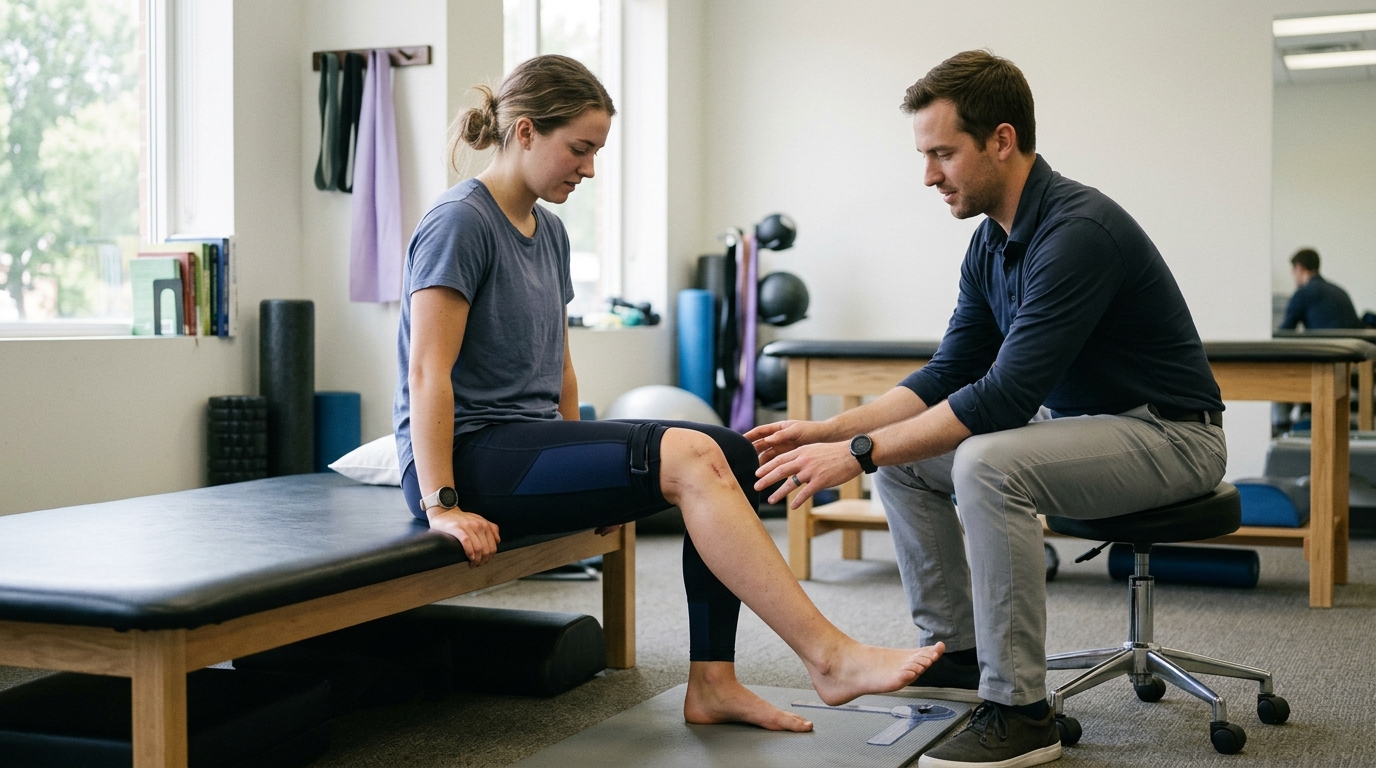

Pushing through pain seems necessary for progress, but sustainable recovery relies on structured pacing, baseline tracking, and systematic load management to prevent setbacks.





How do you know if you are doing too much during physical recovery, or if you are holding yourself back unnecessarily? Many people search for this exact question after a setback, surgery, or injury. They often feel fine during a walk or workout, only to wake up the next morning with sharp stiffness, deep exhaustion, or a noticeable flare in symptoms.
The answer is not to stop moving altogether, nor is it to force your way through worsening symptoms. The most effective approach is pacing. Pacing is the planned adjustment of activity type, volume, intensity, timing, and rest intervals. It uses your symptoms, your functional ability, and your recovery time to keep physical demands within a tolerable range.
There is no universal formula or fixed weekly percentage increase that works for every person. Pacing provides a flexible decision framework rather than a rigid calendar. This guide explains how to establish your baseline, how to interpret physical feedback without fear, and how to make steady adjustments that support your long-term return to movement.
Pacing is often misunderstood as simply doing less. In reality, pacing is an active management strategy designed to help you do as much meaningful activity as your body can currently handle without causing prolonged setbacks. It shifts the focus from arbitrary workout targets to how your body tolerates and recovers from total physical strain.
A complete pacing framework evaluates three distinct signals together:
If you complete an exercise session but cannot walk comfortably the following day, the overall load was too high for your current capacity. Conversely, if you feel mild discomfort during movement that settles within an hour and leaves your next day unaffected, that load is likely manageable.
Pacing also requires looking at total daily exertion. Your body does not separate the physical stress of an intentional rehab session from the physical stress of grocery shopping, yard work, or climbing stairs at the office. Everyday tasks, poor sleep, and emotional stress all draw from the same limited reserve of energy and tissue capacity.
When you understand pacing as total load management, you can make smarter decisions about when to advance, when to hold steady, and when to temporarily scale back. You can learn more about managing these variables by reviewing our resources on rehabilitation, mobility, and movement principles.
Public health guidelines provide valuable targets for long-term health, but they are not always realistic starting points during acute rehabilitation. The World Health Organization recommends that adults complete 150 to 300 minutes of moderate-intensity aerobic physical activity per week, or 75 to 150 minutes of vigorous physical activity, along with muscle-strengthening exercises on two or more days per week. The World Health Organization also emphasizes that adults living with chronic conditions or disabilities should engage in regular physical activity according to their individual abilities.
These population guidelines represent an ideal destination rather than a day-one assignment. When you are recovering from an injury, joint replacement, or persistent pain, trying to meet general population targets immediately can lead to symptom flares and frustration.
Valuable insights come from observational rehabilitation research. The prospective ReSpAct cohort study tracked 1,256 adults with physical disabilities and chronic diseases before discharge from rehabilitation and at 14, 33, and 52 weeks afterward. Researchers measured how activity patterns changed over time in real-world settings.
The study found that median total physical activity increased from 1,545 minutes per week at baseline to 1,710 minutes per week at 52 weeks post-discharge. Notably, light-intensity physical activity and domestic household activities accounted for the largest share of total movement time. Participants achieved meaningful gains in moderate-to-vigorous activity and active commuting across the year, demonstrating that functional recovery involves building daily movement habits alongside formal exercise.
The ReSpAct findings show that recovery is a gradual rebuilding process. Progress is rarely a straight line from zero to high-intensity training. It is built by gradually expanding your tolerance for everyday movement, preserving function, and allowing tissues to adapt over weeks and months. You can read more about structured progression strategies in our injury recovery and healing resources.
The most common trap in physical rehabilitation is the boom-and-bust cycle. This pattern occurs when a person bases their activity level entirely on how they feel at a single moment in time.
On a "good day" with low discomfort, you might feel optimistic and decide to catch up on missed chores, run multiple errands, and double your exercise routine. Because you feel capable while moving, you push past your normal limits. This is the "boom" phase.
The following morning, your body demands payment for the unaccustomed strain. Severe stiffness, elevated pain, or overwhelming systemic fatigue sets in. You are forced to spend the next two or three days resting completely, avoiding even basic movement. This is the "bust" phase.
This cycle creates several physiological and psychological challenges:
Pacing breaks this cycle by establishing consistency. By setting an activity limit on your best days, you conserve the resources needed to avoid deep crashes. Over time, this smooths out the peaks and valleys, creating a stable foundation for genuine physical progress.
A major barrier to consistent recovery is the belief that any physical discomfort indicates ongoing tissue damage. While sharp or worsening pain should never be ignored, mild discomfort is a normal part of reconditioning deconditioned muscles and healing joints. Symptoms provide information about current tolerance, not an absolute verdict on safety.
Clinical institutions often use structured frameworks to help patients interpret sensations. For instance, the Shirley Ryan AbilityLab developed an Activity Traffic Light tool to help individuals evaluate discomfort and monitor functional safety during physical tasks.
Activity in this range produces little to no discomfort, or mild sensations that feel familiar and manageable. Any slight increase in symptoms resolves within a few minutes to an hour after stopping. Your joint range of motion, muscle strength, and movement mechanics remain unchanged, and your ability to carry out normal daily tasks the next day is unaffected.
This zone involves moderate discomfort that rises during activity but remains within a manageable threshold. The key test is what happens afterward. If the discomfort settles back to your normal baseline within 24 hours, and your functional movement remains intact, the activity was likely within an acceptable tolerance window. If symptoms linger past 24 hours or cause you to limp, the activity should be modified in the next session by reducing duration, resistance, or speed.
The red zone is marked by severe, sharp, or rapidly escalating pain that forces you to alter your movement mechanics. If an activity causes joint swelling, visible inflammation, or a severe flare that lasts for several days, you have crossed into an intolerable load. This response indicates that the current dose is too high for your healing tissues, requiring a temporary reduction in volume or a change in exercise selection.
Pacing adjustments are intended for routine musculoskeletal recovery and functional rehabilitation. They are not appropriate when symptoms point to an urgent medical concern.
For example, clinical exercise guidance from Cambridge University Hospitals cardiac rehabilitation services specifies that individuals must stop physical activity immediately if they experience:
If you experience these warning signs, or if you develop new neurological symptoms like sudden numbness, progressive limb weakness, or loss of bowel or bladder control, stop activity and seek immediate medical evaluation.
To make consistent progress without overdoing it, you need a structured method for testing and adjusting your physical activity. The following six-step framework provides a practical way to manage your recovery journey.
Start by identifying the exact activity you want to return to. Vague goals like "getting in shape" make pacing difficult to measure. Clear, functional goals provide concrete targets for your progression plan.
Examples of specific functional targets include:
Your baseline is the amount of activity you can perform comfortably right now without triggering a delayed symptom flare or functional setback. It is not the maximum amount you can complete by gritting your teeth on your best day.
To find your baseline, select a conservative starting point below what you think you can handle. If you believe you can walk for 20 minutes, test a 10-minute walk on flat ground. Maintain that exact volume for three to five sessions across a week. If your symptoms, daily function, and recovery times remain stable, you have successfully confirmed your working baseline.
Before adding new exercise to your routine, evaluate the other physical demands on your schedule. If you know you have a demanding day that involves extensive walking, carrying heavy items, or prolonged standing, reduce your planned rehabilitation exercises for that day.
Treat your daily physical tolerance like a financial budget. If you spend a large portion of your physical energy on unavoidable daily chores, you must reduce your spending on optional workouts to avoid running a deficit that leads to a flare-up.
Never judge the success of an activity session solely by how you feel while performing it. The cardiovascular system and warm muscles can easily mask joint strain or tendon irritation while you are moving.
Pay close attention to how you feel the next morning and two days later. Ask yourself these practical questions:
If the answer to these questions is yes, your body has not fully recovered from the previous dose. Keep your activity light until you return to baseline.
When you are ready to progress, modify only one aspect of your activity at a time. If you change multiple variables simultaneously, such as increasing your walking time, walking uphill, and carrying a weighted pack on the same day, you will not know which factor caused a flare if your symptoms spike.
The primary variables you can adjust include:
Once you introduce a progression, hold that new level steady for at least one to two weeks before attempting another increase. Tissues like tendons, cartilage, and bone require time to adapt to new mechanical loads.
Rushing to add more volume every single week is a primary cause of overuse injuries during rehabilitation. True physical adaptation happens when an increased load is repeated, tolerated, and integrated into your normal physiological routine. For more information on safely rebuilding physical capacity, explore our guide to strength and performance rebuilding.
Your pacing capacity is not static. It changes based on internal biological factors, external life circumstances, and the specific nature of your underlying condition. Understanding these modifying variables prevents unnecessary worry when your progress slows down.
Different tissues heal and adapt at markedly different rates. Muscle tissue has a rich blood supply and often recovers relatively quickly from strain. Tendons, ligaments, and articular cartilage have limited vascularity and require significantly more time to adapt to increased loads.
Furthermore, systemic conditions require distinct pacing rules:
Sleep is the primary biological state for tissue repair, cellular regeneration, and nervous system recovery. When sleep duration or quality drops, your pain sensitivity naturally increases, and tissue repair slows down.
If you experience several nights of disrupted sleep due to travel, illness, or stress, your physical tolerance will temporarily decrease. The smartest pacing decision during poor sleep periods is to maintain your current baseline or temporarily reduce workout volume until regular rest is restored.
Mental and emotional stress creates measurable physical effects. High stress levels elevate circulating cortisol, increase resting muscle tension, and alter how your brain processes sensory signals from joints and muscles.
A demanding week at work or a stressful family situation reduces the physical reserve you have available for exercise. Acknowledging that cognitive strain impacts physical recovery allows you to make realistic adjustments rather than viewing a temporary drop in exercise capacity as a physical setback.
As we age, connective tissues lose a degree of natural elasticity, and muscle protein synthesis becomes slightly less efficient. Adults between the ages of 35 and 75 often find that their bodies require slightly longer rest intervals between demanding physical sessions compared to their twenties.
A history of regular physical activity before an injury provides a helpful foundation of movement skill and body awareness. However, past athletic ability can also tempt you to push ahead too fast. Respecting your current biological reality rather than comparing yourself to your past self is essential for steady, injury-free recovery. You can read more about age-related considerations in our active aging and prevention section.
To see how pacing works in practice, examine these four illustrative models. These examples show how to apply pacing principles across common recovery scenarios.
An individual recovering from a lower-leg strain has been walking comfortably on a flat treadmill for 15 minutes, three days per week, for two consecutive weeks. Their next-day symptoms remain low, daily tasks are unaffected, and recovery takes less than 30 minutes.
Instead of running or adding incline, they adjust a single variable: duration. They increase their walking time from 15 minutes to 18 minutes while keeping the speed, surface, and weekly frequency identical. They maintain this 18-minute level for two weeks, confirming stability before considering another modest increase.
A person recovering from hip surgery completes a 30-minute stationary cycling routine with no pain during the workout. However, later that afternoon, they find it difficult to stand up from a low chair, and they need to take an unplanned nap due to severe fatigue.
The in-session feedback looked positive, but the 24-hour functional response showed that the total dose exceeded their current tolerance. The adjustment is to break the physical load into smaller pieces. They shift to two 10-minute cycling sessions separated by five hours of rest, allowing them to maintain their cardiovascular stimulus while preserving the physical capacity needed for daily living.
A person with persistent lower-back discomfort wakes up feeling remarkably loose and energetic on a Saturday morning. In the past, they would have used this day to clean the entire house, do three hours of yard work, and go for a long hike, resulting in a three-day crash.
Applying pacing principles, they consciously plan their day using time limits and pre-emptive rest. They complete 45 minutes of gardening, followed by 30 minutes of reclining rest and gentle mobility work. In the afternoon, they run one essential errand and take a short 15-minute walk. By resisting the urge to do everything at once, they wake up on Sunday without a symptom spike, maintaining functional momentum.
An individual recovering from shoulder tendinopathy experiences an unexpected increase in pain after helping a neighbor lift a heavy box. Their shoulder aches at rest and mobility is temporarily limited.
Rather than completely immobilizing the arm for a week or trying to force their usual strengthening routine, they temporarily drop down to an active recovery dose. They perform gentle, supported range-of-motion exercises within their comfortable green zone for three days. Once the acute flare settles and resting symptoms return to baseline, they resume their strengthening exercises at a reduced resistance before gradually rebuilding.
Pacing is most effective when coordinated with your physician, physical therapist, or orthopedic surgeon. Take these practical questions to your next clinical appointment to ensure your activity plan aligns with your medical care:
Discussing these questions ensures that you and your healthcare team share the same expectations for your recovery timeline. You can explore more background on our editorial approach and health communication standards on our about ReboundBody page.
Pacing is not a passive surrender to injury or an excuse to avoid movement. It is a practical, evidence-aware framework for navigating physical recovery with confidence and control. Progress during rehabilitation does not require adding more volume every week, nor does it require complete freedom from all discomfort.
By honoring your current baseline, evaluating total daily physical demands, tracking 24-hour delayed responses, and altering one variable at a time, you protect your body from the disruptive boom-and-bust cycle. You allow tissues to adapt naturally and create a sustainable path back to active living.
To put these pacing principles into action immediately, complete these four steps over the next seven days:
If you have questions about specific recovery topics or want to suggest future guide themes, please visit our ReboundBody contact page.

Use ReboundBody resources to understand common recovery stages, rehab terms, movement limits and strength rebuilding. Each guide is designed to make a complex comeback easier to understand.


Read practical guidance on injury recovery, rehabilitation, mobility and rebuilding strength as you work your way back to activity.
Explore Resources