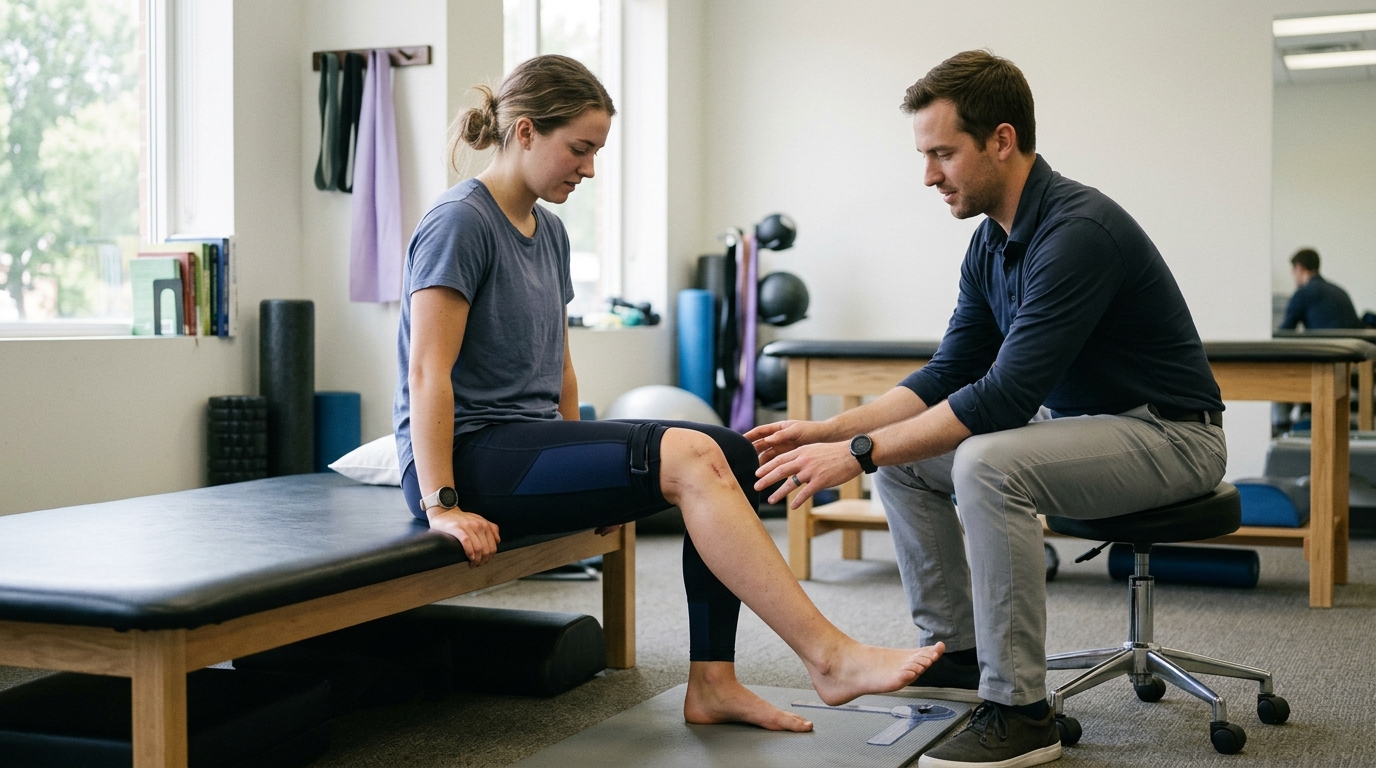

Scaling strength exercises requires adjusting range, stability, and complexity rather than simply adding or removing weight on a barbell.





Most people assume that making an exercise harder requires adding weight to a bar or picking up a heavier dumbbell. In reality, adding external resistance is only one way to alter physical demands. When an exercise feels too difficult, painful, or unstable, immediately dropping the weight is not always the most effective solution either.
Scaling an exercise requires adjusting distinct movement variables rather than treating difficulty as a single dial. Joint range of motion, external resistance, base of support, movement complexity, and proximity to muscular failure all influence how your body responds to a movement. These features interact during every repetition, but they represent independent training variables.
When you modify an exercise during rehabilitation or strength training, adjusting one feature at a time provides clear feedback. If you change your stance, drop the weight, alter your depth, and change your tempo in the same workout, you cannot know which variable solved a problem or created a new one. Understanding how to scale each dimension independently gives you greater control over your physical progress.
An exercise is not simply easy or hard in a generic sense. The total challenge of any resistance exercise is shaped by at least five distinct dimensions.
The first dimension is external load. This refers to the objective resistance applied to your body during a movement. It includes the weight of a barbell, the tension of an elastic band, or the plate selected on a cable stack. External load directly influences mechanical tension on active muscles and joints.
The second dimension is range of motion. Range of motion describes how far a joint or limb travels through a movement pattern. Performing a squat to a high box requires a smaller excursion than squatting below parallel. Changing joint angles shifts mechanical leverage and alters muscle fiber lengthening.
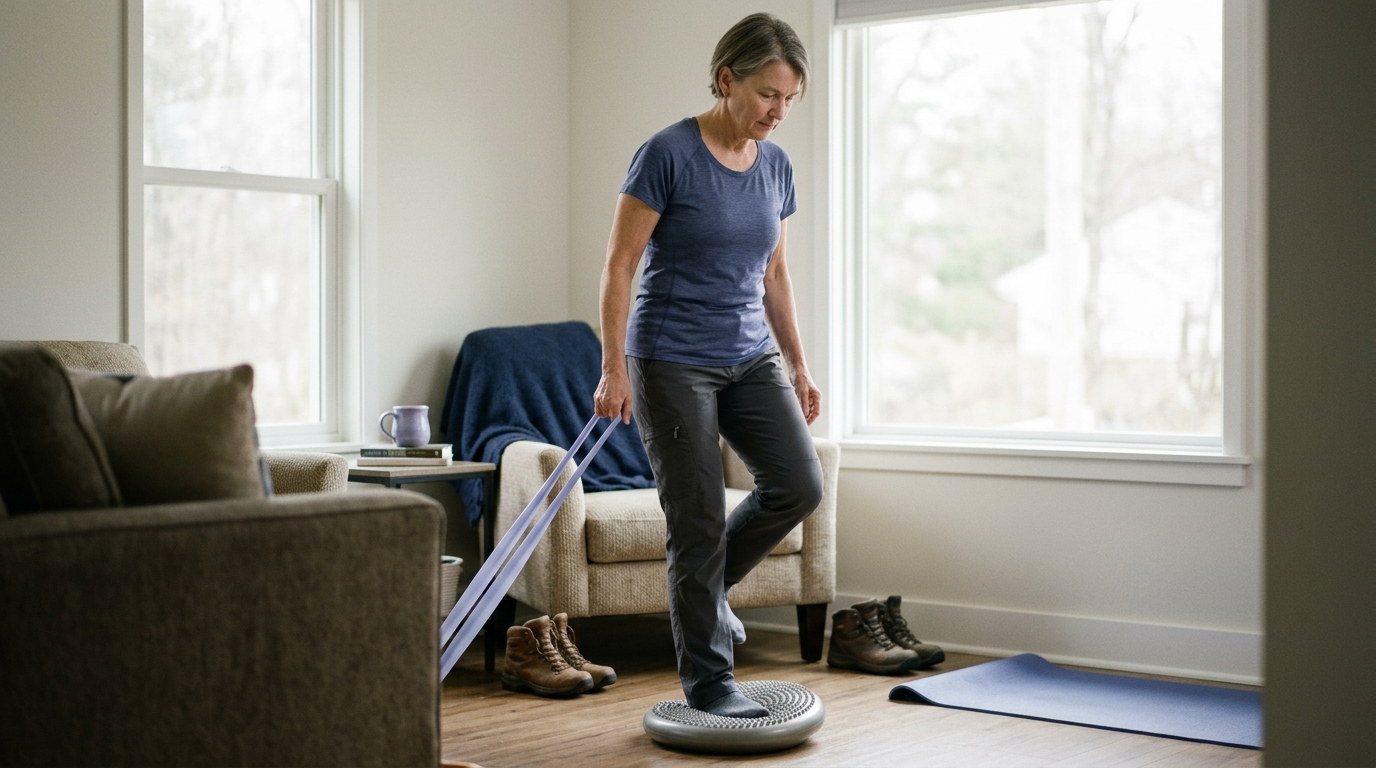
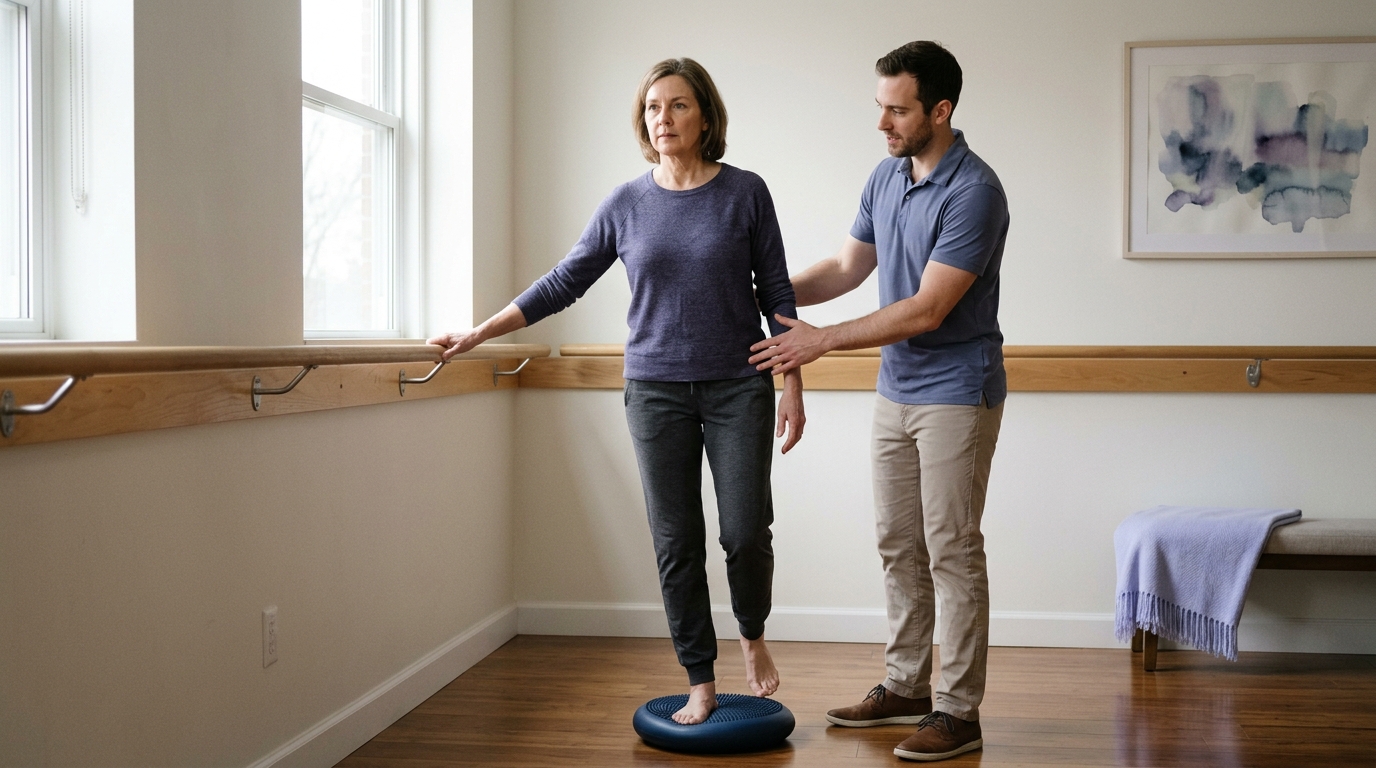
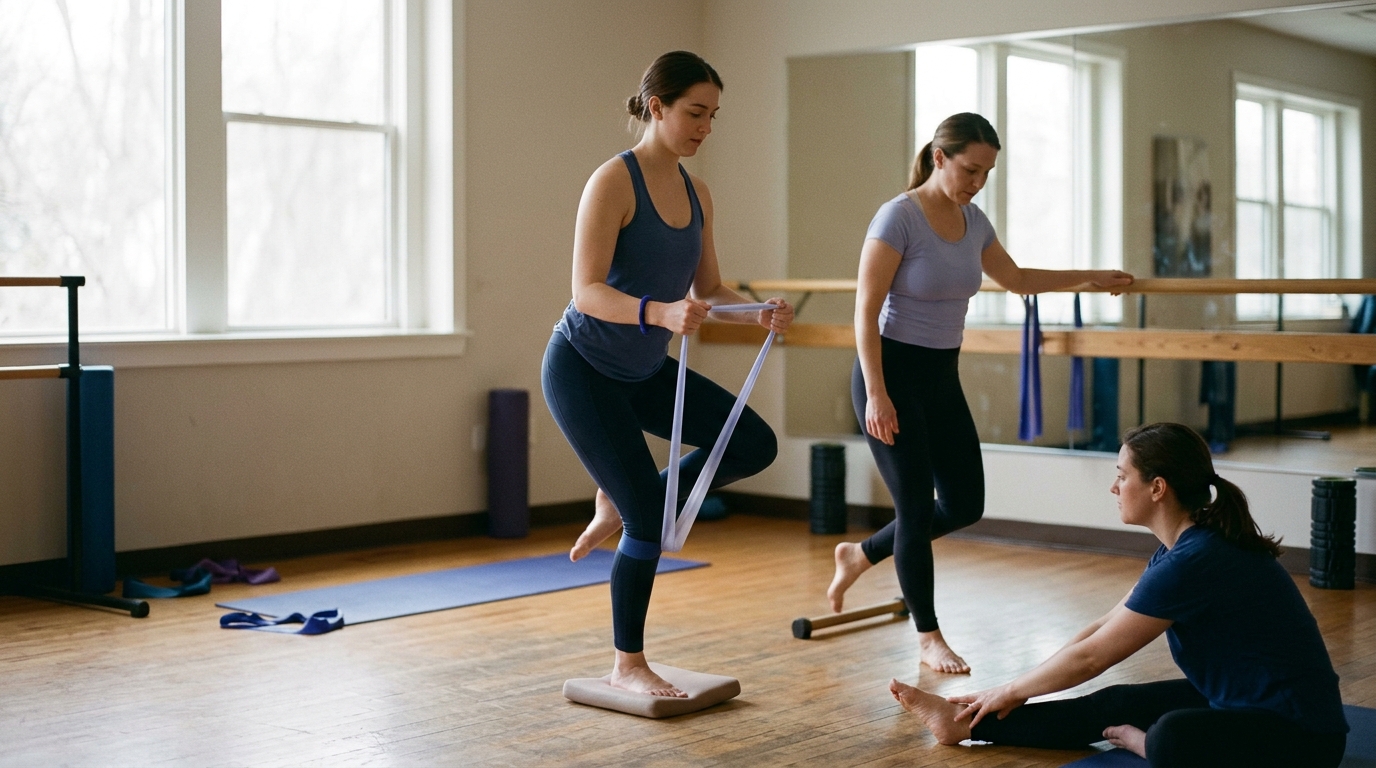
The third dimension is support and stability. This feature describes how much external assistance your body receives to maintain balance and posture. A split squat performed with one hand holding a sturdy railing requires less balance control than an unsupported split squat. Altering support changes how much energy you spend stabilizing your joints versus producing prime-mover force.
The fourth dimension is effort, often described as proximity to muscular failure. Effort measures how demanding a set is relative to your maximum capacity on that specific day. You can perform a set with a light external load to complete exhaustion, or perform a set with a heavy load while stopping several repetitions short of failure. Resistance and effort are not the same variable.
The fifth dimension is movement complexity. Complexity describes the coordination, motor skill, and degrees of freedom involved in a task. A seated machine chest press restricts movement to a fixed, single-plane track. A standing single-arm cable press requires multi-planar control across your trunk, hips, and shoulder girdle. The National Strength and Conditioning Association identifies stability, execution speed, equipment, guidance, and degrees of freedom as key elements that dictate exercise complexity.
External load describes the physical mass or resistance being moved, while effort describes how hard your neuromuscular system works to complete a set. These two factors are frequently conflated in traditional fitness advice. A heavy set is not automatically performed close to failure, and a light set is not automatically easy.
The American College of Sports Medicine position stand on resistance training progression notes that progressive overload involves gradually increasing overall training stress over time. For novice lifters, the guidelines recommend training with loads corresponding to an 8 to 12 repetition maximum range. When learning new movement patterns, moderate loading of 50 to 60 percent of a one-repetition maximum or less is recommended to establish control. When a lifter can exceed their target repetition count by one or two repetitions across two consecutive workouts, increasing the load by 2 to 10 percent is standard guidance. Smaller percentage increases apply to smaller muscle groups, while larger increases apply to compound lower-body exercises.
However, adding weight is not the only way to manage training stress. Effort can be scaled independently of load by adjusting proximity to failure. Research led by Refalo and colleagues examined how training close to momentary muscular failure influences muscular adaptations. Momentary muscular failure is defined as the inability to complete the concentric portion of a repetition through the full range of motion without altering prescribed technique.
In their systematic review and meta-analysis, Refalo and colleagues found that training to complete failure produced only a trivial advantage for muscle hypertrophy compared to stopping short of failure, with an effect size of 0.19. When examining momentary muscular failure specifically, there was no statistically significant advantage over non-failure training, showing an effect size of 0.12. Muscular adaptations occur reliably well before complete failure is reached.
Stopping a set two to three repetitions before failure reduces excessive fatigue and joint stress. This allows active adults to stimulate strength adaptations without compromising movement quality. When scaling your workouts, you can increase the challenge by taking a set closer to failure while keeping the external weight identical. Conversely, you can decrease the stress of a workout by leaving more repetitions in reserve without reducing your working weight.
Range of motion is often treated with rigid assumptions. Some lifters believe full range of motion is universally superior for every goal, while others assume partial ranges are inherently safer for joint health. Current biomechanical and clinical evidence demonstrates a more nuanced reality.
A comprehensive systematic review and meta-analysis by Wolf and colleagues compared full range of motion against partial range of motion resistance training. The researchers found a trivial overall effect favoring full range of motion across all physical outcomes, with a standardized mean difference of 0.12. Subgroup analyses showed trivial to small advantages for full range of motion in strength, power, and muscle size, with effect sizes ranging between 0.05 and 0.20. Full excursions provide modest general advantages, but partial ranges remain effective training tools.
The location of a partial range of motion matters significantly. A systematic review by Schoenfeld and colleagues examined how different segments of joint excursion influence muscle hypertrophy. Training at longer muscle lengths, where the active muscle is stretched under tension, generally produces greater muscle growth than training at short muscle lengths. Performing a partial squat in the bottom half of the movement exposes quadriceps and gluteal fibers to high passive and active tension. Performing a partial squat in the top quarter of the movement loads the muscles only where they are shortened.
Range of motion also produces highly specific strength adaptations. Wolf and colleagues observed that strength gains are greatest in the specific joint angles trained during exercise. If you train exclusively with a shallow squat, your strength gains will be concentrated in that upper range of motion. If you need strength throughout a deep excursion for daily tasks or recreational sports, your training must eventually address those deeper joint angles.
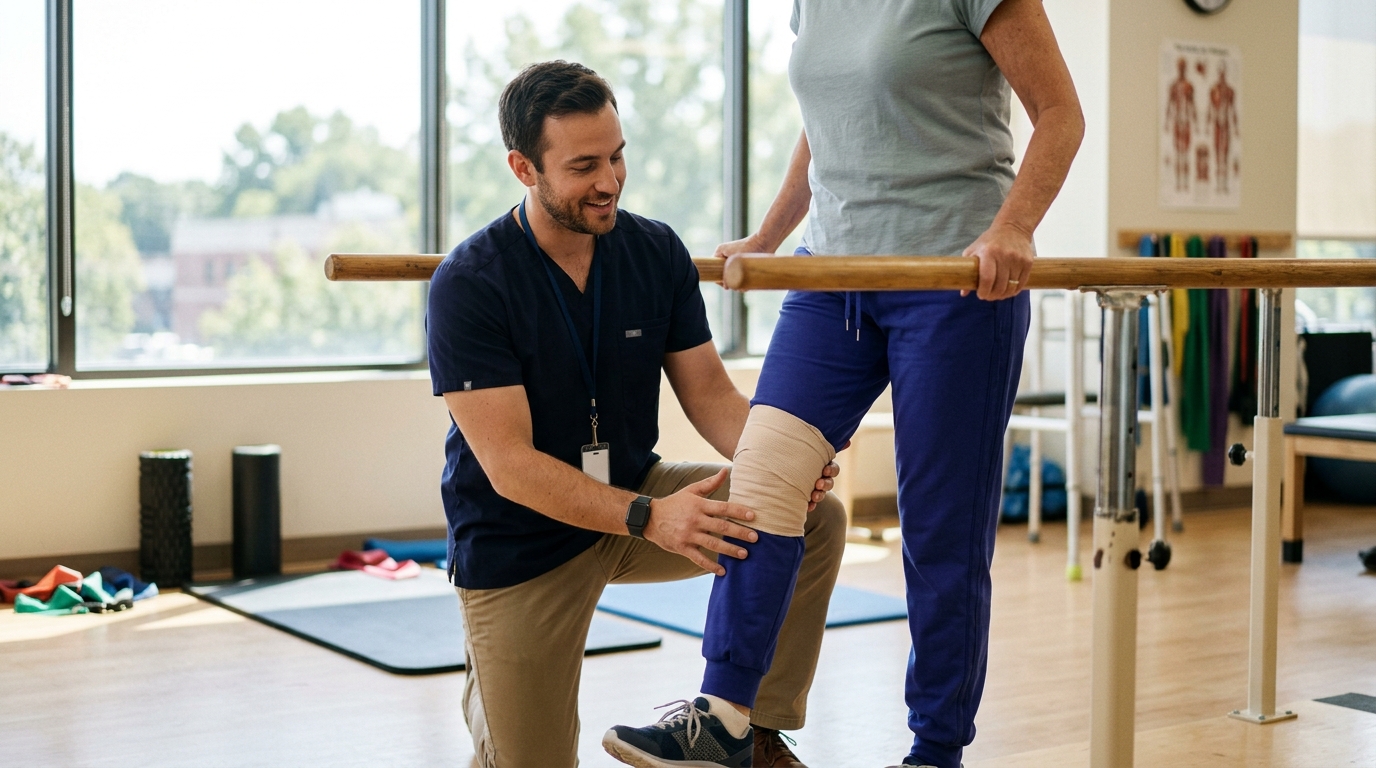
When recovering from an orthopedic setback, adjusting range of motion serves as an effective scaling tool. Shortening the range of motion allows you to train around sensitive joint angles while maintaining muscle activity. As tissue tolerance improves, you can gradually expand the joint excursion without altering the external load. You can explore structured approaches within our rehabilitation and mobility resources to understand how joint excursion changes over time.
Adding or removing physical support alters an exercise fundamentally. Increasing balance demands does not necessarily make an exercise more effective for building muscular strength. In many cases, unstable conditions reduce the ability of target muscles to produce force.
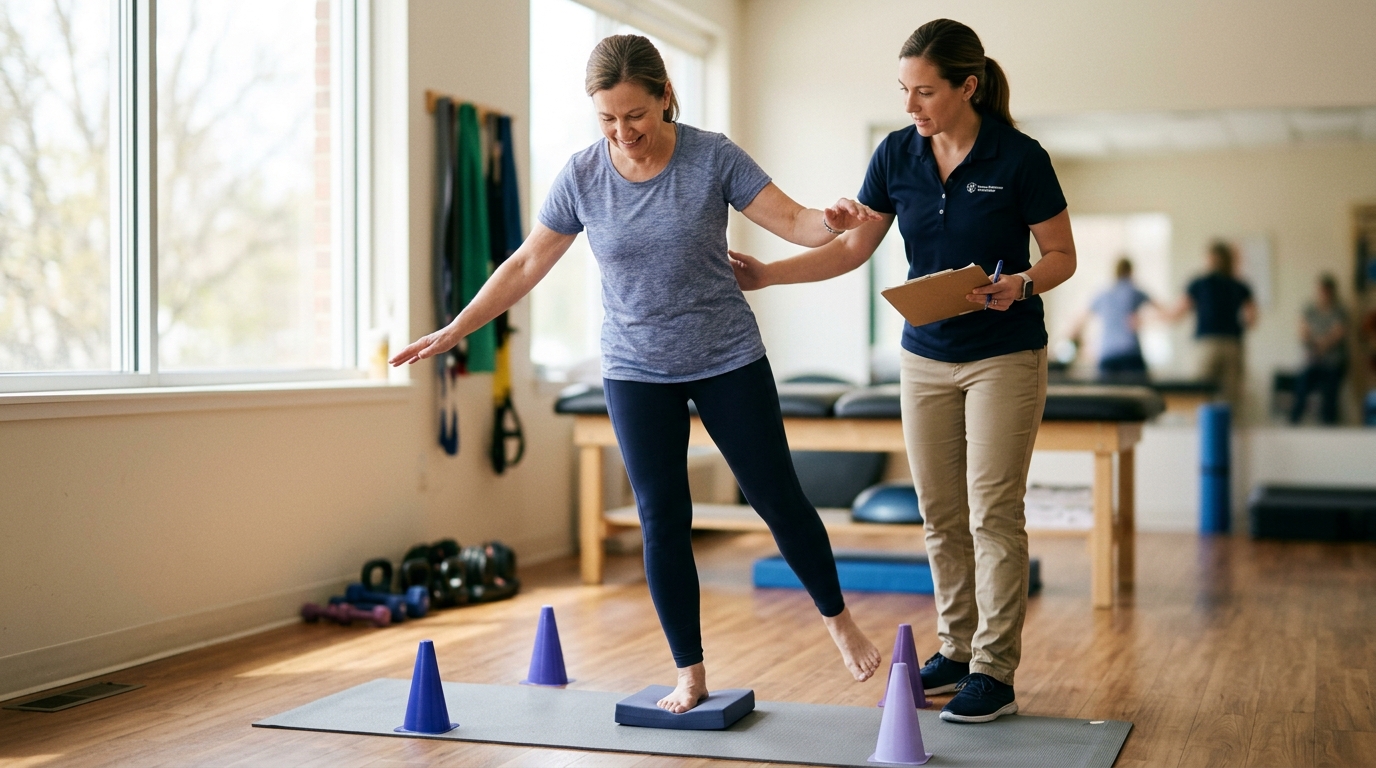
The American College of Sports Medicine notes that highly unstable training environments, such as balance boards or inflatable discs, increase core and stabilizer muscle activation. However, these unstable surfaces substantially reduce prime-mover force production and decrease the total external load a person can lift. Systematic reviews on instability resistance training confirm that unstable surfaces impair movement velocity, force output, and power generation. For healthy individuals, performing traditional strength exercises on unstable surfaces provides limited extra benefits for prime-mover strength.
Understanding this trade-off allows you to choose support modifications based on your specific training goal:
Instability and external load serve different purposes. If you need to build prime-mover strength, do not make the exercise excessively unstable. If you need to train balance, reduce the external weight so that balance control remains the primary focus.
Exercise progressions are frequently presented as rigid ladders, moving from machine exercises to barbells and finally to complex single-leg variations. This linear hierarchy oversimplifies how motor learning and biomechanics operate. A complex exercise is not inherently superior to a simple exercise.
The National Strength and Conditioning Association outlines exercise complexity across several distinct mechanical features:
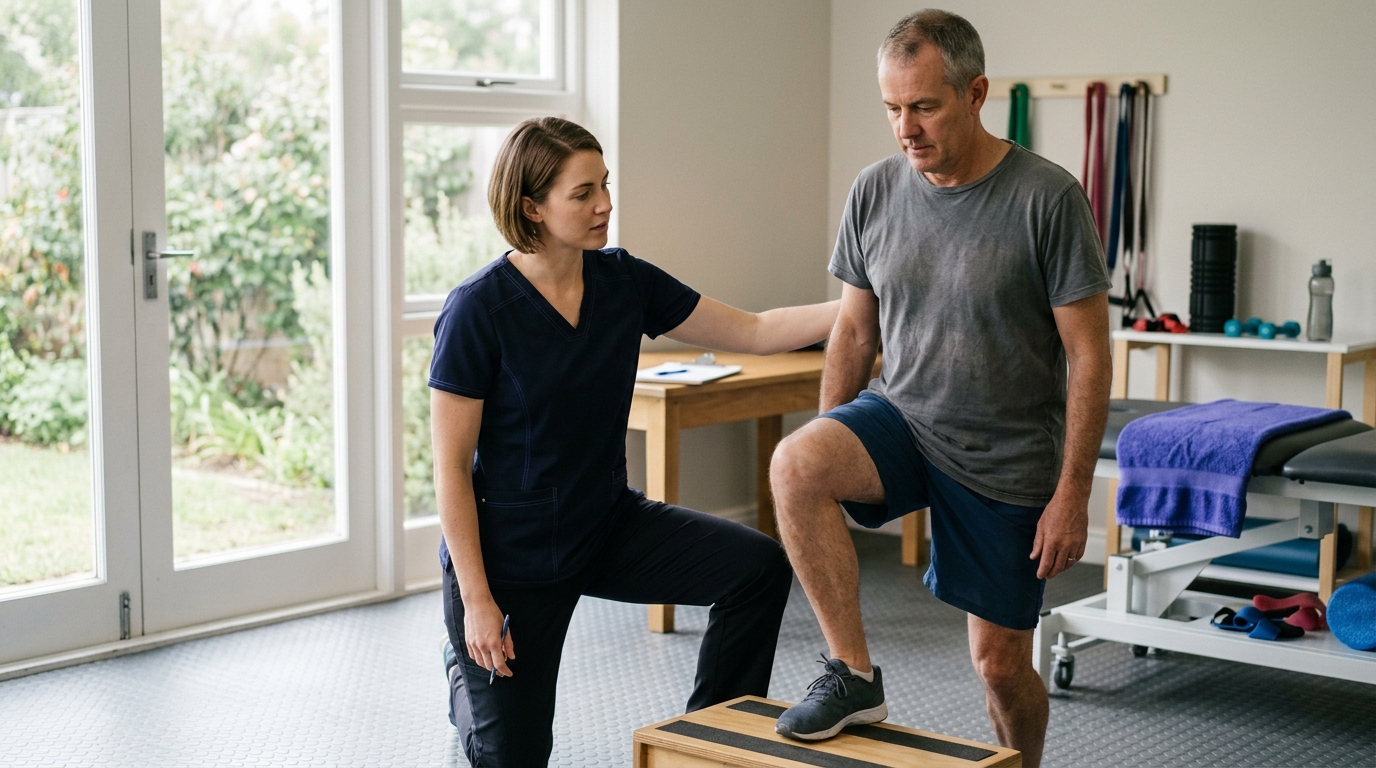
A machine-based movement is not just a tool for novices. A seated leg press provides a high level of stability, allowing experienced trainees to safely challenge their quadriceps near muscular failure without systemic balance fatigue. Conversely, a bodyweight single-leg step-down requires high coordination and joint stability despite using no external barbell resistance.
Scale complexity based on your training goal rather than an arbitrary sense of progression. When movement quality breaks down or joint discomfort occurs, reducing complexity allows you to maintain training volume without overloading your coordination. As confidence and movement mechanics solidify, you can reintroduce multi-planar demands. You can read more about integrating coordinated movement within our movement mechanics articles.
When adjusting an exercise in your routine, making random modifications makes it difficult to understand what works. Applying a systematic decision framework ensures that every adjustment serves a clear purpose.
Decide what physical adaptation you want from the movement. If your priority is rebuilding calf and quadricep capacity after an Achilles tendon issue, mechanical tension on those tissues is your primary objective. If your priority is regaining hip mobility, expanding comfortable joint range of motion takes precedence over lifting heavy loads.
Observe what causes a set to end or what makes a movement feel unsuccessful. Are your target muscles fatiguing before your technique degrades? Is your balance wavering and forcing you to cut the set short? Is joint discomfort appearing at a specific depth? Identifying the exact limiting factor reveals which training dial requires adjustment.
Select one variable to adjust while keeping all other parameters constant:
Monitor how your body handles the modified exercise during the session and over the following 24 to 48 hours. Record the repetitions completed, the perceived effort, and any lingering joint sensitivity. If you want to understand how tissue loading interacts with long-term recovery, review our evidence-based recovery science articles.
To understand how these principles function in practice, examine how common compound exercises can be scaled across different dimensions.
The squat pattern can be modified across all five dimensions without losing its core biomechanical value:
Upper-body pressing can be adjusted to match joint tolerance and muscular capacity:
The posterior chain responds well to precise modifications in range and support:
For broader program planning and compound exercise scaling, explore our strength rebuilding strategies.
Scaling exercises incorrectly can stall your physical progress or cause unnecessary frustration. Being aware of frequent training pitfalls helps you make informed choices.
Many active adults assume that if they are not adding weight to the bar, they are not improving. Progressive overload can be achieved by improving movement control, adding one repetition, slowing the lowering phase, or slightly expanding joint excursion. Load is simply one of several available progression tools.
Insisting on a deep range of motion when tissues are not ready can cause unnecessary setbacks. Partial ranges performed at long muscle lengths provide substantial muscular stimuli. Use the range of motion you can control comfortably today, and expand that range gradually as tissue tolerance improves.
Performing squats or presses on unstable wobble surfaces does not produce superior strength. It significantly reduces prime-mover force output. Use stable setups for strength development, and reserve unstable surfaces for specific balance or proprioceptive training tasks.
Training to complete muscular failure creates disproportionate fatigue and prolongs recovery times. Meta-analytic research demonstrates that stopping one to three repetitions short of failure yields comparable muscle adaptations with significantly less joint strain.
When you change the weight, the range of motion, and the stance in the same exercise session, you lose track of cause and effect. If your knee feels irritated the following day, you cannot know which variable triggered the response. Change one feature at a time to keep your training data clean and interpretable.
When you are managing an active injury, recovering from surgery, or navigating persistent joint pain, exercise modifications should be coordinated with your healthcare providers. Physical therapists, orthopedic surgeons, and sports medicine physicians can provide specific anatomical boundaries for your training.
Take a proactive list of questions to your clinical appointments:
Clear clinical boundaries allow you to scale your exercises within safe parameters while continuing to build functional capacity. You can reference our complete directory of orthopedic recovery resources to prepare for your clinical consultations.
Scaling an exercise requires treating movement difficulty as a multi-dimensional system. By viewing external load, joint range of motion, external support, muscular effort, and movement complexity as independent variables, you gain precise control over your physical development. Adjusting one feature at a time removes guesswork, protects healing structures, and makes your long-term training responses clear and predictable.
Systematic exercise modification gives you the power to stay active, build strength, and navigate physical challenges with clarity and confidence.

Use ReboundBody resources to understand common recovery stages, rehab terms, movement limits and strength rebuilding. Each guide is designed to make a complex comeback easier to understand.


Read practical guidance on injury recovery, rehabilitation, mobility and rebuilding strength as you work your way back to activity.
Explore Resources