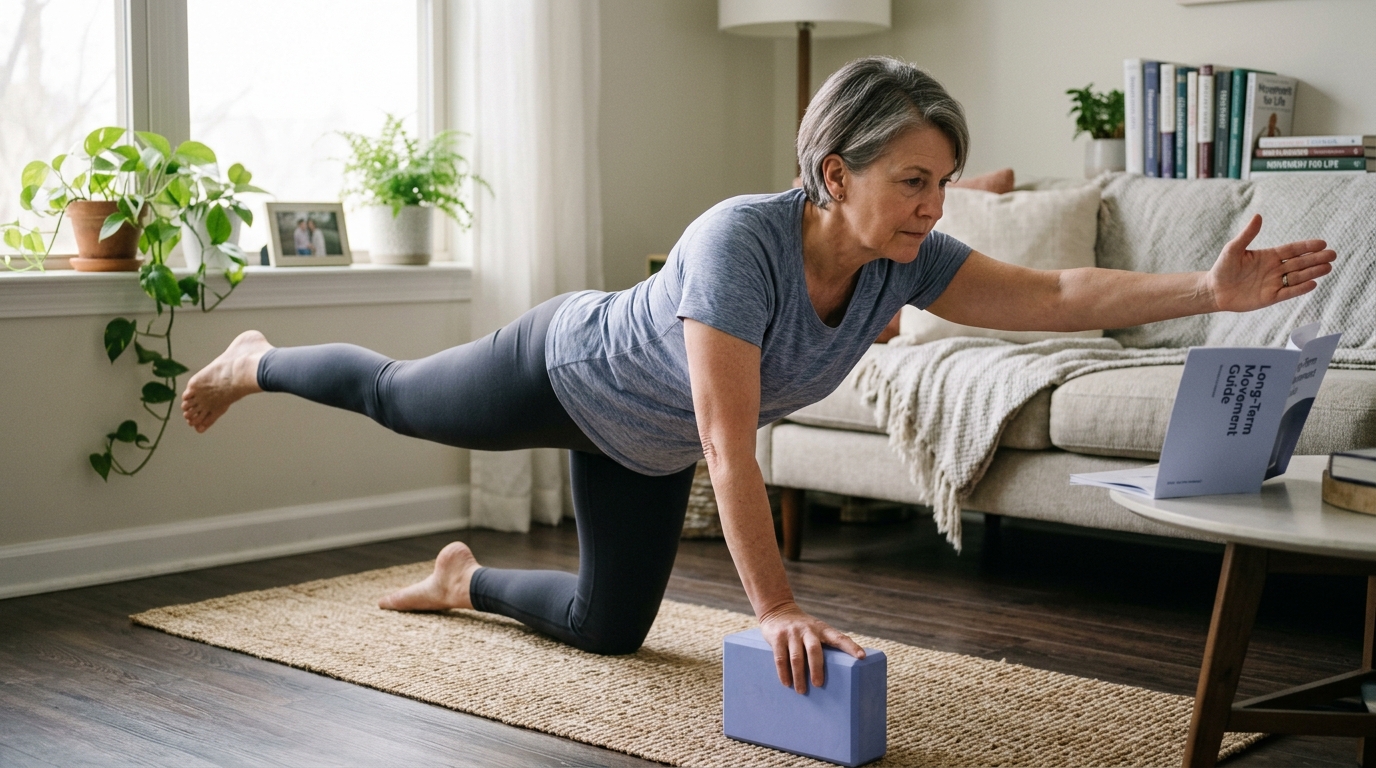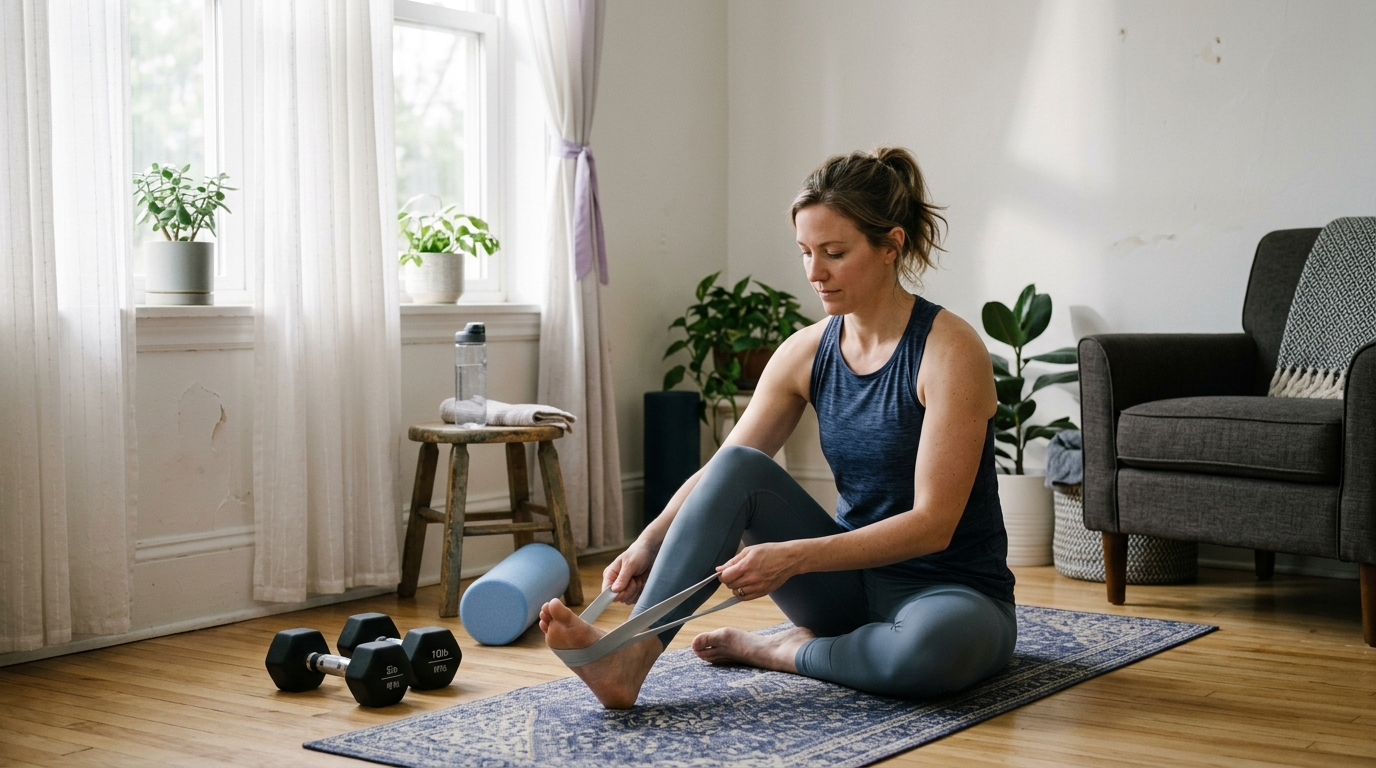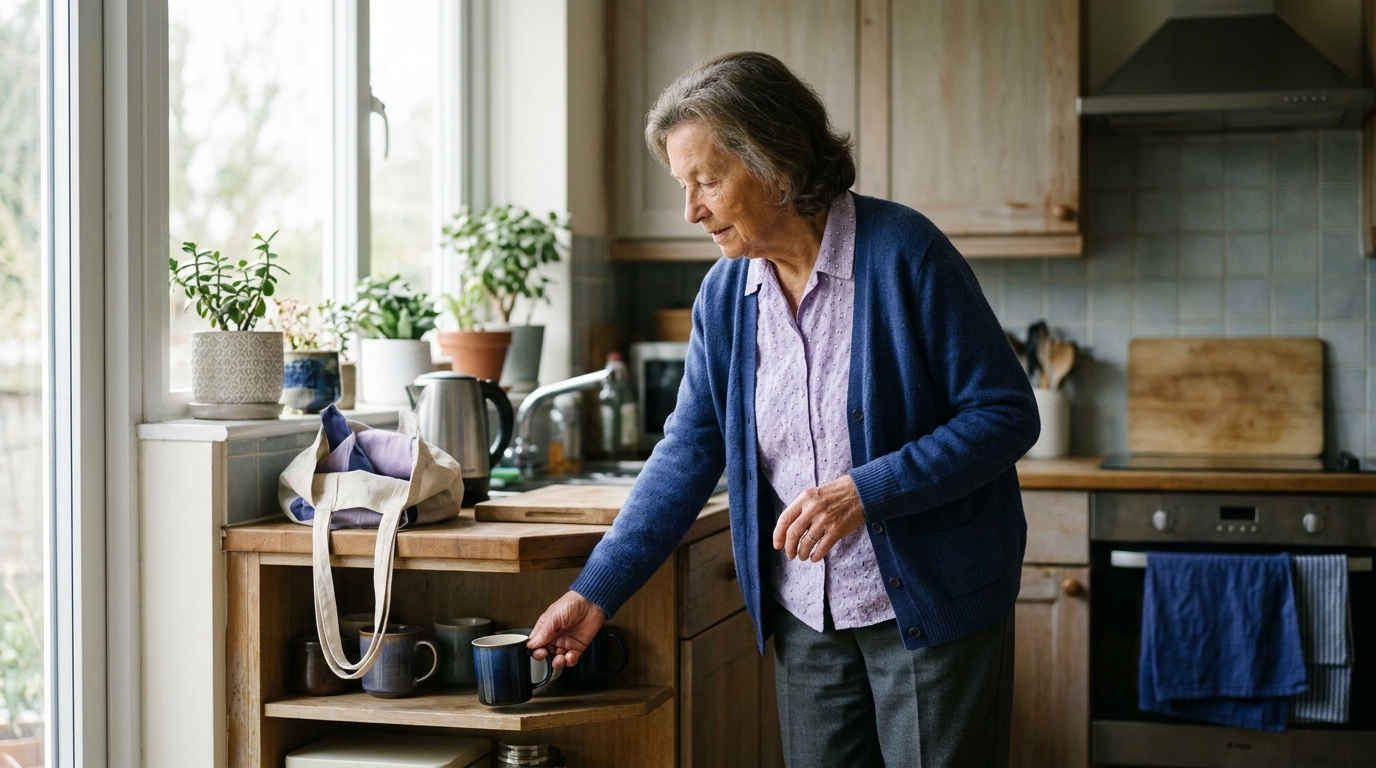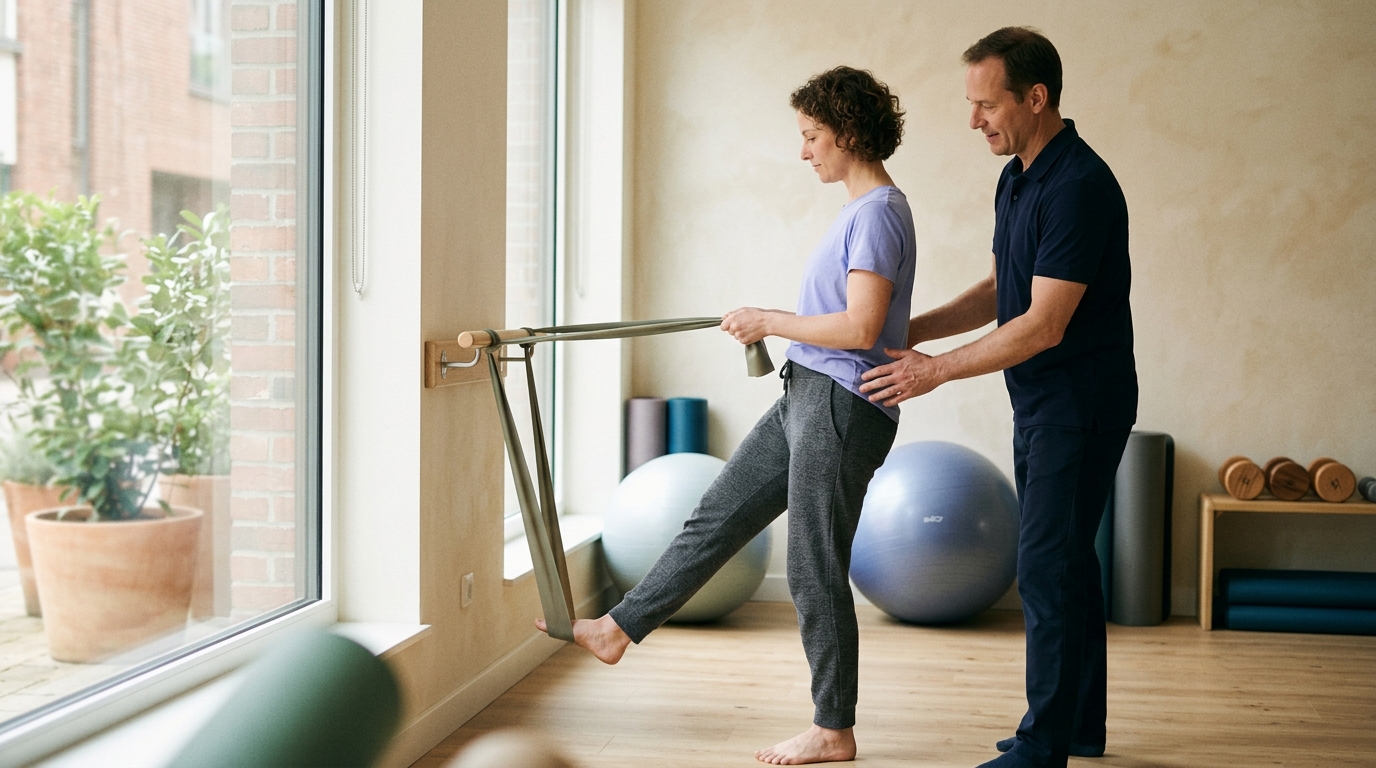

A lower risk of falls and greater everyday stability result from practicing structured balance holds, dynamic movements, and safe progression frameworks.





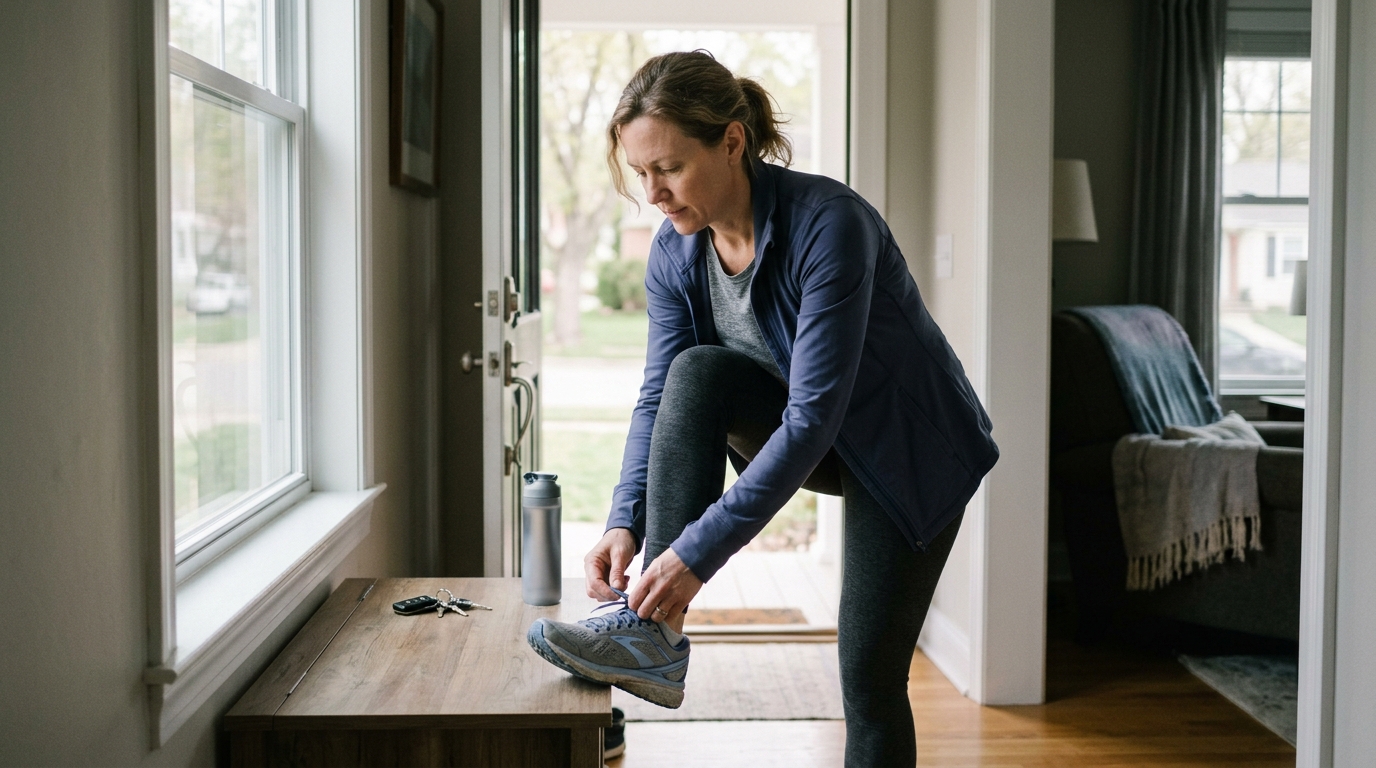
You step off a sidewalk curb onto uneven grass, feel your ankle wobble, and catch yourself on a nearby post. Or perhaps you reach high into an overhead kitchen cabinet while standing on your toes, noticing a sudden wave of unsteadiness. Many people think balance is a single skill that you either have or do not have. They imagine that practicing balance simply means standing motionless on one foot for thirty seconds. In reality, physical stability is a complex system involving multiple sensory inputs, muscular responses, and coordinated joint movements.
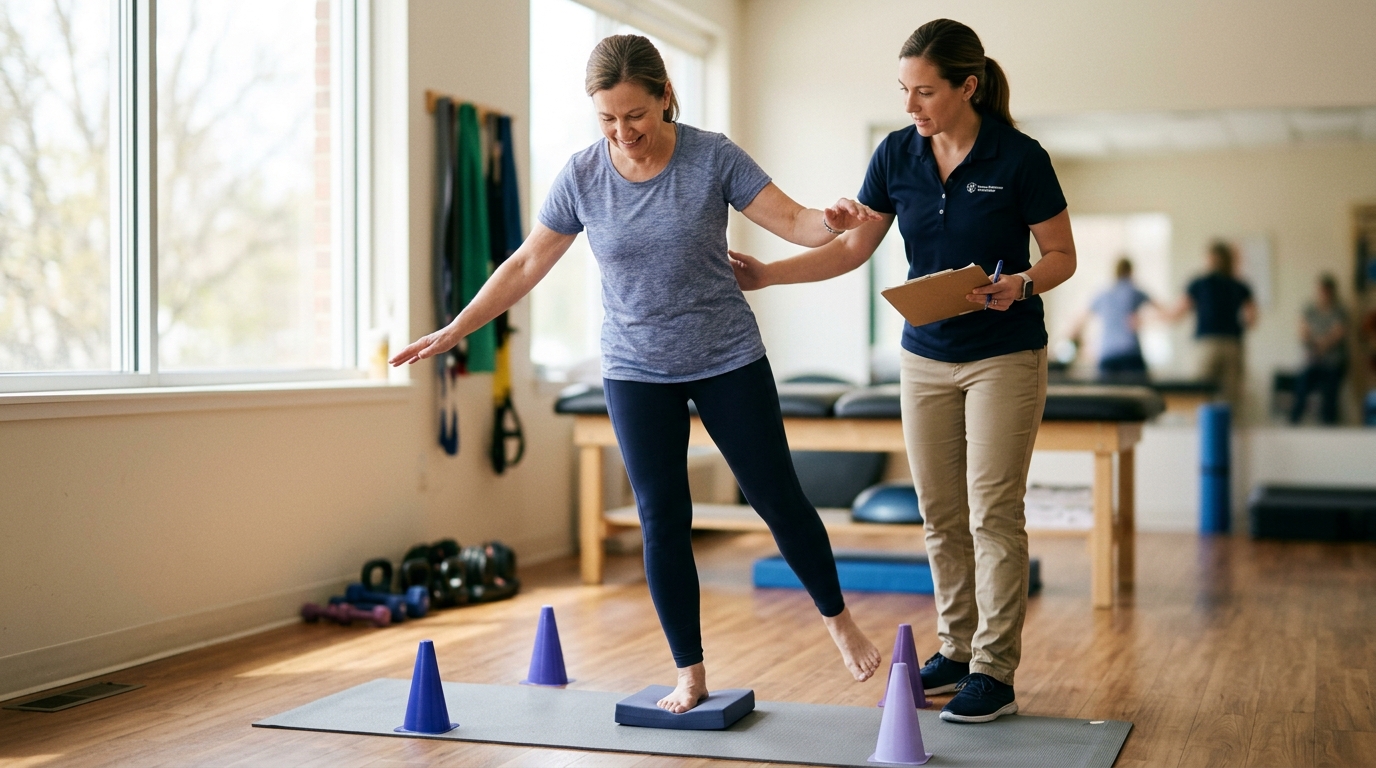
Balance training is a structured method of challenging your body to maintain stability across stationary positions, moving tasks, and unexpected disruptions. A complete balance program combines holding steady stances, shifting your center of mass, stepping in multiple directions, and building leg strength through daily movements like rising from a chair.
The strongest clinical evidence for balance training focuses on community-dwelling older adults and people with an elevated risk of falling. For these groups, structured exercise programs significantly lower the rate of falls and reduce the likelihood of sustaining serious injuries. For younger adults or those recovering from orthopedic setbacks, balance work helps restore joint position awareness and coordination. However, balance training is not a universal shield against every type of accident, and it cannot replace medical care for underlying vestibular, neurological, or cardiovascular conditions.
Understanding the physical impact of falls explains why international health organizations place such a heavy emphasis on balance practice. According to data from the Centers for Disease Control and Prevention (CDC), more than one in four adults aged 65 and older falls each year in the United States. Despite how common these events are, fewer than half of older adults who fall mention the incident to their doctor.
Falls represent the leading cause of injury-related death among older American adults. CDC data indicates that the age-adjusted fall death rate rose 21 percent between 2018 and 2024, climbing from 64.7 to 78.4 deaths per 100,000 older adults. In 2024 alone, falls among adults aged 65 and older caused more than 43,000 deaths and resulted in roughly 4.5 million emergency department visits across the country.
Systematic reviews demonstrate that structured exercise can meaningfully change these numbers. A comprehensive Cochrane review analyzed 39 clinical studies involving nearly 8,000 participants. The researchers found that balance and functional exercise programs reduced the overall rate of falls by 24 percent compared to inactive control groups.
The same Cochrane review evaluated the proportion of individuals who experienced at least one fall during the study periods. Across 37 studies with over 8,200 participants, balance and functional exercise reduced the number of people who fell by 13 percent. It is important to distinguish between these two findings. The rate of falls measures the total number of falls across an entire group over time, while the faller count measures how many individual people had an incident. Both metrics demonstrate high-certainty evidence that balance training protects physical independence.
Global guidelines provide clear parameters for how often adults should practice these movements. The World Health Organization (WHO) recommends that older adults engage in varied, multicomponent physical activity at moderate or greater intensity on three or more days per week. These routines should explicitly emphasize functional balance and strength rebuilding to enhance physical capacity and prevent accidents. WHO evidence summaries indicate that multicomponent programs combining balance, strength, gait, endurance, and physical function can reduce fall rates by up to 23 percent.
The World Falls Guidelines recommend that community-dwelling older adults participate in balance-challenging, functional exercise at least three times per week. These guidelines emphasize that training should last for at least 12 weeks and continue long term for lasting benefits. Some research reviews note that programs delivering three or more total hours of balance and functional work per week achieved a 42 percent reduction in fall rates. However, this three-hour figure represents an observation from pooled study data rather than a rigid rule for every beginner. You can review broader active aging and fall prevention resources to understand how these population targets fit into general healthy longevity routines.
Human balance relies on a continuous feedback loop between your eyes, your inner ear vestibular system, and proprioceptive receptors in your joints and muscles. Your brain processes this sensory information and activates postural muscles to keep your center of mass over your base of support. When any part of this system experiences reduced input or delayed muscular response, you feel unsteady.
To design an effective routine, it helps to break balance down into four functional categories rather than treating it as a single static test.
Static balance refers to your ability to maintain a stationary posture while keeping your feet in place. Examples include standing with your feet together, standing heel-to-toe in a tandem position, or balancing on one leg.
During static holds, your body is never truly rigid. Instead, you experience subtle postural sway as your calf, ankle, and foot muscles make micro-adjustments to keep you upright. Static practice helps you develop baseline confidence and recalibrates joint position sense after periods of inactivity.
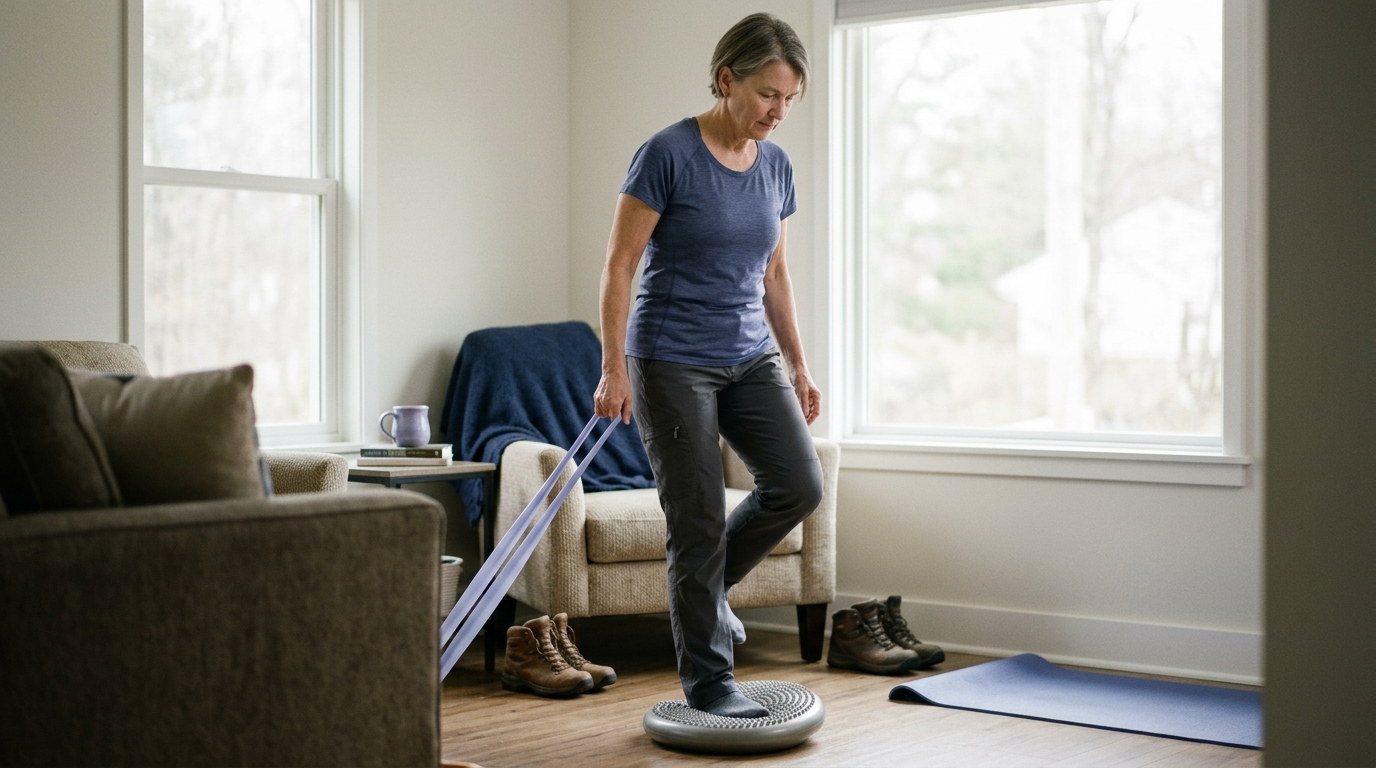
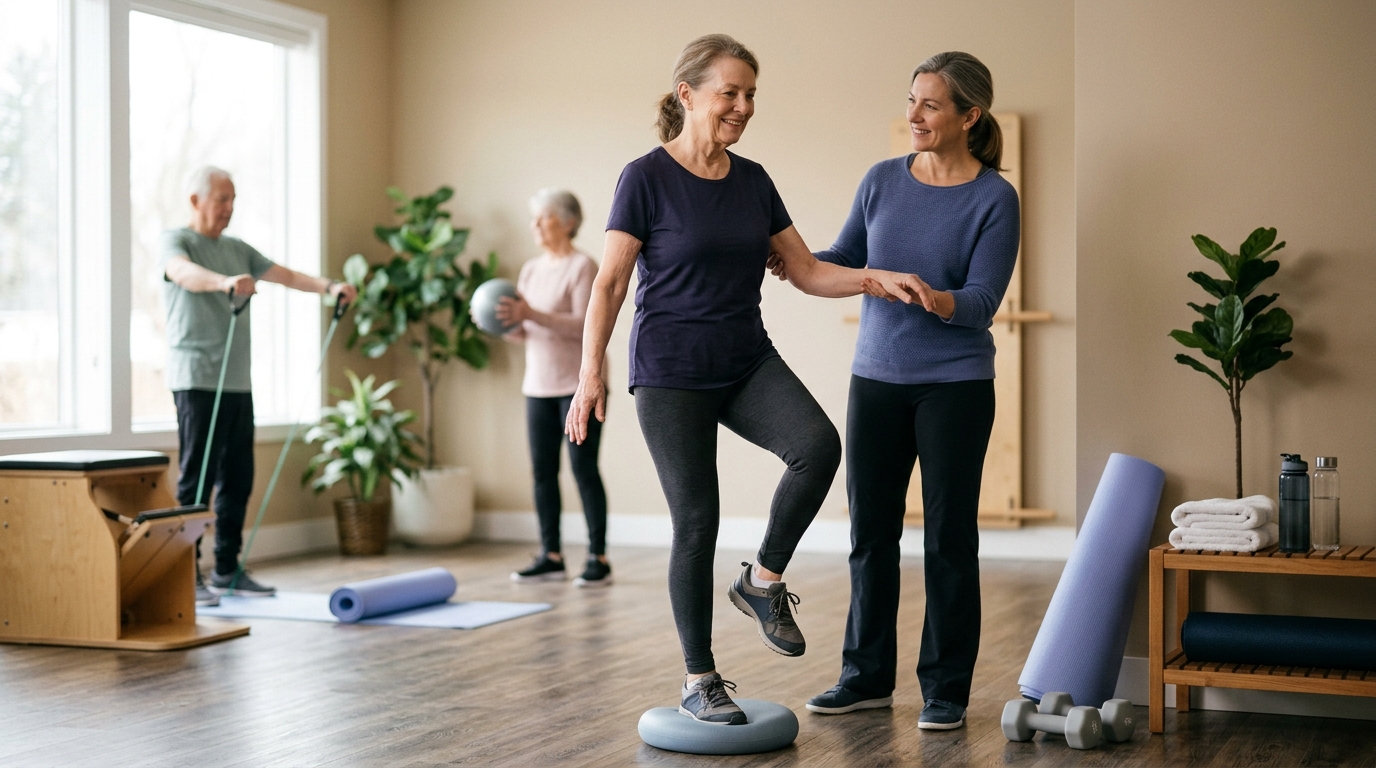
Dynamic balance involves maintaining control over your center of mass while your body is actively moving. This occurs whenever you shift your weight from one leg to the other, march in place, walk along a narrow hallway, or step to the side.
In daily life, most physical challenges are dynamic rather than static. When you carry groceries, walk across a soft lawn, or navigate stairs, your base of support constantly shifts beneath you. Practicing controlled movement teaches your nervous system to coordinate joint stability across the hips, knees, and ankles while in motion.
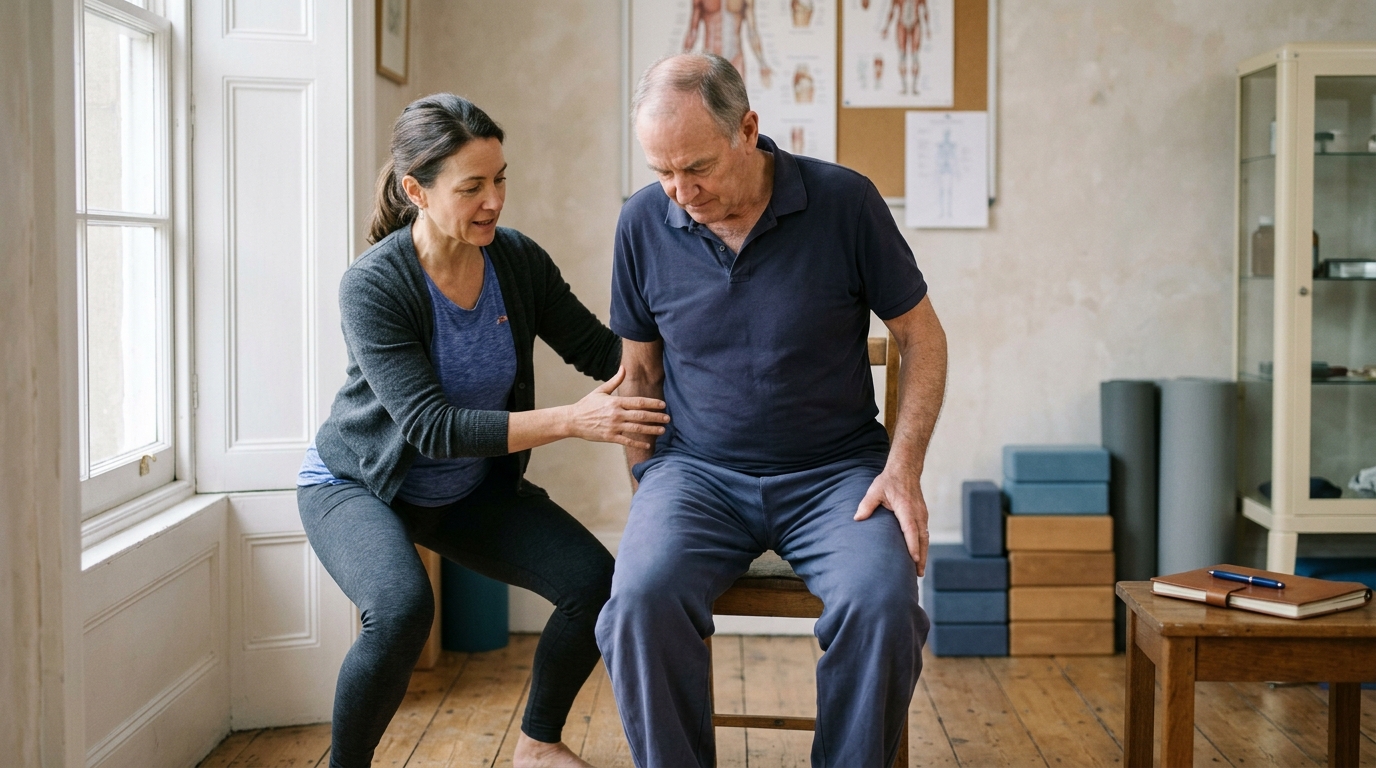
Functional transitions bridge the gap between isolated exercise drills and daily physical tasks. These movements include standing up from a low chair, reaching down to pick up an object from the floor, stepping over obstacles, or turning around in a tight space.
The World Falls Guidelines specifically highlight functional exercises, such as the sit-to-stand motion, as core components of fall reduction programs. These multi-joint patterns build the specific leg strength and movement control required to navigate domestic and community environments safely.
Reactive balance is the ability to recover your footing after an unexpected external disturbance. This happens when you bump into a pet, slip on wet tile, or catch your toe on the edge of a rug.
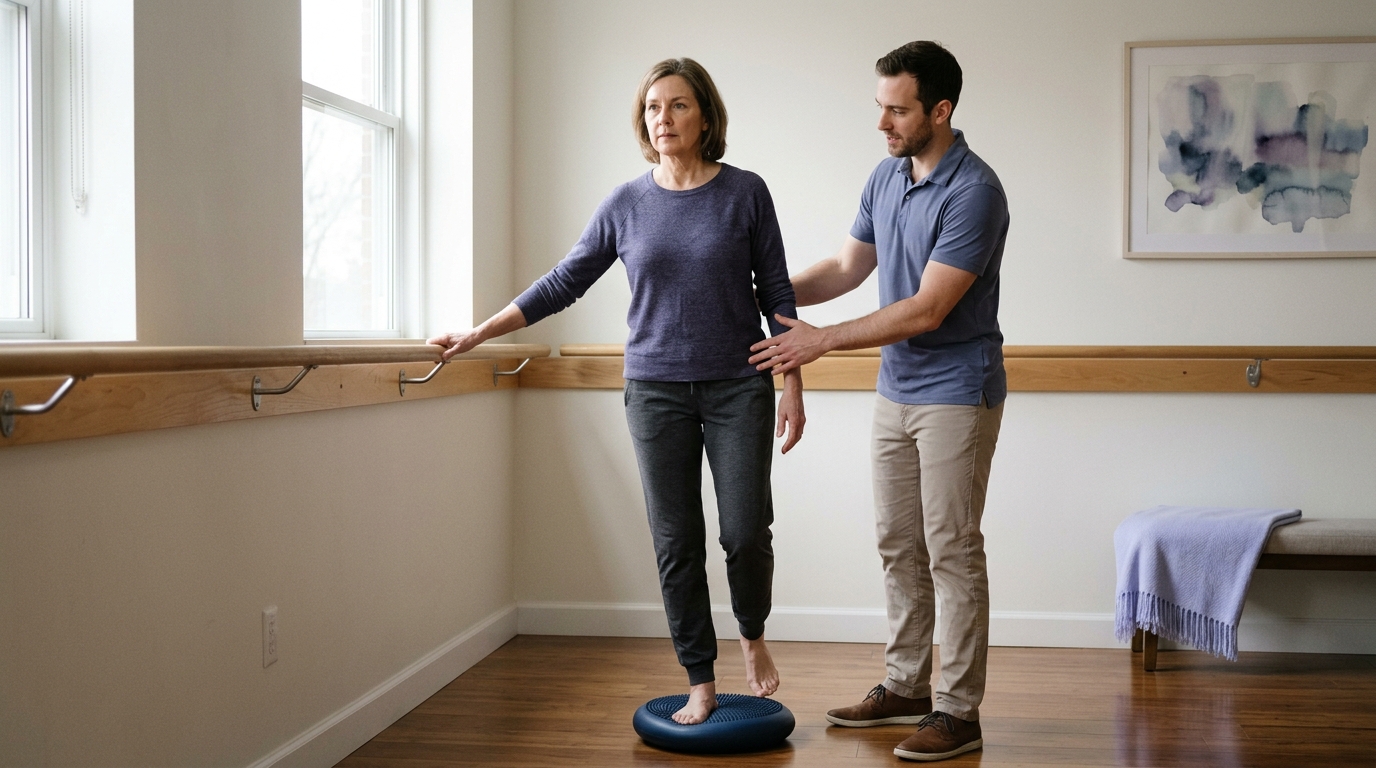
Recovering from a perturbation usually requires a rapid, automatic stepping response or a sudden shift in hip strategy. While dynamic drills improve movement confidence, structured reactive drills involving external pushes require professional guidance to avoid fall risks during practice. For self-directed training, focusing on multidirectional stepping and speed changes provides a safe foundation for reactive capacity. You can learn more about movement mechanics through mobility and movement principles.
Progression in balance training should follow a structured, predictable path. Making an exercise too difficult too quickly increases the likelihood of a loss of balance and discourages consistent practice. The framework below outlines how to systematically advance your training from basic supported stances to complex functional patterns.
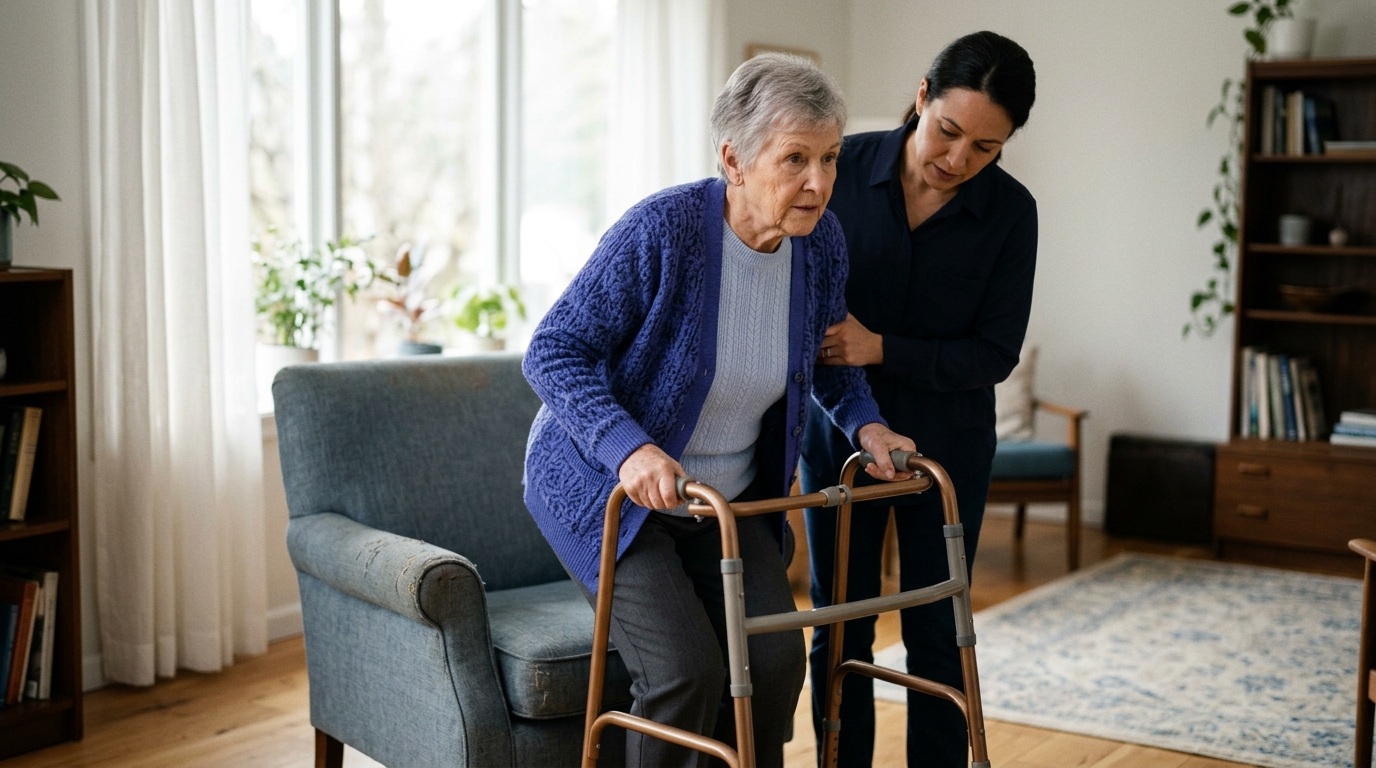
Every balance routine should begin in a controlled environment where stable support is immediately accessible. The National Institute on Aging (NIA) recommends setting up your exercise space near a sturdy chair, a solid kitchen counter, or a clear wall.
Make sure your practice area is free of throw rugs, clutter, and electrical cords. If you feel unsteady at any moment, keep your hands on the support surface. A safe starting point allows you to challenge your balance systems without creating unnecessary anxiety or physical danger.
When you are ready to increase the challenge of a static hold, adjust the position of your feet before removing your hand support. Moving your feet closer together reduces your base of support, forcing your postural muscles to work harder.
Start with a standard parallel stance with your feet shoulder-width apart. Next, bring your feet completely together so your ankles touch. From there, move to a semi-tandem stance, where the instep of one foot touches the big toe of the other. Finally, advance to a full tandem stance, placing one foot directly in front of the other like walking on a tightrope. Keep a light hand touch on your counter or chair throughout these foot position adjustments.
Once you can hold narrow stances steadily with minimal hand support, introduce slow, rhythmic movement. Movement forces your center of mass to travel across your base of support, activating dynamic stabilization pathways.
Begin with simple side-to-side weight shifts, pausing on each leg for two to three seconds. Progress to slow marching in place, lifting your knees to a comfortable height while keeping your hands hovering just above your support surface. You can also incorporate slow heel-to-toe walking along a flat, unobstructed hallway.
Transition practice prepares you for the physical demands of real-world movement. Focus on standing up from a chair without using your arms for assistance, pausing briefly at the top to ensure stability before sitting down under control.
Incorporate directional changes into your walking practice. Walk four steps forward, pause, turn slowly in a wide circle, and walk back to your starting point. Practice stepping sideways over an imaginary line on the floor to improve lateral hip control and coordination.
A fundamental rule of balance programming is to adjust only one variable at a time. If you decide to narrow your stance, keep your hands near a sturdy support and keep your eyes open. If you decide to practice an exercise with less hand support, keep your feet in a wider, more stable position.
Never combine multiple new challenges simultaneously, such as standing on one leg on an unstable foam cushion with your eyes closed. Stacking difficulty factors increases fall risk and makes it impossible to determine which element caused instability.
Balance adaptations require repetitive neurological conditioning and steady strength gains. The World Falls Guidelines and WHO recommendations emphasize that balance-
focused exercise should occur at least three days per week for a minimum of 12 weeks.
Consistency over months leads to durable improvements in functional stability. Stopping balance exercises entirely often leads to a gradual decline in stability, meaning long-term maintenance is essential for preserving physical independence.
The exercises below represent practical movements recommended by organizations like the NIA, the National Health Service (NHS), and the World Falls Guidelines. Each exercise includes detailed setup instructions, coaching cues, and methods for making the movement easier or harder.
This exercise targets static balance by reducing your lateral base of support while keeping your hands close to a secure surface.
To make this exercise easier, separate your feet by two to three inches so you have a slightly wider base. Place your full palms flat on the counter for firmer support.
To increase the challenge, reduce your hand contact from a full palm grip to light fingertips, then to a single fingertip, and eventually hover your hands an inch above the surface. You can also progress to a semi-tandem stance by placing one foot slightly ahead of the other.
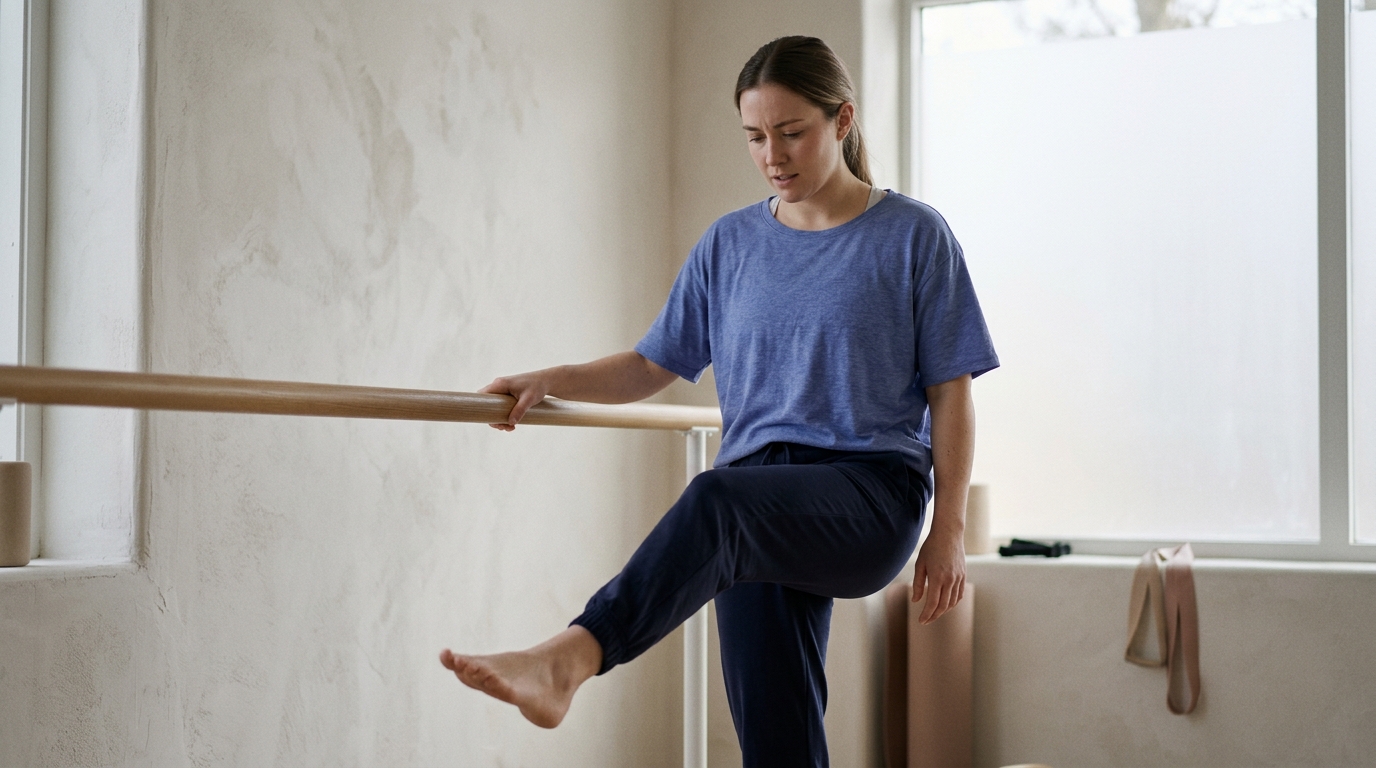
Single-leg standing builds ankle stability, strengthens lateral hip muscles like the gluteus medius, and improves single-limb weight bearing.
If single-leg standing feels too difficult, keep the toes of your lifted foot lightly touching the floor behind you like a kickstand. This maintains partial weight on the front leg while providing a quick safety net.
To advance the exercise, gradually lighten your hand grip on the support surface. Once you can hold the position steadily with hovering hands, try looking slowly from left to right to challenge your visual balance inputs.
Tandem positioning narrows your lateral base of support to a single line, challenging your forward and backward postural sway control.
To reduce the difficulty of tandem walking, leave a two-inch gap between your front heel and rear toes, or walk with a slightly wider stance like walking on parallel train tracks rather than a tightrope. Keep one hand gliding along a wall for constant stability.
To increase the challenge, pause for two full seconds on each step while holding the tandem position before taking the next step. Ensure you maintain an upright posture and avoid looking down at your feet throughout the movement.
Lateral movement strengthens the hip abductors and improves dynamic control during sideways weight transfers.
To make side-stepping easier, take smaller steps of six to eight inches and keep both hands firmly placed on the support surface. Perform the movement at a slow, deliberate pace without rushing.
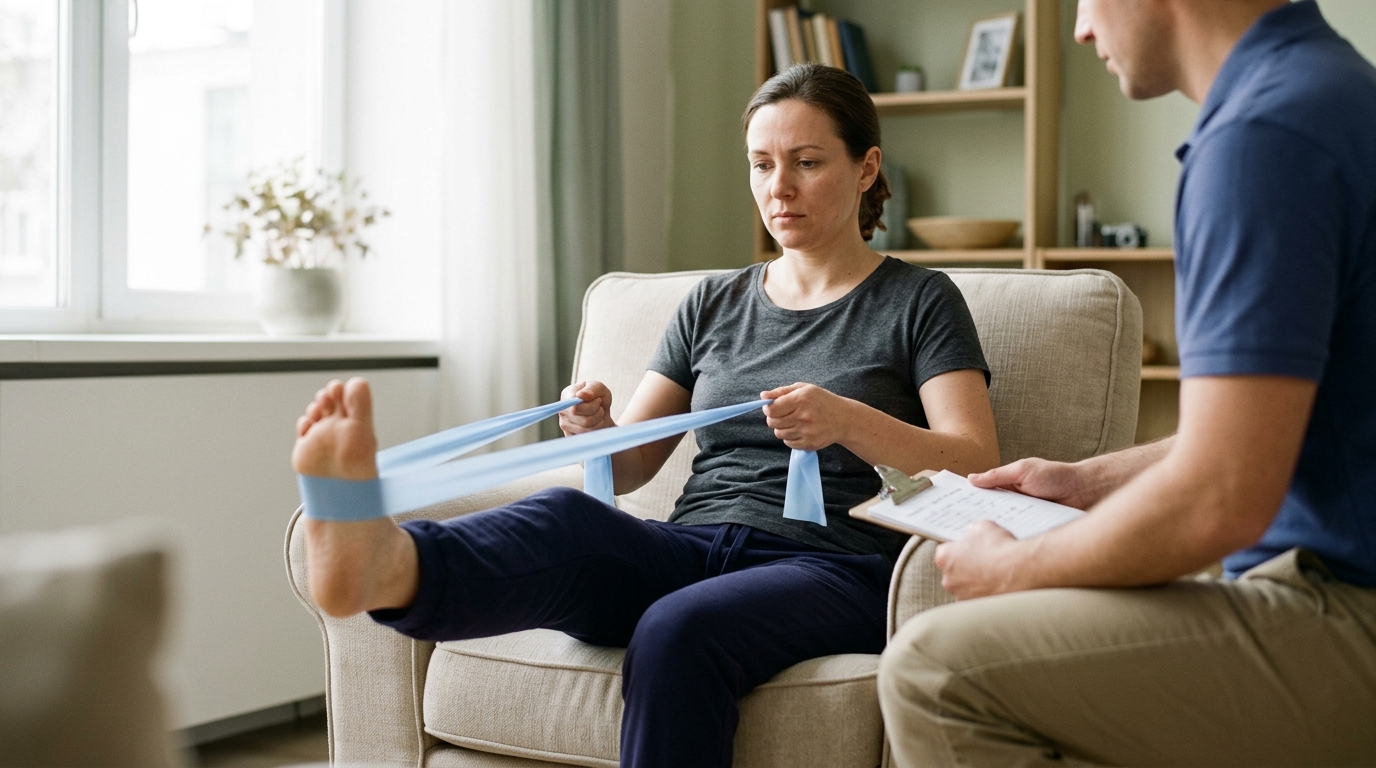
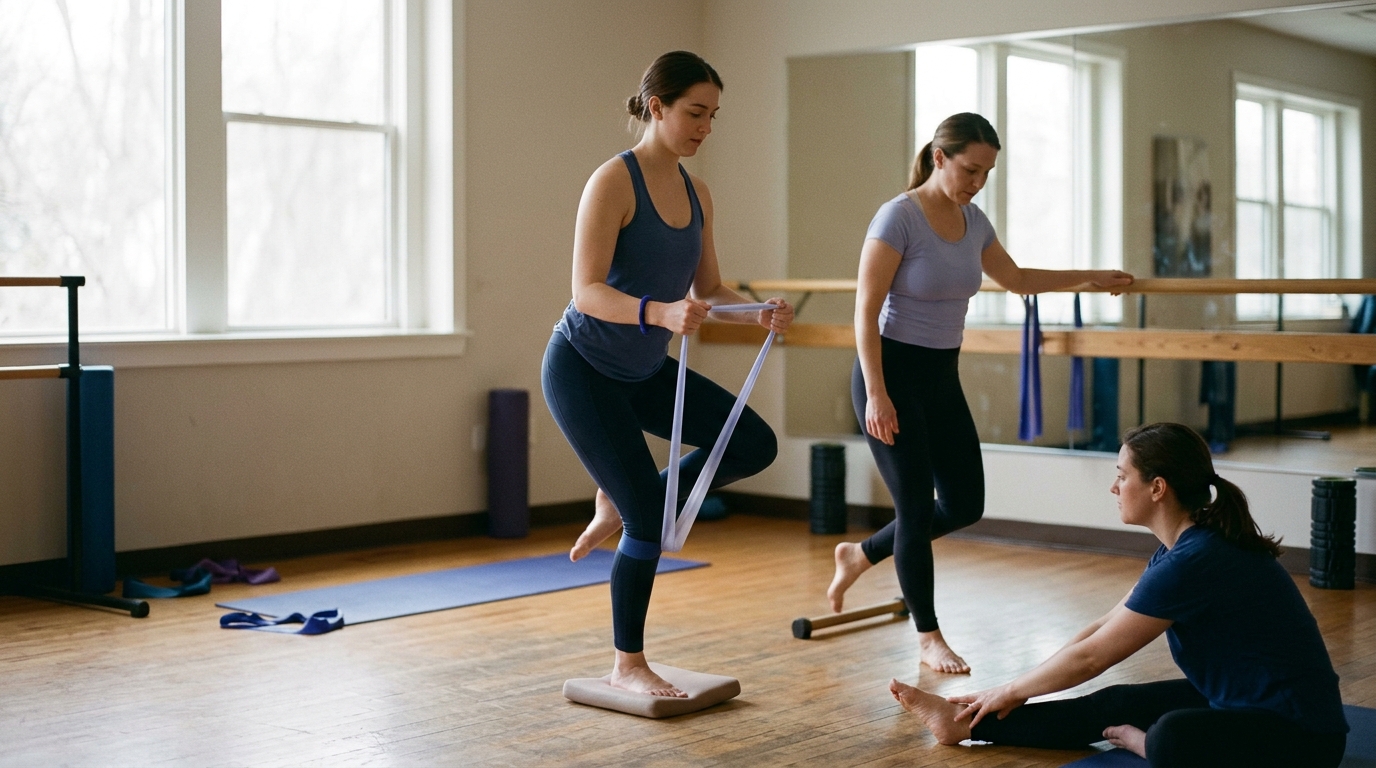
To make side-stepping harder, loop a light resistance band around your lower thighs just above your knees, or perform the exercise across a clear open room while hovering your hands near your sides. For more exercise variations focused on active aging, review these injury prevention resources.
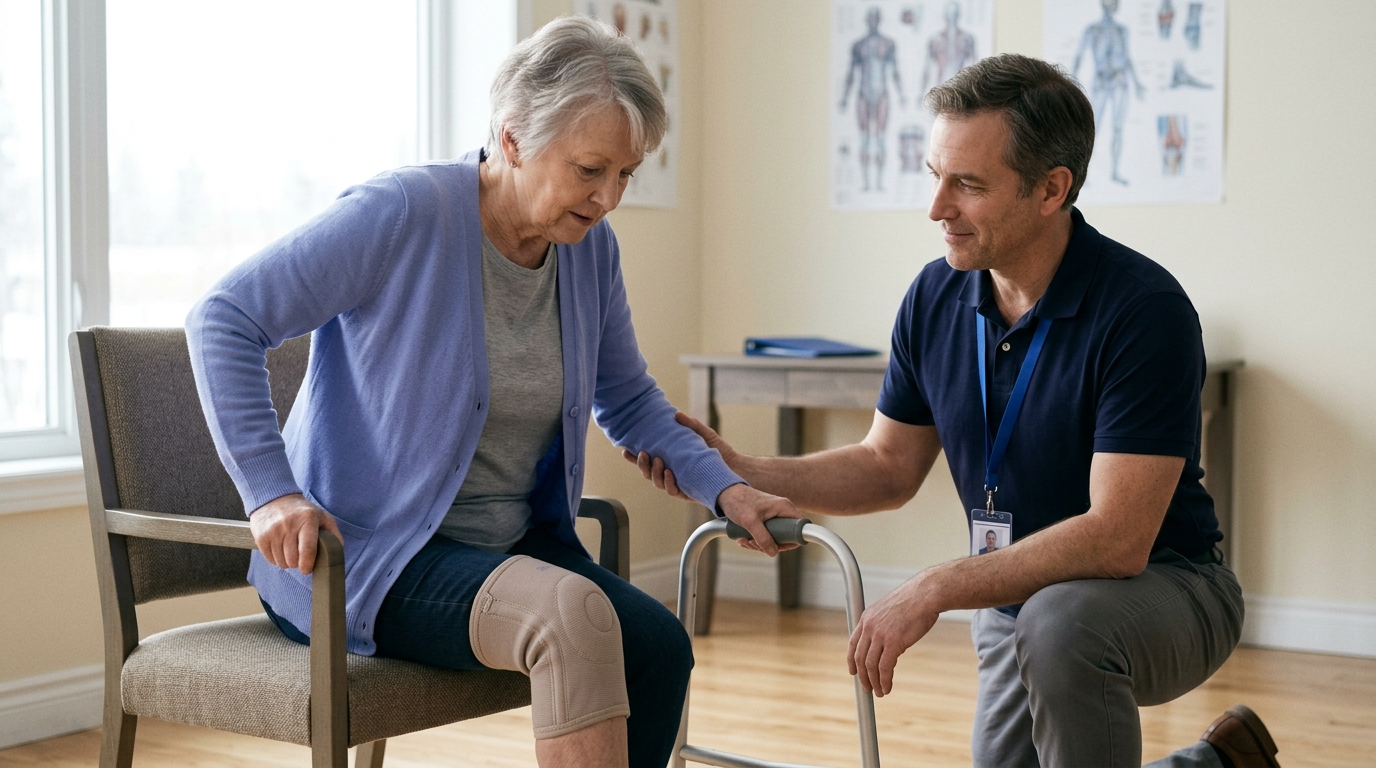
The sit-to-stand movement is a fundamental functional strength and balance exercise. It targets quadriceps, gluteal, and core strength while challenging balance during a large center-of-mass shift.
To simplify the sit-to-stand, place a firm cushion on the chair seat to raise the starting height by two to three inches. You can also push off the chair armrests or your thighs with your hands to assist the upward movement.
To advance the movement, cross your arms across your chest so your legs perform all the work. You can also slow down the lowering phase, taking three to four seconds to return to the chair seat.
Combining balance drills with light resistance and movement control reflects real-world physical demands. The table-free outline below provides an illustrative multicomponent session structure that can be adapted based on individual capability:
Maintaining a safe practice environment is the most important part of any balance routine. The goal of balance training is to stimulate your balance systems without causing an actual fall. Following established safety guidelines protects you from avoidable accidents.
Set up your exercise area in a well-lit room with clear pathways. Remove all loose throw rugs, pet toys, furniture corners, and loose cords from the floor. Practice on a firm, level surface rather than thick carpeting or uneven outdoor terrain.
Keep a sturdy, non-rolling support object within arm reach at all times. A heavy dining room chair, a solid kitchen countertop, or a clear hallway wall provides immediate security if you experience a sudden loss of stability.
Many people mistakenly believe that using hand support ruins the effectiveness of a balance exercise. In reality, hand support is a valuable tool for fine-tuning exercise intensity. Placing two hands, one hand, or a single fingertip on a counter allows you to practice challenging foot positions safely.
Using support builds movement confidence and allows your postural muscles to adapt without causing panic. As your stability improves, you can gradually reduce hand pressure, transitioning from a full grip to a light finger touch over several weeks.
Always practice in supportive, flat shoes with non-skid rubber soles. Avoid practicing in loose slippers, smooth-soled dress shoes, or standard socks on hardwood or tile surfaces, as these significantly increase slip hazards.
If you prefer to practice barefoot, ensure you are standing on a clean, non-slip exercise mat that provides adequate grip. Keep your practice area dry and free of moisture or spilled liquids.
Pay close attention to your body during exercise. The NHS and NIA recommend stopping balance practice immediately if you experience dizziness, lightheadedness, chest discomfort, shortness of breath, or sudden joint pain.
Mild muscle fatigue in your calves and hips is normal during balance training. However, feeling lightheaded or unsteady indicates that you should sit down in a secure chair, rest, and hydrate before continuing.
The rate at which balance improves varies significantly from person to person. Several individual factors influence baseline stability, exercise tolerance, and the time required to build lasting coordination.
Prior injuries to the ankles, knees, hips, or spine can alter how your body senses joint position. Conditions like osteoarthritis, joint replacements, or chronic ankle instability often reduce joint mobility and delay muscular reflexes.
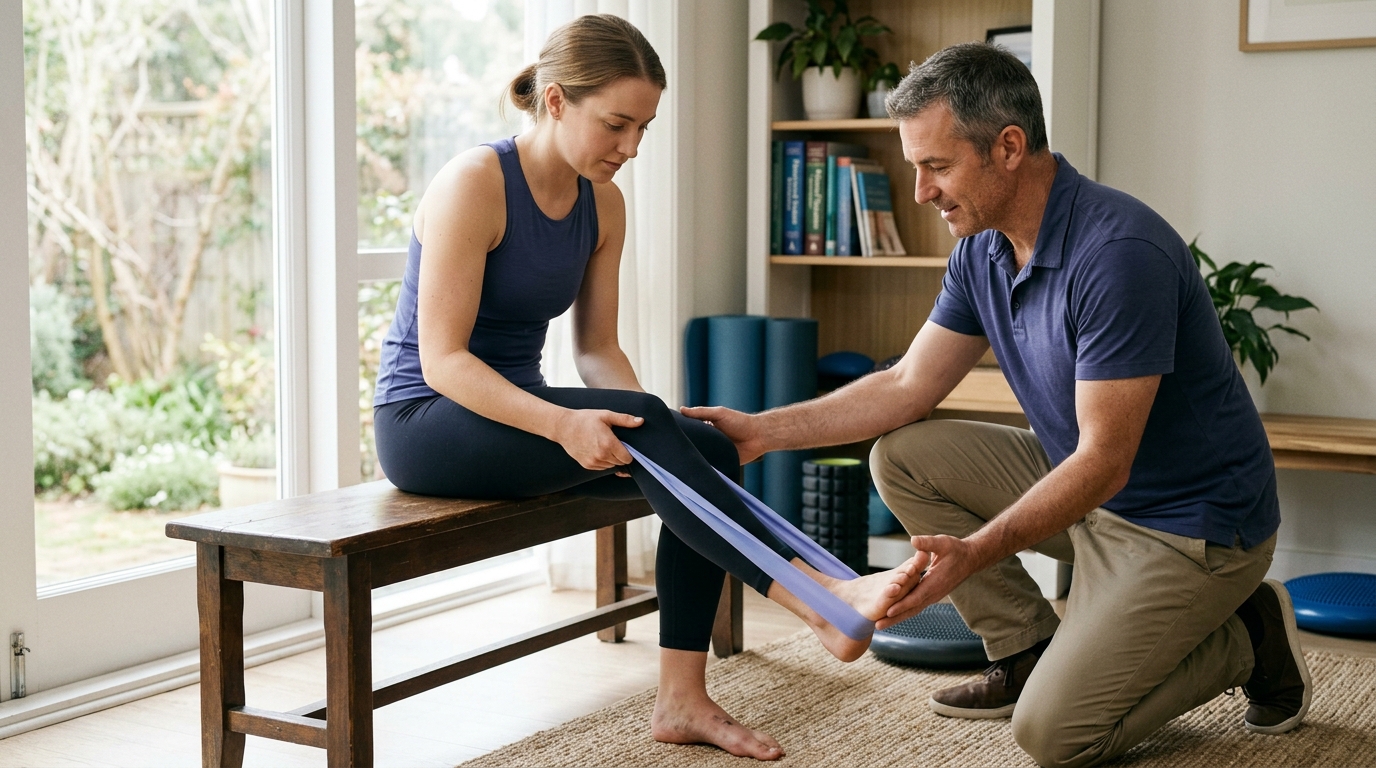
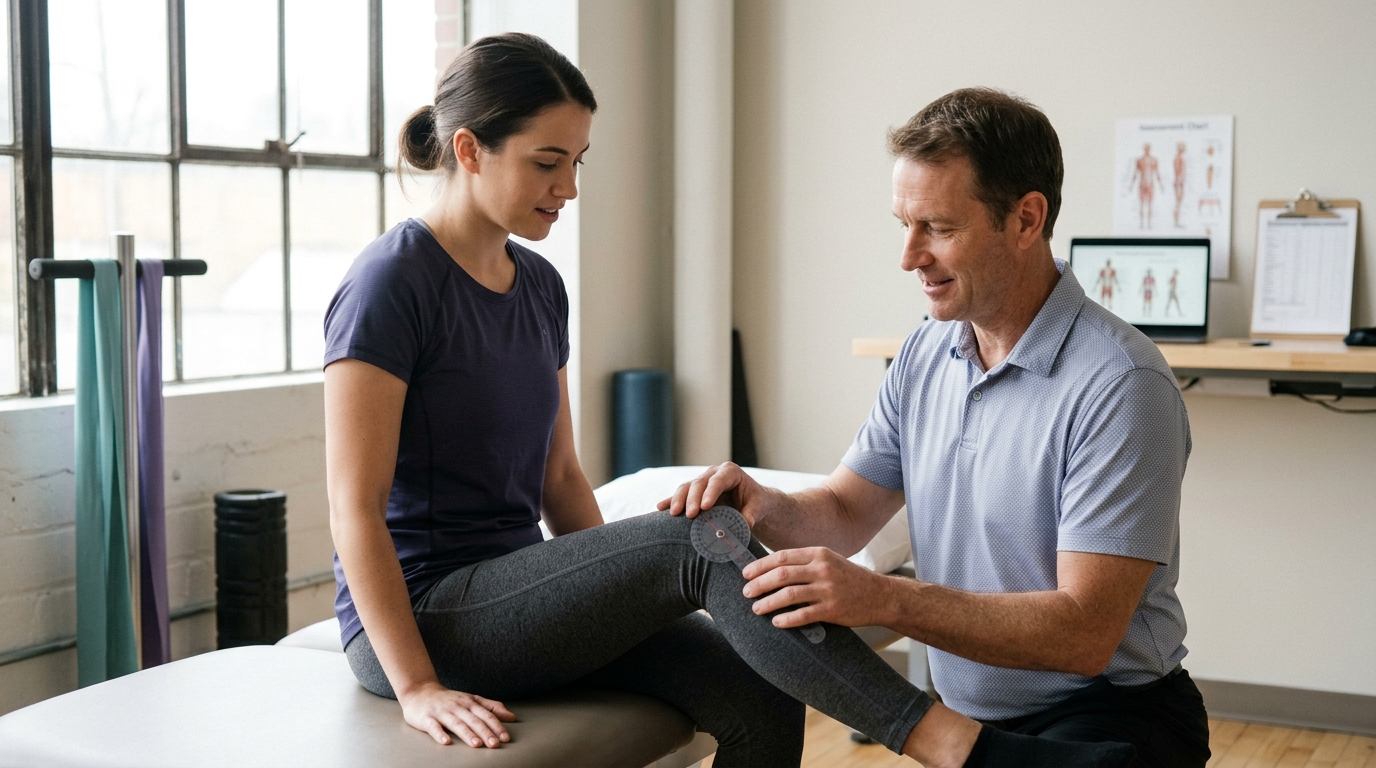
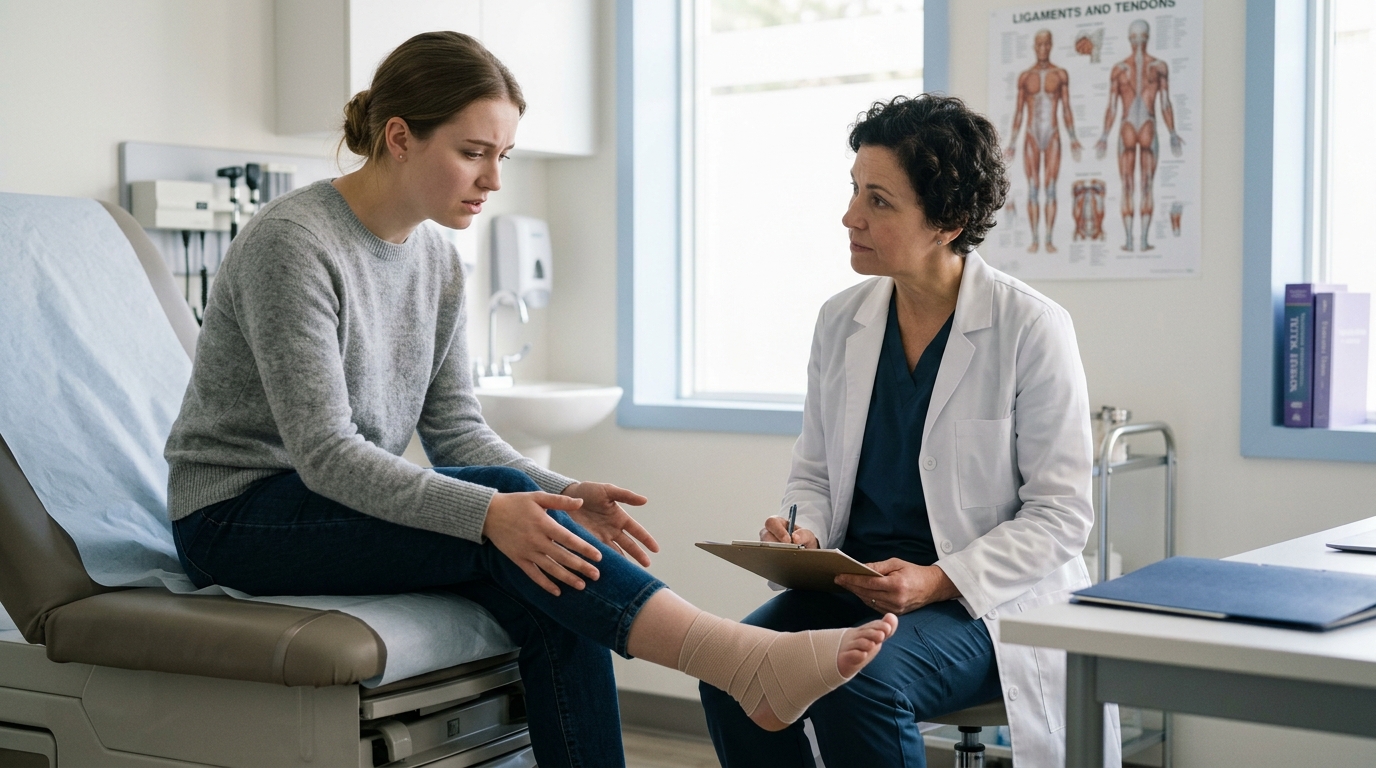
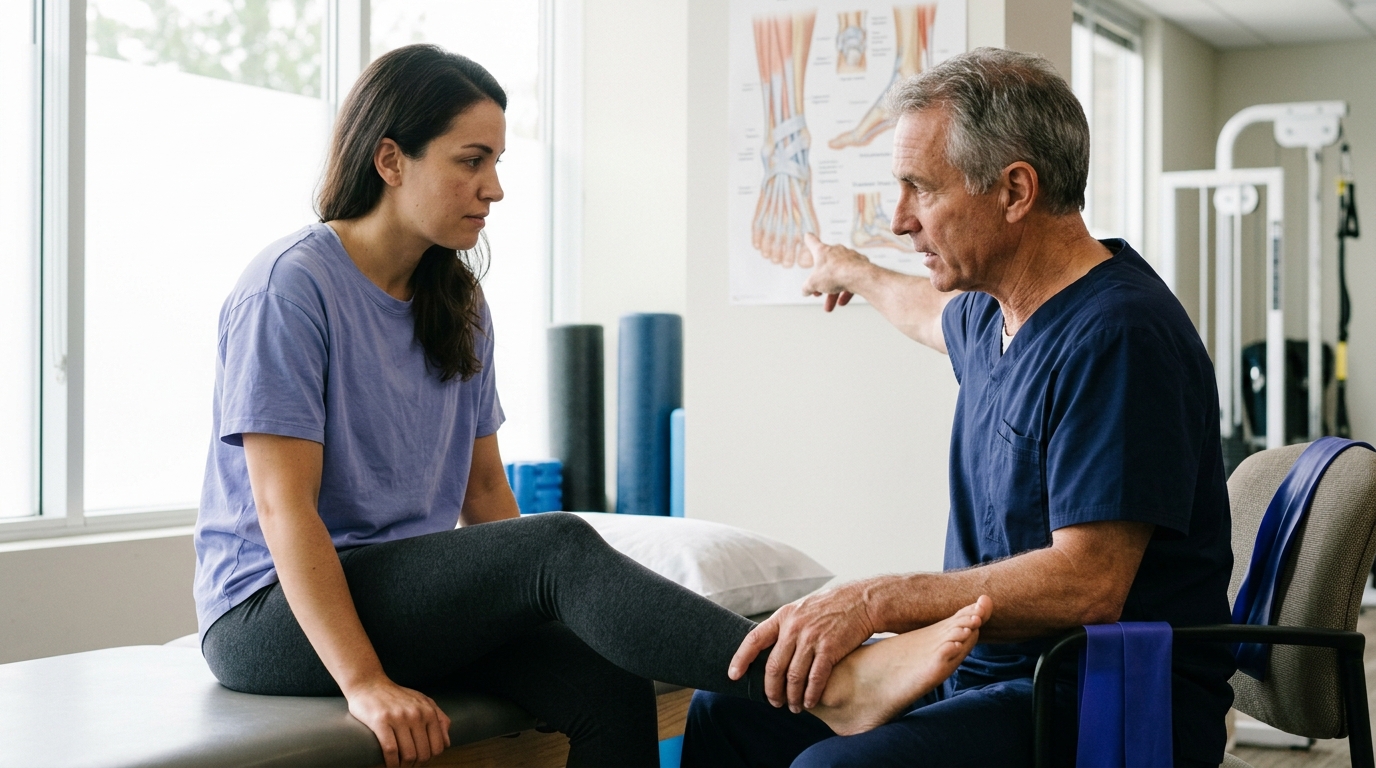
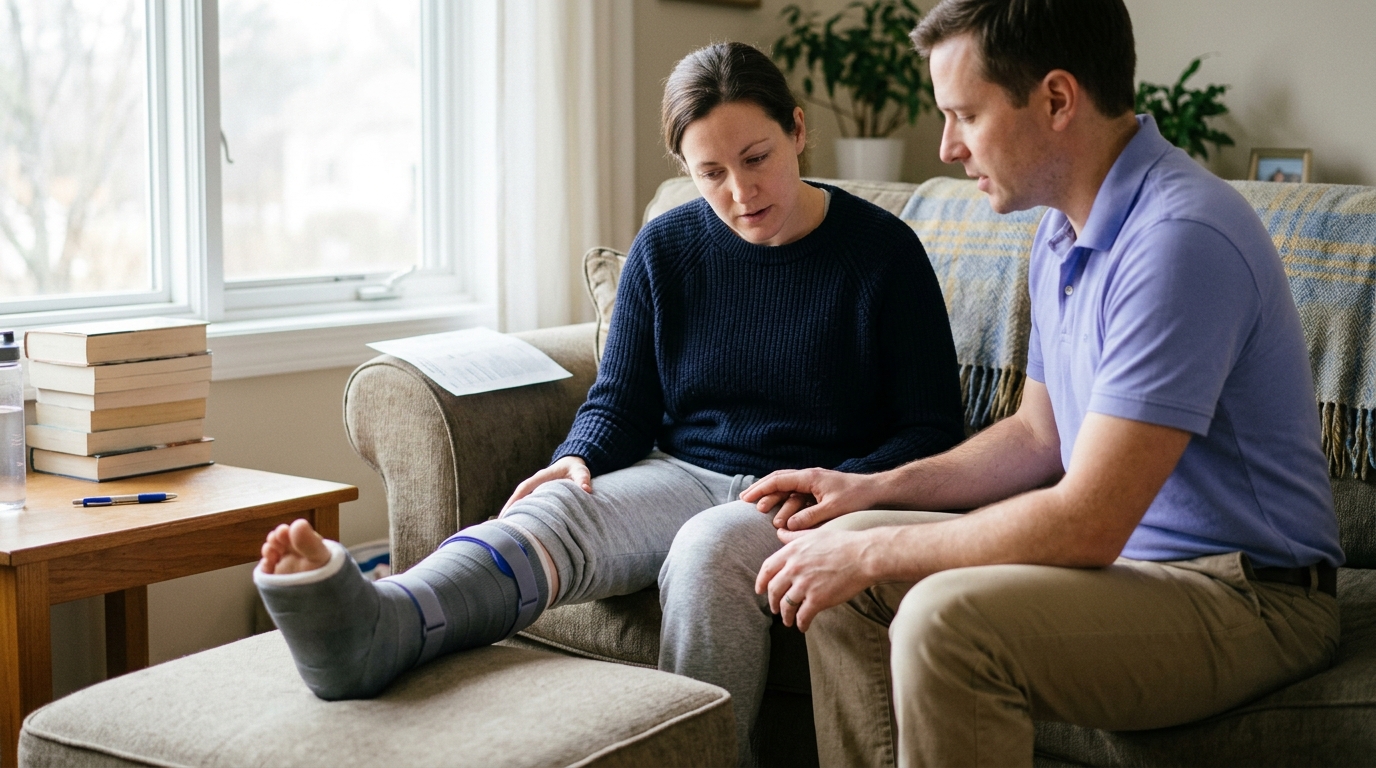
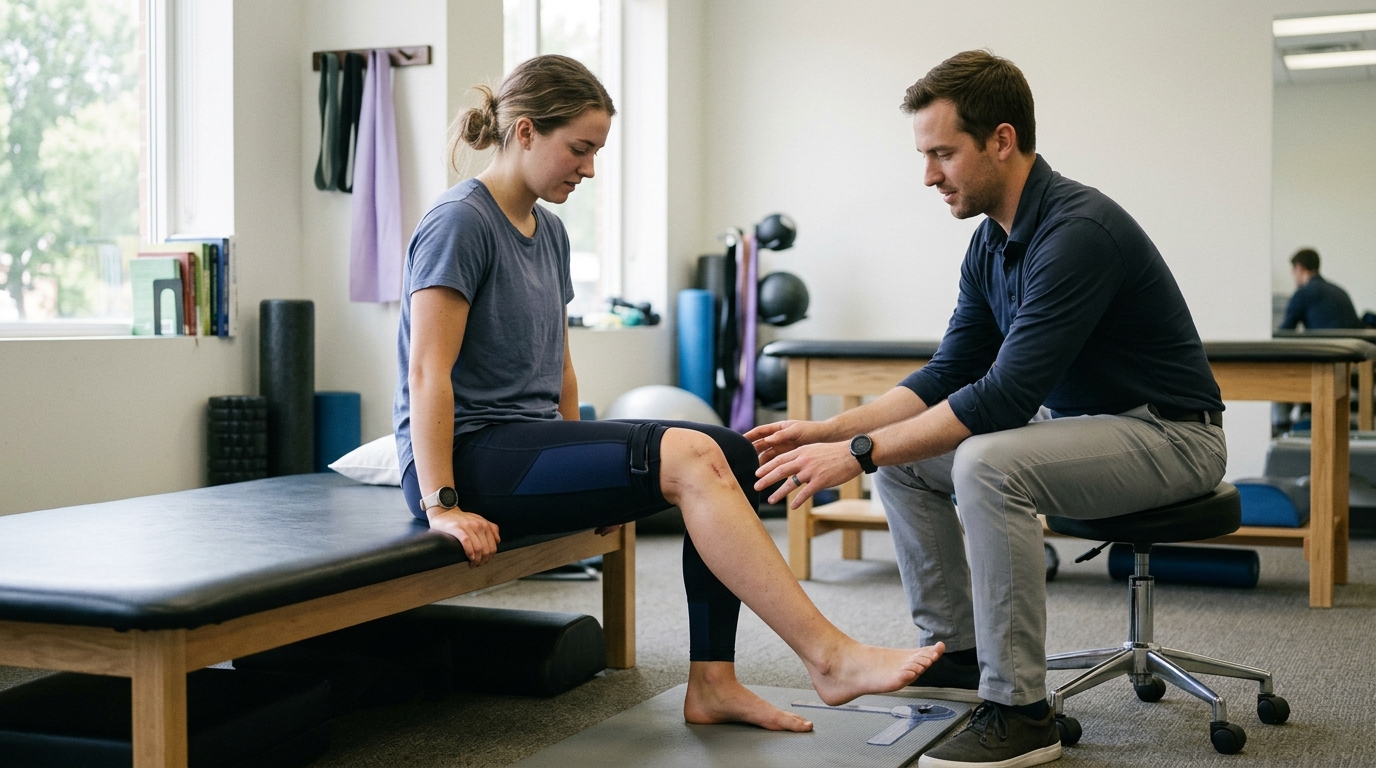
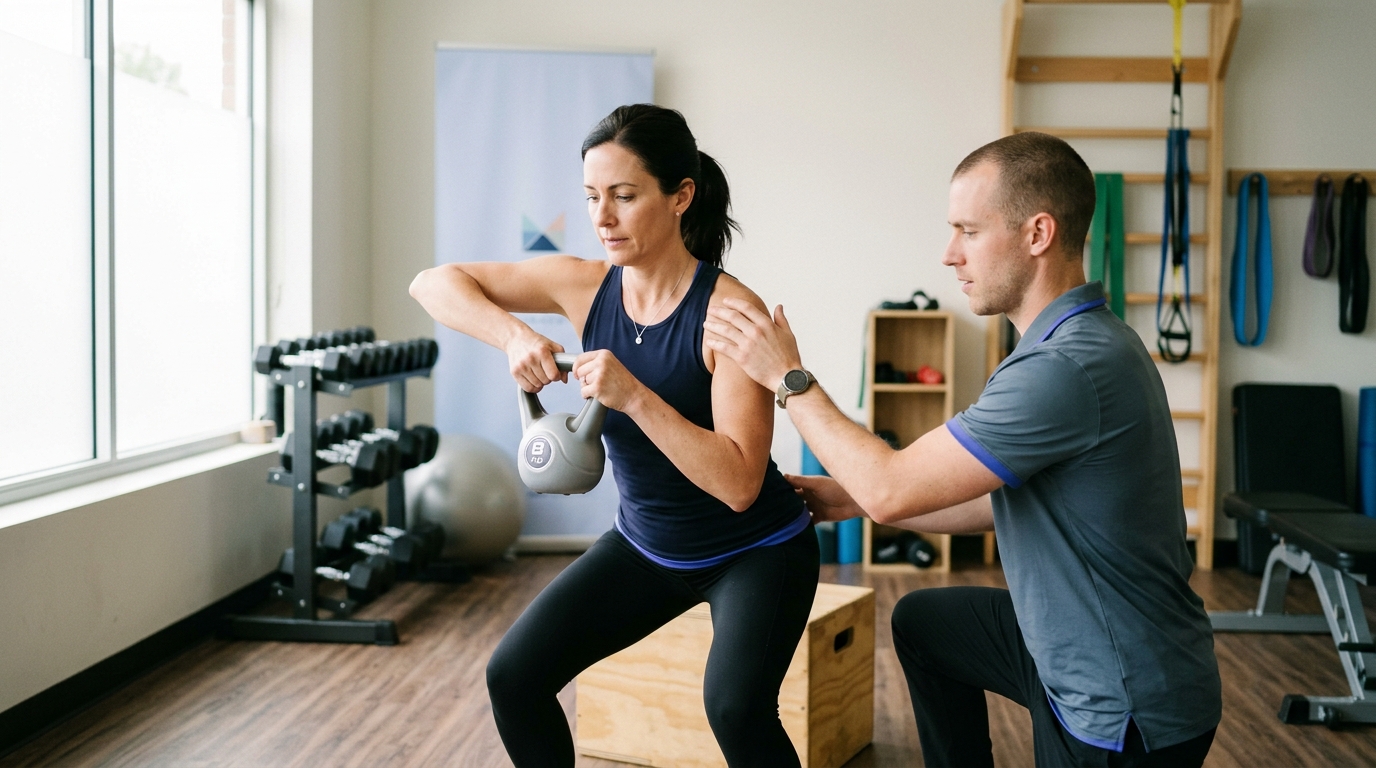
People recovering from lower extremity surgery often require targeted rehabilitation and mobility resources before advancing to complex balance challenges. Restoring basic range of motion and joint stability creates the necessary foundation for balance progressions.
Your balance depends directly on the quality of sensory signals reaching your brain. Conditions like peripheral neuropathy reduce sensation in the soles of your feet, making it harder to detect changes in floor texture or foot position.
Inner ear disorders, such as benign paroxysmal positional vertigo (BPPV) or vestibular hypofunction, disrupt spatial orientation and head movement control. Vision changes, including cataracts, glaucoma, or wearing bifocal lenses while walking, also alter balance. When sensory inputs are impaired, balance training requires careful environmental adjustments and supervised progression.
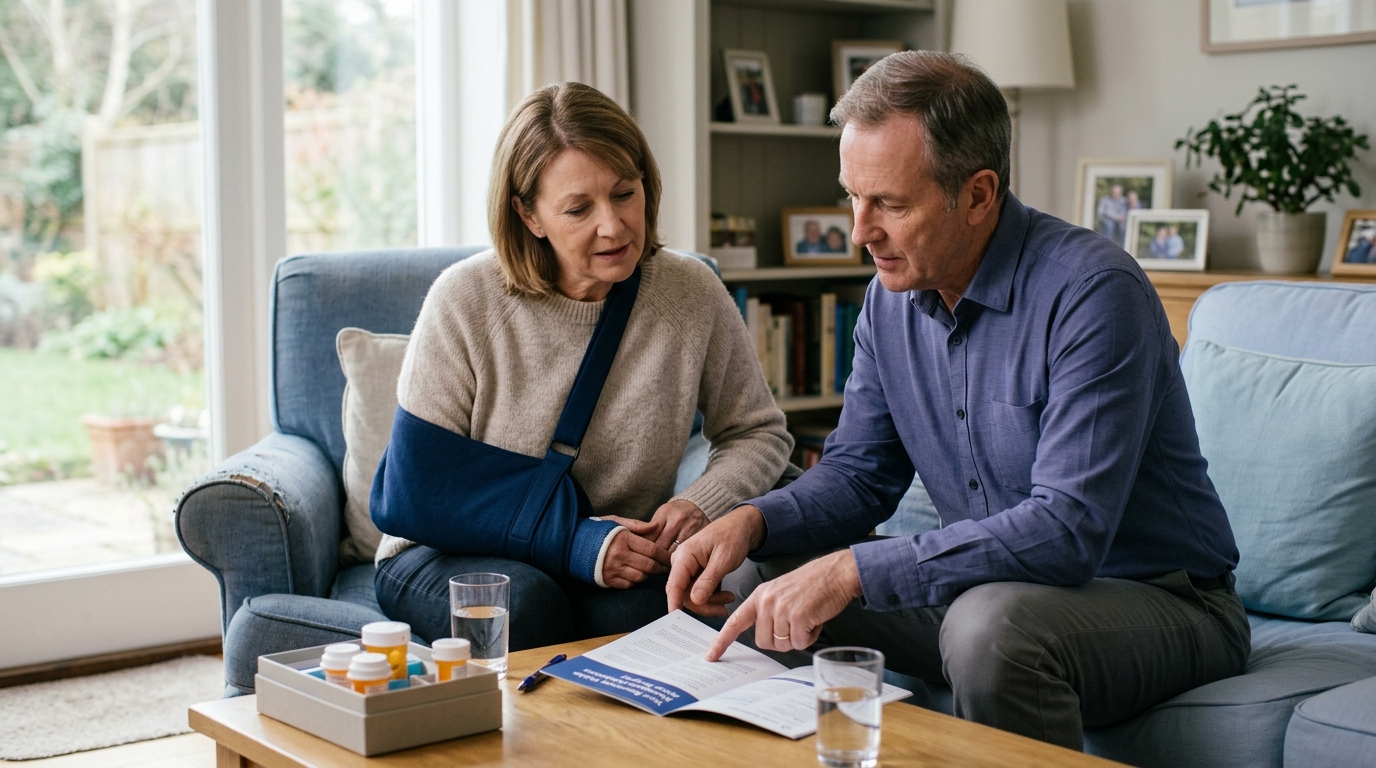
Many common medications influence physical stability, blood pressure regulation, and alertness. Blood pressure medications, sedatives, antidepressants, sleep aids, and muscle relaxants can cause orthostatic hypotension, drowsiness, or delayed reaction times.
Taking multiple prescription medications simultaneously increases the risk of drug interactions that affect balance. If you notice increased unsteadiness after starting or changing a medication, discuss these symptoms with your prescribing physician.
Balance cannot function effectively without adequate muscular strength. If your quadriceps, gluteal muscles, and calf complex lack the capacity to support your body weight, balance strategies will fail during sudden movements.
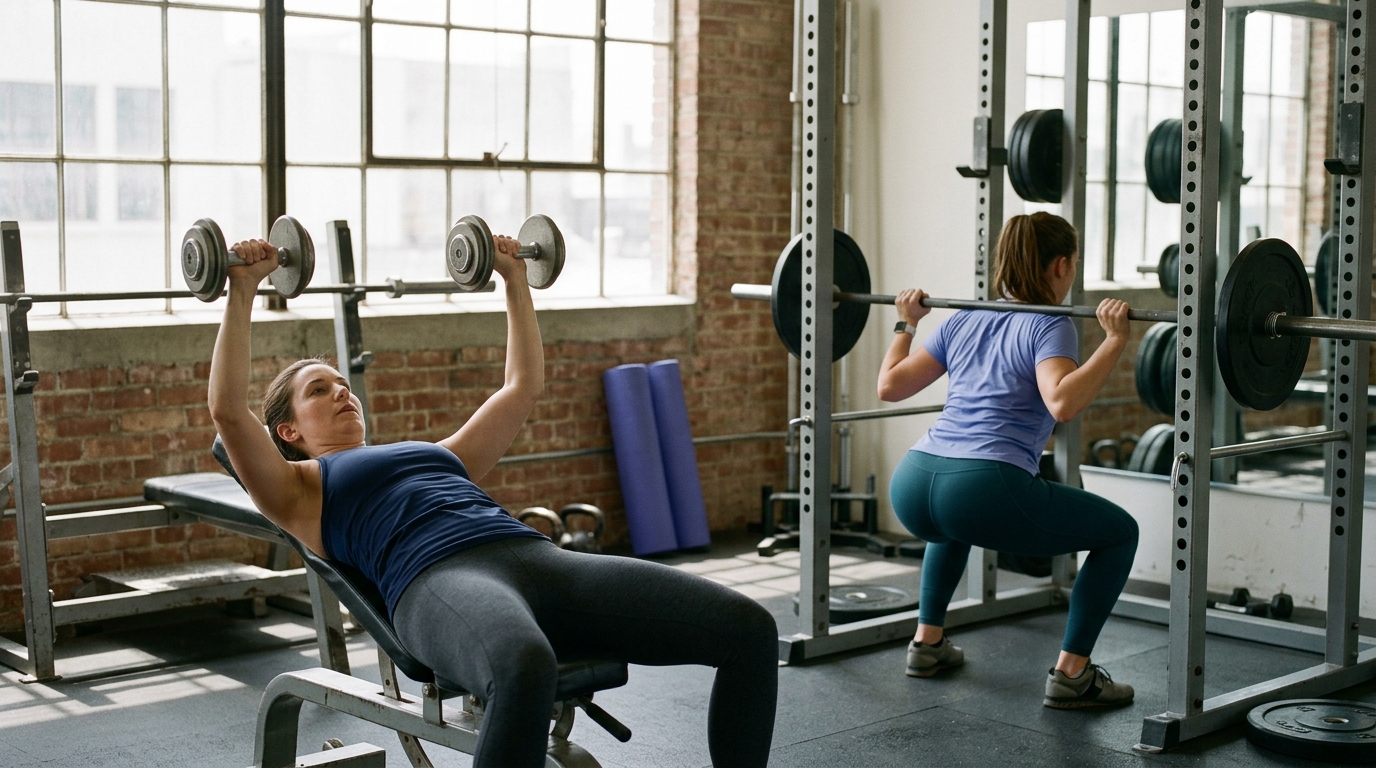
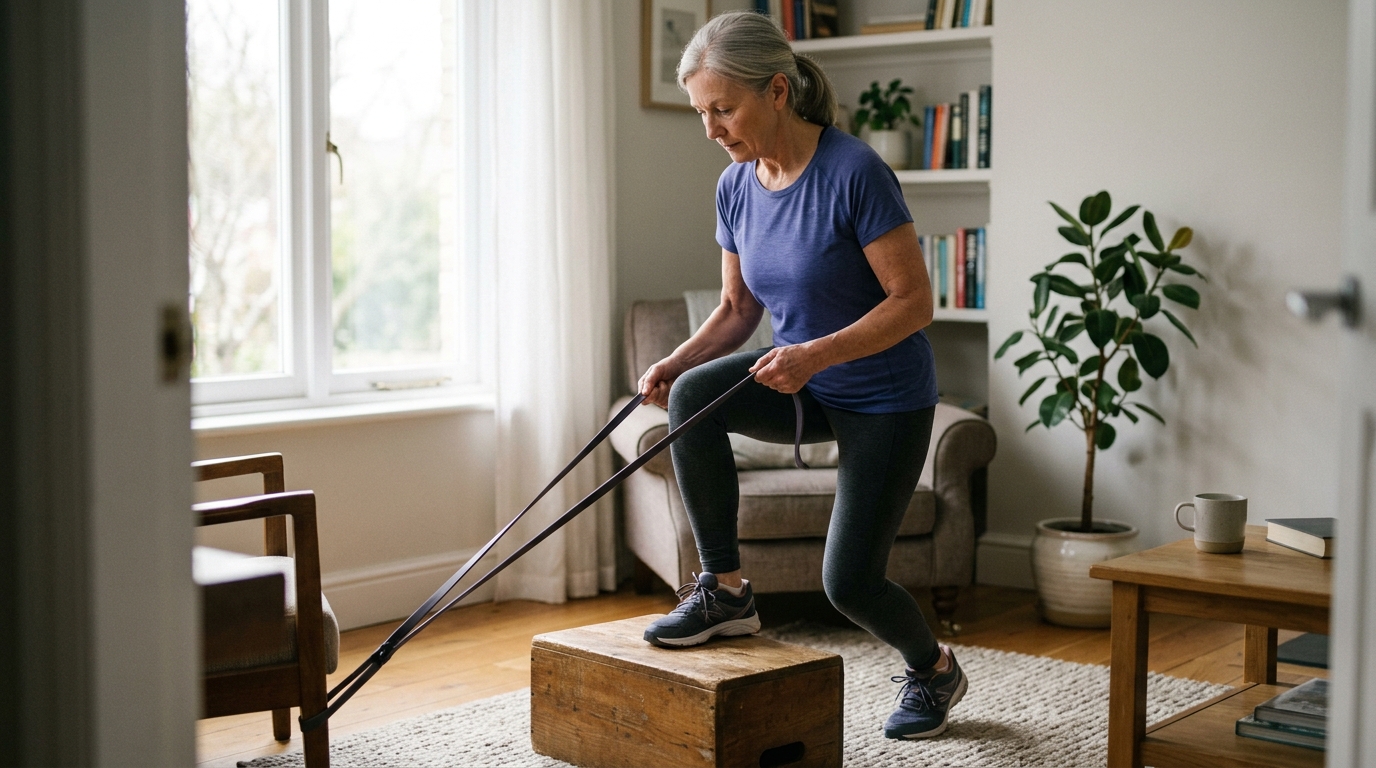
Integrating balance drills with progressive resistance training yields superior outcomes compared to balance practice alone. You can explore structured approaches to strength rebuilding to complement your balance routine.
The following scenarios illustrate how balance principles apply to different fitness levels and risk profiles. These models serve as conceptual examples rather than personalized medical treatment plans.
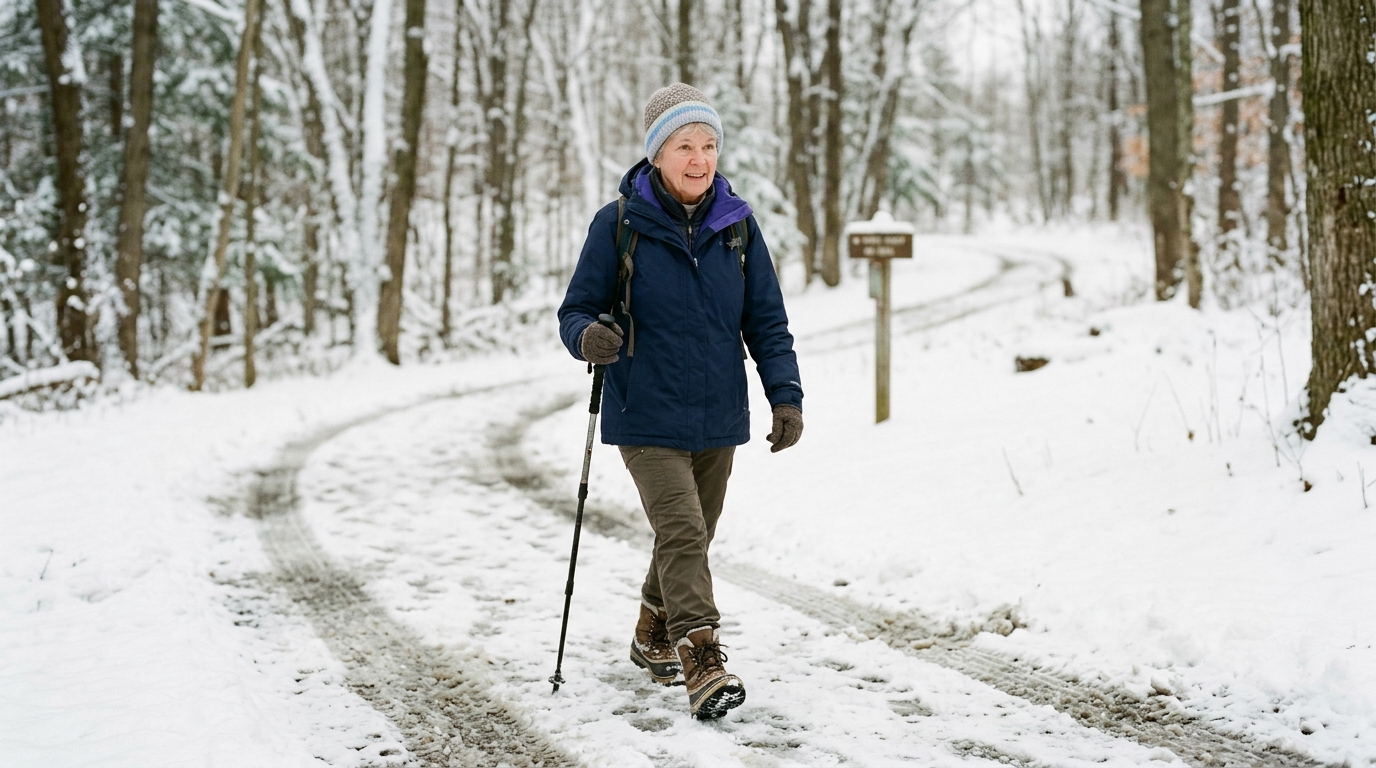
An active 68-year-old adult with no history of falls wants to maintain mobility for hiking and gardening. This individual possesses good baseline strength and walks regularly but wants to improve single-leg control on uneven terrain.
A 62-year-old individual notices slight wobbling when turning around quickly in the kitchen or stepping out of the shower. This person has not fallen but reports feeling less sure-footed during rapid directional changes.
A 74-year-old adult slipped on wet decking six months ago without sustaining an injury. The incident reduced their confidence, leading to slower walking and a wider, shuffling gait.
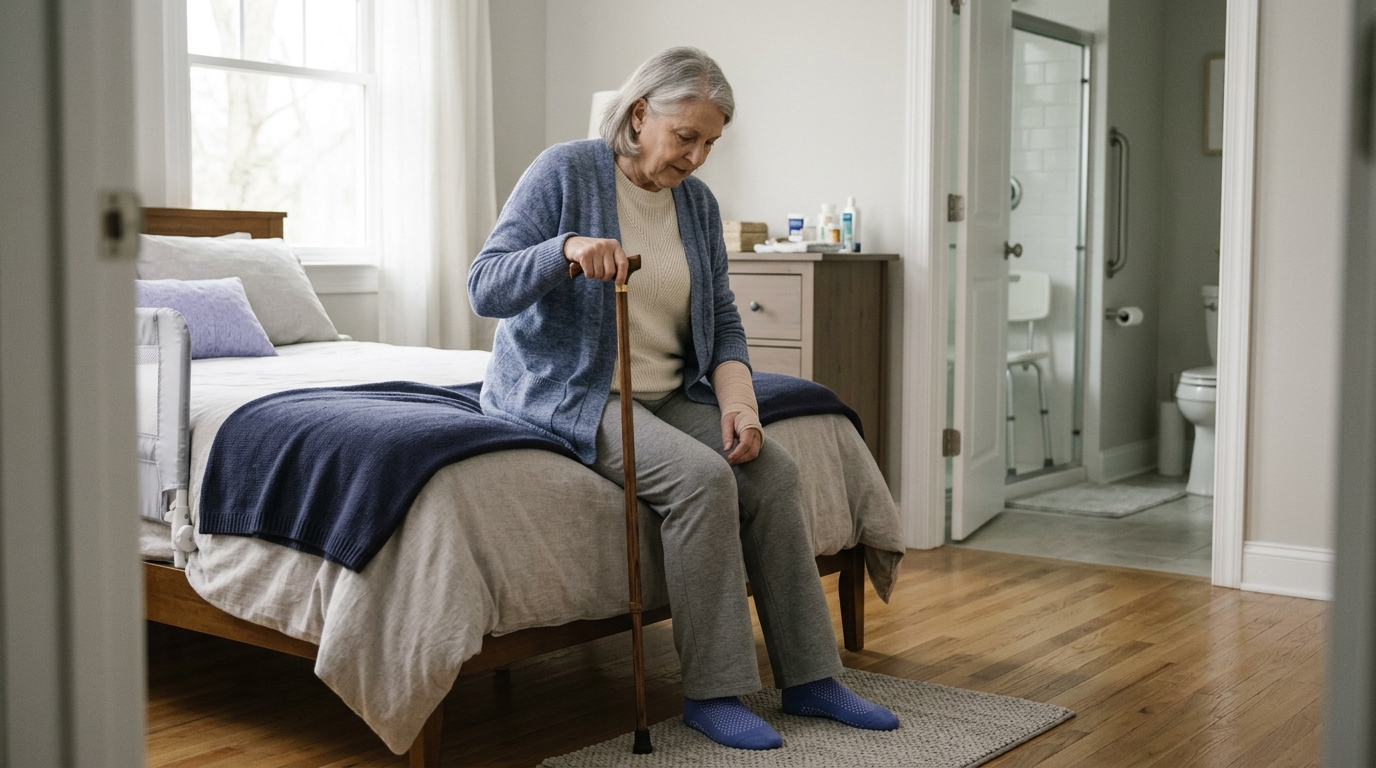
A 78-year-old adult has fallen twice in the past year, experiences occasional lightheadedness when standing up, and uses a cane for community walking.
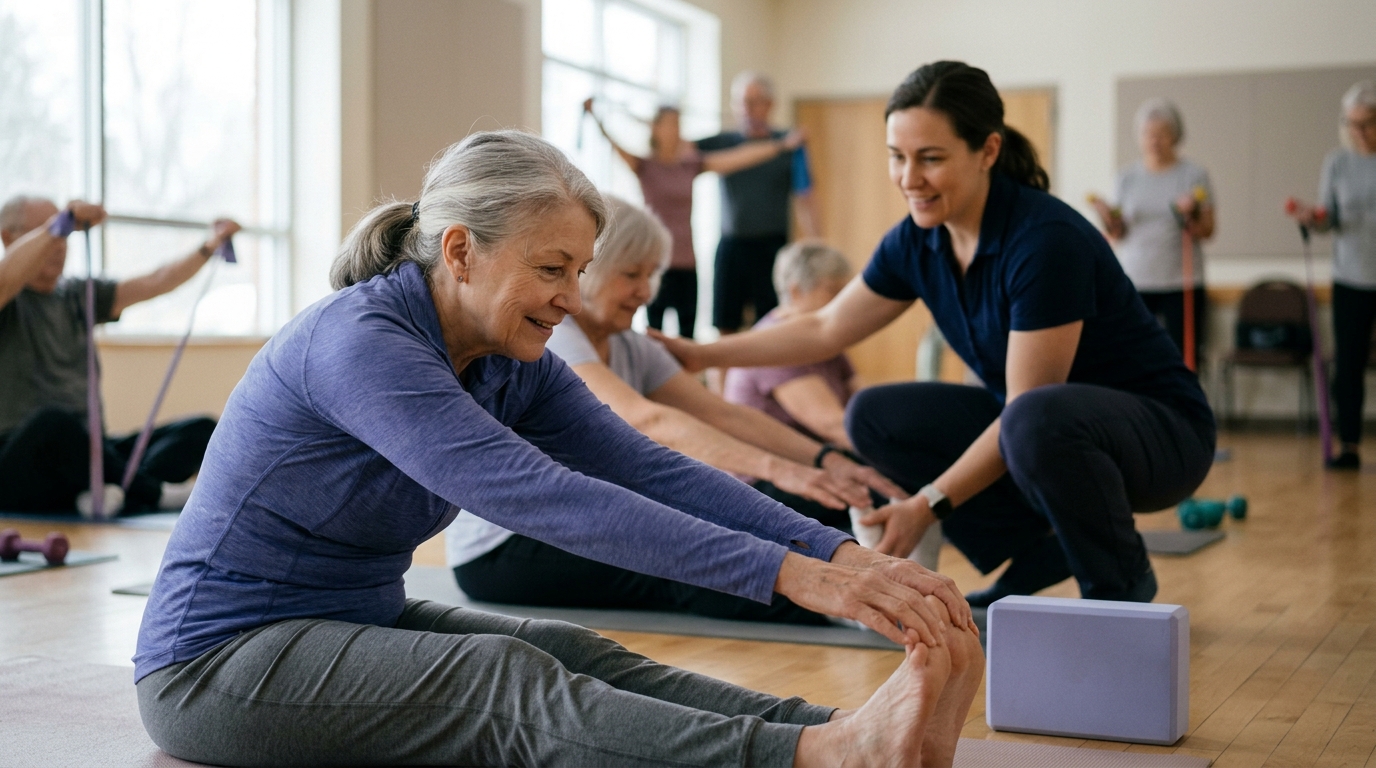
A fitness instructor leads an active aging balance class with 12 participants possessing varied physical abilities. The instructor needs to deliver an engaging session while ensuring individual safety.
If you experience unsteadiness, have a history of falls, or want individualized guidance, discussing balance with a healthcare professional is an essential step. Consider asking your doctor or physical therapist the following practical questions:
Balance is an active, trainable neuromuscular skill that requires consistent practice across stationary positions, moving patterns, and functional daily tasks. Strong clinical evidence demonstrates that structured multicomponent exercise combining balance, gait, and strength training significantly reduces fall rates among community-dwelling older adults.
By starting in a safe environment, varying your foot position, using hand support as a dosing tool, and progressing one variable at a time, you can systematically improve your physical stability. However, balance training should always be tailored to your individual health status, orthopedic history, and baseline mobility.
When to revisit this resource: Review these progression frameworks whenever you experience a change in physical function, recover from an injury, transition to a new activity routine, or want to advance your home exercises safely.
Taking a measured, research-backed approach to balance training allows you to maintain coordination, build functional strength, and support lifelong physical independence.

Use ReboundBody resources to understand common recovery stages, rehab terms, movement limits and strength rebuilding. Each guide is designed to make a complex comeback easier to understand.


Read practical guidance on injury recovery, rehabilitation, mobility and rebuilding strength as you work your way back to activity.
Explore Resources