
Two independent orthopedic evaluations clarify your diagnosis, compare surgical techniques, and help you decide whether conservative therapies are sufficient before committing to surgery.





An orthopedic second opinion is an independent evaluation of a musculoskeletal problem by another qualified medical professional. It is not an accusation of poor care, a declaration of distrust, or a guarantee of finding a better outcome. Instead, it is a standard medical process designed to clarify a diagnosis, confirm whether a procedure is necessary, or compare alternative treatments.
Getting another perspective helps you evaluate options when facing major joint surgery, spinal procedures, complex fractures, or persistent pain that has not responded to standard care. Disagreement between medical professionals is common and does not automatically mean one clinician is wrong. This comprehensive guide explains when seeking an additional opinion makes sense, how to discuss it with your current doctor, what the research says about recommendation differences, and how to evaluate competing treatment plans.
An orthopedic second opinion is a consultation with an independent clinician to review your symptoms, physical examination, and medical history. The goal is to obtain an objective review of a specific clinical question. It is not a popularity contest between two doctors, nor is it a search for someone who will tell you only what you want to hear.
A second opinion can focus on several distinct parts of your care:
The primary question is whether the current diagnosis accurately explains your symptoms and physical limitations. Different musculoskeletal conditions can produce nearly identical pain patterns. An independent review checks whether your clinical exam matches the findings on your imaging studies.
Diagnostic imaging, such as magnetic resonance imaging or computed tomography, requires clinical interpretation. A second clinician evaluates whether the visible anatomical changes are the true cause of your symptoms. Not every abnormality seen on a scan requires medical intervention.
This assessment determines whether an invasive intervention is genuinely necessary right now. A clinician evaluates whether conservative therapies have been adequately attempted. They will determine if waiting or continuing physical therapy is a safe and reasonable path.
If surgery is indicated, different surgical techniques may exist to address the issue. One surgeon might favor a minimally invasive arthroscopic procedure, while another recommends an open reconstruction. A consultation clarifies why a specific technical approach is being suggested for your anatomy.
A consultation can assess whether a proposed operation is the appropriate size and timing for your condition. It addresses whether a staged approach, a smaller procedure, or postponing surgery until symptoms progress is clinically sensible.
Every orthopedic intervention involves trade-offs between potential pain relief, functional recovery, surgical risks, and rehabilitation demands. An independent evaluation provides a balanced estimate of what improvement is realistic and what risks exist if you choose not to operate.
A second opinion is entirely different from a permanent transfer of care. Seeking another view does not mean you are firing your current orthopedic surgeon or ending your therapeutic relationship. Professional ethical guidelines make it clear that patients have the right to seek additional consultations while continuing their regular care.
Not every sprain, minor fracture, or mild bout of joint pain warrants a second consultation. Routine musculoskeletal conditions often follow standard, evidence-based recovery pathways that do not require multiple specialist reviews. However, specific situations carry higher stakes or greater uncertainty, making an additional perspective valuable.
You may want to consider seeking an independent consultation in the following situations:
If you are currently evaluating treatment choices or preparing for a major procedure, reviewing structured injury recovery and healing resources can help you understand standard recovery pathways before your appointment.
Certain situations require immediate clinical attention rather than scheduling a non-urgent second opinion. Acute neurological deficits, such as progressive weakness in a limb, loss of bowel or bladder control, severe trauma, or signs of joint infection require urgent medical care. In those cases, delaying treatment to shop for elective consultations can lead to irreversible nerve or tissue damage.
Understanding what clinical research says about second opinions can help set realistic expectations. Research shows that second opinions frequently result in different recommendations, but an alternate opinion is not automatically superior. Disagreement is simply a reflection of medical nuance, varying surgical training, and different interpretations of risk.
Much of the published literature on orthopedic second opinions focuses on spinal surgery, where clinical decisions are notoriously complex. A comprehensive scoping review examined second opinions for patients with spinal pain who were considering surgery. The review analyzed twelve observational studies and found wide variation in agreement rates between the first and second clinicians.
Diagnostic agreement between the first and second opinions ranged from 53% to 96% across the included studies. Agreement on whether surgery was indicated at all was much lower, ranging from 0% to 83%. When both clinicians agreed that an operation was necessary, they often disagreed on the specific procedure. In one study cited in the review, agreement on the exact surgical technique occurred in only 16% of cases.
A separate scoping review on spine surgery consultations found that approximately 40.6% of reviewed cases were second opinions. Among those second opinions, 61.3% were discordant with the initial recommendation. Furthermore, 75% of those discordant opinions recommended nonoperative, conservative management instead of the initially proposed surgery.
Individual studies show similar patterns of clinical divergence. In a study of 100 patients with spine conditions who were evaluated for surgery, researchers found disagreement in 56% of diagnoses and 73% of treatment indications. These statistics illustrate that medical opinions in complex orthopedic subspecialties frequently vary.
Despite these differences in recommendations, the evidence base has notable limitations:
Nearly all available studies on orthopedic second opinions are observational rather than randomized controlled trials. In the spinal surgery scoping review, eleven of the twelve analyzed studies were rated poor in methodological quality, and one was rated fair.
The current research does not prove that patients who obtain a second opinion achieve better long-term physical function or pain relief than those who do not. Researchers found no comparative trials evaluating health outcomes between patients who sought a second opinion and those who relied solely on their initial consultation.
While second opinions often recommend conservative management over surgery, studies do not track whether those patients eventually required surgery later. It remains unclear whether nonoperative recommendations permanently resolved the issue or merely postponed an inevitable operation.
Data from spine surgery cannot be assumed to apply equally to hip replacements, knee arthroscopy, or rotator cuff repairs. Different joints have different diagnostic criteria, surgical thresholds, and success rates.
These research findings show that clinical variation is normal. A different recommendation provides an alternate framework for your decision, not an objective proof of error by the first clinician.
Many patients worry that asking for a second opinion will offend their doctor or harm their relationship. In reality, experienced orthopedic specialists view second opinions as a standard part of patient-centered care. Professional organizations encourage open communication around additional consultations.
The American Academy of Orthopaedic Surgeons emphasizes that patients are free to seek additional opinions, and clinicians should cooperate by providing necessary medical records. Similarly, the American Medical Association Code of Medical Ethics states that physicians should advise patients that they may seek another opinion and should facilitate the process.
When discussing your wish for another consultation, frame the request around your personal decision-making needs rather than expressing doubt in the doctor's competence. Clear, respectful communication keeps the focus on your health goals.
Here are practical phrases you can use during your appointment:
If a clinician reacts with anger, defensiveness, or hostility when you mention a second opinion, that reaction is useful information. A professional clinician should welcome an independent review for a major procedure. Maintaining an open dialogue ensures that you can return to your original doctor if you decide to proceed with their plan.
A second opinion is only as good as the clinical data available to the consulting doctor. If the new specialist does not have access to your previous imaging scans, surgical notes, and physical therapy reports, the consultation may result in unnecessary repeat testing or an incomplete assessment.
Organizing your medical records in advance saves time and ensures an accurate review. Medical ethics guidelines emphasize that cooperating in the prompt transfer of records serves the patient's best interest.
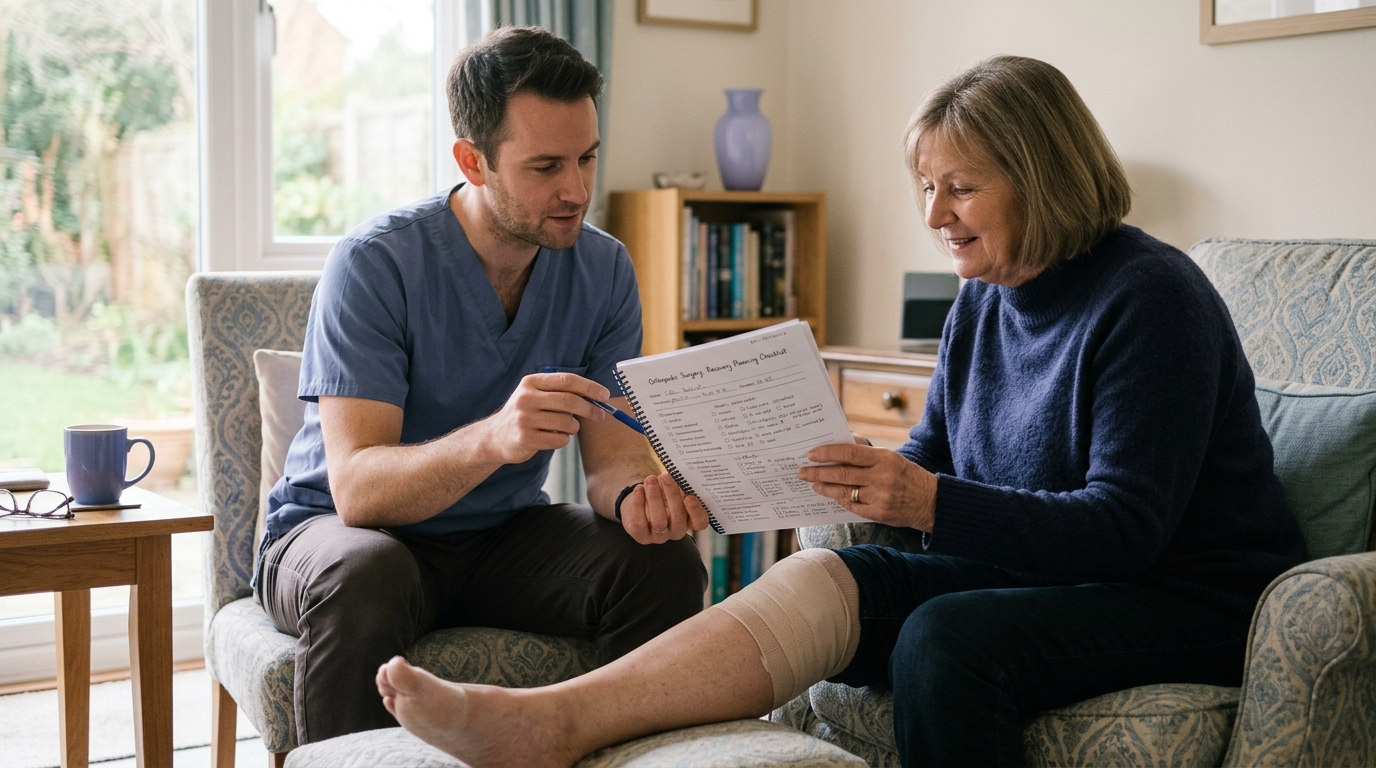
Use the following step-by-step checklist to prepare for your second opinion appointment:
Do not rely solely on printed radiology reports. Ask your imaging facility for the raw image files on a disc or via a secure digital transfer link. The consulting surgeon will want to review the actual scans, not just the radiologist's written interpretation.
If you have had prior surgeries, injections, or specialized procedures on the affected joint, obtain the detailed operative notes. These documents describe your internal anatomy, tissue quality, and any hardware that was implanted.
Obtain discharge summaries from your physical therapy clinic. These notes document which exercises were performed, the duration of treatment, your compliance, and your objective functional progress.
Contact your health insurance provider to confirm network participation and referral requirements. The American Medical Association advises patients to check health plan provisions that may affect out-of-pocket costs or out-of-network consults.
Doctors have limited time during consultations. Bringing a concise, one-page timeline of your condition helps the specialist grasp the core issues quickly.
Structure your one-page case summary using these clear headings:
This structured summary serves as a practical communication tool. It helps the consulting doctor focus immediately on the decisions that affect your quality of life.
When two qualified orthopedic surgeons evaluate the same patient and reach different conclusions, patients often feel confused. Differences in clinical recommendations rarely stem from one doctor being knowledgeable and the other being unqualified. Instead, medical recommendations are shaped by several legitimate clinical and professional factors.
Clinicians may place different emphasis on physical examination findings versus imaging abnormalities. One surgeon might view mild nerve root compression on an MRI as the primary driver of leg pain. Another might believe that an inflamed sacroiliac joint or hip pathology is the true cause of the symptoms.
Surgeons hold different perspectives on what constitutes an adequate trial of nonoperative management. One clinician may consider six weeks of physical therapy and a single steroid injection sufficient before recommending surgery. Another may advocate for six months of progressive strengthening, activity modification, and lifestyle changes before considering an operation.
Surgical training evolves rapidly. A surgeon with advanced fellowship training in minimally invasive techniques may recommend a focused, small-incision decompression. A surgeon with extensive reconstructive experience might advise a wider decompression with spinal fusion to ensure long-term stability.
Every surgeon develops a clinical philosophy regarding surgical risks versus expected benefits. Some clinicians favor early intervention to correct structural issues before secondary joint degeneration develops. Others favor delaying surgery as long as possible to avoid the inherent risks of infection, blood clots, hardware failure, or adjacent segment disease.
Surgeons working in high-volume academic research hospitals may see different patient populations than community-based orthopedic surgeons. High-volume specialists may have deeper experience with rare anatomical variations or complex revisions, influencing how they calculate the odds of a successful outcome.
Understanding these underlying factors helps you see that medical recommendations are expert judgments based on clinical evidence, individual experience, and risk assessment. Recognizing this context prevents you from viewing disagreement as an error.
Evaluating differing medical advice requires a structured framework. Rather than simply choosing the doctor with the friendlier bedside manner or counting votes between multiple providers, compare the underlying clinical reasoning of each proposed plan.
Use this four-part framework to evaluate each recommendation:
Compare how each doctor addresses these critical questions:
Ask yourself whether both doctors are treating the exact same condition. If the first clinician is treating a torn meniscus and the second is treating underlying osteoarthritis, their surgical plans will naturally conflict. Clarify whether they agree on the root cause of your pain.
Evaluate how each proposed treatment is intended to fix your problem. Does the plan remove damaged tissue, stabilize an unstable joint, replace a worn surface, or strengthen surrounding muscles? Ensure you understand the biomechanical purpose of each proposed option.
Compare the realistic functional goals of each plan. Will the procedure completely eliminate pain, or is it designed only to reduce pain to a manageable level? Ask whether the proposed recovery allows you to return to running, heavy lifting, or recreational sports.
If you are weighing the physical demands of rehabilitation after a major procedure, reviewing evidence-based surgery and rehabilitation guides can clarify what post-operative recovery entails.
Ask both clinicians what happens if you delay the procedure for three to six months while continuing conservative therapy. In many elective orthopedic conditions, waiting carries minimal clinical risk and provides valuable time to observe whether symptoms stabilize. In other conditions, delaying intervention can lead to progressive muscle atrophy, joint destruction, or chronic nerve injury.
When you complete your second consultation, you will generally encounter one of three scenarios:
Navigating these differences requires patience and clear communication. Your goal is to select the plan whose clinical logic, risk profile, and rehabilitation timeline align with your personal values and functional goals.
To get the most value from your consultations, enter the exam room with specific, high-yield questions. Avoid asking vague questions like "What do you think I should do?" Instead, ask targeted questions that reveal the clinician's diagnostic reasoning and risk calculations.
Asking these questions ensures that you gather the objective information necessary to make an informed choice about your body.
No. Seeking a second opinion is an independent consultation, not a permanent transfer of medical care. You remain completely free to return to your original physician to carry out your treatment plan. Professional medical ethics guidelines explicitly separate requesting an additional consultation from dismissing your primary treating doctor.
When two specialists disagree, focus on the differences in their underlying assumptions rather than trying to decide who is right. Ask each surgeon to review the other's notes and explain why they disagree with that approach. If the disagreement persists around a high-stakes decision, consulting a specialized multidisciplinary clinic or an academic medical center can provide an objective tiebreaker.
Most major health insurance plans, including Medicare, cover second opinions for non-emergency, medically necessary surgical procedures. However, coverage rules, specialist referral requirements, and network restrictions vary widely between individual policies. Always contact your insurance provider beforehand to verify whether the consulting specialist is in-network and whether prior authorization is needed.
Yes, many major medical centers offer remote second opinion programs where specialists review uploaded imaging files and medical records. Telehealth reviews work well for evaluating diagnostic imaging, surgical indications, and treatment concepts. However, a remote review cannot replace a hands-on physical examination, which is often essential for testing joint stability, muscle strength, and localized nerve responses.
An orthopedic second opinion is a valuable tool for clarifying complex diagnoses, evaluating surgical risks, and understanding nonoperative alternatives. Disagreement between medical specialists is common and reflects the nuanced nature of musculoskeletal care rather than medical incompetence.
Success lies in organizing your complete medical records, asking focused questions about clinical reasoning, and checking insurance requirements in advance. By comparing the evidence, benefits, trade-offs, and rehabilitation demands of each approach, you can make a confident, well-informed medical decision that aligns with your long-term health and mobility goals.

Use ReboundBody resources to understand common recovery stages, rehab terms, movement limits and strength rebuilding. Each guide is designed to make a complex comeback easier to understand.


Read practical guidance on injury recovery, rehabilitation, mobility and rebuilding strength as you work your way back to activity.
Explore Resources