How to Choose Shoes for Walking and Exercise: A Practical Guide

Selecting the right athletic footwear requires evaluating your activity mechanics, comparing design categories, and ensuring a precise fit for long-term comfort.

How to Choose Shoes for Walking and Exercise: A Practical Guide
Share
White Reddit alien mascot face icon on transparent background.White paper airplane icon on transparent background.White stylized X logo on black background, representing the brand X/Twitter.
October 1, 2026
Injury Prevention & Staying Active

Active adults often search for the best shoe to eliminate joint pain or prevent exercise injuries. Many buyers hope that finding a specific category or arch support design will keep them healthy. The direct answer is that shoe choice is primarily a fit and task decision rather than an injury prescription.

Research does not show that any specific category of athletic shoe reliably prevents lower limb injuries. Footwear cannot replace gradual training progression, adequate rest, and strength rebuilding. A good pair of exercise shoes matches the physical demands of your specific activity. It should fit the exact dimensions of your foot and feel comfortable immediately on the surfaces where you move.

Selecting footwear involves understanding movement mechanics, personal comfort, and activity surfaces. A shoe designed for forward walking will not provide the side support needed for court sports. Similarly, a shoe built for off-road trails may feel stiff or slippery on polished gym floors. Understanding these practical differences helps you choose footwear that supports your routine without relying on unsupported marketing claims.

Evidence on Footwear Categories and Injury Risk

The relationship between athletic footwear design and injury prevention has been studied across thousands of participants. The most comprehensive analysis comes from a major Cochrane systematic review examining running footwear and lower limb injuries. This review analyzed 12 randomized controlled trials involving 11,240 adult participants over study periods lasting from six to 26 weeks.

The trials evaluated whether categorizing runners by foot shape and assigning them specific shoe types reduced injuries. Traditional marketing often suggests that people with lower arches require motion-control footwear, while people with higher arches need cushioned models. The Cochrane review found very low certainty evidence regarding whether motion-control shoes reduce injuries compared to neutral or cushioned footwear. The relative risk was 0.92 with a 95 percent confidence interval ranging from 0.30 to 2.81.

A confidence interval that spans from 0.30 to 2.81 indicates substantial uncertainty. This means the data cannot confirm whether motion-control shoes reduce injury risk, make no difference, or increase risk. The broad takeaway from established sports medicine research is uncertainty rather than proven protection. No single design category has been demonstrated to serve as a reliable barrier against musculoskeletal setbacks.

This evidence base focuses specifically on adult runners rather than general walkers. Running generates ground impact forces that are two to three times body weight, involving an aerial phase where both feet leave the ground. Walking produces much lower impact forces, maintaining continuous ground contact. While running trial findings show that category labels do not ensure injury prevention, they do not mean footwear choices are meaningless. Footwear remains essential for comfort, surface traction, foot protection, and sport-specific stability.

Movement Mechanics Across Different Exercise Activities

Footwear needs depend heavily on the direction of your movement and the surfaces you encounter. Different activities place distinct mechanical loads on the bones, joints, and soft tissues of your feet. Selecting a shoe requires matching the shoe's structure to these specific movement patterns.

Walking Mechanics

Walking is a repetitive, linear movement with a distinct heel-to-toe gait cycle. Each step begins with the heel striking the ground, followed by a roll through the midfoot, ending with a push-off from the toes. Because one foot is always in contact with the surface, impact forces remain moderate.

According to guidelines from the American Academy of Orthopaedic Surgeons, walking shoes emphasize arch stability, shock absorption, and a smooth tread. The Centers for Disease Control and Prevention notes that good walking footwear should be relatively flat and flexible enough to let the foot roll naturally through each step. A stable heel counter helps keep the rearfoot aligned as the heel strikes the ground.

Running Mechanics

Running involves a continuous series of single-leg impacts with an airborne phase between steps. The foot may strike the ground on the rearfoot, midfoot, or forefoot depending on individual mechanics and speed. These repetitive vertical forces require durable midsole materials capable of absorbing repeated loads over long distances.

Running shoes are engineered primarily for forward motion. They feature elevated heel cushioning, longitudinal flex grooves, and materials that assist forward propulsion. However, running shoe designs generally feature softer, taller midsole foam. This construction can feel unstable when you attempt rapid sideways movements.

Court and Multi-Directional Sports

Sports such as tennis, pickleball, basketball, and volleyball require abrupt stopping, pivoting, and lateral cutting. These activities exert intense sideways forces on the upper material and sole of the shoe.

The American Podiatric Medical Association advises against wearing forward-motion running shoes for activities that involve frequent lateral movement. Running shoes have taller sole profiles and flexible upper fabrics that can roll over during a hard cut. Court shoes feature stiff side support, low sole heights, and durable outsoles that wrap upward around the edges. This design provides lateral stability and helps prevent the foot from sliding off the footbed during sudden changes of direction.

Gym Workouts and Cross-Training

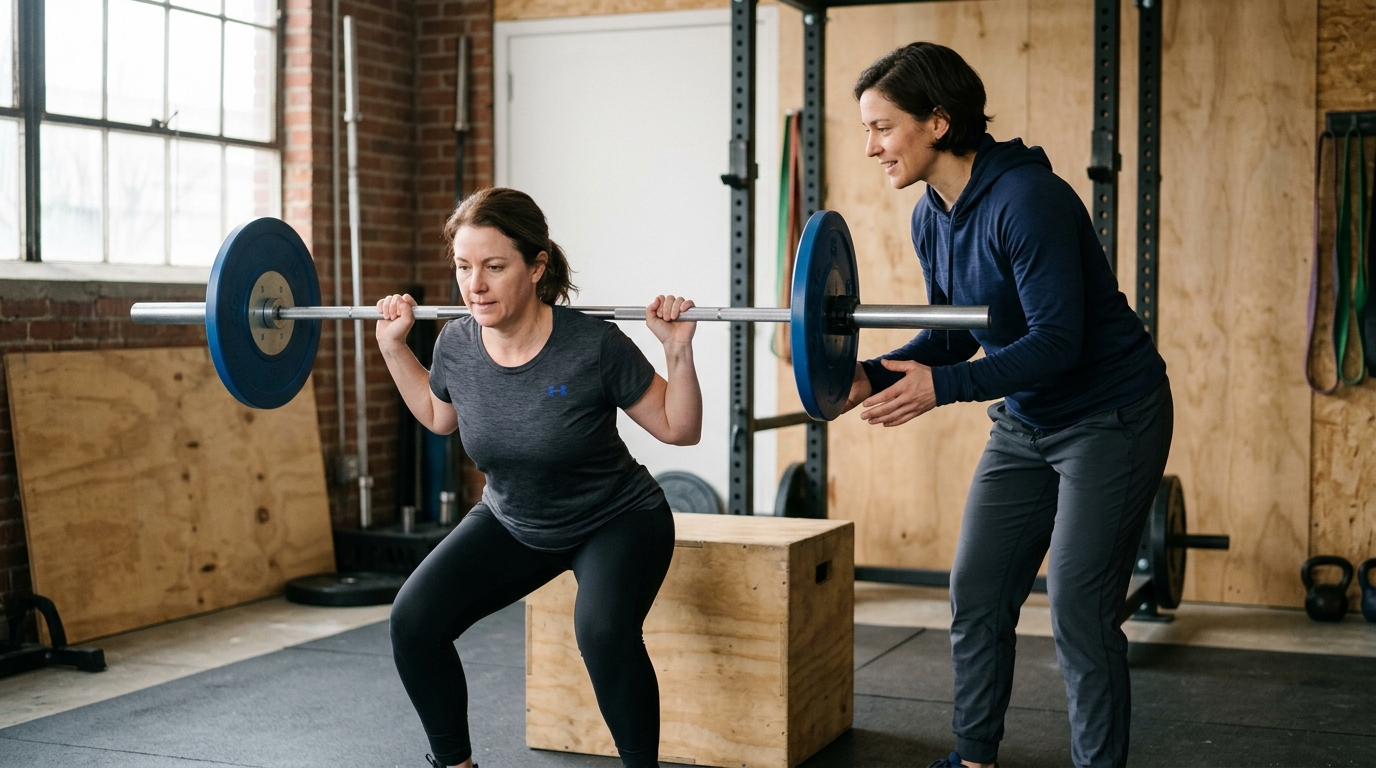
General fitness classes, weight training, and circuit workouts combine varied movements. A single session may include bodyweight squats, lunges, short sprints, and lateral agility drills.

Cross-training shoes are built to provide a middle ground across these diverse demands. The American Academy of Orthopaedic Surgeons describes cross-trainers as multi-purpose shoes designed to handle multiple activities. They offer more lateral stability than dedicated running shoes, along with moderate cushioning for short aerobic drills. However, a multi-purpose shoe may not provide optimal comfort for high-mileage walking or specialized trail hiking.

Trail Walking and Hiking

Exercising on dirt paths, gravel, and unpaved terrain presents uneven footing, rocks, and mud. Standard road shoes have flat outsoles that easily slip on loose dirt or wet grass.

Hiking and trail shoes incorporate deep rubber lugs to grip uneven terrain. They often feature stiffer midsoles and reinforced toe bumpers to shield the toes from rocks and roots. The American Academy of Orthopaedic Surgeons lists hiking shoes as a distinct sport-specific category. While these rugged features improve grip on rough terrain, they can feel heavy, stiff, and uncomfortable on flat concrete pavements.

Shoe Categories and Design Intent

Shoe manufacturers use specific terminology to describe the structural features built into different models. Understanding these terms helps you understand what a shoe is designed to do. It is important to view these categories as design features rather than medical cures.

Neutral and Cushioned Footwear

Neutral shoes are designed without dense medial posting or rigid plastic wedges in the arch area. They focus on uniform cushioning and unconstrained foot motion. These models are often suggested for individuals with neutral mechanics or higher, more rigid arches.

Cushioned shoes prioritize shock attenuation using soft midsole foams. They allow the foot to move naturally through its gait cycle without attempting to alter foot pronation. For walkers seeking an unrestricted, soft feel during road workouts, neutral cushioned shoes remain a common choice.

Stability Footwear

Stability shoes incorporate design elements intended to guide foot movement and reduce inward foot roll, known as pronation. Manufacturers use firmer foam densities along the inside edge of the midsole, wider base geometries, or guide rails along the perimeter.

These shoes are traditionally marketed toward individuals with mild to moderate overpronation or flexible arches. While these structures provide a firmer, more guided sensation under the arch, research does not prove they prevent overuse injuries. A stability shoe should be chosen because the wearer prefers a firm, structured feel, not because of an assumed medical requirement.

Motion-Control Footwear

Motion-control shoes represent the most rigid category of athletic footwear. They feature wide, flat soles, extremely stiff heel counters, and reinforced medial posts or thermoplastic supports.

The American Academy of Orthopaedic Surgeons notes that motion-control designs are intended for individuals with severe pronation or flat feet. These shoes are built to resist twisting and significantly limit foot motion. However, their rigidity can make them feel heavy and stiff. As established in systematic reviews, motion-control shoes have not been proven to lower injury rates compared to cushioned designs.

Minimalist and Zero-Drop Footwear

Minimalist footwear features thin soles, little to no arch support, wide toe boxes, and zero heel-to-toe drop. The design intent is to let the foot function naturally without artificial cushioning or motion restriction.

Advocates suggest that thin soles strengthen the intrinsic muscles of the foot and encourage sensory feedback from the ground. However, transitioning abruptly to minimalist shoes can place sudden, increased stress on the Achilles tendon and calf muscles. If you are exploring changes in movement mechanics, review our mobility and movement guidelines to understand how tissues adapt to shifting demands.

Maximalist Footwear

Maximalist shoes feature thick, oversized midsoles made of lightweight foam, often paired with curved rocker soles. The design provides extensive cushioning and reduces the bending required at the toe joints during push-off.

Walkers with forefoot pain or arthritis in the big toe joint often find rocker-bottom maximalist shoes comfortable. The rigid rocker geometry helps the foot roll forward smoothly without excessive joint extension. However, the increased stack height can feel unstable for individuals with balance concerns or those navigating uneven ground.

Guidelines for Proper Shoe Sizing and Fit

Proper fit is the single most critical factor in footwear selection. A shoe that matches your foot dimensions reduces the risk of blisters, black toenails, nerve compression, and pressure points. Relying solely on the printed size number is a common mistake, as sizing varies between brands and models.

  • PRACTICAL TRY-ON CHECKLIST
  • 1. Shop late in the afternoon when feet are naturally swollen.
  • 2. Wear the exact socks you plan to use during your activity.
  • 3. Fit shoes to the larger foot (stand fully to bear weight).
  • 4. Verify a thumb-width (1/2 inch) space past the longest toe.
  • 5. Ensure the toe box allows toes to spread without pressure.
  • 6. Check that the heel counter grips the heel without slipping.
  • 7. Walk on different floor surfaces (carpet, tile) to test feel.
  • 8. Reject footwear that feels uncomfortable out of the box.

The Try-On Protocol

The American Academy of Orthopaedic Surgeons outlines clear fitting principles that should guide every shoe purchase:

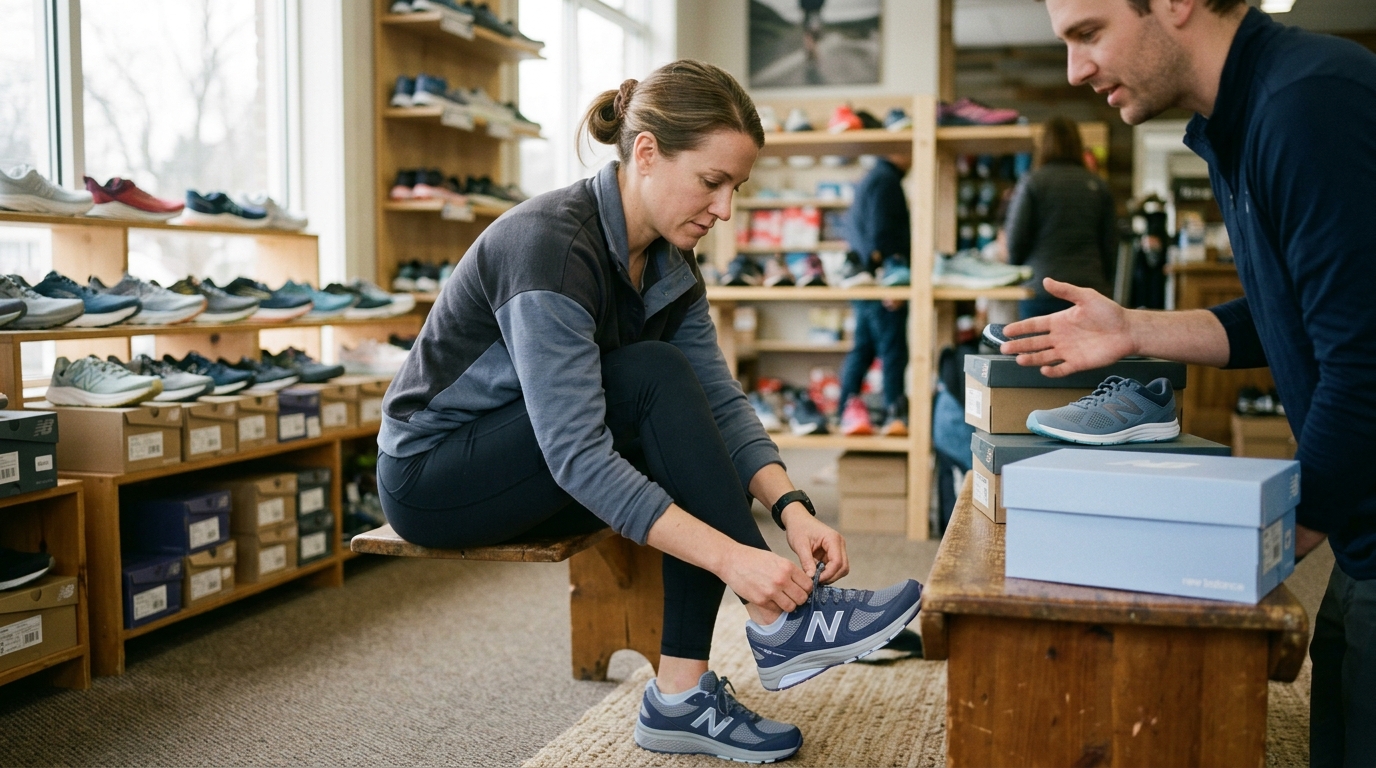
  1. Try shoes on late in the day or immediately after an exercise session. Feet naturally expand and swell during daily activities, and shopping in the afternoon prevents buying shoes that will feel tight during workouts.
  2. Wear the specific socks you intend to use for your walking or exercise sessions. Sock thickness significantly affects how a shoe fits around the heel and forefoot.
  3. Try on both shoes and fully tie the laces. Most people have one foot that is slightly longer or wider than the other.
  4. Fit the shoe to your larger foot. You can adjust the lacing or add a thin insert to accommodate the smaller foot, but a shoe that is too small cannot be enlarged.
  5. Stand up and verify that you have at least one-half inch of clearance between your longest toe and the front tip of the shoe. Remember that your longest toe may be your second toe rather than your big toe.
  6. Walk around the store on hard tile and carpeted surfaces. Pay close attention to whether the heel slips, the arch feels supported, or the sides press against your joints.

Assessing the Three Dimensions of Fit

Proper fit requires evaluating length, width, and vertical depth across the entire shoe.

  • Forefoot Width and Toe Box Freedom: The front of the shoe must be wide enough to allow your toes to splay naturally as you bear weight. If the upper material bulges over the midsole or you feel pressure on your pinky toe, the shoe is too narrow. A cramped toe box can aggravate bunions, neuromas, and ingrown toenails.
  • Vertical Depth: Depth refers to the space between the insole and the top fabric of the shoe. If the top fabric presses down firmly on the tops of your toes, the shoe lacks sufficient depth. Adequate vertical volume is especially important for people with hammertoes or high insteps.
  • Midfoot and Instep Security: The midfoot should feel snug and supported without excessive tightness. The lacing system should allow you to secure the shoe firmly without creating painful pressure points across the top of your foot.
  • Rearfoot and Heel Counter Hold: The heel counter is the stiff cup built into the back of the shoe. It should grip your heel securely to prevent slipping when you push off. A slipping heel causes friction blisters and forces your toes to claw at the footbed to maintain stability.

The Myth of the Break-In Period

A common misconception is that athletic shoes should feel tight initially and will become comfortable once broken in. Guidance from Guys and St Thomas NHS Foundation Trust advises against buying shoes that feel uncomfortable in the store with the hope that they will soften later.

Modern athletic shoes are constructed from synthetic mesh, rubber, and foam materials that do not stretch significantly over time. While the foam will compress slightly with use, the shoe should feel comfortable and supportive the moment you try it on. If a shoe pinches, rubs, or feels restrictive in the store, choose a different size, width, or model.

Evaluating Cushioning, Flexibility, and Traction

Evaluating footwear involves looking closely at three mechanical components: midsole cushioning, structural flexibility, and outsole traction. Balancing these elements depends on where you exercise and how your body responds to movement.

Midsole Cushioning and Shock Absorption

The midsole is the foam layer located between the outer rubber tread and the inner fabric lining. It serves as the primary shock-absorbing component of the shoe. Manufacturers use materials such as ethylene-vinyl acetate (EVA), polyurethane, or gas-infused foams to disperse impact.

  • Soft Cushioning: Highly compliant foams provide a plush, pillowy sensation during footstrike. They absorb impact forces effectively, which many walkers find pleasant on hard asphalt surfaces. However, extremely soft foams can compress unevenly and reduce joint position awareness in individuals with balance instability.
  • Firm Cushioning: Denser foams offer less initial give but provide a stable, responsive platform. Firm midsoles maintain their structural integrity longer and provide predictable support for heavier individuals or those carrying packs.
  • Moderate Cushioning: A balanced midsole offers enough shock absorption to cushion hard surfaces while retaining enough firmness for balance and efficient propulsion.

Longitudinal and Torsional Flexibility

Flexibility describes how easily the shoe bends along its length and twists from side to side.

  • Forefoot Flexion: A walking shoe must bend easily at the ball of the foot, where your metatarsophalangeal joints naturally flex during push-off. If a shoe is completely rigid through the forefoot, your calf muscles and Achilles tendon must work harder to propel you forward.
  • Midfoot Torsional Rigidity: While the forefoot should bend, the middle of the shoe beneath your arch should resist excessive twisting. You can test this by holding the heel in one hand and the toe in the other, then gently twisting in opposite directions. A shoe that twists like a washcloth offers minimal arch stability, which may cause foot fatigue during long walks.
  • SHOE COMPONENT EVALUATION MATRIX
  • Component Test Method Desired Sensation
  • Forefoot Flex Bend toe toward heel Smooth flex at ball
  • Midfoot Twist Twist toe and heel opposite Resists wringing out
  • Heel Counter Press sides of heel cup Firm, holds shape
  • Outsole Tread Inspect lug pattern Matches your terrain

Outsole Tread and Traction

The outsole is the bottom rubber layer that makes direct contact with the ground. Selecting the right tread pattern ensures secure footing on your chosen walking surface.

  • Smooth and Segmented Treads: Walking shoes designed for pavement and treadmills feature flat, grooved outsoles. These designs maximize rubber contact with smooth surfaces while allowing the sole to flex naturally.
  • Multi-Directional Court Treads: Court shoes use herringbone or pivot-point tread patterns made from non-marking rubber. These patterns provide predictable grip when stopping abruptly or moving sideways on indoor wood or outdoor asphalt courts.
  • Lugged Trail Treads: Off-road shoes feature pronounced rubber cleats, or lugs, spaced widely apart. These lugs bite into dirt, mud, and loose gravel to prevent slipping. However, walking on smooth concrete with deep lugs can feel uncomfortable and accelerates tread wear.

A laboratory study evaluating slip-resistant footwear technologies showed that specialized outsole designs can significantly increase friction compared to standard commercial footwear. However, laboratory traction tests do not mean a consumer shoe will eliminate slips on ice, wet grease, or loose scree. Always match your tread to your walking environment. For more ideas on staying safe outdoors, review our active aging and prevention strategies.

Biomechanical and Environmental Variables Affecting Shoe Choice

No single footwear recommendation works for every person. Your body mechanics, age-related tissue changes, previous surgeries, and training surfaces all influence what shoe will work best for your routine.

  • FACTORS MODIFYING FOOTWEAR NEEDS
  • • Surface Type: Pavement vs. packed dirt vs. hardwood courts
  • • Activity Volume: Casual strolls vs. structured marathon walks
  • • Age-Related Changes: Thinner fat pads, joint stiffness
  • • Surgical History: Joint replacements, fused joints, repairs
  • • Training Phase: Active rehabilitation vs. high-intensity sport

Age-Related Changes in Foot Structure

As adults age, the feet undergo structural and physiological changes that alter shoe requirements:

  • Fat Pad Atrophy: The natural adipose fat pad beneath the heel and the ball of the foot gradually thins over time. This reduction in natural shock absorption can make walking on hard surfaces uncomfortable, increasing the need for resilient midsole cushioning.
  • Widening of the Forefoot: Ligaments and tendons lose some elasticity with age, leading to a gradual lowering of the arch and widening of the forefoot. An adult who wore a standard medium width at age 35 may require a wide or extra-wide shoe at age 65.
  • Reduced Joint Mobility: Conditions like osteoarthritis can reduce range of motion in the big toe, ankle, or subtalar joints. Footwear with mild rocker-bottom soles can assist forward movement and reduce stress across stiff joint capsules.

Surfaces and Environmental Conditions

The hardness and regularity of your walking surface dictate how much cushioning and traction you need:

  • Concrete and Asphalt: Hard, unforgiving road surfaces generate repetitive ground reaction forces. Shoes used primarily on pavement require durable cushioning foams that resist premature compression.
  • Treadmills: Treadmill belts have built-in shock absorption, making extreme shoe cushioning less critical. A lightweight, flexible neutral shoe often works well for treadmill sessions.
  • Natural Trails and Grass: Softer surfaces absorb impact naturally but introduce uneven footing. Stability, lateral support, and grippy tread patterns become more important than thick midsole foam when navigating outdoor paths.

Previous Orthopedic Conditions and Surgical History

Past joint injuries or surgeries can influence footwear compatibility:

  • Joint Replacements: Individuals with total knee or hip replacements benefit from stable, well-cushioned shoes that dampen impact forces without creating tripping hazards. Excessive stack height should be avoided to preserve balance and ground feel.
  • Plantar Fascia Irritation: People recovering from plantar heel discomfort often prefer shoes with moderate heel elevation and supportive arches. A shoe that is completely flat can increase tension along the plantar fascia during toe-off.
  • Achilles Tendon Sensitivity: A higher heel-to-toe drop (10 to 12 millimeters) reduces the stretch placed on the Achilles tendon at heel strike. Conversely, low-drop or zero-drop shoes increase the mechanical load on the calf and Achilles complex.

When returning to activity after a physical setback, footwear is only one part of the equation. To structure a safe return, consult our strength rebuilding and return to exercise guides.

Practical Decision Pathways for Common Activity Profiles

To make footwear selection straightforward, consider how these design principles apply to specific, real-world exercise routines.

Scenario 1: The Daily Neighborhood Fitness Walker

  • Primary Activity: Four to five weekly walks of two to four miles on asphalt sidewalks and paved roads.
  • Primary Demands: Consistent shock absorption, flexible forefoot transition, and durable outsole rubber.
  • Recommended Shoe Characteristics: Look for a dedicated walking shoe or a neutral cushioned running shoe. Ensure the shoe has a moderate heel-to-toe drop, a flexible forefoot, and a smooth, durable rubber tread.
  • Key Pitfall to Avoid: Do not buy rigid trail shoes or heavy motion-control shoes unless you specifically need their stiff construction. A lightweight, flexible running or walking shoe provides ideal comfort for paved surfaces.

Scenario 2: The Hybrid Walker and Short-Distance Jogger

  • Primary Activity: Alternating between walking and short intervals of light jogging on road or track surfaces.
  • Primary Demands: Durable shock absorption for running impacts, combined with smooth heel-to-toe rolling for walking phases.
  • Recommended Shoe Characteristics: Choose a neutral or mild stability running shoe. Running shoes accommodate walking mechanics easily, as confirmed by CDC physical activity guidelines.
  • Key Pitfall to Avoid: Avoid heavy walking-only shoes. Dedicated walking shoes can feel clunky and lack the responsive cushioning needed for the higher impact forces of jogging.

Scenario 3: The Pickleball and Court Sport Enthusiast

  • Primary Activity: Playing pickleball, tennis, or indoor badminton two to three times per week.
  • Primary Demands: Side-to-side stability, firm lateral upper support, low sole height, and durable traction on court surfaces.
  • Recommended Shoe Characteristics: Choose a dedicated court shoe designed for tennis or pickleball. Look for a low stack height, reinforced lateral outriggers, and durable toe caps.
  • Key Pitfall to Avoid: Do not wear forward-motion running shoes on court surfaces. The tall, soft midsoles and lightweight mesh uppers can roll during sudden lateral cuts, increasing the risk of ankle sprains.

Scenario 4: The Multi-Activity Gym Member

  • Primary Activity: Combining treadmill warm-ups, machine strength training, bodyweight fitness classes, and indoor cycling.
  • Primary Demands: Balanced versatility, moderate lateral stability, and a secure footbed for lifting weights.
  • Recommended Shoe Characteristics: Select a cross-training shoe. These models offer a flat, stable platform for leg exercises like squats and lunges, while providing enough forefoot flexibility for short treadmill runs.
  • Key Pitfall to Avoid: Avoid wearing ultra-cushioned maximalist running shoes when lifting weights. Squishy, thick foam compresses unevenly under heavy loads, reducing balance and ankle stability.

Scenario 5: The Mixed Pavement and Unpaved Trail Walker

  • Primary Activity: Walking on neighborhood streets that connect to packed dirt trails, gravel paths, and park routes.
  • Primary Demands: Versatile traction, water-resistant or debris-resistant uppers, and moderate underfoot protection.
  • Recommended Shoe Characteristics: Look for a hybrid trail-running shoe or light trail-walking shoe. These feature moderate 2 to 4 millimeter outsole lugs that grip loose dirt without feeling harsh on concrete.
  • Key Pitfall to Avoid: Avoid heavy mountaineering boots for light trail walking. Rigid boots restrict natural ankle motion and cause unnecessary fatigue on gentle terrain.

For more information on comparing exercise gear and movement strategies, browse our complete library of injury prevention resources.

Questions to Discuss With a Clinician

While retail shoe specialists can help with basic sizing and comfort checks, complex foot pain or structural issues require clinical evaluation. If you have persistent discomfort, joint arthritis, diabetes, or a history of foot surgery, consult a physical therapist, podiatrist, or orthopedic specialist.

Here are practical questions to guide your discussion:

  • Footwear Characteristics: "Based on my current joint health, range of motion, and gait mechanics, should I look for specific footwear features like a rocker sole, a firm heel counter, or a specific heel-to-toe drop?"
  • Orthotics and Inserts: "Would an over-the-counter arch support or a custom orthotic insert help manage my symptoms, or should I rely on the structural support of the shoe alone?"
  • Shoe Sizing with Orthotics: "If I use an orthotic insert, should I look for shoes with removable footbeds or consider going up a half-size or a wider width to ensure enough volume?"
  • Activity-Specific Clearance: "Are there specific exercise surfaces, movements, or footwear styles I should avoid while my current foot or ankle condition is healing?"
  • Lacing Techniques: "Are there specific lacing patterns that can help relieve pressure over my instep or secure my heel without restricting circulation?"

For broader guidance on managing physical setbacks and rehabilitation plans, explore our movement and rehabilitation resources.

Summary and Practical Checklist

Selecting the right shoes for walking and exercise requires viewing footwear as an activity tool rather than a medical cure. Systematic reviews confirm that no single footwear category reliably prevents lower limb injuries. Instead, successful shoe selection relies on matching the shoe's structure to your specific activity, ensuring an accurate anatomical fit, and choosing immediate comfort.

A running shoe is engineered for forward momentum, a court shoe provides stability for lateral cutting, a cross-trainer handles varied gym workouts, and a trail shoe delivers traction on dirt. Within the correct category, fit your larger foot late in the day, confirm at least a half-inch of toe space, verify heel hold, and reject any pair that feels tight or uncomfortable.

Next Steps for Your Footwear Search

Use this checklist during your next shoe purchase:

  1. Identify Your Primary Activity: Determine where and how you will use the shoe most often (pavement walking, court sports, gym workouts, or off-road trails).
  2. Select the Matching Category: Look at models designed specifically for that activity rather than assuming general sneakers work for every sport.
  3. Schedule an Afternoon Fitting: Go shopping late in the day when your feet are at their largest volume.
  4. Bring Your Gear: Take the exact socks and any orthotic inserts you plan to use during exercise.
  5. Measure Both Feet: Have your foot length and width measured while standing to identify your larger foot.
  6. Check Toe Clearance: Ensure there is at least one-half inch (roughly a thumb width) between your longest toe and the end of the shoe.
  7. Evaluate Width and Depth: Verify that your toes can spread naturally without rubbing against the sides or the top of the upper mesh.
  8. Perform a Movement Trial: Walk across hard floors and carpet in the store, verifying that the heel stays locked in place and the shoe feels comfortable immediately.

Sources

  1. Running shoes for preventing lower limb running injuries in adults - Relph, N - 2022 | Cochrane Library
  2. Athletic Shoes - OrthoInfo - AAOS
  3. Shoes: Finding the Right Fit - OrthoInfo - AAOS
  4. How To Find the Best Walking Shoes
  5. CDC - BAM, Physical Activity, Walking
  6. Walking and Your Feet: Choose Proper Walking Shoes
  7. Choosing the Best Shoe for your Workout
  8. Choosing shoes to reduce foot pain - Overview
  9. How to Choose the Right Athletic Shoe for You | OSG

Use ReboundBody resources to understand common recovery stages, rehab terms, movement limits and strength rebuilding. Each guide is designed to make a complex comeback easier to understand.

White stylized X logo on black background, representing the brand X/Twitter.

Recent resources

Make the next stage of recovery clearer

Read practical guidance on injury recovery, rehabilitation, mobility and rebuilding strength as you work your way back to activity.

Explore Resources