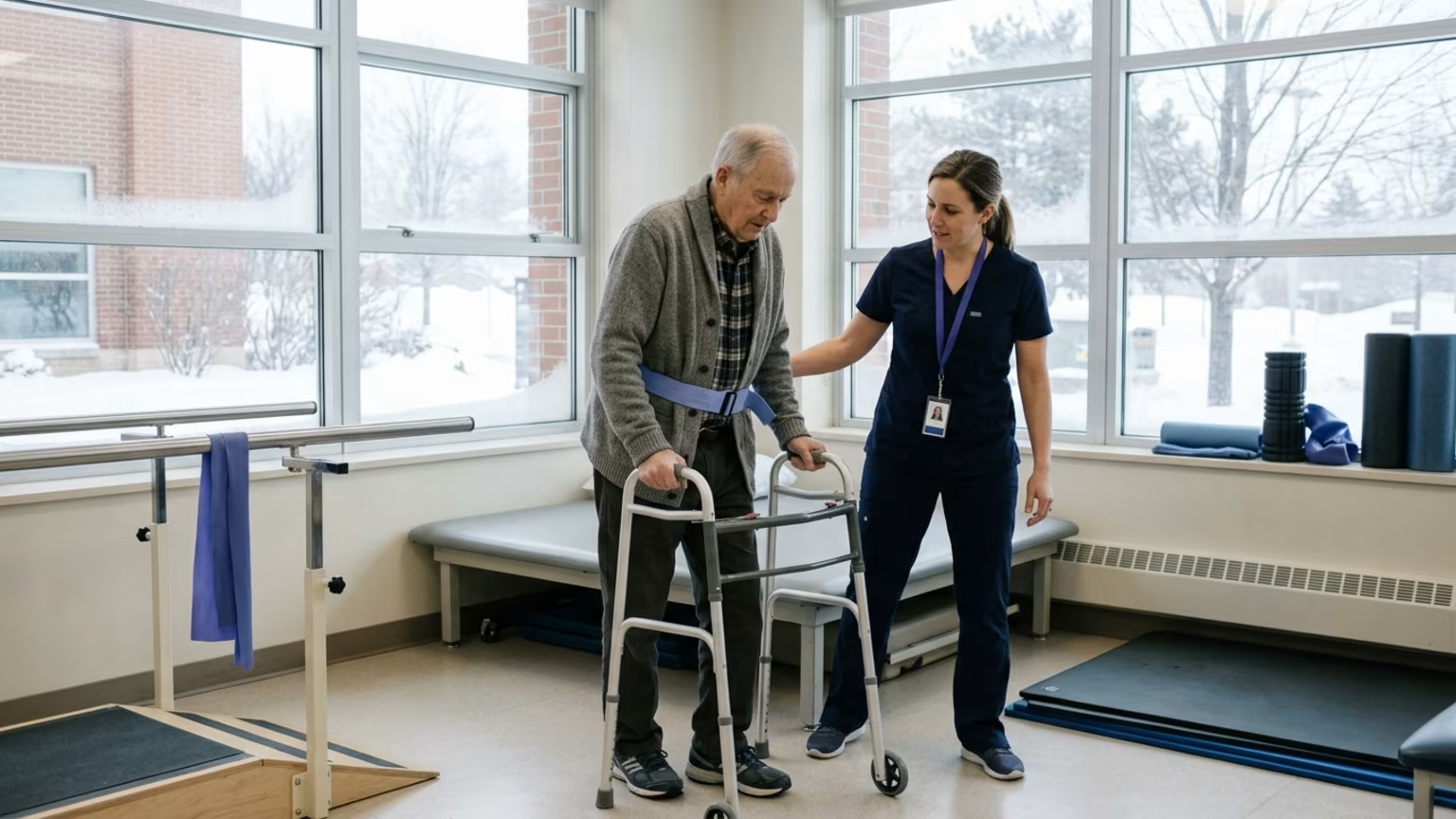

Elliot Hospital’s seasonal advice connects winter surgery preparation with physical therapy discussions, transportation and home-safety planning.





On 2026-09-23, orthopedic practice POSM published preparation advice that supported specialist-recommended exercise before orthopedic surgery. Elliot Hospital’s seasonal guidance addresses a related concern: connecting clinical preparation with transportation and home safety during winter recovery. Its Senior Health team recommends discussing surgical decisions with the care team and considering preoperative physical therapy alongside practical plans for returning home.
The winter details are specific. Elliot highlights transportation to physical therapy and an icy driveway as issues worth discussing before a procedure. It also draws attention to indoor fall hazards, including stairs and bathrooms, as well as routes used at night.
For someone facing orthopedic surgery, the useful message is about coordination. A conversation about strength before surgery can sit alongside a conversation about reaching therapy afterward. Planning for recovery also includes understanding how the home setting fits into the care team’s advice.
The clinical background for this seasonal advice is specialist-led preparation. In its related article, POSM advises patients to follow an exercise or physical therapy program recommended by an orthopedic specialist. It also advises discussing strenuous exercise with the provider before starting it, particularly when significant joint pain or injury is present.
That distinction matters when reading the phrase “build strength before surgery.” It describes a topic for the treating team to assess. It does not identify a particular exercise routine for a reader to choose from an online article.
Preoperative means before the procedure. Postoperative means after it. Elliot’s guidance connects these stages by encouraging conversations about physical therapy and assessments before surgery, along with plans for recovery at home.
The starting point is therefore the surgical discussion itself. Elliot recommends involving both the care team and the surgeon in decisions about surgery. Questions about preparation belong within that discussion rather than in a separate plan based only on general recovery content.
For readers comparing online advice, this provides a useful way to organize information. The specialist’s recommendation addresses personal clinical decisions. The hospital’s seasonal article adds subjects to discuss, including therapy arrangements and the setting where recovery will take place.
Elliot’s article brings together clinical preparation and practical planning. Keeping those categories separate makes the advice easier to understand without treating either one as the entire recovery plan.
The clinical side includes:
The practical side includes reaching physical therapy and accounting for icy access routes. Elliot’s examples make transportation part of the conversation before surgery, rather than leaving it as a detail to address only when an appointment is approaching.
These categories meet at an ordinary question: how will the planned care fit into daily life? A therapy recommendation identifies a clinical next step. A transportation discussion addresses how that appointment would be reached. Both subjects can be brought to the care team without assuming that the reader already knows what postoperative mobility will look like.
Home planning deserves the same attention. Elliot cautions readers to consider indoor hazards as well as outdoor conditions. Its examples include stairs and bathrooms, plus the route someone might use during the night.
The practical value is the wider view of preparation. An icy driveway is one concern, but it is not the whole home-recovery conversation. The hospital’s advice brings attention back to the spaces used every day and the support arrangements that may need discussion before the procedure.
Elliot’s guidance comes from its Senior Health team. The article covers fall prevention and chronic pain as well as planning for winter procedures. Its emphasis is therefore broader than surgery preparation alone.
For older adults facing orthopedic surgery, the transportation and home-access questions may closely match their concerns. The same planning subjects may also be relevant to a midlife adult whose recovery will take place during winter. Relevance here means that the questions fit the situation, not that every reader should receive the same exercise program.
The surgical portion addresses prospective patients who can discuss preparation with their treating team. It does not describe people enrolled in a specific research study. The population to keep in mind is an audience seeking seasonal health guidance rather than a defined group whose surgical outcomes were measured.
The most useful connection is between the reader’s circumstances and the article’s planning topics. Someone concerned about reaching appointments may focus on transport. Someone uncertain about home arrangements may focus on questions about access and support.
For broader background, readers can also review how strength and mobility relate to everyday function. That context can help organize questions without replacing the treating team’s advice.
Elliot’s recommendations support a discussion about preparation rather than a self-directed training plan. The following questions reflect the topics in its article. They are conversation prompts, not a required sequence or a set of conditions for surgery.
A useful question is: “Does preoperative physical therapy have a role in my preparation?” This follows Elliot’s advice to consider connecting with therapy while keeping the decision with the care team.
Another question is: “Which assessments need to be coordinated, and who can explain the arrangements?” Elliot identifies assessment planning as part of preparation. Asking about coordination can help distinguish an agreed clinical plan from general information found online.
POSM’s advice adds a related point for anyone considering strenuous exercise. That decision belongs in a conversation with the provider. The relevant question is what preparation the specialist recommends for the planned procedure and the person’s current condition.
Elliot specifically highlights getting to physical therapy during winter. A reader can raise any uncertainty about transportation before the procedure rather than trying to infer the answer from a general description of rehabilitation.
Possible questions include: “What should be discussed about transportation to therapy?” and “Who can help clarify the arrangements if winter access is a concern?” These questions focus on the practical issue Elliot identifies without assuming a particular appointment schedule or level of mobility.
Readers thinking further ahead can also learn about the transition beyond formal physical therapy. That is a separate stage of planning from the immediate question of reaching postoperative appointments.
The home conversation can include the areas Elliot names: stairs and bathrooms, along with nighttime routes. Outdoor access can be described separately, including any concern about an icy driveway.
A useful question is: “Which parts of my home setup should we discuss when planning recovery?” Another is: “What should I clarify about help at home?” Elliot’s advice supports bringing these subjects to the team instead of assuming that home preparation means the same thing for everyone.
The goal of these questions is shared understanding. A reader can describe the setting and the unresolved concerns. The treating team can address how those concerns relate to the planned care.
Elliot’s article is seasonal hospital education. It is not an announcement of a new clinical guideline, a trial, or a change in treatment standards. Its contribution is bringing clinical preparation and winter logistics into one discussion.
The article’s language about preoperative strength and recovery is qualified with “tends to.” It supplies no procedure-specific outcome data. That leaves unanswered which patients benefit most from particular preparation programs and how those programs relate to recovery after different procedures.
Its recommendations also do not establish that every surgical patient needs physical therapy beforehand. Connecting with therapy is something the care team can help consider and arrange. The practical winter advice likewise does not provide a tested protocol or a standard preparation timeline.
Elliot also cites exercise research without supplying enough detail about the included populations and programs to translate those findings into an individual routine. That is another reason to keep expectations tied to the planned procedure and qualified care, rather than to a broad claim about getting stronger.
The clear practical conclusion is to use the article as a guide to discussion topics. Strength preparation belongs with the clinical plan. Therapy transportation and home access belong in the same planning conversation, with personal decisions left to the treating team.
Today, write down one unresolved transportation or home-access question to bring to your surgical care team.
Choosing which winter surgery advice belongs in a care-team discussion is a decision ReboundBody supports through clear recovery information. Conflicting claims about exercise and treatment can make preparation harder to understand, so its evidence-aware coverage helps active adults in midlife and later life put rehabilitation and return to activity in context without medical promises.

Follow ReboundBody for practical articles on injury recovery, rehabilitation, mobility and rebuilding strength. New posts turn research into clear ideas for the road back to activity after injury or surgery.






Read practical guidance on injury recovery, rehabilitation, mobility and rebuilding strength as you work your way back to activity.
Explore Resources