
A study in healthy older adults found lean-tissue differences across exercise intensities. Here is the recovery context and what remains uncertain.





In 2025, a study published in Maturitas reported a difference in lean tissue among healthy older adults exercising at different intensities. The high-intensity interval training group maintained lean tissue, while the moderate-intensity group had a small decline. ScienceDaily described the study in coverage dated October 31, 2026.
The finding adds to a specific question about active aging: how exercise intensity relates to body composition. It deserves a closer look because a change in fat or lean tissue can sound like a broad verdict on which workout is best. The study's actual comparison was more focused.
The study compared high-intensity interval training, or HIIT, with moderate-intensity and low-intensity exercise. All three groups took part in exercise programs. The question was how their body composition changed over the same study period.
That comparison matters when placing the finding within the evidence. Lower-intensity exercise was an active comparison rather than an absence of activity. The study therefore speaks to differences among the programs it tested, not simply the value of exercising instead of remaining inactive.
The reports describe a research result rather than a revision to clinical guidance. A finding about one measured outcome does not automatically replace the reasons an existing exercise or rehabilitation plan was chosen.
The useful background is the distinction between an evidence question and a care decision. The researchers asked how exercise intensity related to tissue changes. A reader may be asking how to return to familiar activity after a physical setback. Those questions overlap, but they are not the same.
According to ScienceDaily, researchers assessed body composition at the beginning of the program and again after three months and six months. The reported pattern was:
These findings separate two outcomes that can easily get blended together: losing fat and retaining lean tissue. The groups did not show an identical pattern for both measures. That is the main contribution of this comparison.
There is also an important distinction between the language used to summarize a result and the measurement behind it. The Yahoo/Men's Journal report cautioned that the scans estimated fat and lean tissue. They did not directly measure muscle strength or establish better daily function. Retaining lean tissue therefore should not be translated into proof of preserved strength, improved mobility or maintained independence.
A precise summary keeps the tissue finding intact without adding benefits that were not demonstrated. In this study, the HIIT group maintained lean tissue while the moderate-intensity group showed a small decline. That is a useful observation on its own terms.
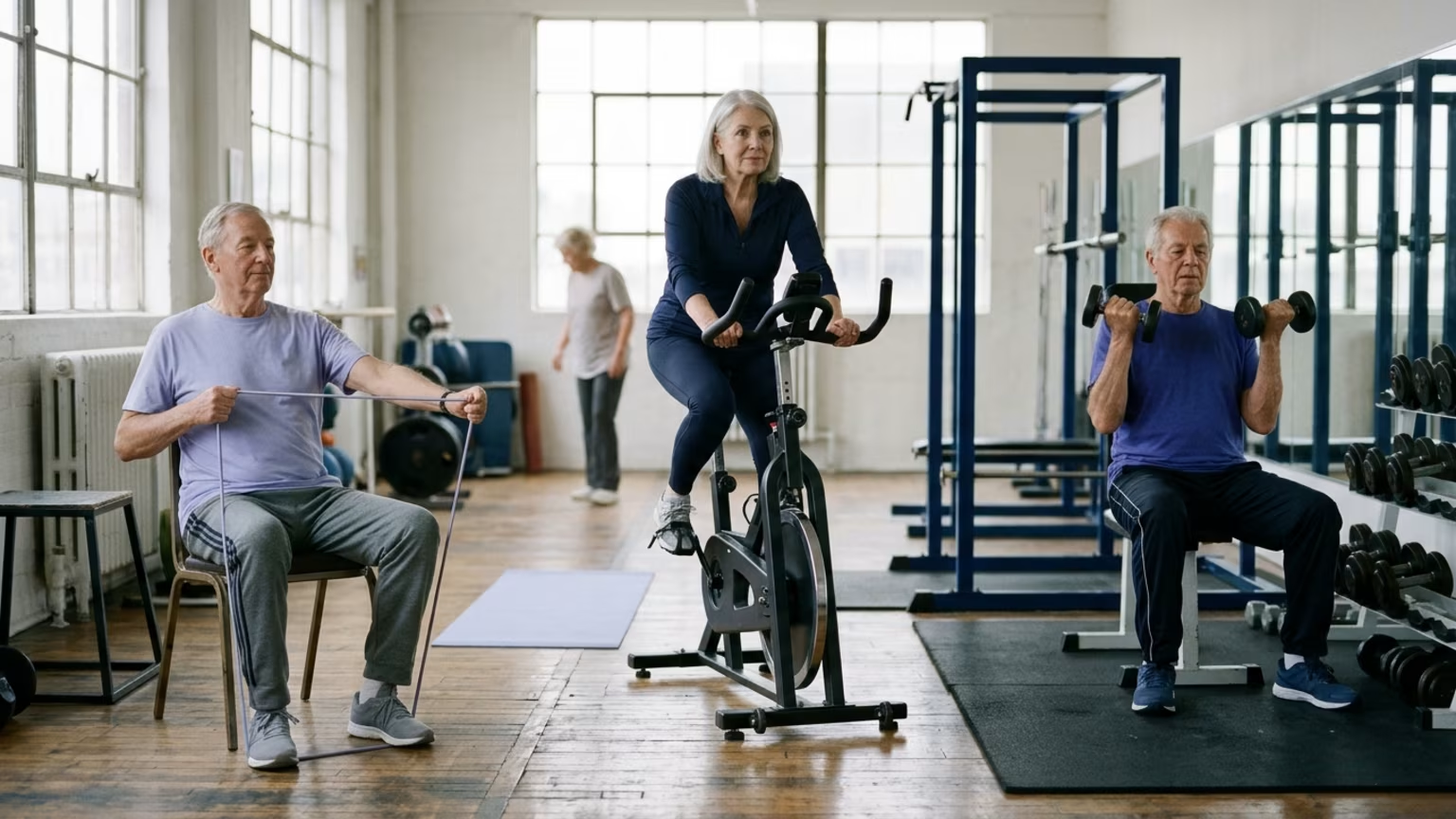
The study included 123 healthy older adults whose average age was 72. Participants attended supervised, 45-minute exercise sessions three times a week for six months, according to ScienceDaily and the Yahoo/Men's Journal report. Exercise intensity was individualized.
Those details describe the setting in which the result occurred. This was an organized program with supervision and effort adjusted to the participant. The intensity label was only one part of that setup.
The description of participants as healthy is especially relevant to ReboundBody readers. The available findings do not establish that the same results apply directly to people recovering from orthopedic surgery, injury or recurring pain. Nor do they establish the result for people with functional limitations.
That boundary is about matching evidence to the people studied. It is not a judgment about what someone recovering from a setback may eventually be able to do. It means the study population and a rehabilitation population should not be treated as interchangeable.
The average age also describes the group rather than predicting an individual response. The finding belongs to these participants under these program conditions. Keeping that context attached to the result makes it more useful than the intensity label alone.
For someone returning to exercise, the practical value is a clearer way to discuss intensity. The study does not supply an injury-recovery progression plan. Its session schedule describes the research program rather than a target for readers to copy.
A conversation with a treating clinician or rehabilitation professional can separate the study's finding from a personal decision about vigorous exercise. Useful topics include the goal of exercise, how greater effort would fit the current plan and how progress would be assessed.
A person's main concern might be returning to a familiar walk, managing stairs or resuming recreation. Those are possible recovery goals, not automatic reasons to favor the exercise group with the most appealing scan result.
Putting the finding alongside clear goals for a return to activity helps separate what matters to the person from what mattered in the study. A tissue measurement may be relevant to that conversation without defining the whole goal.
For a reader considering vigorous exercise during recovery, suitability and progression belong in a discussion with the treating professional. The useful question is how the proposed activity fits the person's current rehabilitation plan, rather than whether HIIT won a headline comparison.
This is also part of the broader question of readiness to return to regular exercise. A research finding can help frame that discussion without settling the decision.
It helps to distinguish a research outcome from the outcome being pursued in care. The discussion may concern movement capacity, confidence in familiar tasks or a return to recreation. Naming that purpose keeps attention on the person's recovery rather than on reproducing a study result.
The Yahoo/Men's Journal report cautioned that the body-composition changes were relatively small and not clearly clinically meaningful compared with lower-intensity exercise. In plain language, the reported differences did not establish a clear advantage large enough to matter in practice.
That leaves a question about the importance of the lean-tissue pattern. A difference can be worth studying without being large enough to determine which program a person should use. The finding supports further attention, not a broad ranking of exercise choices.
The reason for the difference also remains unsettled. University of the Sunshine Coast associate professor Mia Schaumberg suggested that HIIT's greater muscular demand might provide a stronger signal to retain tissue. That is a proposed explanation rather than a mechanism demonstrated by these findings.
Whether the pattern lasts beyond the six-month program is another open question. Longer-term results would help show whether the observed difference persists or changes over time. The study's duration should remain part of how its result is understood.
The measured conclusion is narrower than a claim that harder exercise is always better. This comparison found a difference in lean-tissue outcomes within a supervised program for healthy older adults. There is room for a useful finding without making it the whole story of recovery.
A lean-tissue result can become pressure to train harder when the study setting is left out. ReboundBody translates recovery research into clear explanations for active adults. Its coverage of rehabilitation and return to activity keeps evidence limits visible for people navigating injury or surgery, without making medical promises.

Follow ReboundBody for practical articles on injury recovery, rehabilitation, mobility and rebuilding strength. New posts turn research into clear ideas for the road back to activity after injury or surgery.






Read practical guidance on injury recovery, rehabilitation, mobility and rebuilding strength as you work your way back to activity.
Explore Resources