

A spinal cord injury trial found mixed pain results. Learn what supported exercise added and how to discuss the findings with a care team.





On October 21, 2026, the University of British Columbia (UBC) reported mixed findings from a randomized exercise trial for adults with spinal cord injury (SCI) and chronic pain. The primary pain measure was inconclusive, while a separate SCI-specific measure favored exercise. The study was published in Archives of Physical Medicine and Rehabilitation.
The useful question is not simply whether exercise “works” for pain. It is which outcomes changed and what kind of program was tested. This trial examined individualized exercise with professional support in everyday settings.
That makes the findings worth understanding without treating them as a broad endorsement of exercise as pain treatment. The details offer a more useful starting point than the headline alone.
Before this trial, people with SCI had already described using exercise to manage pain. Lead author Kathleen Martin Ginis said evidence on how to prescribe it for that purpose had been lacking. The researchers were testing an approach people had reported using, rather than introducing the idea for the first time.
UBC described the study as the first randomized controlled trial to test whether international SCI exercise guidelines could specifically help reduce chronic pain. A U.S. News report likewise described the exercise prescriptions as based on SCI guidelines that include aerobic and strength exercise.
That distinction matters. Having an exercise guideline and having evidence that a program reduces chronic pain are separate things. This trial asked a pain-specific question within an existing exercise framework.
UBC also reported that the research was shaped by input from more than 150 people with SCI and 50 clinicians. That input placed the study question in the context of concerns raised by people living with the condition and those involved in their care.
Community input and trial results serve different purposes. The input helps explain why the question was worth asking. The measured outcomes are what readers need to examine when judging the program's effects.
According to UBC, the exercise program combined individualized aerobic and strength activity with support from certified fitness trainers and weekly counseling. Participants exercised at home or in places such as local gyms and community centers. The intervention was not confined to a research facility.
The support is part of what was tested. This was more than a general suggestion to become active, and the results belong to that supported program as a whole.
The primary pain measure combined pain severity with interference in daily life. A separate SCI-specific measure focused on pain intensity. These outcomes are related, but they are not interchangeable.
Pain intensity concerns how much pain someone reports. Interference concerns the effect of pain on everyday life. Keeping those ideas separate helps explain why findings from different measures should not be folded into a single claim of success.
On the SCI-specific intensity measure, UBC reported significant decreases in the exercise group compared with the control group at three and six months.
At six months, 8 of 18 assessed exercise participants reported a pain-intensity reduction of at least 30%. The corresponding result was 2 of 16 assessed control participants. Those figures describe the participants assessed for that comparison, not all 46 people enrolled in the trial.
The 30% figure describes the size of the pain reduction used in this comparison. It does not mean that exercise helped 30% of all participants or that pain fell by that amount for everyone.
UBC also reported less pain interference with daily activities and mood in the exercise group at three months. The group reported greater vitality as well.
These outcomes add context beyond the intensity score. They keep attention on what living with pain involves, rather than reducing the whole question to how strong pain feels. Each result still needs to be read as its own outcome.
The trial enrolled 46 adults with chronic neuropathic or musculoskeletal pain after SCI. About half were assigned to the supported exercise program. The comparison group continued its usual activities.
The inclusion of musculoskeletal pain does not make this a general study of orthopedic recovery. Every participant belonged to the SCI population being studied. The findings therefore do not directly establish the same pain effects after joint surgery or a common muscle or tendon injury.
For ReboundBody readers recovering from a different physical setback, that boundary is important. Similar words such as “pain,” “strength” and “exercise” do not make different recovery situations interchangeable.
The reported comparison also matters: supported exercise was compared with usual activity. That is the comparison to keep in mind when weighing the findings, rather than imagining that the trial ranked every available pain-care option.
Questions about planning a gradual return after injury remain tied to the person's diagnosis and recovery stage. This SCI trial adds a specific piece of evidence rather than supplying a general return-to-exercise plan.
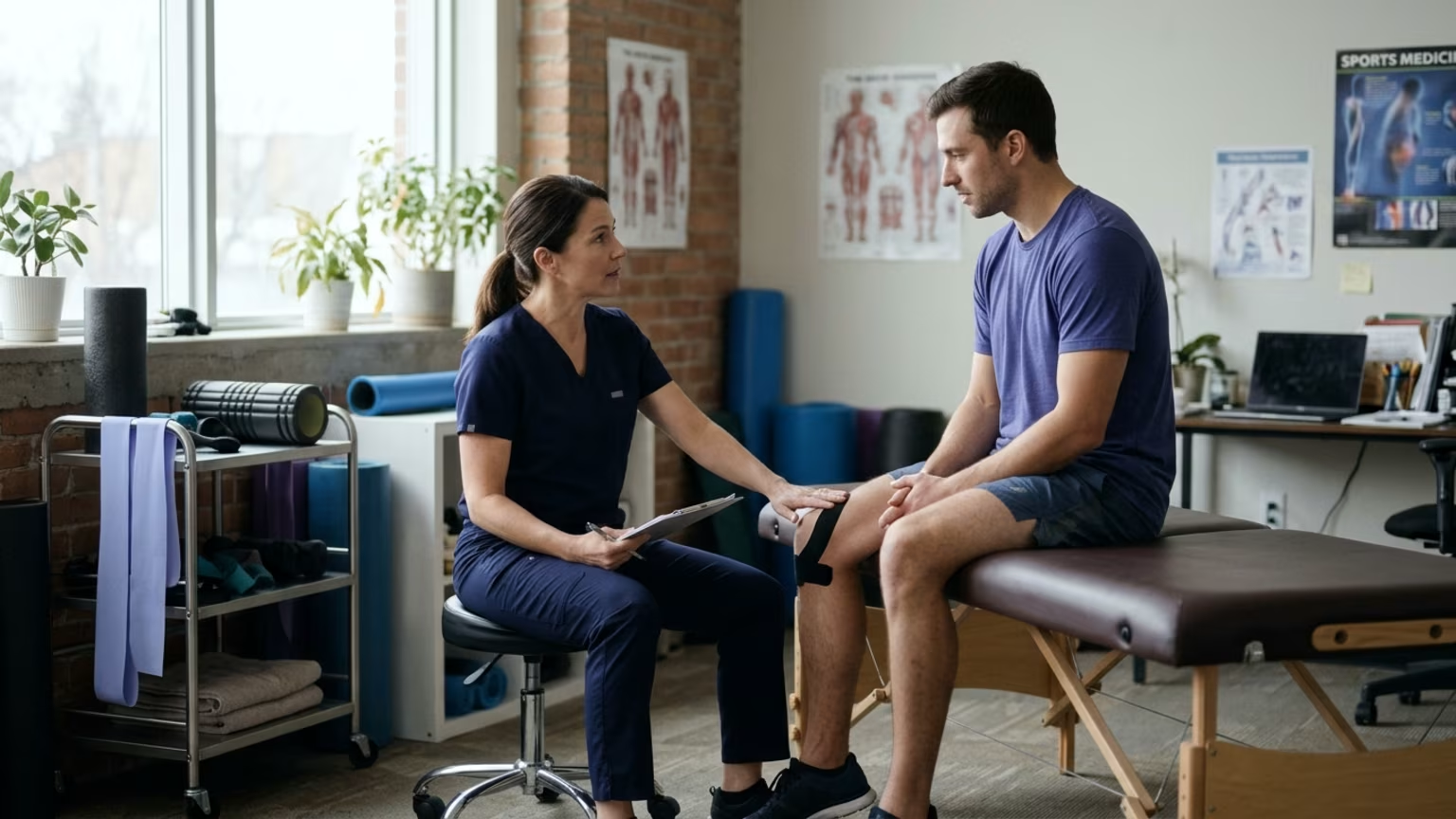
The practical value is a reason to discuss individualized aerobic and strengthening activity with a qualified clinician or rehabilitation professional. For someone with SCI and chronic pain, the study provides a concrete program and set of outcomes to discuss.
It does not establish that exercise should replace medication or other pain care. Those decisions remain personal clinical decisions, not conclusions a reader should draw from this report.
A useful conversation can focus on the following questions:
These are discussion topics, not a routine to follow. The research supports asking about a tailored approach rather than copying exercises or selecting a workload from a news story.
For readers sorting through several pain-care options, ReboundBody's guide to discussing pain management with a healthcare professional offers a separate place to frame that conversation.
It is also useful to keep the purpose of the discussion clear. A pain outcome and a question about returning to a particular activity are not the same question. Readers preparing for that transition can bring questions about how activity readiness is assessed to their rehabilitation team.
The role of this update is to make those conversations better informed. It is not to change a reader's current exercise or pain-management plan.
The study enrolled fewer people than planned. UBC said COVID-19 restrictions and wildfire evacuations disrupted recruitment, leaving enrollment at 46 rather than the planned 84. Martin Ginis called for larger trials to confirm the findings.
Individual responses also differed. Some participants reported large pain reductions, while others reported little change or increased pain. That variation is an important part of the result, not a detail to set aside when describing the more favorable findings.
Participants met the aerobic prescription more consistently than the strength prescription. This leaves an important question about how the program was carried out: which parts were people able to sustain, and how might that affect the results?
Because the intervention combined exercise with trainer and counseling support, the findings also leave questions about the contribution of each part. A larger study could help clarify which people benefit and what support matters most. Whether favorable changes continue beyond the reported follow-up is another question for future research.
Martin Ginis cautioned that the intervention “isn’t a cure-all.” Her interpretation leaves room for exercise as a possible option for some people while keeping the need for confirmation in view.
For now, the clearest next step is a better question for the care team, not a borrowed exercise prescription.
Day-to-day decisions about exercise for spinal cord injury pain sit with the treating team; ReboundBody's role is to make the supporting research easier to understand. Its articles give active adults plain-language context for rehabilitation and rebuilding strength without turning a study result into a medical promise.

Follow ReboundBody for practical articles on injury recovery, rehabilitation, mobility and rebuilding strength. New posts turn research into clear ideas for the road back to activity after injury or surgery.




Read practical guidance on injury recovery, rehabilitation, mobility and rebuilding strength as you work your way back to activity.
Explore Resources