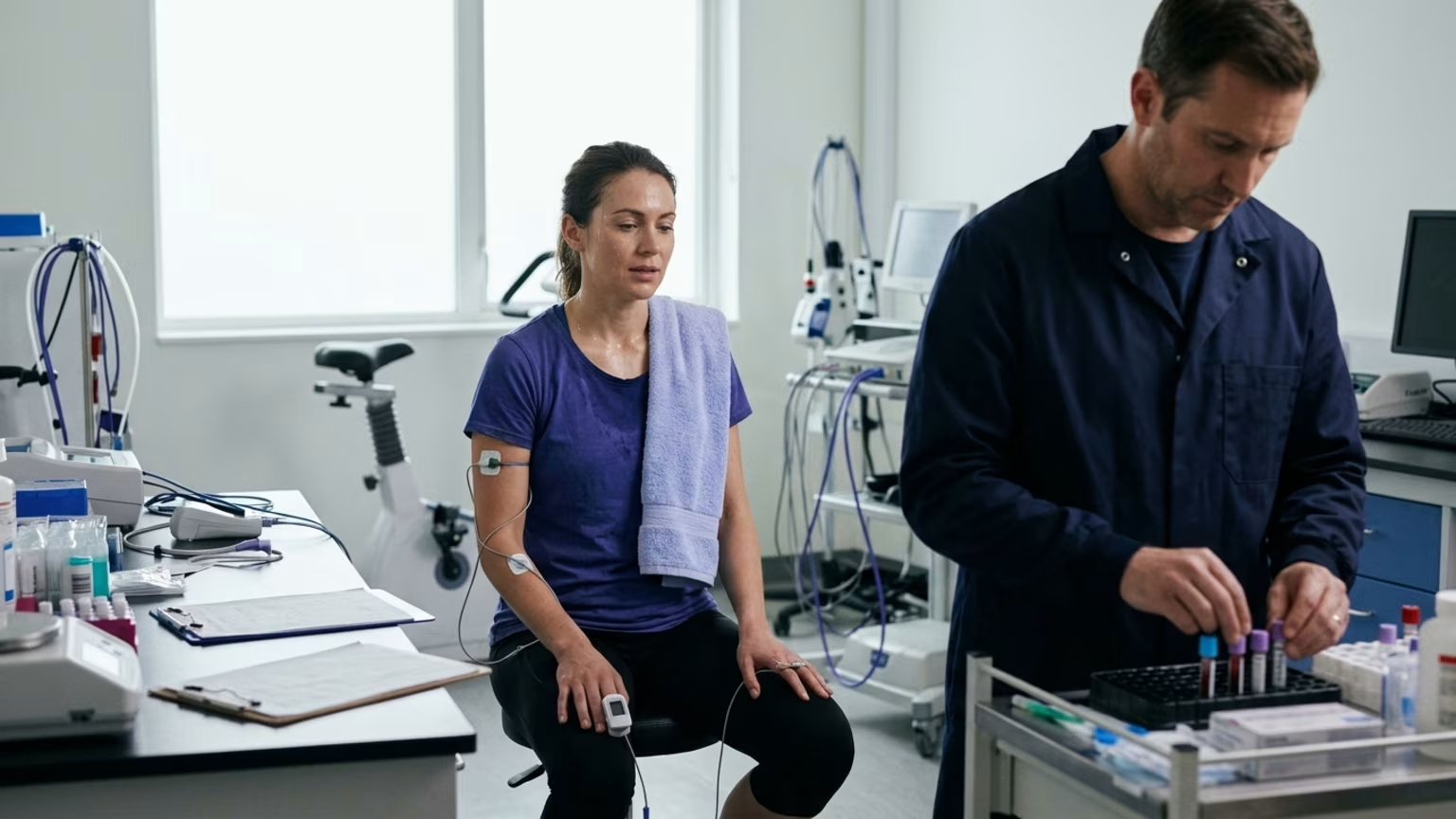

A new study mapped thousands of protein changes after exercise. Learn what it adds to recovery research and why it does not set a nutrition or rehab plan.





An October 12, 2026 report on a Nature Metabolism study described thousands of protein changes after a single exercise session. The study was titled “Systemic proteomic dynamics of acute exercise reveal genetic links to health and disease.” Researchers measured 10,128 proteins across blood, saliva and urine. Of those, 3,007 showed a significant response after exercise.
The findings offer a detailed picture of how the body responds during the hours following physical activity. Different responses appeared in different fluids and at different times. Later patterns included associations with immune activity and tissue repair.
For adults rebuilding movement after an injury or surgery, the important question is how this research fits into recovery care. Understanding the study starts with separating the biological response it measured from the practical outcomes a recovery plan aims to improve.
This was an update to the research picture rather than an announced change in rehabilitation guidance. The report added evidence about short-term biological responses to exercise. It did not announce a replacement for the guidance a patient receives from a qualified healthcare professional.
The study's starting point was a set of samples collected before exercise. Researchers then compared those measurements with samples taken after the session. That setup asks a focused question: what changed following exercise?
A clinical recovery question is different. It asks whether an approach improves outcomes such as pain, strength or the ability to return to activity. A detailed molecular map can help shape research questions without answering all of those clinical questions itself.
This distinction also helps when reading about the difference between symptom relief and readiness for exercise. A laboratory result and a practical recovery milestone describe different parts of the picture. Neither should be silently substituted for the other when interpreting a research headline.
The study summary reports that about 30% of the measured proteins were significantly regulated after exercise. Here, the finding concerns changes in protein measurements across the sampled fluids. The response varied by both the fluid being tested and the time since the session.
The reported fluid-specific findings included:
These results make the timing of the samples important to the story. The researchers were not simply producing a list of proteins associated with exercise. They were mapping where responses appeared and how those responses unfolded afterward.
At 24 hours, the report describes patterns associated with immune-cell mobilization, growth-factor activity and tissue repair. It also identifies proteins related to the extracellular matrix as central across time points. These are the biological categories highlighted by the analysis.
The report describes an openly available interactive atlas through a University of Copenhagen research-group resource. Its proposed uses include studying exercise biology and developing candidate biomarkers. Biomarkers are measurements researchers may investigate as indicators of a biological response.
A separate comparison also found overlap between groups. According to the study summary, 1,212 proteins responded consistently with the initial group. It reports that 74% of time-responsive proteins changed in the same direction immediately after exercise.
That comparison is a useful addition because the research did not rely only on the initial cycling session. It gave researchers another setting in which to examine the protein patterns. To judge how far that comparison reaches, however, the makeup of both groups matters.
The initial group consisted of 25 healthy young men. They completed 45 minutes of moderate-intensity cycling. The report describes the intensity as about 75% of maximum heart rate.
Researchers collected blood, saliva and urine before exercise and at several points through 24 hours afterward. This was a small group completing a defined exercise task. The participants were not described as patients recovering from orthopedic injury or surgery.
The separate group included 24 middle-aged adults, 62.5% women. In a randomized crossover design, they completed aerobic exercise, high-intensity interval exercise and resistance exercise. This broadened the research beyond young men and beyond a single exercise mode.
The report does not identify that second group as people receiving rehabilitation either. Including middle-aged adults and women improves the range of participants studied. It does not establish that the results apply to people with persistent pain, reduced mobility or healing orthopedic injuries.
For ReboundBody readers, that boundary is important. Being closer in age to some study participants is not the same as sharing their health status or recovery situation. The evidence applies most directly to the exercise responses of the volunteers who were studied.
The practical value of this study is understanding the research, not copying the exercise session. The duration and intensity describe the experiment. They are not personal targets for someone returning to movement after a physical setback.
The same distinction applies to the timing of the findings. A protein response observed at a later sampling point is part of the study's timeline. It should not be turned into a deadline for a person's next workout or recovery milestone.
The word “protein” can make this headline sound like a nutrition study. In this case, the researchers were measuring proteins in body fluids after exercise. They were not comparing meals or testing how much dietary protein participants should consume.
The report provides no dietary intervention, supplement comparison or nutrition recommendation. It therefore offers no basis for choosing a post-exercise meal, a supplement or a protein dose. Nutrition decisions that depend on an individual's health and recovery needs belong in a discussion with qualified care.
A useful reading habit is to match each claim to the outcome measured. In this study, the outcome was a pattern of molecular responses. A claim about better rehabilitation would need evidence about rehabilitation outcomes.
That distinction keeps an interesting finding in its proper place. The atlas may help researchers form new questions about exercise and recovery. It does not need to become a new daily rule to be valuable.
For practical context, readers can review the broader questions involved in moving from rehabilitation toward familiar activities. The relevant discussion is how evidence relates to a person's goals and current situation. Decisions about changing training demands during a return to activity require more than a molecular headline.
The central unanswered question is how these protein patterns relate to outcomes that patients can feel or use. A protein changing after exercise does not by itself demonstrate faster healing, improved strength or less pain. The report provides no patient-outcome results showing a better return to activity.
The observation period also matters. The study tracked an acute response through 24 hours. It does not establish long-term changes in function or show how the patterns develop across an extended recovery period.
There is a further gap between identifying a candidate biomarker and using it in routine care. The report describes possible future applications such as biomarker development and precision exercise prescription. It does not show that the candidates are ready to guide patient decisions.
Useful next research questions include:
These are questions for further study, not findings already established by the atlas. The contribution here is a detailed resource for investigating exercise biology. Its clinical value will depend on what later research connects those measurements to.
Today, write down one question for your healthcare team: “What evidence will we use to judge my readiness for my next activity?”
Regaining strength and resuming usual activities are outcomes worth distinguishing from laboratory signals, a difference ReboundBody clarifies through research-led recovery writing. ReboundBody helps adults in midlife and later life make sense of conflicting exercise and nutrition claims so they can better understand recovery and prepare questions for qualified healthcare professionals.

Follow ReboundBody for practical articles on injury recovery, rehabilitation, mobility and rebuilding strength. New posts turn research into clear ideas for the road back to activity after injury or surgery.




Read practical guidance on injury recovery, rehabilitation, mobility and rebuilding strength as you work your way back to activity.
Explore Resources