

A UP Health System hip recovery story illustrates reassessment and everyday milestones, with clear limits on what one patient’s experience establishes.





On October 23, 2026, UP Health System published a patient-recovery story describing Harry Hermann’s progress from wheelchair use toward walking and everyday physical tasks. The report says his rehabilitation team repeatedly reviewed his progress and adjusted his plan. His reported milestones eventually included stairs, gardening and lifting.
The detail worth examining is the process between those milestones. The account describes clinic treatment alongside home exercise and repeated reassessment. For readers wondering how rehabilitation connects with normal activity, it offers a concrete example of a plan being reviewed as a person’s abilities change.
The background to this report is Hermann’s situation before therapy. According to UP Health System, he had recently undergone angioplasty and received heart stents. Hip surgery was not an option at that time because of his recent heart procedure.
The story says Hermann arrived at physical therapy after spending three weeks in a wheelchair. An injection in his hip helped him begin treatment. Those details matter because the starting point was not simply a decision to exercise more. His care involved several clinical decisions within a particular medical situation.
Physical therapist Natalie Hupp described early work aimed at moving the affected body part without worsening severe pain. She said Hermann’s pain decreased from “a nine or ten out of ten to about five or six.” That account places symptom management alongside the effort to restore movement.
This was a report about a treatment course rather than an announcement of revised rehabilitation guidance. Its useful context is the sequence of events: restricted mobility came first, followed by treatment and a plan that the team continued to review. The later activity milestones make more sense when read against that starting point.
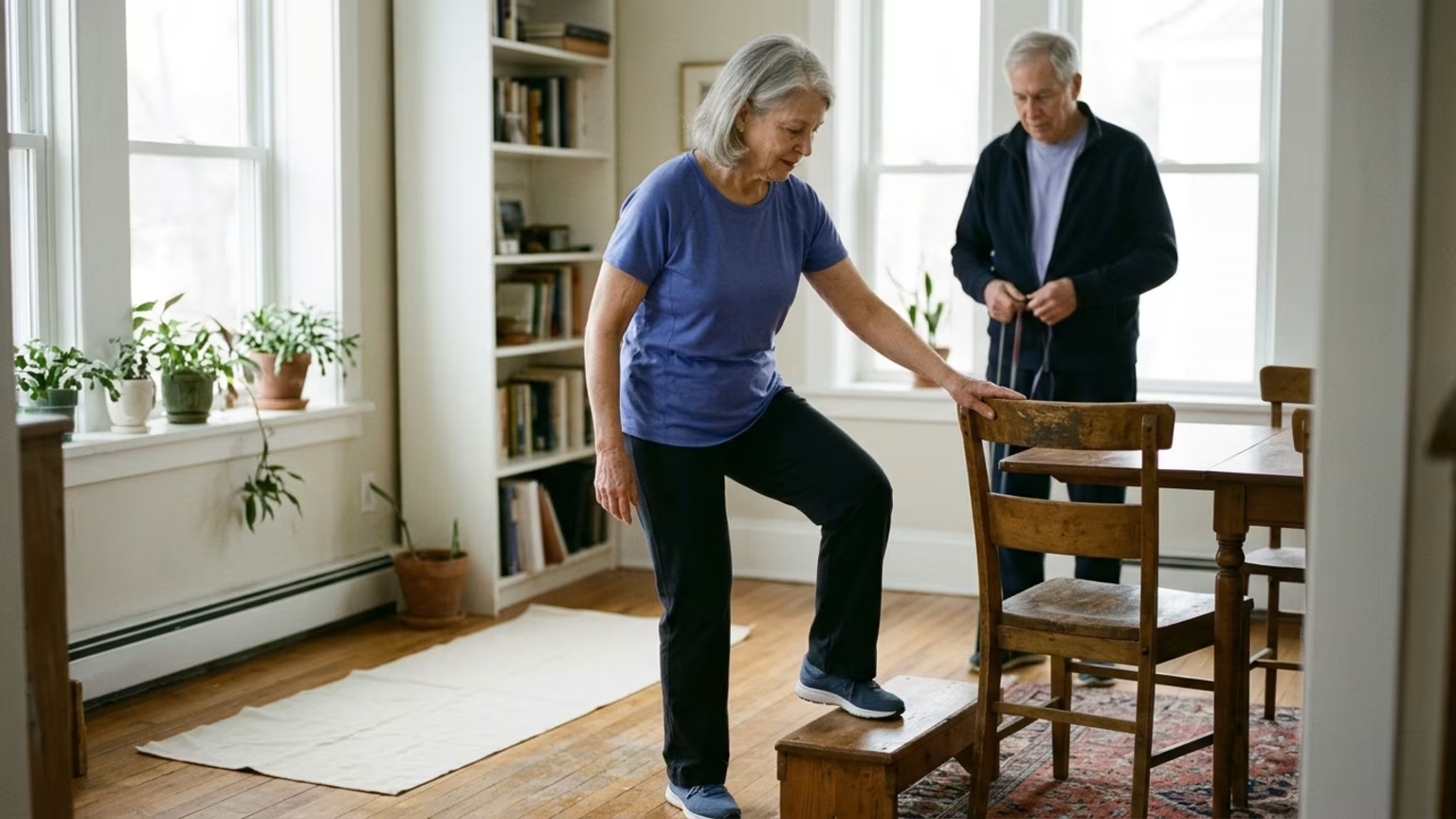
UP Health System describes a progression from a wheelchair to a walker and then a cane. Hermann later walked without the cane. The story also reports stair negotiation and a return to gardening, along with lifting, pushing and hauling.
These are different descriptions of progress within his story. Walking without a cane records one change. Returning to gardening records another kind of achievement: participation in an everyday activity. Looking at both gives a fuller picture of what the hospital meant by his return to mobility.
The report says Hermann’s progress was reassessed every eight weeks. His plan was adjusted as needed. That review process is the central feature of this account: the plan was revisited rather than described as an unchanged set of exercises from beginning to end.
According to the hospital story, Hermann exercised six days a week and rested one day. Hupp described home exercise as important to supporting the work done in the clinic. She also emphasized the individual’s commitment, offering her observations as his treating therapist.
At the time of publication, Hermann said he was using a treadmill. His routine included 30 exercises, alternating 15 each day. These details describe the amount of activity reported at that stage of his recovery.
Read together, the milestones and review schedule show several parts of his rehabilitation: changes in walking support, changes in everyday function and continued work outside the clinic. The report’s practical interest lies in how those parts fit into the story, rather than in any single exercise or achievement.
The patient described is Hermann, a retired electrician. The article does not state his age or identify a specific hip diagnosis. It also does not provide the injury mechanism or explain the severity of the underlying joint problem.
Those missing details define who the account applies to. It documents Hermann’s experience within the circumstances described. It does not identify a diagnosis-based group whose members could be expected to follow the same course.
For adults in midlife or later life, the connection is therefore the recovery question rather than a matching medical profile. How did the team recognize progress beyond basic walking? Which activities appeared in the account of his return to daily life? Those questions keep attention on the reported process without assuming that another person has the same hip problem.
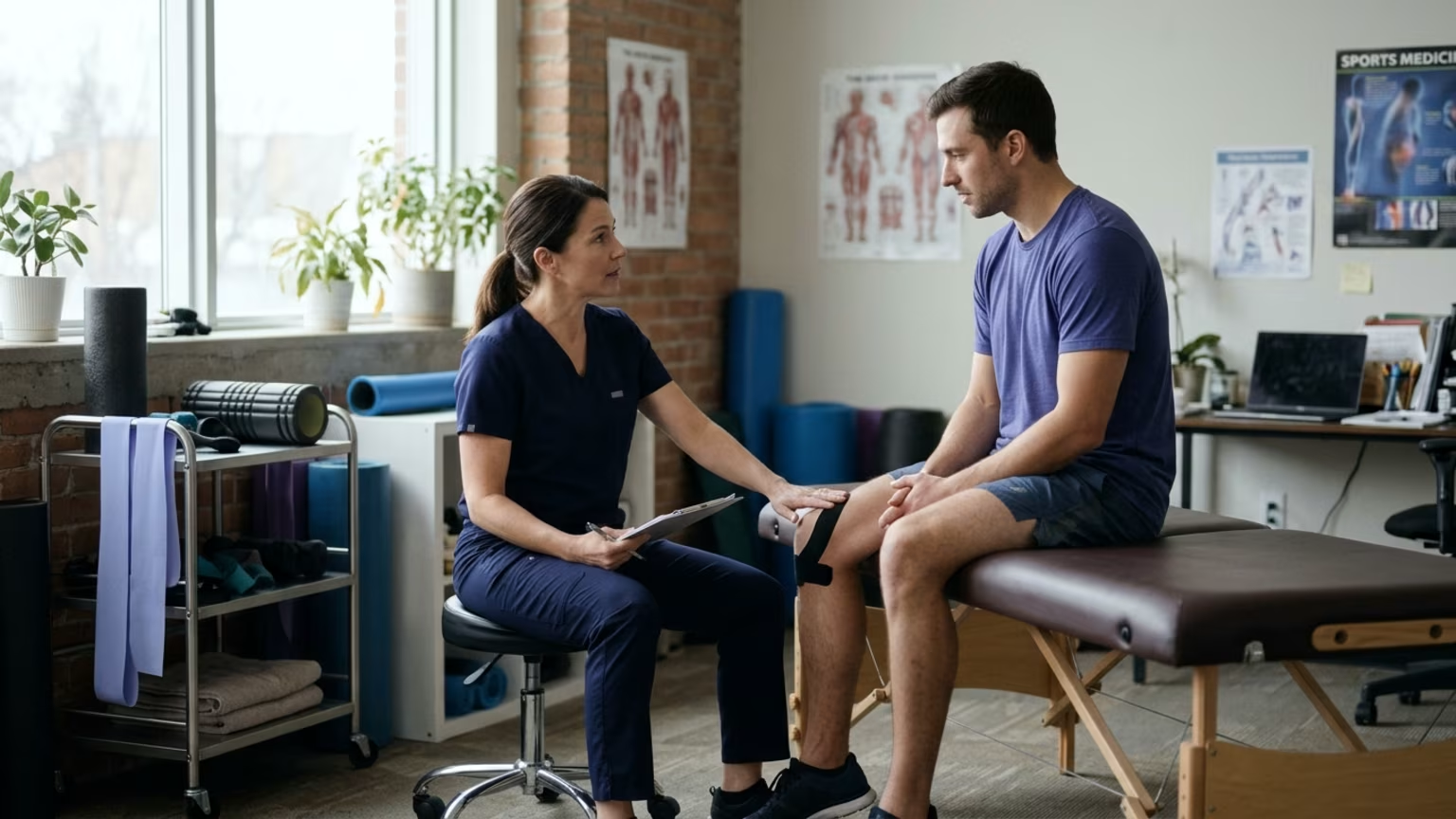
The clearest practical use of the story is as a starting point for discussing goals with a qualified healthcare professional. Hermann’s reported progress included tasks that mattered outside the clinic. Readers can ask how their own appropriate goals will be described and reviewed.
Questions consistent with the case include:
These questions concern the reasoning behind a plan rather than a request to copy Hermann’s routine. They also give the transition back to normal activity a clearer subject. Instead of discussing “getting stronger” in broad terms, the conversation can focus on the functions the treating team considers relevant.
ReboundBody’s explanation of movement patterns used in everyday tasks offers related background for understanding that kind of discussion. The connection to this story is the focus on daily function, not an additional exercise plan drawn from Hermann’s experience.
Hupp emphasized honest communication about how exercises feel. She also acknowledged that therapy can involve soreness and hard work. Her account supports discussing severe pain or an exercise that seems to aggravate symptoms with the treating therapist.
The useful distinction is between reporting an experience and deciding what it means medically. A reader can describe what an activity feels like without making a diagnosis or independently changing the treatment plan. The interpretation remains a matter for the clinician who knows the person’s situation.
For related reading, ReboundBody covers ways to describe and track physical responses during rehabilitation. In the context of this case, the relevant point is communication: information from outside the appointment belongs in the discussion about progress.
In Hermann’s story, review was linked with adjustments to his plan. Readers can ask their own clinician what a review will consider and which functional goals are appropriate. That keeps the discussion centered on the person’s current care rather than on reaching someone else’s milestone.
The hospital article is a patient story, not a clinical trial or treatment comparison. It provides no comparison group or broader patient outcomes. It therefore cannot establish how often physical therapy avoids surgery or isolate which parts of Hermann’s care produced his reported improvement.
The same boundary applies to the schedule and exercise volume. His review interval and home routine are details of his care, not a universal prescription. The reported pain ratings are Hupp’s account of his progress; the article does not describe a formal measurement protocol or standardized outcome scores.
UP Health System reports that Hermann eventually avoided hip surgery. After new X-rays, his surgeon reportedly said, “That is a hip I wouldn’t expect to replace anytime soon.” The story does not name the surgeon or provide the X-ray findings and detailed prognosis. That remark describes the reported assessment of Hermann’s hip at that point rather than a prediction for other patients.
The open questions concern how similar patients might fare and what their longer-term outcomes would be. This account does not settle those questions. It does give a picture of one rehabilitation course in which progress was reviewed and everyday activities became part of the story.
The lasting image is not an exercise count or a date on a calendar. It is the return of ordinary tasks to Hermann’s day.
Choosing which everyday milestones to discuss at a rehabilitation review is a question ReboundBody helps readers understand through evidence-aware recovery writing. For active adults uncertain about moving from formal rehabilitation back to normal activity, its independent articles explain recovery concepts with realistic limits so readers can better understand the transition and prepare questions for qualified healthcare professionals.

Follow ReboundBody for practical articles on injury recovery, rehabilitation, mobility and rebuilding strength. New posts turn research into clear ideas for the road back to activity after injury or surgery.




Read practical guidance on injury recovery, rehabilitation, mobility and rebuilding strength as you work your way back to activity.
Explore Resources