

Learn how to monitor physical symptoms during injury recovery. We explain how to evaluate daily discomfort and when to seek professional clinical guidance.





Pain does not always mean you are causing damage. When you begin rebuilding strength after an injury, discomfort is often a normal biological response. The actual challenge is observing how your body recovers in the hours that follow. Building a realistic expectation of the recovery timeline is essential for long-term success.
Reading your physical response involves monitoring symptoms as an observation tool rather than a strict test. You can evaluate how a joint feels during movement, immediately afterward, and the following morning. If symptoms settle quickly and return to their baseline level, the workload is likely manageable. If you notice a worsening trend or a loss of function, that signals a need to pause.
There is always some uncertainty in orthopedic rehabilitation. The rules change depending on your specific injury and the surgical protocols you might have. Fear of reinjury often causes people to avoid movement entirely. This avoidance can slow down the healing process and lead to further muscle loss.
The goal is to gather information about your physical limits without crossing them. You can use this daily data to make informed decisions about your routine. Understanding these patterns helps you separate harmless fatigue from actual setbacks. It ultimately provides a clearer path forward for your long-term recovery.
The appropriate physical response varies wildly from person to person. A patient recovering from a ligament reconstruction will have strict postoperative restrictions. Those clinical guidelines always override any general symptom check you might perform at home. Meanwhile, a person managing chronic tendon irritation might be encouraged to tolerate mild discomfort.
Different tissues simply heal at different rates. Guidelines that apply to a muscle strain will not map perfectly onto a joint replacement. This biological variability is why a single pain score cutoff never works for everyone. Personal medical history also alters how the nervous system interprets movement.
Previous injuries can change your baseline sensitivity to new activity. The current stage of your recovery plays a massive role in what is acceptable. Early rehabilitation heavily focuses on protection and reducing inflammation. Later stages require controlled mechanical stress to rebuild tissue tolerance and functional strength.
Age and sleep quality also influence how your tissues recover from exertion. A younger adult might bounce back from a heavy session overnight. An older adult might need an extra day of rest to achieve the identical recovery. All these variables mean that your symptom response is unique to your current life circumstances.
A practical framework for reading your body focuses on a full daily cycle. The first check happens while you are actively moving or exercising. You want to note whether the sensation remains stable or sharply increases as you continue. A sharp increase often indicates that the current load is too heavy.
The second observation period begins immediately after you finish the activity. Notice how quickly your body returns to its resting state. A manageable response means the heightened awareness begins to fade within a few hours. Lingering stiffness is quite common, but it should not prevent you from performing basic daily tasks.
The final check occurs the following morning. This next-day evaluation is often the most revealing metric for tissue tolerance. If you wake up and your symptoms have returned to normal, the previous day was tolerated well. A significant spike in stiffness suggests the activity exceeded your current physical capacity.
Writing down your observations can reveal trends that you might otherwise miss. A simple log helps with tracking physical symptoms and measuring exactly how long stiffness lasts after a workout. You can document the specific exercises you performed and the weights you used. This structured approach prevents you from making emotional decisions based on temporary discomfort.
Many people assume that rehabilitation must be completely comfortable to be safe. In reality, some physical awareness is entirely normal when you introduce new loads. Tissues that have been immobilized will naturally react when they are asked to work again. This reaction is a standard part of the biological healing process.
Discomfort alone does not automatically mean you are causing joint damage. The severity and duration of the sensation are far more important than its mere presence. Mild soreness that dissipates quickly often indicates that your body is adapting to the stress. This physical adaptation is exactly what builds joint resilience over time.
However, this does not mean you should force your way through sharp pain. A healthy adaptation process feels significantly different than aggravating a damaged structure. You must evaluate the specific quality of the sensation during your exercises. A dull ache is generally more acceptable than a sharp stabbing feeling.
A structured physical progression relies on knowing the difference between loading healthy tissue and causing harm. You might notice that certain movement patterns consistently cause irritation while others feel completely fine. This insight allows you to modify your routine rather than abandoning it entirely. You can focus on isolated strengthening exercises that do not provoke a negative response.
Finding the exact right amount of activity is a common source of frustration. Scientists continue to study how much exercise provides the best recovery stimulus. A 2026 systematic review looked at this issue by analyzing 239 trials. In that extensive dataset, 99.2 percent of the trials involved nonspecific chronic low-back pain presentations.
The authors associated low to moderate exercise doses with short-term improvements. However, they also noted that the evidence did not establish one optimal exercise dose. The researchers cautioned that the certainty of their evidence was low to very low. They judged 84 percent of the included trials to be at high risk of bias.
These statistics highlight the inherent uncertainty in physical rehabilitation research. The review also reported that adverse events occurred in 28.5 percent of the included trials. Those events were predominantly non-serious and musculoskeletal in nature. This data reinforces why individualized care is so vital when rebuilding strength after a physical setback.
Broad scientific studies provide helpful context, but they cannot give you a personal blueprint. The inability to identify one perfect exercise dose is a vital piece of information. It confirms that rehabilitation is an iterative process of careful trial and error. Patients must rely on mindful observation rather than rigid adherence to a generic online protocol.
General education can never replace specific medical advice from a professional. Your physical response should always be discussed with a qualified clinician or orthopedic specialist. You might ask them what specific physical sensations are normal for your exact procedure. Knowing what to expect reduces anxiety when you encounter typical post-workout fatigue.
You should also ask about red flags that warrant an immediate pause in activity. A clinician can explain which movements are strictly prohibited during your current phase of healing. It is helpful to ask how you should modify your routine if next-day soreness is severe. They can help you properly adjust the intensity, volume, or frequency of your exercises.
Ask your physical therapist how they measure progress beyond simply asking about your pain levels. They might track improvements in your range of motion, balance, or overall force production. Understanding these clinical benchmarks gives you a clearer picture of your rehabilitation timeline. You can then use your daily symptom observations to support their formal clinical plan.
A productive conversation with your clinician starts with clear communication about your goals. If you want to return to hiking, they need to know that early in the process. They can then design a customized plan that targets the specific demands of trail walking. Your daily symptom reports will help them adjust that plan week by week.
Rehabilitation requires a willingness to listen to physical feedback without reacting with panic. The body uses discomfort to communicate, but that signal is not always a warning of imminent danger. Observing the rise and fall of symptoms over a full day provides a much clearer picture of your progress.
True physical recovery is rarely a straight line of constant improvement. There will be days when the tissue feels resilient and days when it feels vulnerable. Patience becomes just as critical as the physical exercises themselves. The quietest moments of rest are often when the most profound healing takes place.
After you establish a method for tracking daily symptoms, the next challenge is applying that data to a long-term physical progression. ReboundBody addresses the confusion about recovery timelines and what normal variation can look like during this phase. Our independent editorial platform covers mobility and strength rebuilding through clear, evidence-aware content that avoids medical promises. This practical context helps active adults understand their situation and make more informed decisions with qualified healthcare professionals. Browse Resources

Follow ReboundBody for practical articles on injury recovery, rehabilitation, mobility and rebuilding strength. New posts turn research into clear ideas for the road back to activity after injury or surgery.


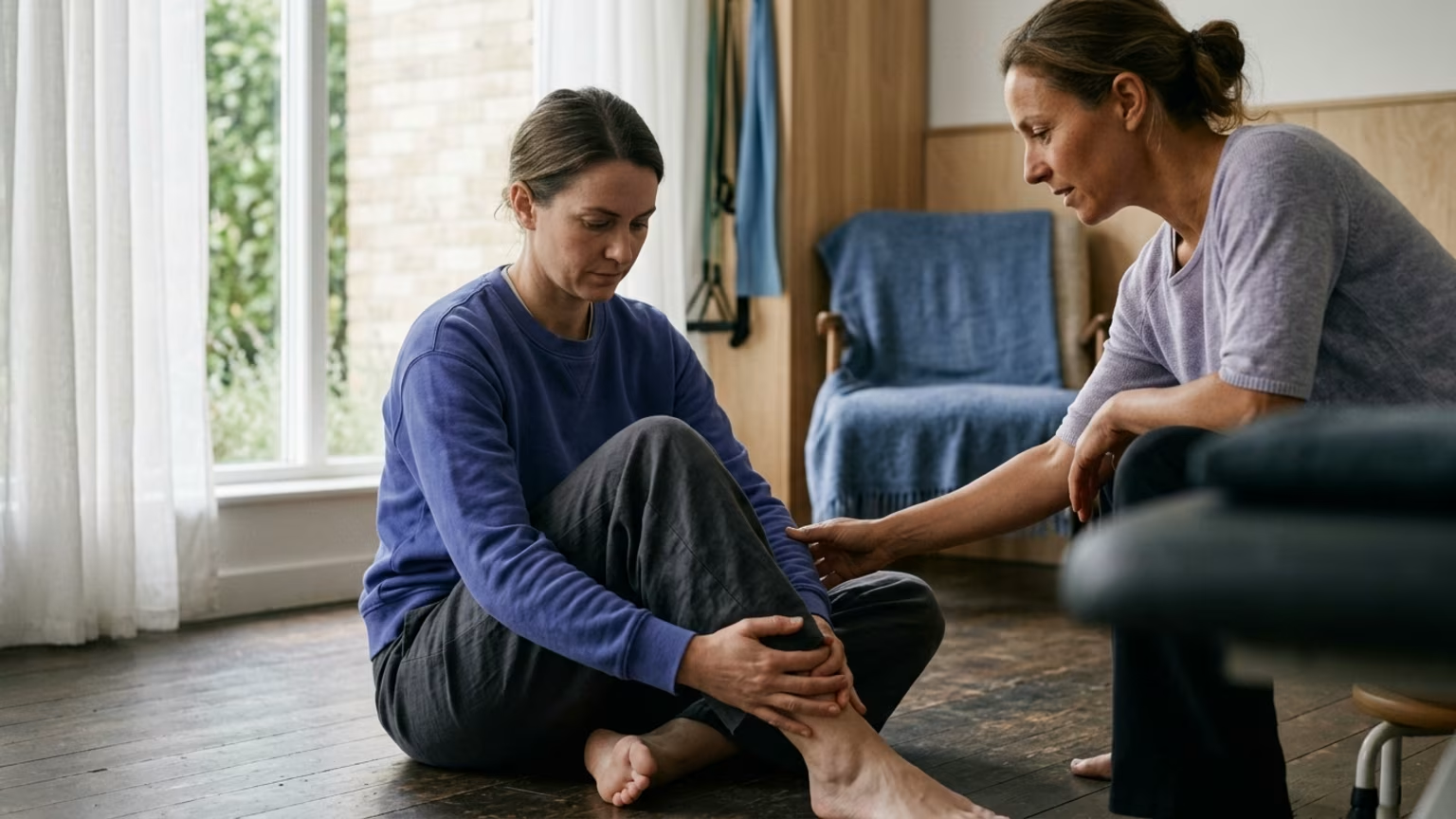



Read practical guidance on injury recovery, rehabilitation, mobility and rebuilding strength as you work your way back to activity.
Explore Resources