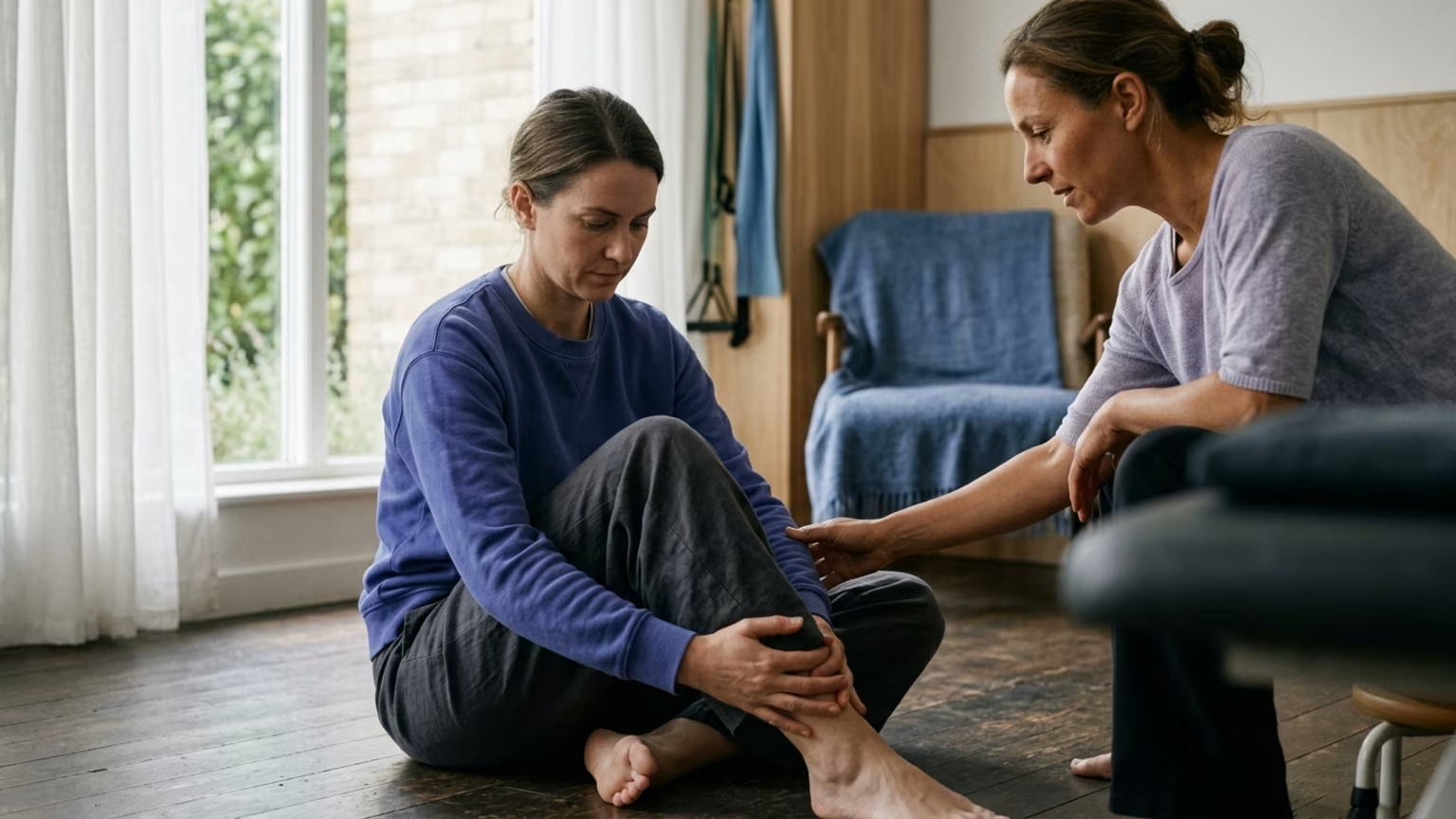

Understand how protective guarding can outlast physical injury. Learn what evidence says about the fear-avoidance model and safely rebuilding movement capacity.





You pause before bending to lift a dropped shoe, automatically bracing your lower back. The initial injury happened months ago, yet your muscles still stiffen in anticipation of a familiar ache. That split-second hesitation reveals a silent tension between physical healing and movement confidence.
The physical tissues may have recovered, but the nervous system remains on high alert. This lingering caution is a common hurdle for active adults returning to daily life. Understanding why the body holds back is the first step toward regaining comfortable movement.
Many active adults believe that hesitation during movement always indicates underlying tissue damage. When a joint feels stiff or uncomfortable, the immediate assumption is that the injury is still entirely active. This view suggests that any protective guarding is a clear signal to stop moving completely. From this perspective, the only acceptable approach is to wait until all pain disappears before returning to exercise.
We naturally assume that shielding our bodies is the most reliable way to prevent frustrating setbacks. It is very easy to conclude that fearing certain movements is simply practical common sense. This belief is widespread, understandable, and rooted in our desire to heal properly. However, it can significantly complicate the transition from formal rehabilitation back to normal everyday activities.
Relying entirely on discomfort as a strict stop sign can make returning to valued tasks nearly impossible. People often find their worlds shrinking as they avoid more and more physical challenges. A rigid belief that pain equals damage leaves little room for the natural variations of recovery. Eventually, the fear of reinjury becomes a larger barrier than the original physical problem.
This cycle of avoidance can slow down the rebuilding of essential strength and mobility.
Instead of treating all hesitation as undeniable proof of damage, researchers utilize a fear-avoidance framework. This framework describes how interpreting pain as threatening may contribute to fear of movement. When pain is viewed as a sign of danger, it can lead directly to activity avoidance. Over time, this avoidance may cause a person to experience greater functional limitation in daily life.
The model provides a way to understand why some individuals struggle even after typical healing timeframes elapse. It is important to note that the fear-avoidance model is a descriptive framework, not a clinical diagnosis. It does not provide definitive proof that a particular person’s pain is caused solely by fear. Instead, it offers a lens to view how protective responses can outlast the initial physical trauma.
Evidence shows that muscular guarding can be an entirely appropriate short-term response during early recovery. However, ongoing physical restriction might indicate that fear-related avoidance is driving the limitation. Pain or caution alone cannot firmly establish the actual status of your healing tissues. The research emphasizes that a persistent reluctance to move requires careful evaluation rather than strict rest.
Addressing the psychological barrier is often just as important as treating the physical joint. When movement feels restricted, evaluating the underlying confidence issues can be highly beneficial. Understanding the physical sensation of guarding helps reframe the recovery process.
The idea that we should avoid uncomfortable movements persists because it aligns with our biological survival instincts. A sudden protective change in movement is highly appropriate immediately after an acute injury. Following strict post-surgical precautions requires a degree of careful guarding to protect vulnerable healing structures. During these early stages, avoiding specific motions prevents disruption to the delicate repair process.
We learn very quickly that modifying our steps or bracing our joints keeps us physically safe. This early success makes the physical habit of guarding very difficult to break later in the journey. The brain learns to associate certain joint angles or physical loads with the initial trauma. When a sudden symptom flare occurs, it can be frightening and rapidly reinforce the urge to retreat.
People logically, and understandably, equate a bad day with a brand new injury. This intuitive reasoning makes it challenging to transition from protecting a limb to using it normally again. Furthermore, societal messaging often reinforces the idea that resting is the best response to discomfort. Friends and family frequently advise injured adults to take it easy and avoid any physical strain.
This well-meaning advice validates the internal fear of movement and encourages prolonged inactivity. Breaking out of this protective mindset requires a deliberate shift in how we interpret bodily sensations. It takes conscious effort to trust the body after it has experienced a significant physical setback.
A 2026 systematic review and meta-analysis examined how graded exposure interventions might help movement fear. The review assessed randomized trials for people experiencing chronic musculoskeletal pain. Researchers included 8 randomized controlled trials, encompassing a total of 554 participants across the studies. Eligibility for these trials required participants to have experienced pain lasting at least 3 months.
Crucially, the review explicitly excluded pain caused by acute injury or recent surgery. Therefore, these findings do not establish how graded exposure should be utilized immediately after an operation. In the reviewed studies, graded exposure involved a very specific and structured physical approach. Clinicians helped participants identify specific feared activities, arranging them carefully from less to more fear-provoking.
Individuals then progressed through these hierarchical movements while monitoring their physical responses. This structured method is significantly more specific than simply telling a patient to increase general exercise. The review authors reported possible improvements in some fear-related and functional disability outcomes. Despite these positive trends, the findings regarding overall pain intensity were inconsistent across different measurement scales.
The certainty of the gathered evidence ranged from very low to moderate, requiring cautious interpretation. Many specific outcomes were downgraded by the reviewers because of risk of bias or statistical imprecision. The overall review was further limited by wide variations among the included study populations and chosen methods. Most of the reported results were strictly short-term, with follow-up assessments occurring at 6 months or less.
The authors specifically called for longer follow-up periods in future research to verify lasting benefits. Consequently, these results should not be presented as absolute proof that exposure therapy works for every condition. It is vital not to generalize findings from chronic pain populations directly to all orthopedic recoveries. The evidence highlights a potential recovery tool, rather than a universal treatment mandate.
Translating this complex research into daily life means finding a sustainable balance between caution and capability. One US National Health Service physiotherapy resource provides practical guidance for managing these ongoing movement challenges. The NHS resource advises people with muscle, joint, or bone problems to adapt activity rather than stop completely. This sensible approach suggests starting at a highly manageable level and building upward gradually.
As symptoms and physical confidence improve, you can slowly increase the complexity of your daily tasks. Gradual movement serves as a practical way to rebuild capacity, not a command to force your way through severe pain. It is often helpful to notice your functional patterns rather than focusing exclusively on subjective pain levels. Ask yourself if you are increasingly avoiding a movement or successfully adapting it for your current ability.
The NHS resource says a significant or lasting symptom increase is a reason to consider reducing your activity amount. You can then build back up slowly once the temporary symptom flare settles down. Importantly, the same resource notes that recovery can take several weeks or even much longer. Experiencing a mixture of good and bad days is a common feature of this extended process.
A symptom flare does not always mean that further tissue damage has actually occurred. This understanding can help reduce the panic that often accompanies a temporary setback in mobility. It allows you to view rest and activity balance as an ongoing adjustment rather than a rigid pass-or-fail test. Using gentle preparatory movements can also bridge the gap between hesitation and action.
However, there are clear times when pushing forward independently is not the correct choice. The NHS resource recommends seeking professional advice if symptoms worsen significantly over a short period. You should also consult a clinician if entirely new or unusual symptoms suddenly appear during your routine. If symptoms are not improving or are severely affecting daily life, clinical assessment is strongly advised.
Individualized professional guidance remains essential when navigating specific post-surgical restrictions or unpredictable recovery timelines.
Overcoming the deep-seated fear of movement is rarely a straightforward or linear journey. Guarding is an entirely normal protective response, but it can eventually limit your return to valued activities. Current evidence suggests that structured, gradual progression can help improve functional outcomes for some individuals. Adapting your daily tasks allows you to maintain essential mobility without overwhelming your sensitive nervous system.
By starting small and respecting significant symptom changes, you can steadily rebuild your physical confidence. It is crucial to remember that a temporary increase in discomfort does not automatically equal structural failure. Learning to differentiate between safe fatigue and concerning pain is a major milestone in physical rehabilitation. Always defer to your qualified healthcare team for personalized, condition-specific advice.
Consistent, adaptable movement remains the most reliable pathway back to a capable and active lifestyle.
Confusion about recovery timelines and what normal variation can look like often keeps people stuck in a cycle of movement avoidance. ReboundBody helps you navigate the uncertainty about the transition from formal rehabilitation back to normal activity. We explain rehabilitation and strength rebuilding through clear, evidence-aware content with realistic limits, so you can make informed decisions alongside your healthcare team. Browse Resources

Follow ReboundBody for practical articles on injury recovery, rehabilitation, mobility and rebuilding strength. New posts turn research into clear ideas for the road back to activity after injury or surgery.





Read practical guidance on injury recovery, rehabilitation, mobility and rebuilding strength as you work your way back to activity.
Explore Resources