

A September 2026 HealthDay report highlights the importance of gradual progression. Learn how to manage physical stress safely when returning to exercise.





On September 30, 2026, U.S. News published a HealthDay report written by Dr. Jillian Foglesong Stabile. The article offers general precautions for people preparing to start a new workout routine. It focuses heavily on how to manage physical stress as the body adapts to new movement. The primary recommendation is to start with shorter sessions and lower intensity.
From there, individuals can gradually increase the physical challenge as their bodies adjust to the work. This cautious pacing gives muscles, tendons, and ligaments the necessary time to handle new physical demands safely. The September report is not presented as a new clinical guideline for post-injury care. It is also not a report of one specific new clinical trial.
Instead, Dr. Foglesong Stabile describes her advice as being informed by her experience as a doctor. The article serves as a broad overview rather than a formal medical prescription for any specific condition.
Before looking at specific return plans, it helps to understand broad activity goals. The Centers for Disease Control and Prevention provides a general target for adults. This general guidance suggests at least 150 minutes of moderate aerobic activity weekly. Alternatively, it suggests 75 minutes of vigorous activity each week.
The agency notes that intensity and duration can vary based on age and underlying health conditions. These broad numbers are population targets rather than an immediate starting line for someone recovering from an orthopedic problem. Rushing to meet these general targets right away can sometimes cause unnecessary setbacks during rehabilitation. A separate NHS physiotherapy resource offers helpful advice for people who have not exercised for a while.
It says individuals should begin with a smaller amount of activity after a period of rest. From there, they can increase their effort gradually as they adapt to the movement. This NHS advice supports the concept of a graded start without replacing individualized post-operative instructions.
It is always helpful to view physical recovery as a multi-step journey rather than a race. General fitness advice often assumes the reader is already operating at a healthy baseline. When recovering from an injury, that baseline is temporarily altered and requires special care. Recognizing this difference helps you set more realistic expectations for your own rehabilitation timeline.
The American Academy of Orthopaedic Surgeons also provides helpful context for returning to movement. Their OrthoInfo page discusses the specific role of a structured conditioning program. It says such a program can help people return to daily activities after foot or ankle injury or surgery. This structured conditioning supports formal rehabilitation as a safe route back to function and recreational sports.
However, the search-result description does not establish that one single program fits every type of injury. It also does not specify a universal progression schedule for all patients. Different injuries require different timelines, varying movement restrictions, and specialized exercises. This is why individualized medical advice remains a critical part of a safe recovery journey.
The HealthDay report adds important emphasis to the value of building physical capacity slowly over time. It reinforces the idea that a gradual return is always better than an immediate jump into heavy activity. The article draws on a wide range of medical literature published between 2015 and 2026. These listed sources include respected publications like Medicine & Science in Sports & Exercise and the Journal of Orthopaedic & Sports Physical Therapy.
Additional listed sources include Circulation, Sports Medicine, and Mayo Clinic. Another cited source is Arthroscopy, Sports Medicine, & Rehabilitation. However, the report does not connect its individual recommendations to particular findings from those specific sources. It stresses that the body needs ample time to handle new physical demands safely.
The article recommends starting with easier workouts and building up as physical tolerance improves. This core advice aligns with common approaches to managing physical load during early recovery phases. The report also highlights several other factors that support safe movement and physical conditioning. It recommends paying close attention to proper form and technique during any exercise.
Rest and adequate sleep are mentioned as critical parts of a safe fitness routine. Furthermore, it recommends prioritizing suitable equipment, good nutrition, and proper hydration. These additional measures are presented as general advice rather than quantified guarantees of injury prevention.
This guidance applies broadly to general readers who are starting new physical routines. It is intended for people looking to increase their physical activity levels safely over time. The report includes a specific practical caveat for individuals with pre-existing medical conditions. These individuals are advised to consult a healthcare provider before beginning a new regimen.
This step helps ensure that any new exercise routine aligns with their specific medical needs. The article is not a specific rehabilitation plan for a distinct orthopedic diagnosis. It does not replace individualized instructions following a surgery or a major injury. The guidance is directional and intended for a wide population managing their return to activity.
It does not say that all adults returning after injury require the exact same clearance process. The advice serves as a baseline set of general precautions for maintaining an active lifestyle.
For adults recovering from a setback, this general advice offers a useful starting framework. It is common to want to return to previous activity levels immediately after an injury. However, treating gradual progression as a baseline rule can help manage early physical stress. You can learn more about finding the right balance in injury prevention strategies compared.
Taking a measured approach allows your tissues to adapt without becoming physically overwhelmed. If you have taken time away from exercise, always begin below your prior routine. You can then increase your activity slowly as you tolerate the movement. The HealthDay article and the NHS physiotherapy resource both strongly support this concept of starting small.
Do not treat general population goals as a required immediate target during your early rehabilitation. A structured approach to strength training for injury prevention often requires a customized and patient plan. The report advises seeking medical advice if discomfort persists during your return to activity. This means paying close attention to pain signals and your overall recovery progress.
Rest and a provider consultation are absolutely warranted when symptoms do not resolve on their own. It is also important to consider outside recovery factors like sleep during injury recovery. Prioritizing rest, proper nutrition, and adequate hydration can support your body as it adapts. You should also remember to check your equipment and exercise technique as you progress.
Proper form can make a significant difference as you gradually increase your physical load over several weeks. Making small adjustments to your daily habits can also support your overall physical resilience. For example, focusing on nutrition for injury recovery provides a good foundation for healing tissues. You might also want to review how to track injury recovery to monitor your progress safely.
Building a sustainable movement habit requires patience and consistent daily attention. Small walks and light stretching can often serve as good starting points for many people. These low intensity activities keep your joints moving without applying excessive physical pressure. Over time, your body will signal when it is ready for a slightly larger physical challenge.
These combined efforts create a much more supportive environment for a gradual return to your favorite activities. Understanding the difference between general soreness and persistent discomfort is a necessary part of navigating this transition. When you start an exercise routine, some mild muscle adaptation is completely normal and expected. However, pushing past persistent pain can lead to recurring problems and unnecessary physical setbacks.
While the principle of gradual progression is clear, many specific details remain undefined in the report. The HealthDay article does not provide a quantified progression rate for increasing physical load. It does not specify exactly how much to increase duration, intensity, or frequency. It also does not say how long a person should wait between these gradual increases.
The page lacks specific criteria for deciding when an individual is safely ready to progress. The article advises resting when discomfort persists, but it does not strictly define the word persists. It does not identify the specific causes of pain or provide a distinct pain threshold to monitor. It also does not address how a clinician might modify activity during a formal recovery program.
Furthermore, the report lacks the underlying study details needed to properly assess its listed references. It does not provide effect sizes or evidence grading for the sources it mentions. Because the report does not distinguish among specific orthopedic diagnoses, its practical application is inherently limited. It does not separate the specific needs of someone with a minor strain from someone recovering from major surgery.
The page also does not provide a separate interview with a named rehabilitation specialist. It lacks any quotes from health executives or outside clinical experts to corroborate the general advice. As a result, readers must interpret these broad guidelines alongside their own individualized medical advice.
Returning to movement is rarely a perfectly linear path. Learning to listen to early fatigue and respect periods of rest is often the most important skill a person can build.
A safe return to activity requires careful load management, and ReboundBody explains the practical steps needed to reach that physical milestone. We address conflicting online claims about recovery tools and exercises to help active adults understand what normal recovery variation looks like as they rebuild their movement capacity.

Follow ReboundBody for practical articles on injury recovery, rehabilitation, mobility and rebuilding strength. New posts turn research into clear ideas for the road back to activity after injury or surgery.





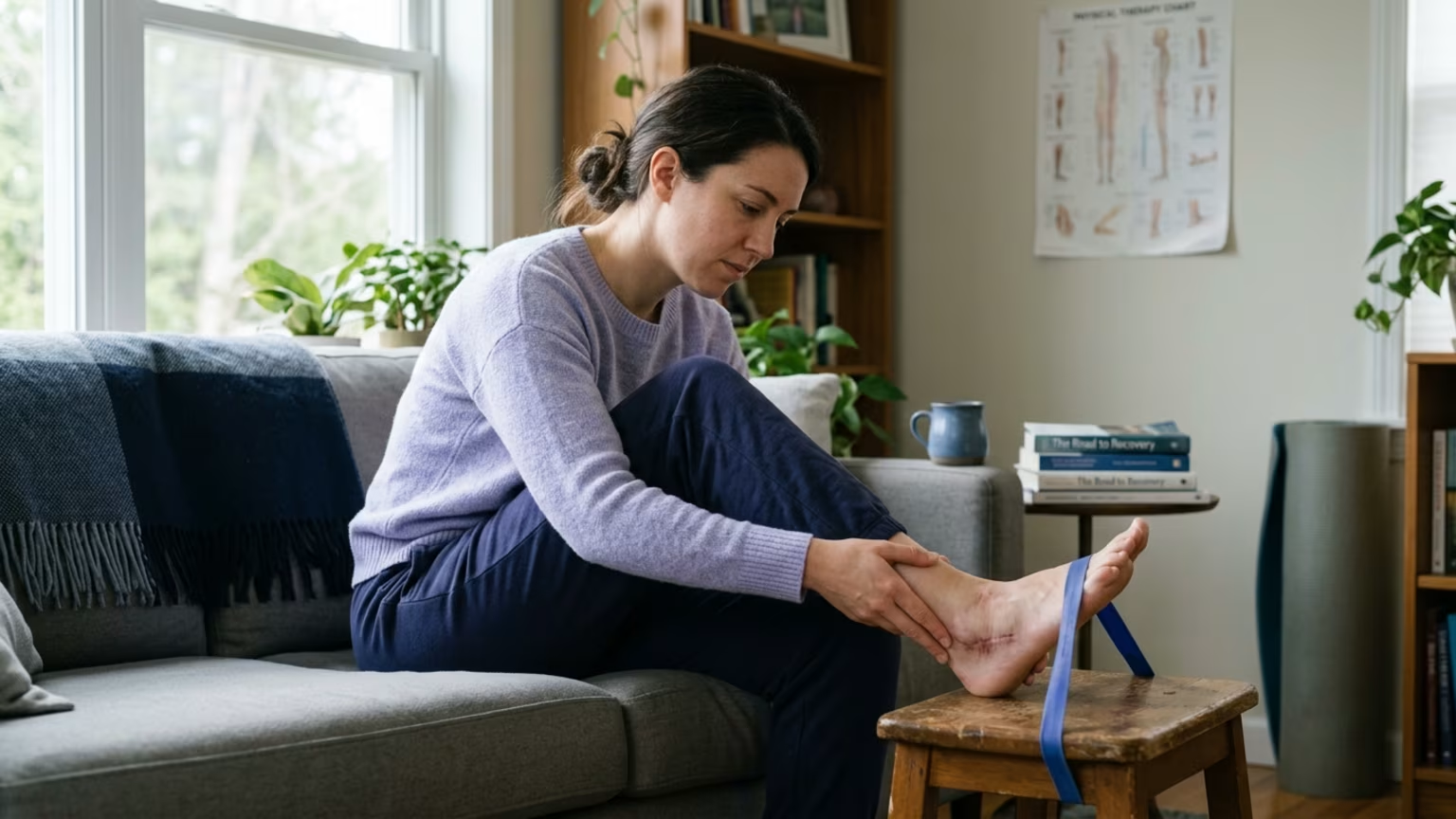
Read practical guidance on injury recovery, rehabilitation, mobility and rebuilding strength as you work your way back to activity.
Explore Resources