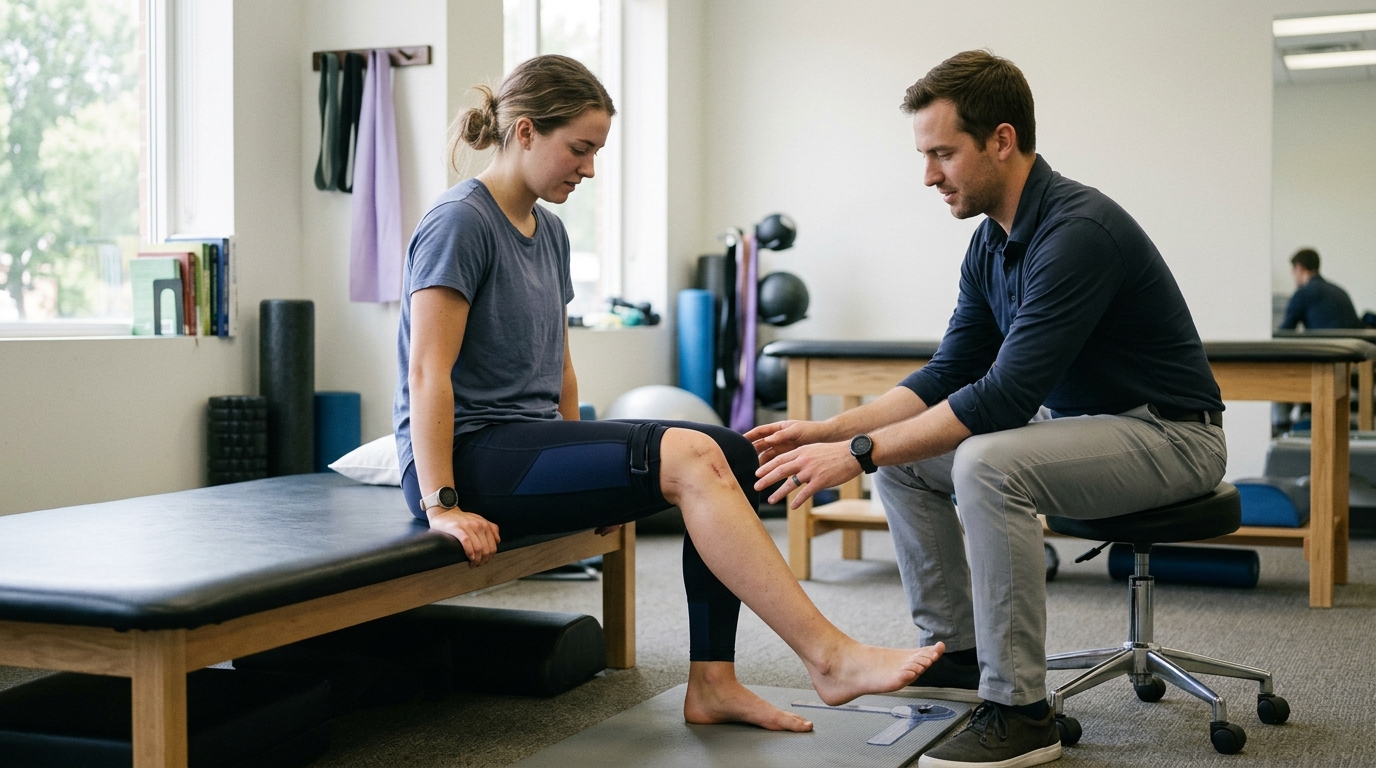

Static stretching alone rarely prevents sports injuries, but combining strength training, balance work, and smart workload management builds lasting physical resilience.





You set a goal to get back into consistent running, tennis, or strength workouts. For the first three weeks, everything feels smooth and energizing. Then, during a routine session, your Achilles tendon starts aching, or an awkward step leaves your ankle swollen and stiff. You find yourself wondering what went wrong. You stretched before your workouts, bought supportive shoes, and tried to be careful.
The truth is that physical setbacks rarely happen because of a single missed stretch. Staying active over the long term requires managing several layers of physical risk at once. There is no single method that eliminates every risk.
Instead, research shows that combining different strategies creates a much stronger shield. These methods include progressive strength work, balance practice, dynamic warm-ups, sensible workload management, and environmental awareness. When you understand what each tool can and cannot do, you can build a sustainable routine that keeps you moving safely.
Injury prevention is about lowering the likelihood and severity of physical setbacks. It cannot offer a total guarantee that you will never experience pain or tissue strain. Physical activity always involves some level of force, impact, and unpredictable movement.
A comprehensive prevention plan addresses both acute events and overuse problems. Acute injuries happen suddenly from a specific event, such as a rolled ankle on uneven grass. Overuse injuries develop gradually when repeated physical stress exceeds the current capacity of your tendons, bones, or muscles.
Research shows that different strategies solve different problems. Strength training increases how much physical force your muscles and connective tissues can absorb. Balance and proprioception work improve joint control and position awareness during sudden shifts. Structured warm-ups prepare your nervous system and tissues for immediate activity. Gradual workload progression protects your body from sudden spikes in training stress. Finally, managing your environment removes external hazards like slick surfaces or poor lighting.
No single strategy can replace the others. A solid warm-up cannot protect you if you double your running mileage overnight. Heavy strength work cannot keep you from slipping on a wet patch of pavement. Long-term movement health comes from using these methods together as part of your regular lifestyle.
The science of injury prevention relies on large studies that follow groups of active people over time. Researchers compare groups that perform specific exercise routines against control groups that continue their usual activities.
A landmark meta-analysis pooled 25 randomized controlled trials that included 26,610 participants and tracked 3,464 injuries. The study examined adolescents and adults, ranging from military recruits to recreational and competitive athletes. Across all exercise programs combined, participants experienced a significantly lower overall injury risk. Exercise programs reduced the risk of acute injuries by about 35 percent and cut the risk of overuse injuries by almost half.
However, the effectiveness varied widely depending on the specific type of exercise used in the program.
In the pooled meta-analysis, strength training showed a very large preventive association across four clinical trials. The relative risk was 0.315, which represented a large drop in injury rates for the strength training groups compared to control groups.
While these findings are encouraging, they come with important scientific caveats. The result was based on only four studies. Furthermore, study conditions do not reflect every real-world sport or daily activity. Strength training is an essential pillar of health, but it cannot be treated as an absolute shield against every possible injury.
Balance training challenges your brain and nervous system to control your joint positions in space. In the 25-trial meta-analysis, proprioception programs were linked to an estimated 45 percent reduction in injury risk across six studies.
The evidence is especially clear for lower body joint control. Specific reviews focused on athletic populations show that balance and coordination drills can reduce ankle sprain rates by 20 to 60 percent. The benefits are particularly noticeable for active individuals who have already sprained an ankle in the past.
A structured warm-up is more than just five minutes of easy walking. In the sports medicine literature, an effective warm-up is a multicomponent routine that includes movement preparation, dynamic balance, strength, and agility drills.
A systematic review of 15 cluster randomized trials evaluated structured warm-up programs across thousands of participants. The researchers found an estimated injury rate ratio of 0.64. This indicates a 36 percent lower injury rate in groups using structured warm-ups compared to those doing standard routines. When researchers adjusted for possible publication bias, the warm-ups still demonstrated a meaningful 30 percent reduction in overall injury rates.
Many active adults grew up believing that holding static stretches before exercise was the best way to prevent injuries. However, modern scientific evidence does not support this belief.
In the pooled sports-injury meta-analysis, static stretching alone showed a relative risk of 0.963 across three studies. This result was not statistically significant, meaning stretching by itself did not produce a measurable reduction in injury rates. Static stretching can help you maintain temporary joint range of motion, but it does not build tissue load capacity or improve dynamic joint stability. To learn more about how joint movement fits into overall physical conditioning, you can review our articles on mobility and movement patterns.
When reading sports science research, it is essential to understand what relative risk means. A study reporting a 36 percent relative risk reduction means the group doing the exercise had 36 percent fewer injuries than the untreated control group.
This statistic does not mean that any single person has a 36 percent lower chance of injury on any given day. Your actual personal risk depends on your baseline fitness, your previous injury history, your age, and your weekly training volume. Group averages provide valuable guidance, but they are not exact personal predictions.
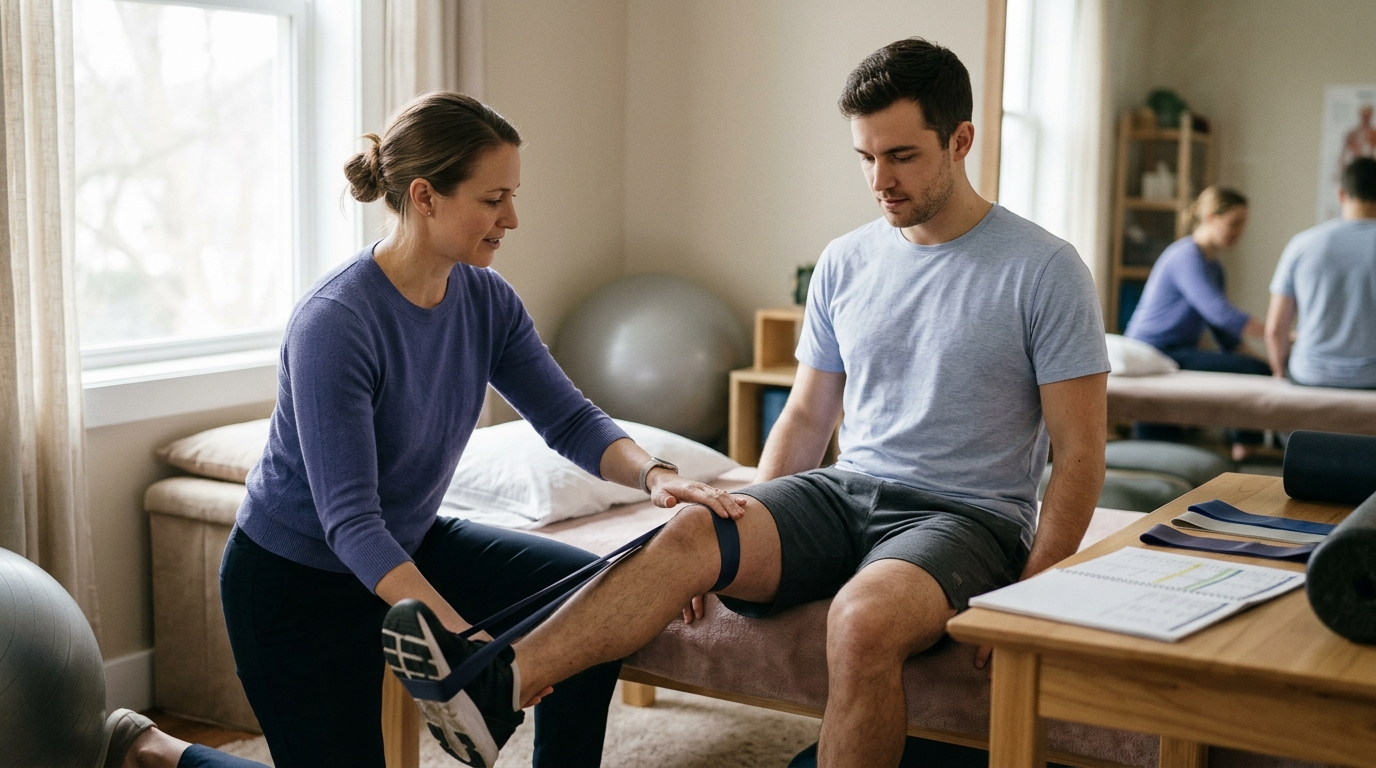
Strength training works by applying controlled mechanical loads to your muscles, tendons, ligaments, and bones. Over time, your body adapts to these demands by making tissues stronger and more resilient.
When you lift weights or perform bodyweight resistance exercises, your muscle fibers produce force to move the load. At the same time, your tendons and bones adapt to handle the mechanical tension. This process increases your overall physical capacity. When your physical capacity is high, daily tasks and athletic movements place a smaller relative strain on your body.
For example, when an active adult runs downhill, the quadriceps and patellar tendon must absorb several times their body weight with every stride. If the leg muscles are weak, that force transfers directly into passive structures like cartilage and joint capsules. By building lower body strength through squats, lunges, and calf raises, your muscles absorb more impact force, protecting your joints.
According to global guidelines from the World Health Organization, adults should perform muscle-strengthening activities that involve all major muscle groups on two or more days each week. For middle-aged and older adults, strength training also helps preserve muscle mass and maintain bone density.
However, strength training cannot prevent injuries caused by sudden planning errors. If you have strong leg muscles but abruptly triple your weekly running distance, your tendons can still become irritated. Strength work builds the engine and reinforces the chassis, but you must still steer the vehicle with care. You can find detailed guidance on progressive strength routines in our resources for rebuilding strength and athletic performance.
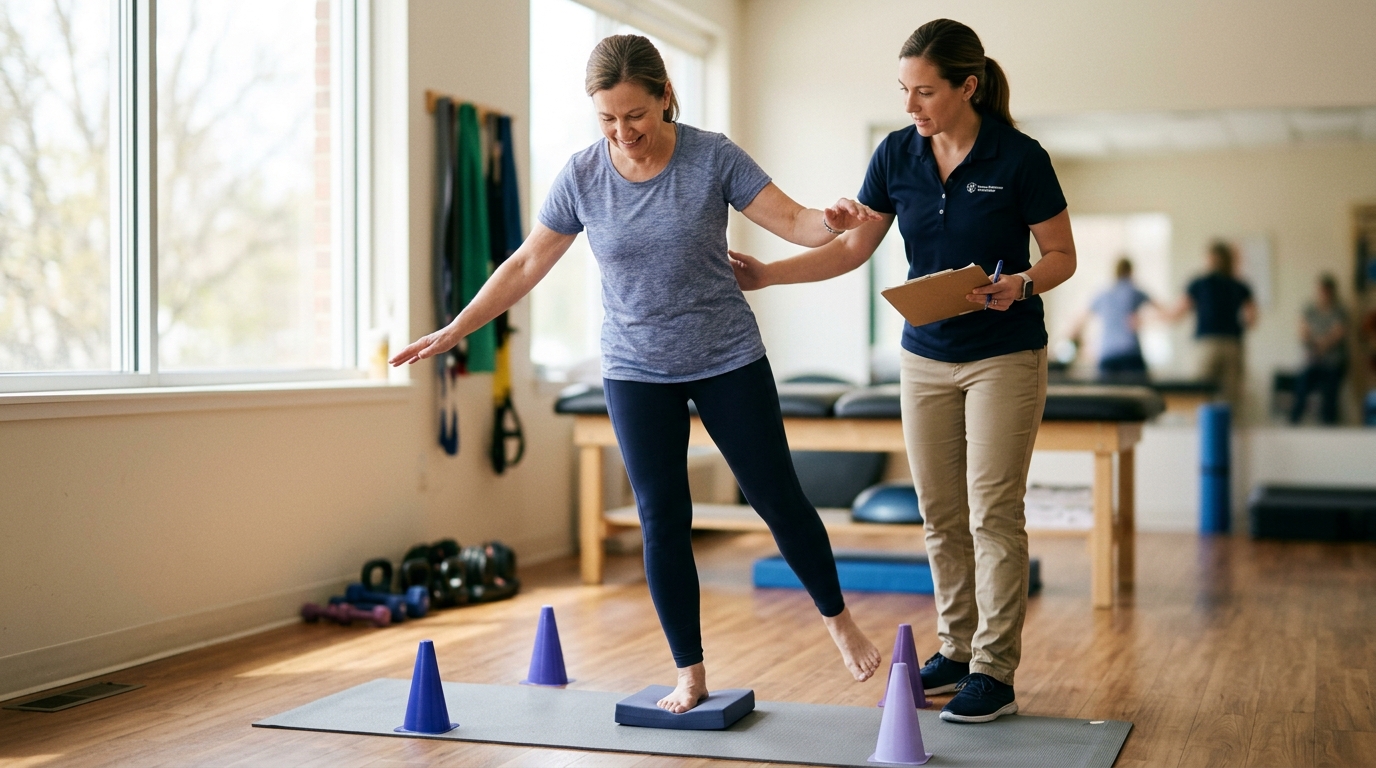
Proprioception is your body's ability to sense its position, orientation, and movement in space without looking. Specialized sensory receptors in your muscles, tendons, and joint capsules constantly send signals to your spinal cord and brain.
When you step on an uneven root or make a sudden pivot on a pickleball court, your nervous system must react instantly. It must fire the correct stabilizing muscles to keep your joints aligned and prevent a severe roll or twist.
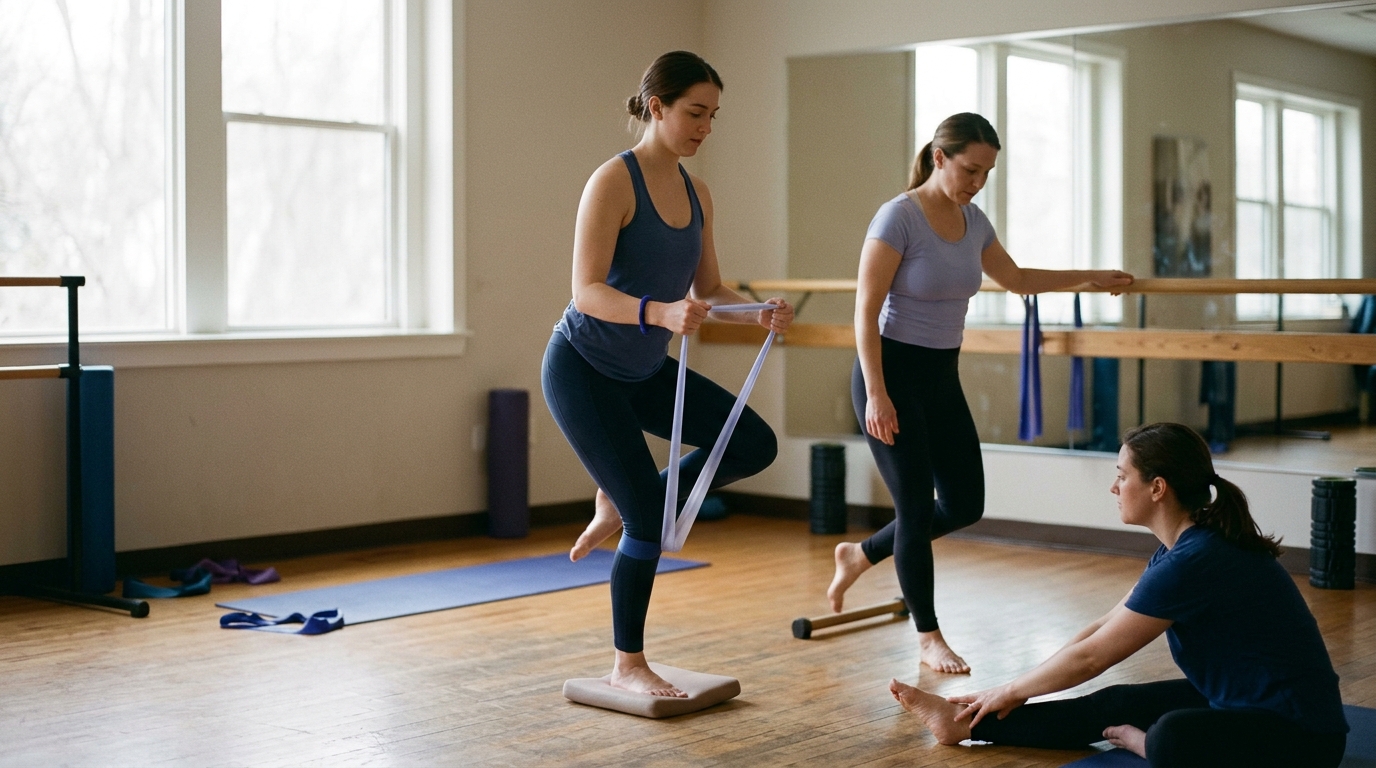
Balance and proprioception training trains these neuromuscular pathways. Common exercises include:
The research supporting balance training is particularly strong for ankle health. A systematic review published in clinical rehabilitation literature found that balance training significantly lowered ankle sprain rates in athletes. For individuals with a history of prior sprains, proprioceptive training reduced repeat sprains by approximately 36 percent. When an ankle is injured, the internal joint receptors can become damaged. Targeted balance exercises help retrain those sensory pathways, restoring protective joint reflexes.
It is equally important to distinguish athletic balance training from fall prevention in older adults. While sports studies focus on joint sprains and fast athletic cuts, fall-prevention research looks at whole-body stability and daily functional independence.
A Cochrane systematic review revealed that regular exercise routines reduced the rate of falls in community-dwelling older adults by roughly one-quarter. For older individuals, the World Health Organization recommends varied multicomponent physical activity emphasizing functional balance and strength training on three or more days per week. For further reading on healthy aging and functional stability, visit our collection of articles on active aging and injury prevention.
A casual warm-up often consists of a few arm circles and a brief jog. While this increases blood flow, it misses an opportunity to prepare your nervous system for complex physical demands.
In clinical trials, researchers study structured neuromuscular warm-up programs. These routines combine several distinct physical elements into a cohesive 10 to 15 minute sequence performed right before activity. A comprehensive warm-up typically includes:
The systematic review of 15 warm-up trials showed that these combined routines lowered sports injury rates by roughly 36 percent. Effective programs were performed consistently over periods of three months or longer.
A structured warm-up works by gradually increasing tissue temperature, improving nerve signal conduction speed, and priming movement coordination. When you enter a game or a hard workout after a proper warm-up, your muscles are ready to react efficiently to sudden forces.
However, warm-ups have clear limits. A warm-up prepares your body for the session immediately ahead. It does not compensate for chronic sleep deprivation, poor recovery, or a sudden spike in training volume. To see how structured movement preparation fits into a broader athletic lifestyle, browse our injury recovery and staying active resources.
The human body is remarkably adaptable, but physical adaptations take time. When you apply mechanical stress through exercise, tissues experience microscopic breakdown followed by repair and strengthening. If you add new stress faster than your body can recover, tissue fatigue accumulates, setting the stage for an overuse injury.
Workload management refers to how you control the volume, intensity, frequency, and type of physical activity you perform over weeks and months. The International Olympic Committee published consensus statements highlighting that sudden, excessive spikes in physical workload are a major contributor to sports injuries.
Many runners and fitness enthusiasts follow the popular rule of never increasing weekly training volume by more than 10 percent. While this rule can serve as a helpful rough concept, sports scientists caution that it is not a rigid law.
In reality, workload tolerance varies depending on the specific sport, the person's training history, and non-physical stressors. The International Olympic Committee notes that safe progression depends on keeping short-term training loads closely aligned with long-term physical preparation.
Consider the following principles to manage your workload safely:
To understand the physiological processes behind tissue adaptation and training fatigue, explore our articles covering recovery science.
Exercise-based prevention prepares your body from the inside, but external conditions introduce hazards that exercise cannot control. A complete prevention framework must evaluate your surroundings and gear.
The surface you train on influences joint impact, traction, and shear forces. For example, running on concrete delivers different impact characteristics than running on soft forest trails or a rubberized track.
Research comparing natural grass and artificial turf shows that injury patterns depend on the generation of the surface, footwear choices, and the specific sport. While modern third-generation turf shows similar overall injury rates to natural grass in many studies, turf can create higher surface friction. Higher friction can increase twisting forces on the knee and ankle during sudden directional changes. When transitioning to a new training surface, introduce it gradually rather than switching all your weekly sessions at once.
Cold, wet, and icy conditions require direct changes to your routine. In cold weather, muscles and tendons lose elasticity more quickly, making thorough movement preparation essential.
When training in freezing temperatures, clinical cold-injury guidelines recommend evaluating temperature, wind chill, precipitation, and terrain. Slippery mud or hidden ice patches can cause sudden falls that overwhelm even the strongest stabilizing muscles. In severe weather, shifting an outdoor workout to an indoor track, treadmill, or stationary bicycle is a smart risk management choice.
Footwear should match your activity and your individual foot mechanics. Worn-out running shoes lose their midsole cushioning and lateral stability over hundreds of miles.
Make sure your footwear fits properly and provides the right grip for your chosen surface. In sports with high collision or impact risks, using appropriate protective gear, such as helmets, wrist guards, or supportive braces, provides essential mechanical protection.
Rather than trying every fitness trend, you can organize your injury prevention plan around five practical questions. This framework helps you identify the highest-value habits for your specific routine.
Every activity places unique physical stresses on the body. A marathon runner faces repetitive, low-magnitude impact over several hours, making tendon and bone stress injuries the primary concern. A basketball or tennis player faces rapid sprints, sudden stops, and lateral cuts, which increase the risk of acute ankle sprains and knee ligament strains.
Identify the most common injury patterns in your activity. Direct your preventive efforts toward those specific demands.
Your personal medical history is one of the strongest predictors of future injury risk. If you have a history of multiple ankle sprains, your joint proprioception may be compromised. This means dedicated single-leg balance drills should be a permanent part of your weekly routine.
If you sit at a desk for eight hours a day, your hip flexors may be stiff and your gluteal muscles underactive. This makes targeted hip strengthening and dynamic warm-up drills especially valuable.
Look back honestly at what your body has done over the past four to six weeks. If you have taken a month off from exercise, your tissues have begun to lose conditioning.
Do not resume your previous volume or intensity on your first day back. Build a gradual ramp of four to eight weeks to allow your muscles, tendons, and cardiovascular system to rebuild their tolerance.
You do not need separate two-hour sessions for every prevention strategy. Instead, layer them into your existing weekly routine:
Before you begin exercising, check your environment. Is the trail poorly lit? Is the gym floor wet near the water station? Are your athletic shoes worn smooth on the bottom?
Address visible hazards immediately. Adjust your route, change your workout time, or update your equipment to eliminate unnecessary external risks.
To see how these principles work in daily life, consider how different active adults might structure their routines. These models are illustrative planning examples rather than personalized medical prescriptions.
An adult wants to return to recreational 5K running after taking six months off due to a busy work schedule.
An active adult in their fifties plays competitive pickleball three mornings a week and has a history of a mild ankle sprain two years ago.
Even experienced active adults can fall into common traps when trying to stay healthy. Being aware of these pitfalls will help you avoid wasted effort and frustration.
Social media often promotes individual exercises as universal solutions for joint pain. However, no single exercise can compensate for a poorly designed training plan, lack of sleep, or sudden training spikes. Injury prevention requires a multi-layered approach rather than a single favorite movement.
Static stretching can feel relaxing and temporarily improves joint range of motion. However, scientific trials have repeatedly shown that stretching before activity does not reduce overall injury rates. Static stretching should not take the place of progressive strength work, balance drills, and active movement preparation.
A thorough warm-up prepares your body for the physical stress of an upcoming session. However, it cannot protect you if your overall training volume vastly exceeds your current capacity. A great warm-up before a workout that is twice as long as your body is prepared for will not prevent an overuse injury.
When a study shows a 35 percent drop in injuries, it reflects group-level trends across hundreds of participants. It does not mean that every person in the study stayed completely healthy. You should use research findings to guide your habits with realistic expectations, knowing that individual responses always vary.
Some active adults try to do every prevention exercise they read about, adding long daily routines on top of their normal workouts. Doing too much extra work can cause accumulated fatigue, defeating the purpose of the routine. Keep your preventive habits short, practical, and easy to maintain alongside your primary sports and recreation.
If you are recovering from a previous injury, experiencing persistent joint discomfort, or planning a major return to sport, working with a physician or physical therapist is essential. Here are practical questions to guide your conversation:
You may want to re-read this guide whenever your physical routine undergoes a significant change. Useful times to revisit these principles include:
Building lasting physical resilience is a steady, ongoing process of matching your body's strength and coordination to the activities you love.

Use ReboundBody resources to understand common recovery stages, rehab terms, movement limits and strength rebuilding. Each guide is designed to make a complex comeback easier to understand.


Read practical guidance on injury recovery, rehabilitation, mobility and rebuilding strength as you work your way back to activity.
Explore Resources