

Understand how to discuss rest, movement, exercise progression, and digital rehabilitation with your clinician without relying on a standard recovery routine.





The right balance between rest and movement depends on the injury or procedure, the stage of recovery, and the restrictions set by the treating team. It is not a choice between complete rest and a standard exercise routine. The useful starting point is a plan with a clear purpose and clear limits.
APTA’s October 2026 feature describes an updated clinical practice guideline for physical therapist management after total knee arthroplasty, or TKA. APTA says the update strengthens support for progressive exercise and addresses digital care and commonly used interventions.
NICE’s guidance addresses digital platforms for preparation before and rehabilitation after primary elective hip or knee replacement. Both sources concern specific rehabilitation settings.
The evidence has a defined boundary: these materials concern joint replacement rather than every orthopedic injury. The accessible APTA feature does not provide the detailed recommendations or evidence grades. Together, these materials do not establish a universal movement schedule, exercise dose, or patient-specific clearance standard.
For someone sorting through conflicting advice, the practical question is: Which movement belongs in my current plan, and how will my clinical team decide when that plan changes?
The answer has to account for the specific injury or operation and the plan being used. A general instruction to “move more” leaves several important questions unanswered.
Useful points to clarify include:
These are ways to organize a clinical conversation. They are not criteria for choosing an activity independently.
An online recommendation can sound precise while saying little about your situation. The name of an exercise does not explain which restrictions apply to you. A more useful comparison is between the online advice and the instructions your treating team has provided.
The broader question of how protection and activity fit together is best kept tied to those specifics. That keeps the discussion focused on your actual recovery plan rather than on competing slogans about rest or exercise.
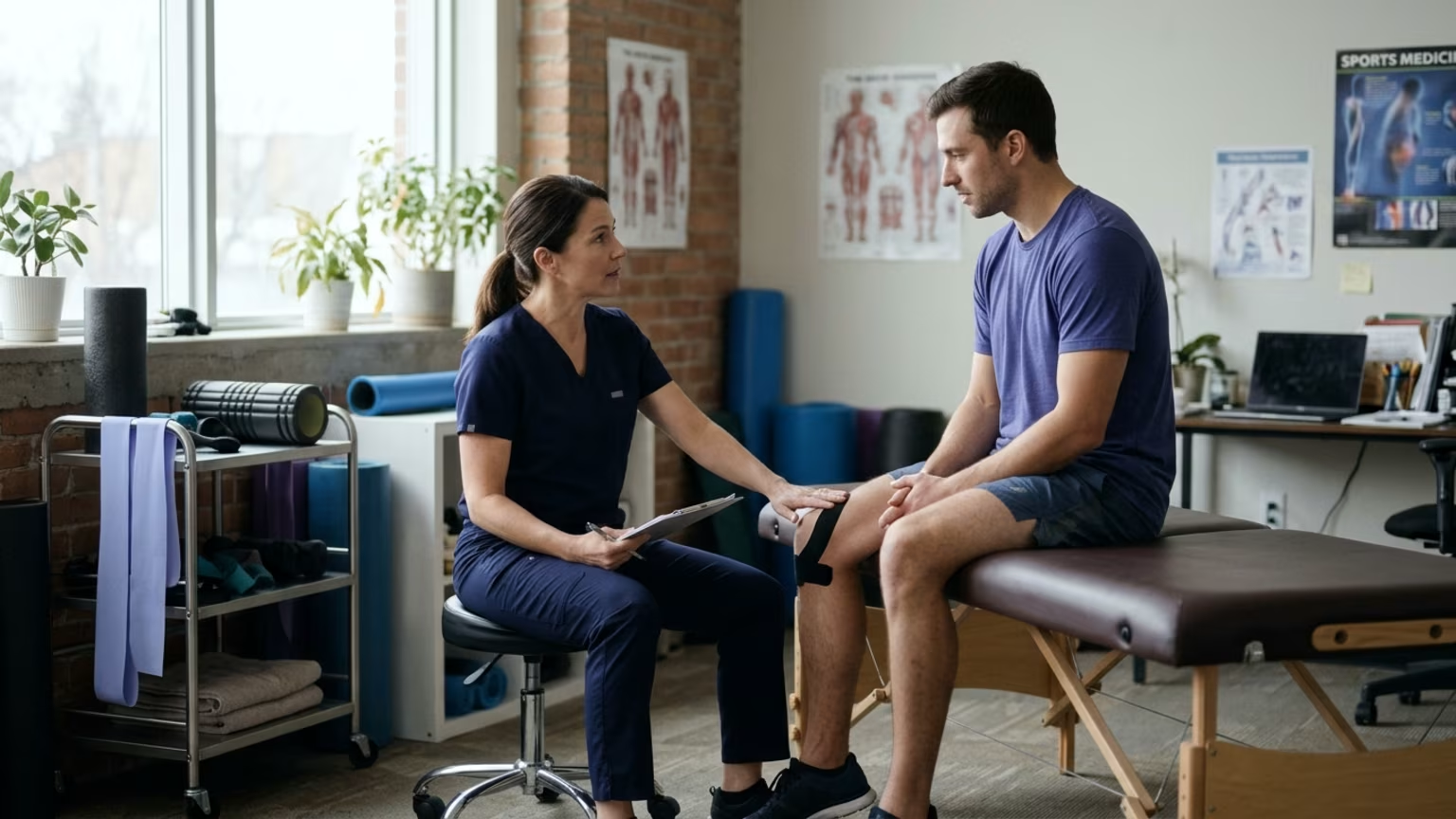
Ask the surgeon or physical therapist to explain the permitted movements and restrictions in terms that connect with your daily life. The goal is to understand the existing plan before interpreting additional advice.
One way to organize that explanation is to separate three information needs:
This makes the conversation more specific than asking whether movement is generally helpful. It also gives the clinician a chance to address the activity you actually have in mind.
For example, a question about an ordinary daily task and a question about progressing a rehabilitation exercise are separate requests for guidance. Naming the task or exercise keeps the discussion concrete. The distinction between everyday activity and formal exercise can help frame those questions.
If an instruction uses a broad term, ask what that term means within your plan. Rather than assigning your own meaning to it, request clarification about the permitted activity and any relevant restrictions.
The intended result of this conversation is a clearer explanation from the treating team, not a new routine assembled from unrelated online examples.
In this research, progressive exercise is a topic for clinical planning. APTA frames post-TKA rehabilitation around decisions about how strengthening should progress, which interventions may improve function, and when digital support might have a role.
The practical issue is how those decisions connect with the plan for a particular person. A headline about progressive exercise does not supply that connection by itself.
A useful question for the treating clinician is: What would you need to assess before changing my current exercise plan?
That opens a discussion about the goal being assessed and how progress will be judged. It also creates room to ask who will make the decision and when the plan should be reviewed. These are discussion prompts rather than progression rules.
If the plan includes a timeline, ask how that timeline relates to the progress measures being used. If it includes milestones, ask what each milestone means for the activity under discussion.
This distinction matters when reading about recovery milestones and readiness. The aim is to understand how your clinician is using a measure or a date, rather than assigning it a meaning on your own.
Progression is therefore a question to clarify within the rehabilitation plan. It is not a separate instruction to keep adding activity.
Treat a digital rehabilitation option as something to discuss within the care plan. Start by separating the delivery question from the movement question.
The delivery question is whether a digital option has a place in your care. The movement question is what the agreed rehabilitation plan includes. Keeping those questions separate helps keep attention on the actual clinical decision.
NICE addresses digital platforms around elective hip or knee replacement. APTA’s feature also identifies possible digital support as a rehabilitation topic. Those are the specific settings behind the discussion here.
Questions to raise with a clinician include:
These questions focus on how a tool would fit into care rather than on its presentation or format. They also give the clinician an opportunity to explain why the option is being considered.
When reviewing an online claim, keep its subject in view. A statement about a digital platform and a statement about which movements belong in your rehabilitation plan address different questions. Ask how the two connect in your situation.
An appointment agenda can focus on the unresolved issue rather than on a collection of online exercises. Include the instructions you have already received and identify where the wording is unclear.
A short summary could name the activity you want to discuss, the restriction you are unsure about, and the question you need answered. This is preparation for a conversation, not a record intended to establish your own clearance.
Useful follow-up questions include:
You can also ask the clinician to explain an unfamiliar term in plain language. Understanding what the instruction means is a separate task from deciding whether the instruction should change. Keeping both tasks visible can make the discussion more focused.
A useful recovery discussion joins three things: the movement under consideration, the restrictions that apply now, and the way progress will be reviewed. Neither “rest more” nor “move more” answers those questions on its own.
The research discussed here points toward specific clinical decisions about exercise progression and possible digital support. The practical priority is understanding how those decisions apply within the plan provided by your own treating team.
Today, write down one unclear part of your current movement instructions to discuss with your surgeon or physical therapist.
Everyday movement and rebuilt strength are concrete recovery goals that ReboundBody puts in context through clear explanations of rehabilitation. For adults sorting through conflicting claims about exercises and digital tools, the independent editorial site separates evidence from uncertainty to support more informed conversations with qualified healthcare professionals.

Follow ReboundBody for practical articles on injury recovery, rehabilitation, mobility and rebuilding strength. New posts turn research into clear ideas for the road back to activity after injury or surgery.





Read practical guidance on injury recovery, rehabilitation, mobility and rebuilding strength as you work your way back to activity.
Explore Resources