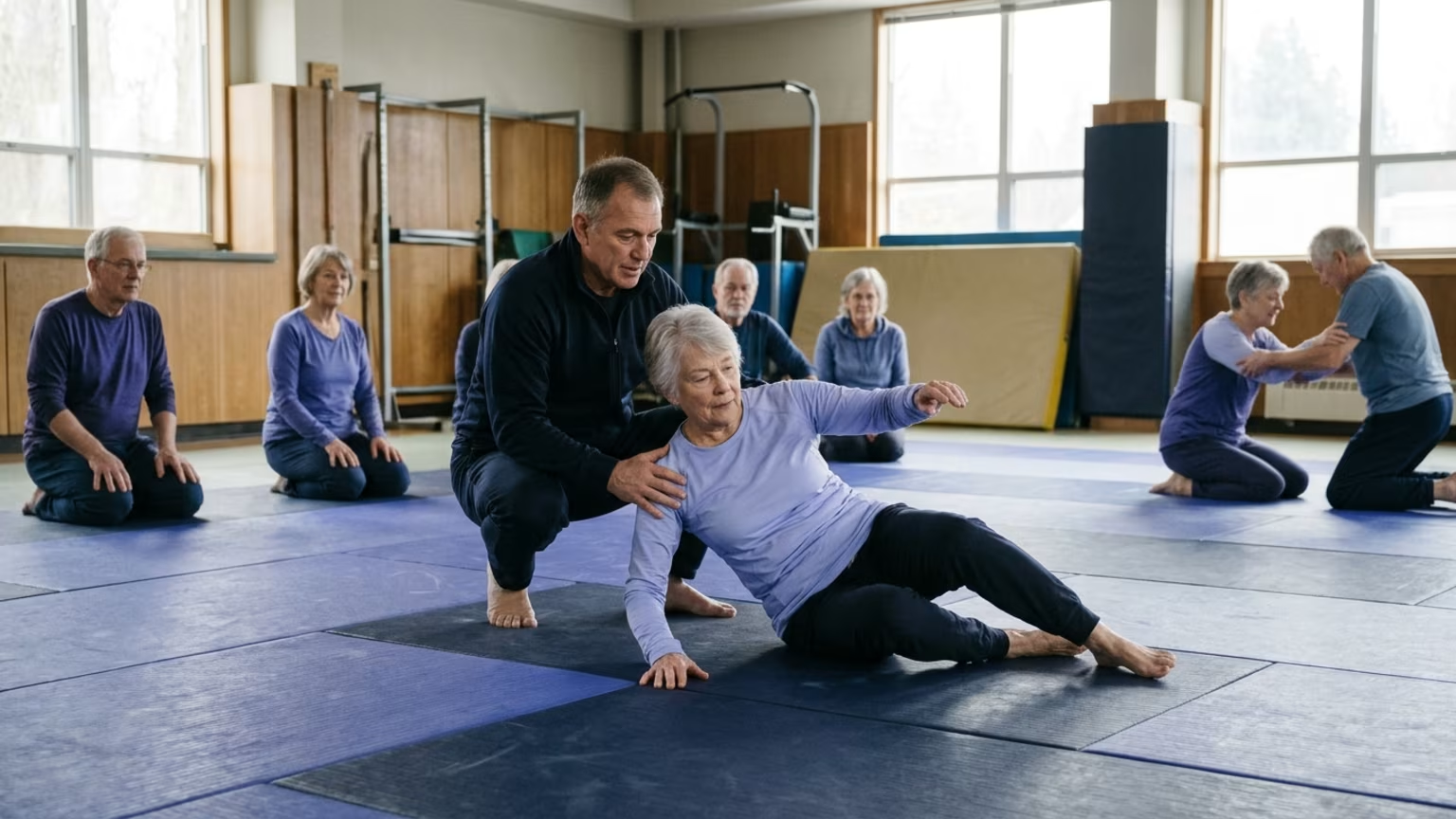

An Australian study reported gains in instructors' falling skills. See how the findings fit into fall preparedness and recovery discussions.





On November 4, 2026, a report on Adelaide University research described gains in instructors' own falling skills and their perceived ability to teach modified judo-based techniques. The study was published in the Australasian Journal on Ageing.
The central detail is who received the training. Allied health professionals and judo coaches learned how to teach older adults. The reported improvements were in those instructors, which makes this a study of teaching capacity rather than a short exercise course tested in older patients.
For adults rebuilding mobility after an orthopedic setback, the finding raises a useful question: how might fall preparedness fit into recovery? Answering that starts with separating the purpose of a program from the health benefits it has demonstrated.
The background to this report is a prevention-plus-preparedness approach. Prevention focuses on reducing the chance of a fall. Preparedness focuses on the response if a fall happens. Those goals are related, but they ask different questions about what training should achieve.
An October 30, 2026, article in ASA Generations framed the issue as a shift from avoidance toward preparedness. The broader rationale is to add preparation for a fall alongside efforts to prevent one. Safe-fall training is proposed as a complementary approach.
That is an important distinction for interpreting the judo-based program. A lesson about responding to a fall has a different purpose from a balance exercise. It also needs to be judged against the outcomes it claims to improve, rather than against the appeal of its underlying idea.
Preparedness can sound reassuring, especially to someone worried about reinjury. But the name of an approach is not a measure of its success. A useful reading habit is to identify the proposed goal first, then look for an outcome that directly tests that goal.
For related context, ReboundBody's discussion of balance work within a wider fall-prevention plan addresses the prevention side of this conversation.
According to the Adelaide University report, the training combined a two-day workshop with eight practical sessions. It covered falling physics and safe exercise with older adults. Participants also practiced modified backward, forward and sideways falls.
The techniques came from Dynamic Balance for Life's Safe Falling program. Adelaide University researchers and the Adelaide University Judo Club developed that program. The emphasis in this intervention was on preparing other professionals to teach the material.
The paper's title reflects that focus: “Upskilling allied health professionals and judo coaches to teach safe falling skills to older adults: A train-the-trainer intervention.”
Researcher Agathe Daria Jadczak reported two changes:
The first measure concerns performing the skill. The second concerns how capable participants felt as teachers. Keeping those measures separate matters because feeling ready to teach and demonstrating a physical skill are different outcomes.
The percentages describe reported increases. They are not the share of participants who mastered falling or became qualified instructors. The coverage does not include full methods or outcome tables. It also does not provide the underlying test measures or explain exactly how the increases were calculated.
The useful addition is evidence about a teaching pathway: professionals learned modified skills and reported greater confidence in teaching them. In principle, training people who can then teach others could help a program reach more learners. That possibility explains the interest in a small instructor study. The next stage is examining how that teaching translates into learning.
Around 16 allied health professionals from aged care and judo coaches took part, according to the university report. These were people preparing to teach others. The direct findings therefore apply to that instructor group.
The report also describes a physiotherapist adding some techniques to weekly falls and balance classes for clients aged 75 to 85. That is a practitioner account of how the material was used. It is not a clinical evaluation of those clients.
The setting matters too. This was an Australian instructor program. The report does not establish whether the same course is available in the United States or whether the findings transfer to US rehabilitation settings.
For someone recovering from orthopedic surgery, there is a further boundary: this was not a test of a post-surgical rehabilitation protocol. A shared interest in safer movement does not make two groups of people the same for care decisions.
The practical value for readers is a more focused discussion with a physical therapist or another treating clinician. Rather than treating the report as a new exercise assignment, it can be used to ask which parts of fall prevention or preparedness belong in an individual recovery plan.
Related reading on balance practice and safety principles can provide background for the terms used in that conversation. The role of this report is to inform questions, not to set exercise intensity or decide when someone is ready to practice falling.
The major open question is whether teaching older adults these skills leads to fewer falls, fewer injuries or greater confidence in daily life. The reported instructor outcomes do not establish any of those benefits.
The report also does not provide an individual screening process or identify who should avoid this training. The term safe falling describes the goal of the program. It should not be read as a finding that deliberately practicing falls is appropriate for every person.
Future research needs to connect the stages that this story brings into view: instructor learning, older adults' learning and real-world health outcomes. Following older learners over time would help address whether skills practiced during training carry into unexpected falls. It would also allow the benefits and possible harms of the approach to be assessed.
Clear evidence. Room for individual recovery.
Considering a fall-preparedness class raises questions about fit, and ReboundBody supplies independent reading to inform that discussion. For adults in midlife or later life who fear reinjury or doing too much too soon, its evidence-aware articles clarify movement rebuilding and help frame questions for qualified healthcare professionals.

Follow ReboundBody for practical articles on injury recovery, rehabilitation, mobility and rebuilding strength. New posts turn research into clear ideas for the road back to activity after injury or surgery.






Read practical guidance on injury recovery, rehabilitation, mobility and rebuilding strength as you work your way back to activity.
Explore Resources