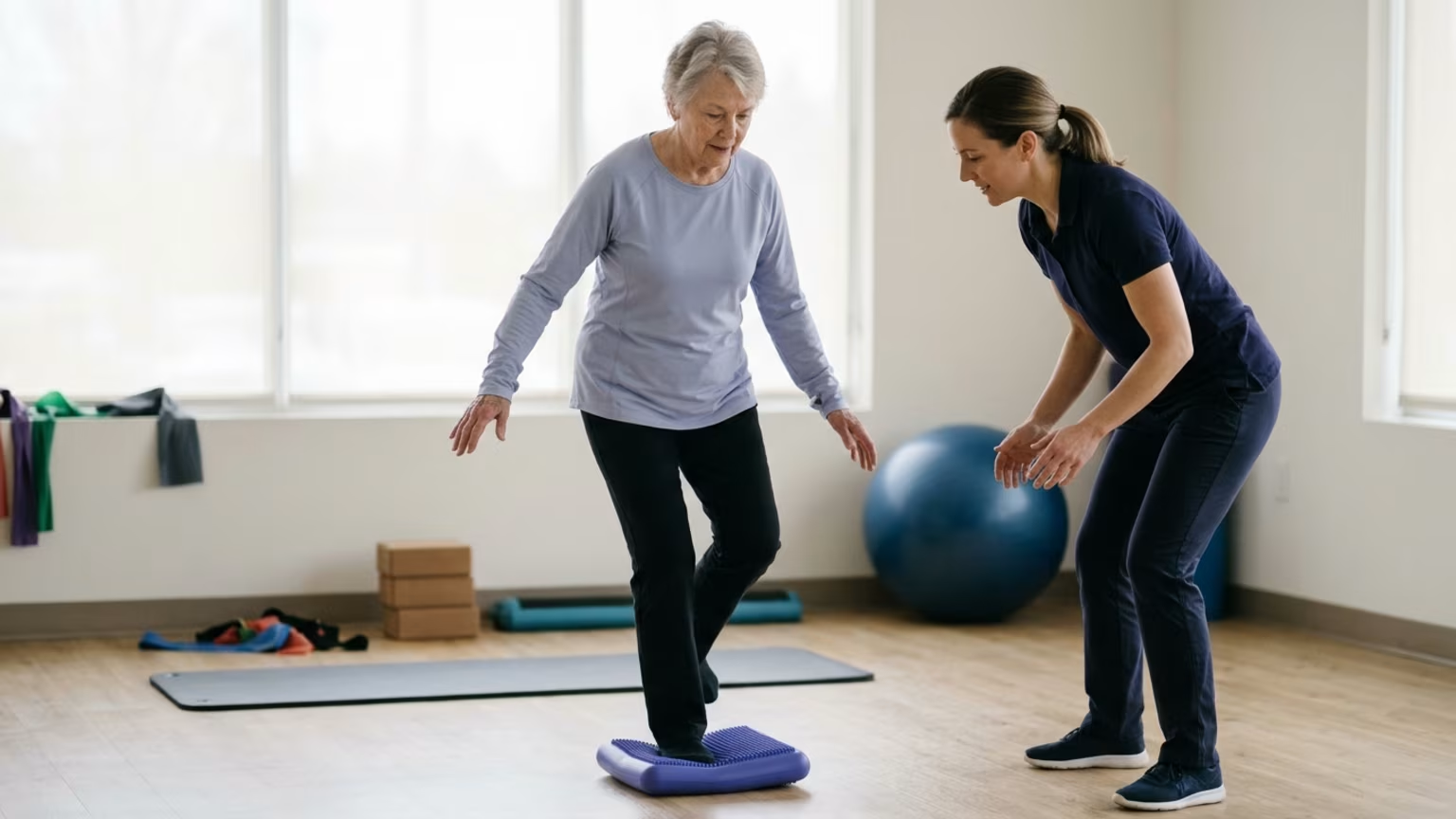

WHO guidance and sports reviews support tailored balance work within broader exercise plans. Understand which findings apply to falls and ankle injuries.





In its falls fact sheet dated 2026-10-21, the World Health Organization (WHO) reports that a Cochrane review found exercise reduced the overall rate of falls by approximately 23% in trial populations. Its guidance recommends tailored exercise that challenges balance and improves functional strength for older people living in the community.
That finding provides a useful starting point for understanding balance training. Separate sports reviews also report benefits from combined exercise programs. Together, these sources support a place for balance work within broader prevention efforts.
For adults returning to movement after a physical setback, the important question is how those findings relate to recovery. Understanding the population studied and the program tested matters more than treating every balance exercise as equivalent.
The background to this update is an established exercise approach rather than a newly introduced rehabilitation method. WHO recommends exercise tailored to the person, with balance challenge and functional strength addressed together. It also emphasizes progression and sufficient duration.
Those elements belong to the same recommendation. Balance is not presented as a replacement for strength work. Nor does the guidance suggest that simply adding a difficult balance task captures the whole approach.
WHO also identifies Tai Chi as a useful option. That broadens the picture beyond specialized equipment or exercises that look like sports drills. The guidance centers on the qualities of an exercise program rather than one piece of equipment.
This context matters when a recovery headline focuses on proprioception. In the sports research discussed below, proprioceptive exercise appears alongside other training components. It is part of the program being studied rather than the only feature receiving attention.
The established foundation is therefore fairly clear: balance challenge has a recognized role in fall prevention for older adults living in the community. Strength, tailoring and progression remain part of that foundation. A useful reading of the evidence keeps those pieces together instead of promoting one ingredient above the others.
The WHO-reported Cochrane finding concerns the overall rate of falls across studied populations. A fall rate describes how often falls occur within a group. It is not the same as an individual's chance of falling.
That distinction gives the headline number its proper meaning. The result supports exercise-based fall prevention at the population level. It does not predict the exact benefit a particular person will receive.
It also helps separate the study outcome from other recovery goals. Fewer falls is one outcome. Returning to a preferred activity is another question, which requires attention to the demands of that activity and the person's recovery context.
A systematic review and meta-analysis listed in PEDro examined FIFA 11+, a multicomponent neuromuscular program. Its exercises include strength, balance, proprioception and plyometric work.
The review included three randomized trials involving 3,833 football players. Together, the trials covered 286,827 exposure hours. The intervention groups had a lower ankle-injury rate, with a reported rate ratio of 0.67.
This is a specific finding about ankle injuries in participating football players. Naming the outcome matters because a favorable result for ankle injuries is more precise than a general claim that a program prevents all injuries.
A separate systematic review recorded in PEDro described seven higher-quality studies of neuromuscular training. It found evidence of reduced incidence for certain sports injury outcomes. This adds support for studying combined training approaches while keeping attention on the particular injuries measured.
The falls guidance applies to older people living in the community. That is the population relevant to WHO's recommendation for tailored balance and functional-strength exercise.
The FIFA 11+ review concerns football players. The separate neuromuscular-training review focuses on adolescent and young adult athletes participating in pivoting sports. Those groups represent a different evidence setting from community-based fall prevention.
For ReboundBody's readers in midlife and later life, this distinction is central. Someone reading about recovery after orthopedic surgery should first identify which group a finding describes. A sports review and an older-adult fall-prevention recommendation answer different questions.
The sports results are not directly transferable to every age group or to all people recovering from orthopedic injury. They also do not establish a general rehabilitation plan for every sport or condition.
The useful connection is narrower: balance appears within broader exercise approaches in both settings. The purposes differ, the participants differ and the outcomes differ. Keeping those differences visible allows the research to inform a conversation without turning separate findings into one universal claim.
For readers, the evidence offers a way to understand the role of balance work rather than a routine to copy. WHO's emphasis on tailoring makes current ability and recovery status relevant to exercise decisions. A clinician or physical therapist can connect those considerations with the person's environment and goals.
The practical question is not simply whether an exercise challenges balance. It is why that challenge belongs in a particular plan. A task selected for fall prevention may serve a different purpose from an exercise included in a football warm-up.
Questions for a qualified healthcare professional might include:
These questions do not require changing treatment independently. They help connect a general research finding with the reasons behind an individual plan.
For a broader view of daily-life concerns, ReboundBody's guide to balance and safer surroundings provides related educational context. Its discussion of strength work when movement is limited addresses another part of the recovery picture.
Returning to an activity also raises questions beyond the presence of balance exercises in a program. ReboundBody's article on understanding readiness through the intended task offers a related way to frame that discussion.
The practical takeaway is to understand the purpose of each part of rehabilitation. Balance work may have a useful place, but the evidence is most informative when connected to the goal it is meant to serve.
The FIFA 11+ review rated its evidence as moderate certainty. It noted bias concerns in two studies and called for further research on optimal dose and applicability across football populations. Those are meaningful limits on how confidently the findings can guide broader conclusions.
The combined nature of the programs creates another open question. Because FIFA 11+ includes several exercise types, its results cannot isolate the effect of proprioceptive training alone. Likewise, WHO's reported fall-rate reduction concerns exercise rather than a separately measured effect of proprioception work.
The separate neuromuscular-training review also called for further trials to identify the most appropriate components for specific sports and populations. Knowing that a combined program helped with certain outcomes does not fully explain which ingredients were most important.
For now, the clearest interpretation is to keep the evidence attached to the program and outcome actually studied. Future research may make the contribution of individual components clearer. It may also clarify how programs should differ across participants and activity demands.
That leaves a useful but measured conclusion. Tailored balance work belongs within the broader discussion of fall prevention and physical recovery. Behind the study outcomes is a quieter goal: moving through ordinary life with greater steadiness.
Reducing falls is the measurable aim behind this guidance, while returning to activity is the broader recovery concern. ReboundBody translates rehabilitation and movement research into plain-language editorial content. Its independent coverage helps active adults in midlife and later life understand recovery milestones and prepare informed questions for their healthcare team.

Follow ReboundBody for practical articles on injury recovery, rehabilitation, mobility and rebuilding strength. New posts turn research into clear ideas for the road back to activity after injury or surgery.


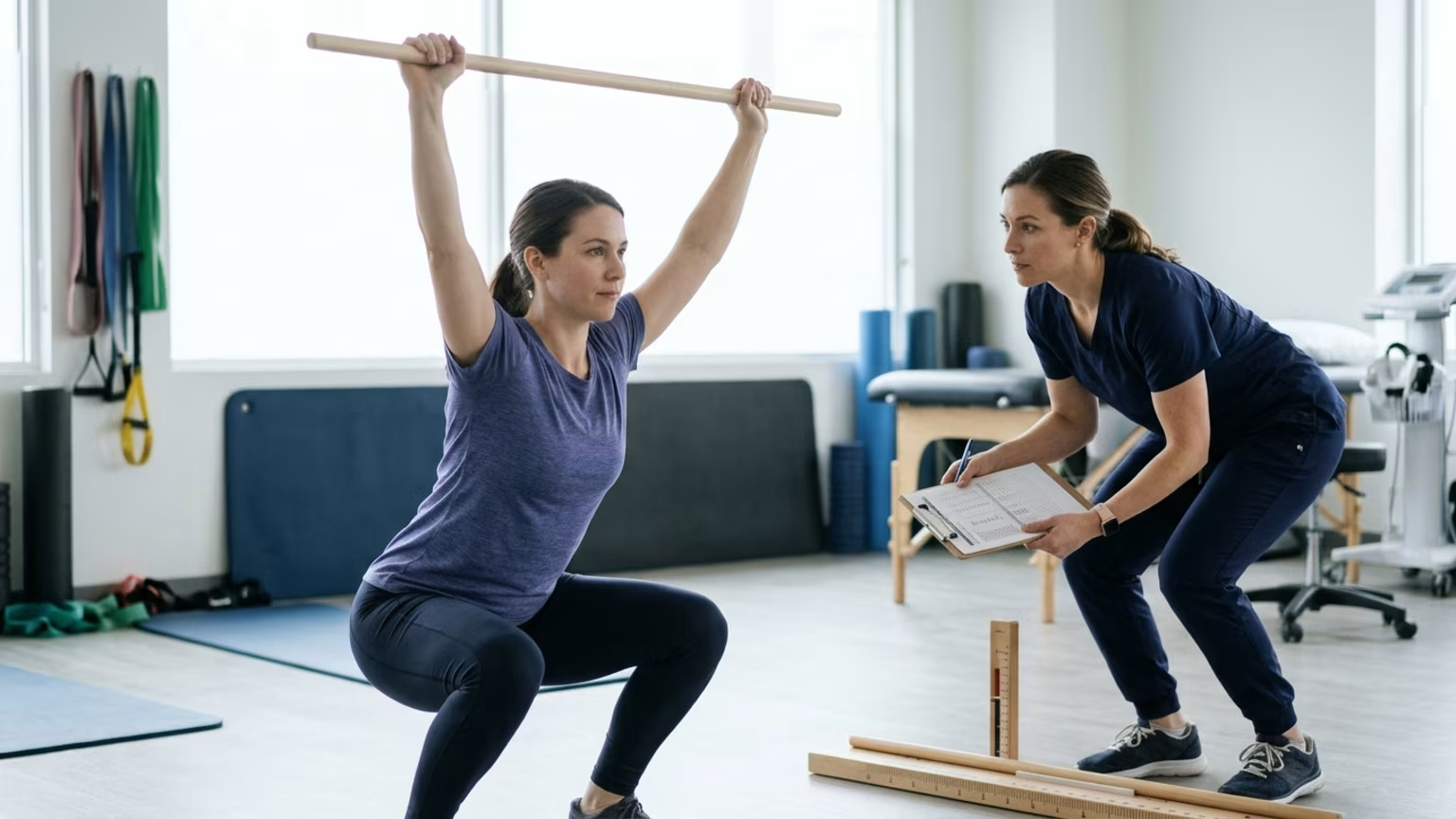

Read practical guidance on injury recovery, rehabilitation, mobility and rebuilding strength as you work your way back to activity.
Explore Resources