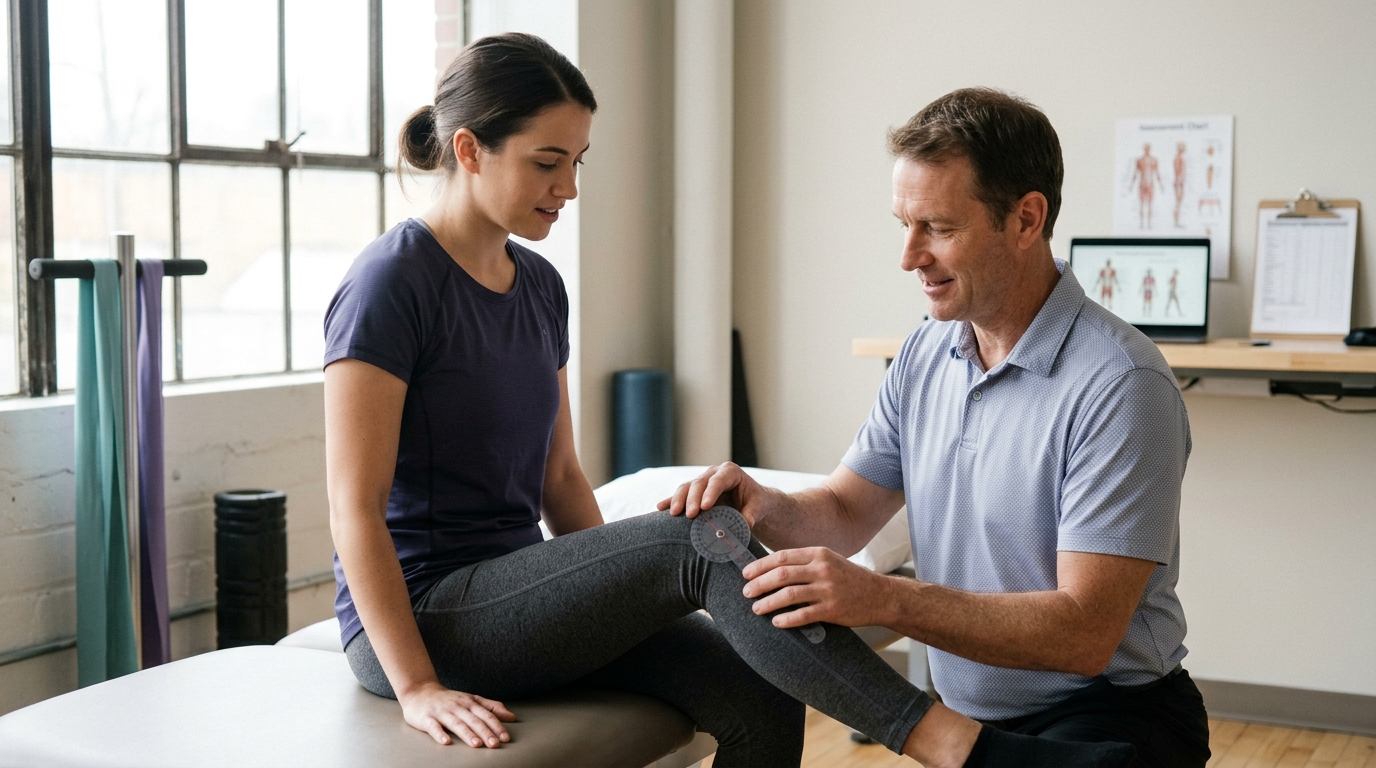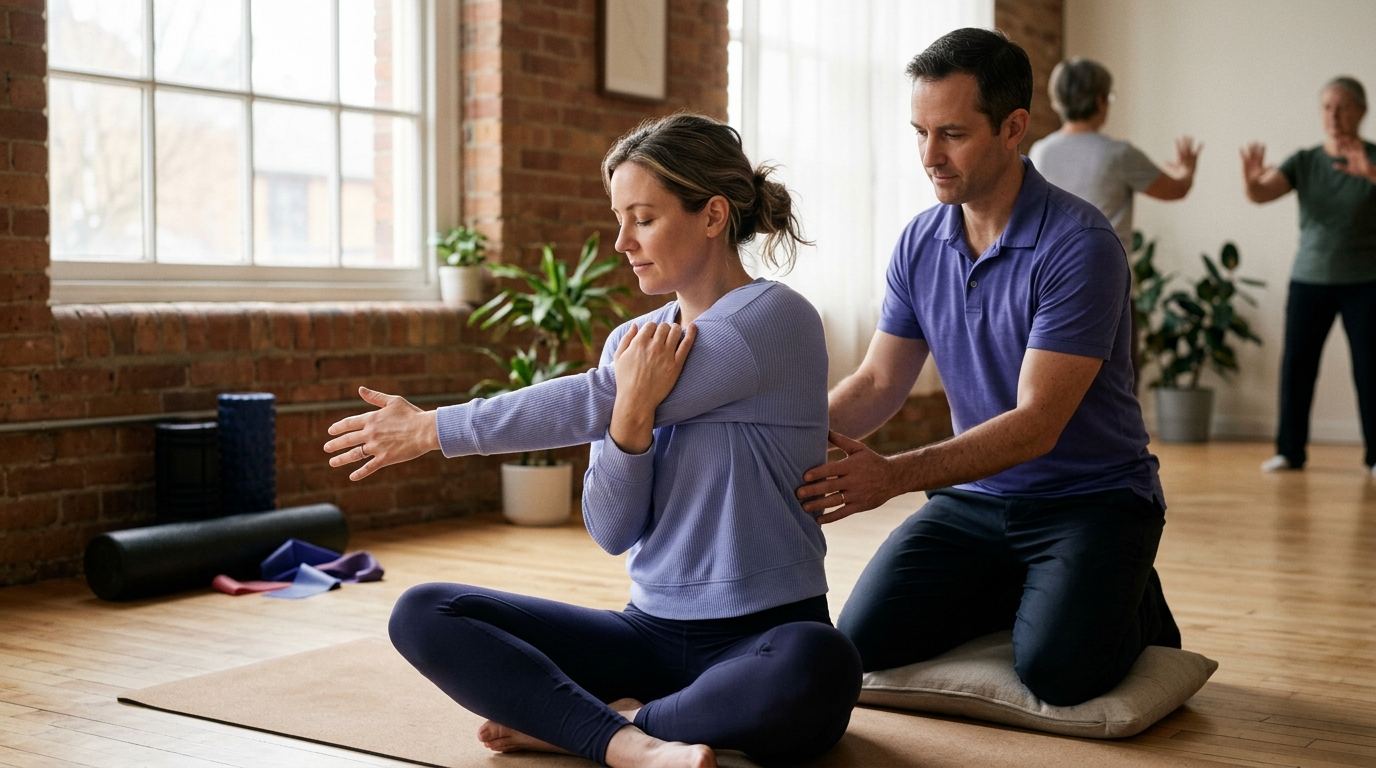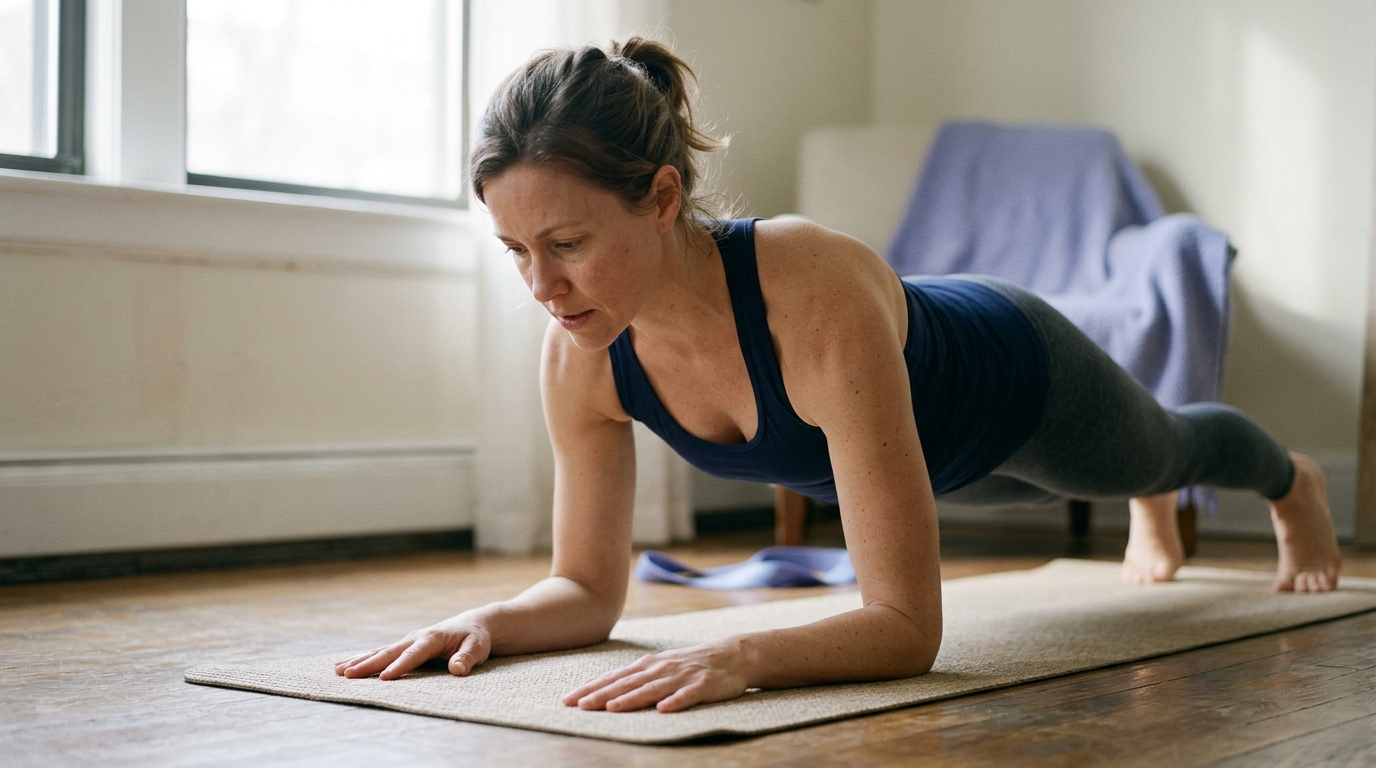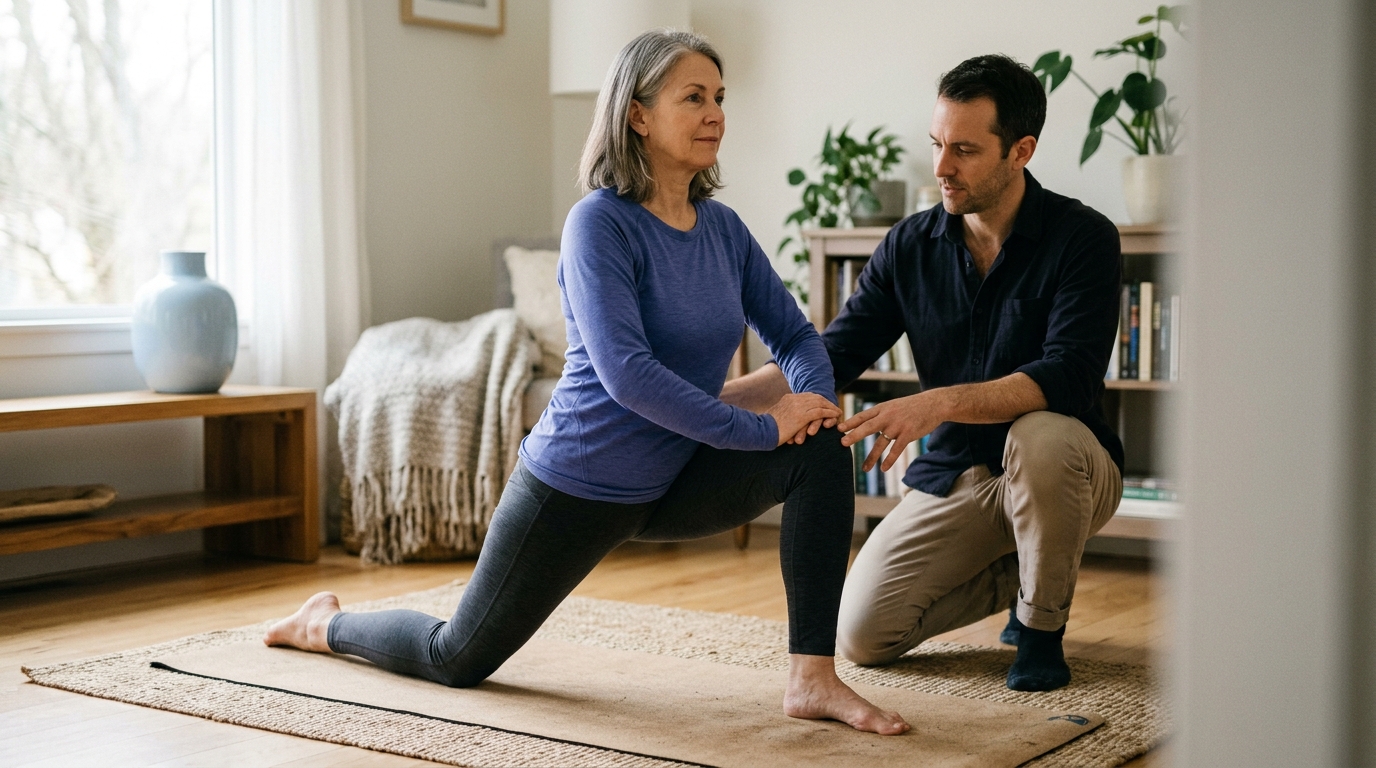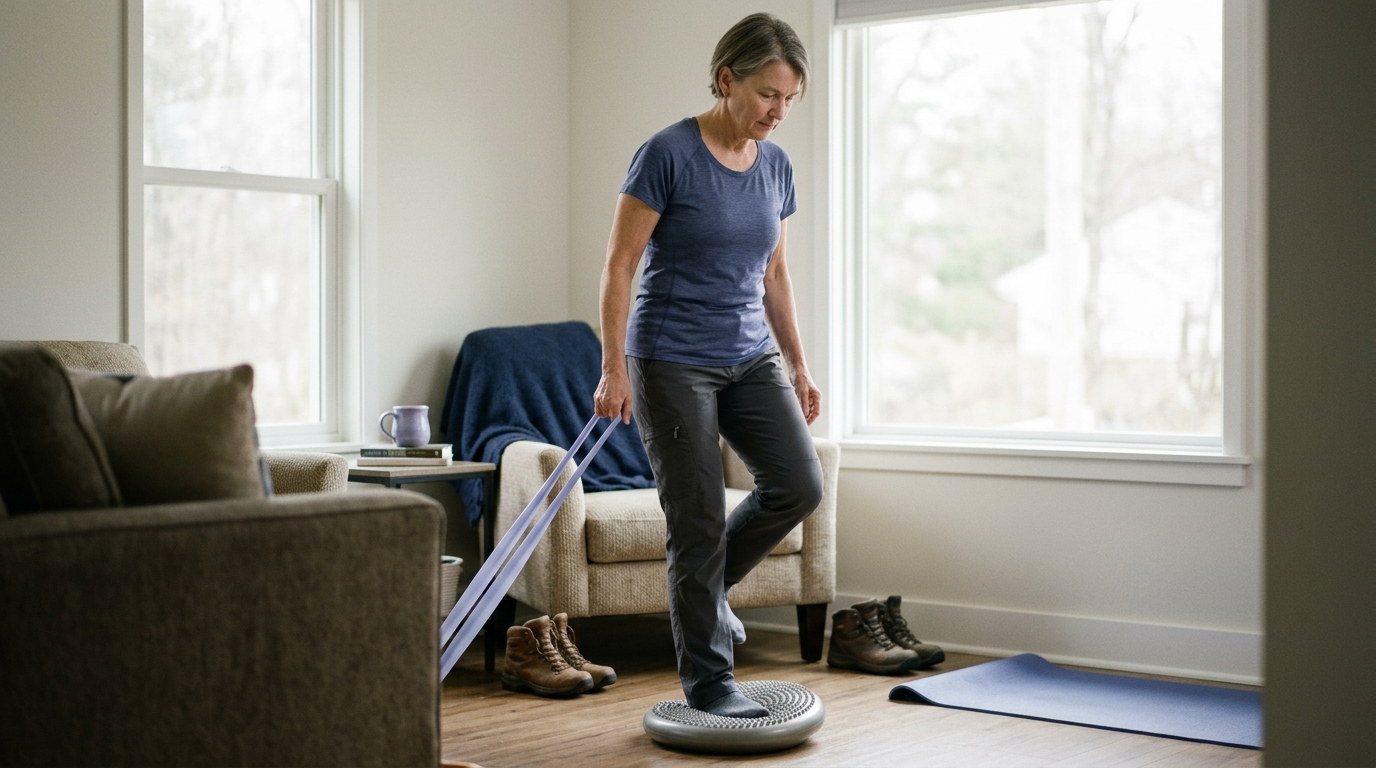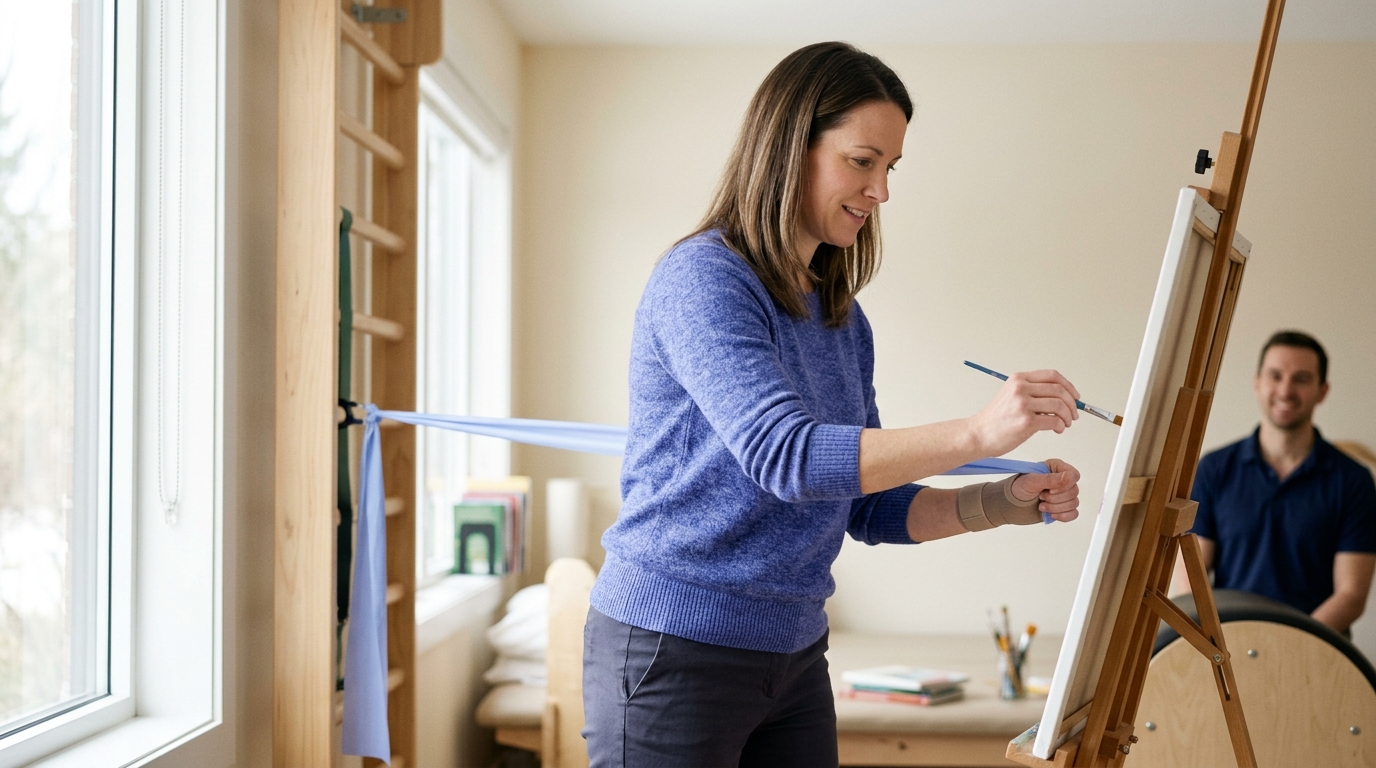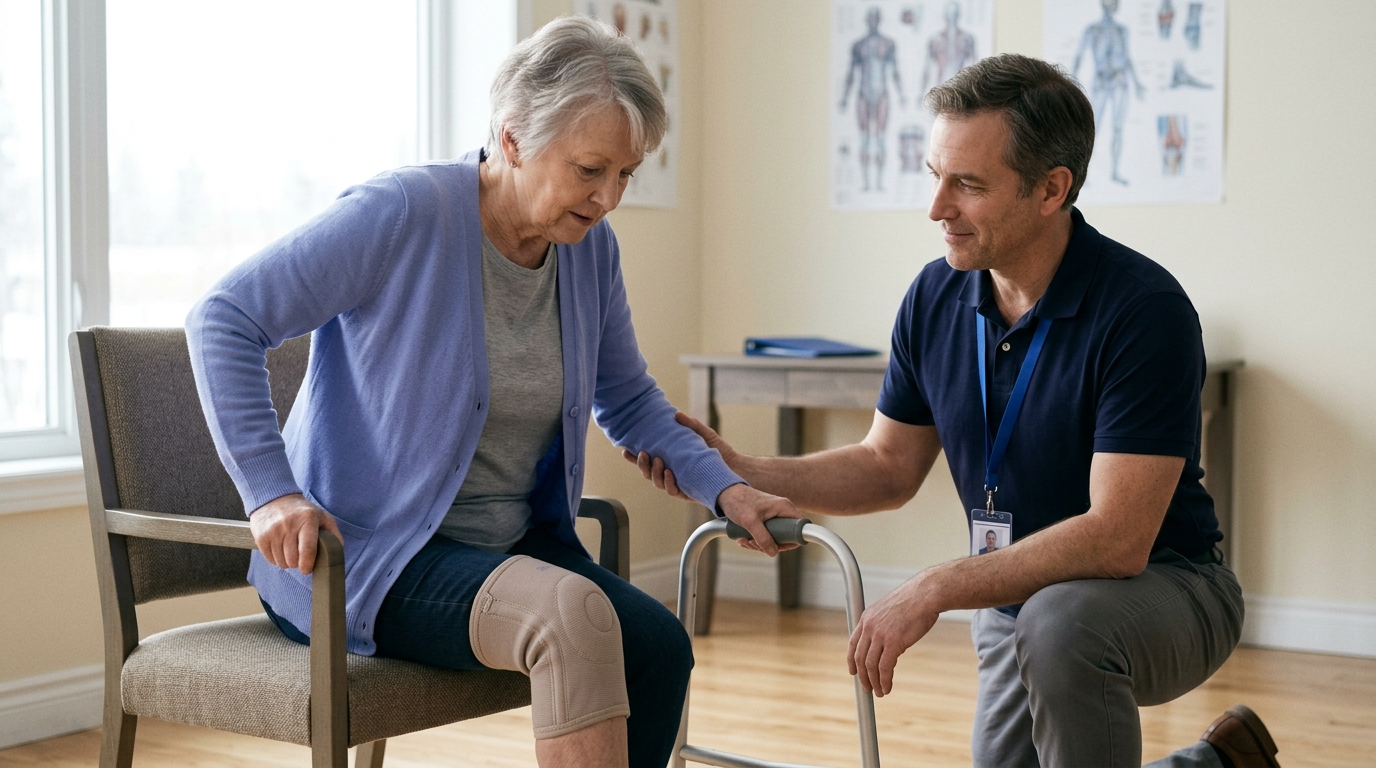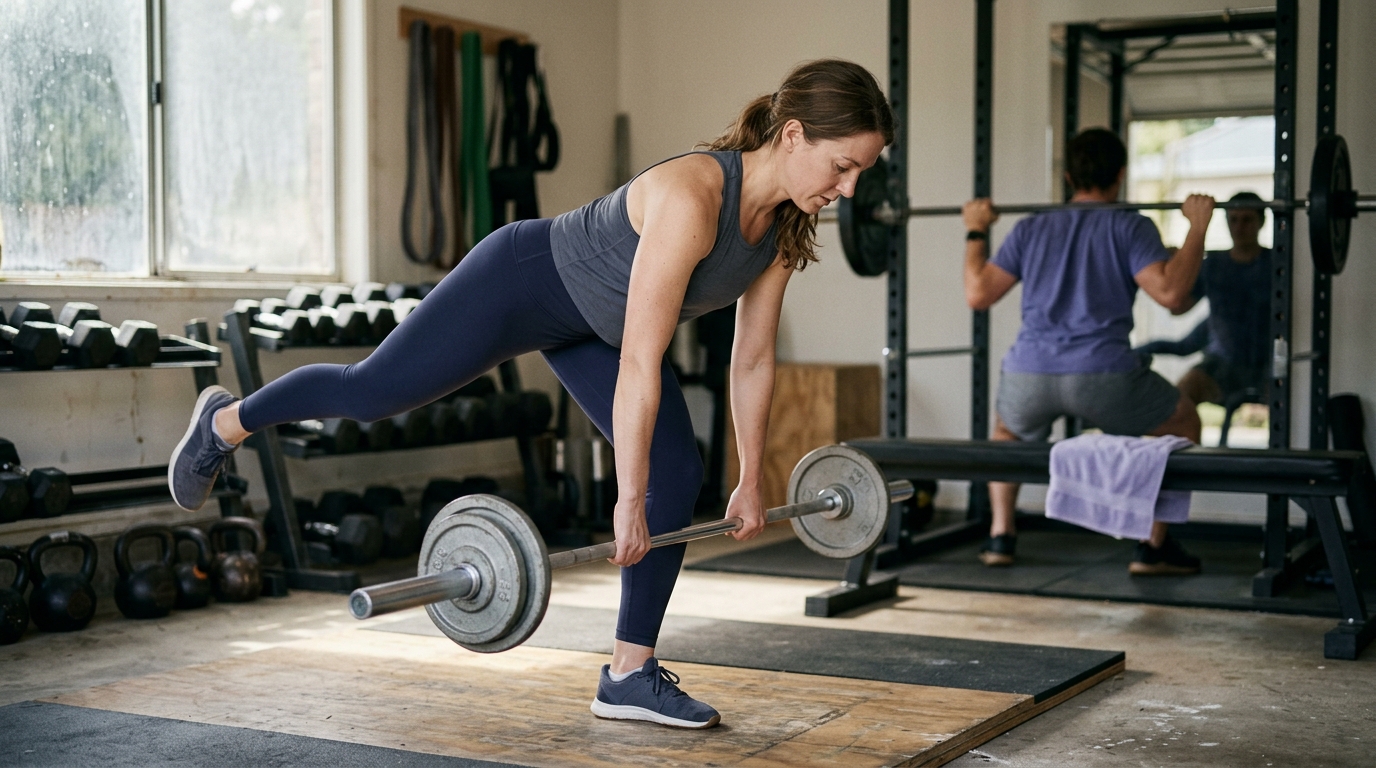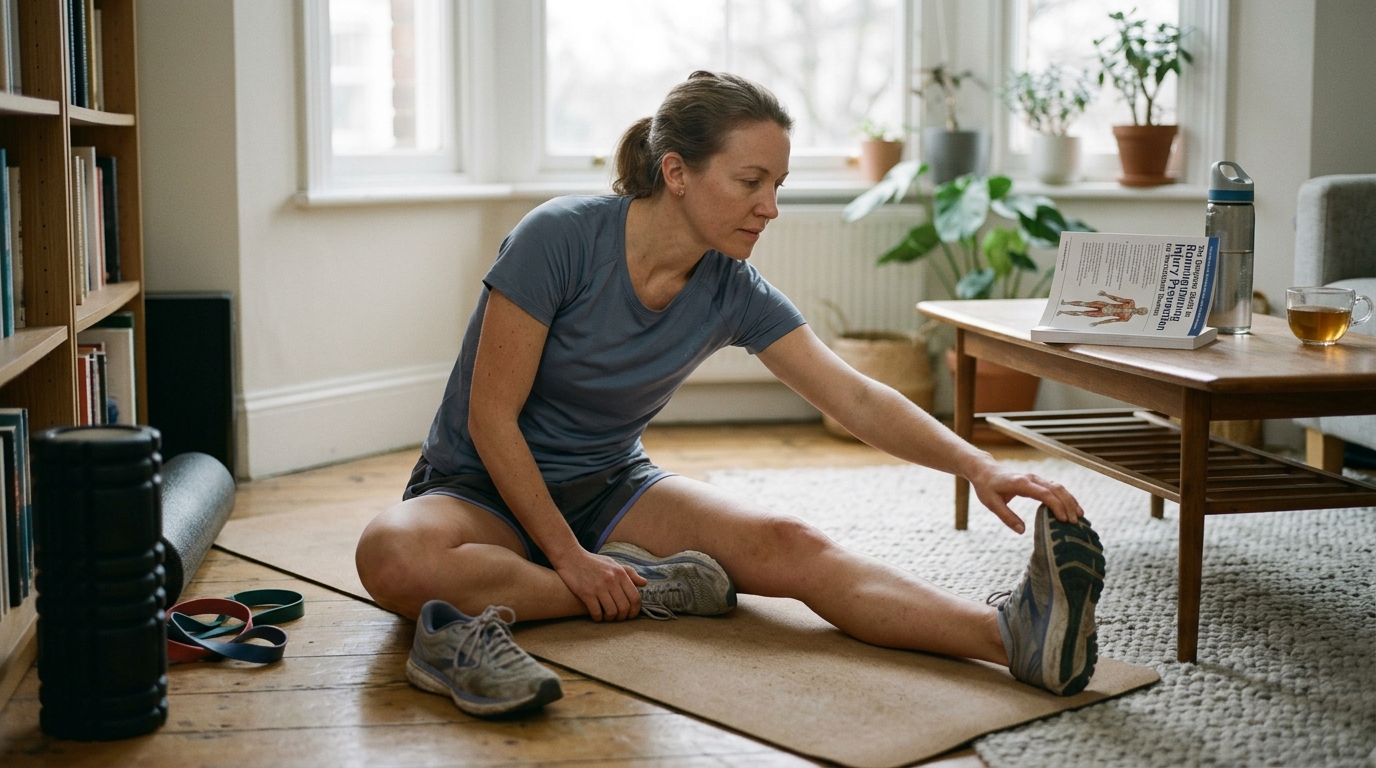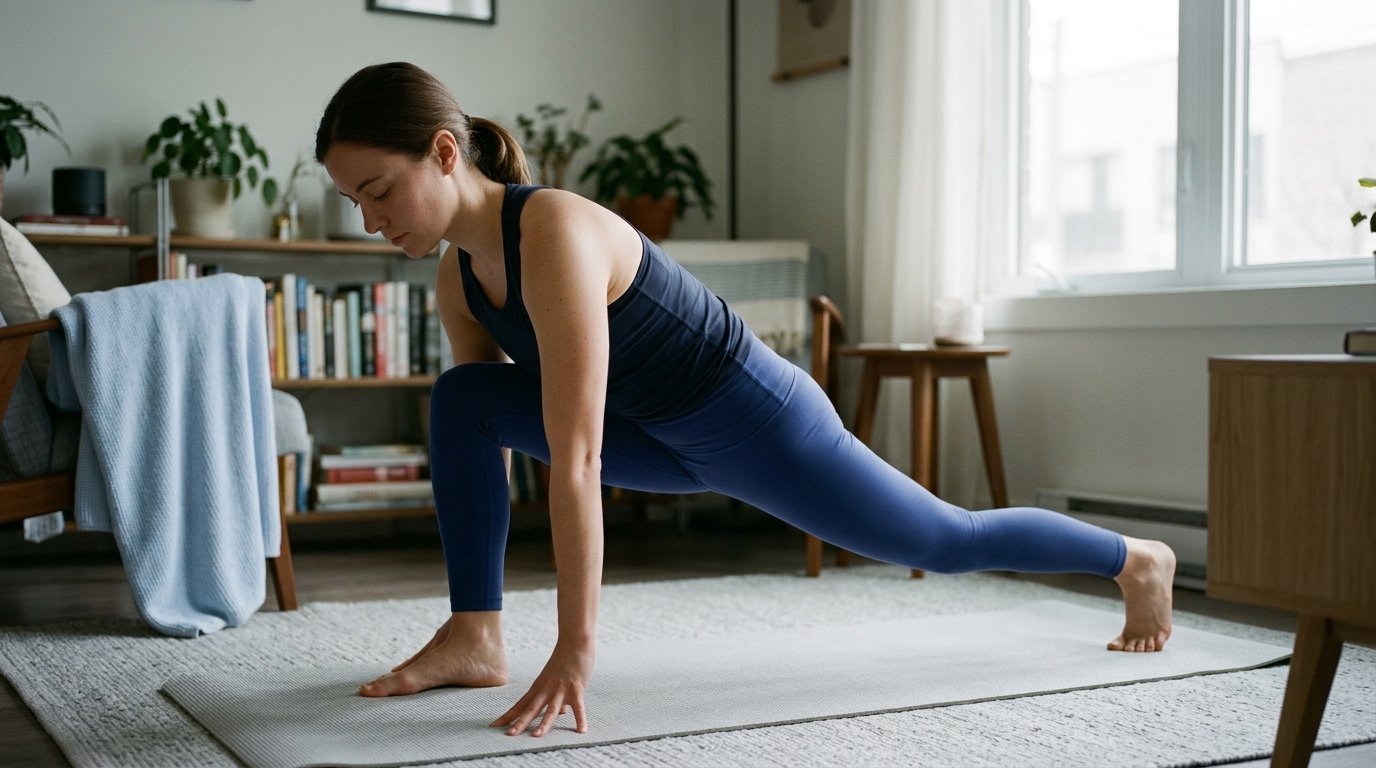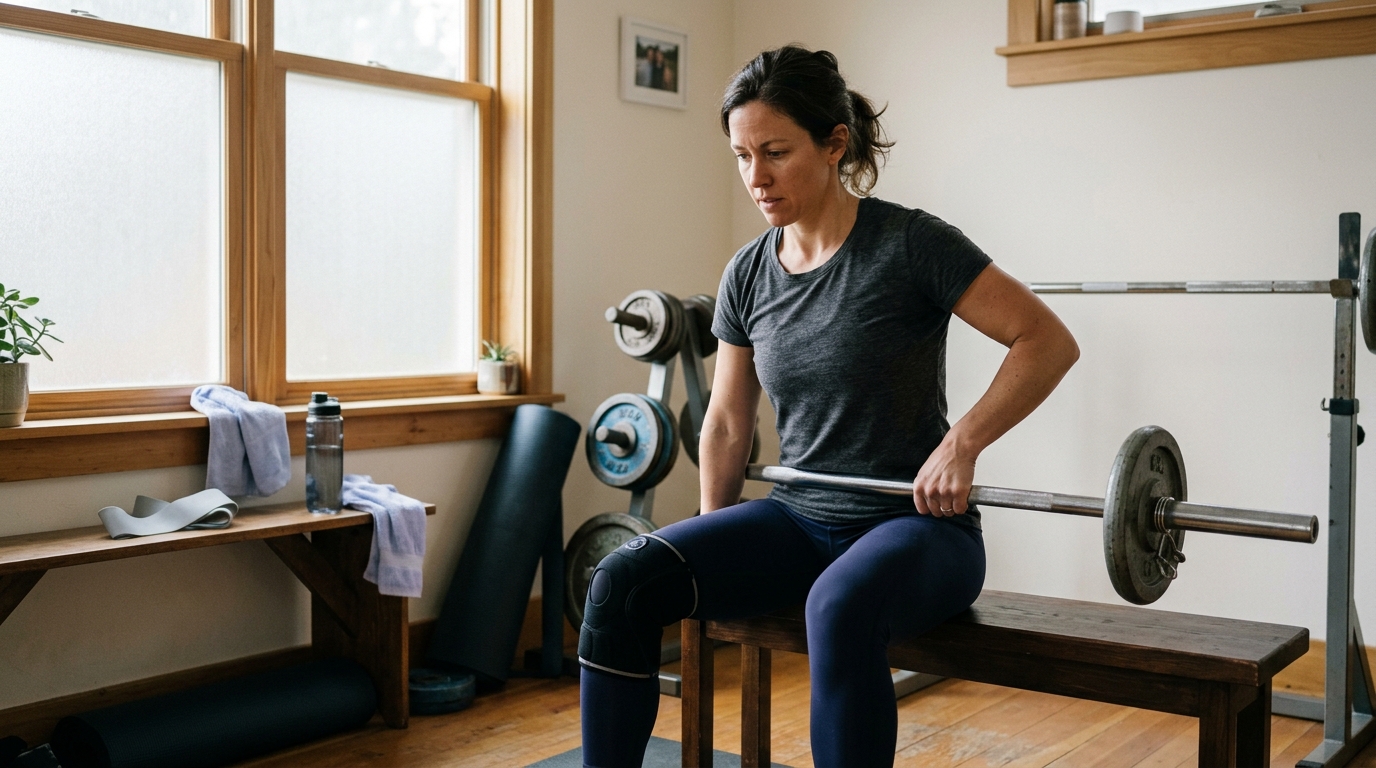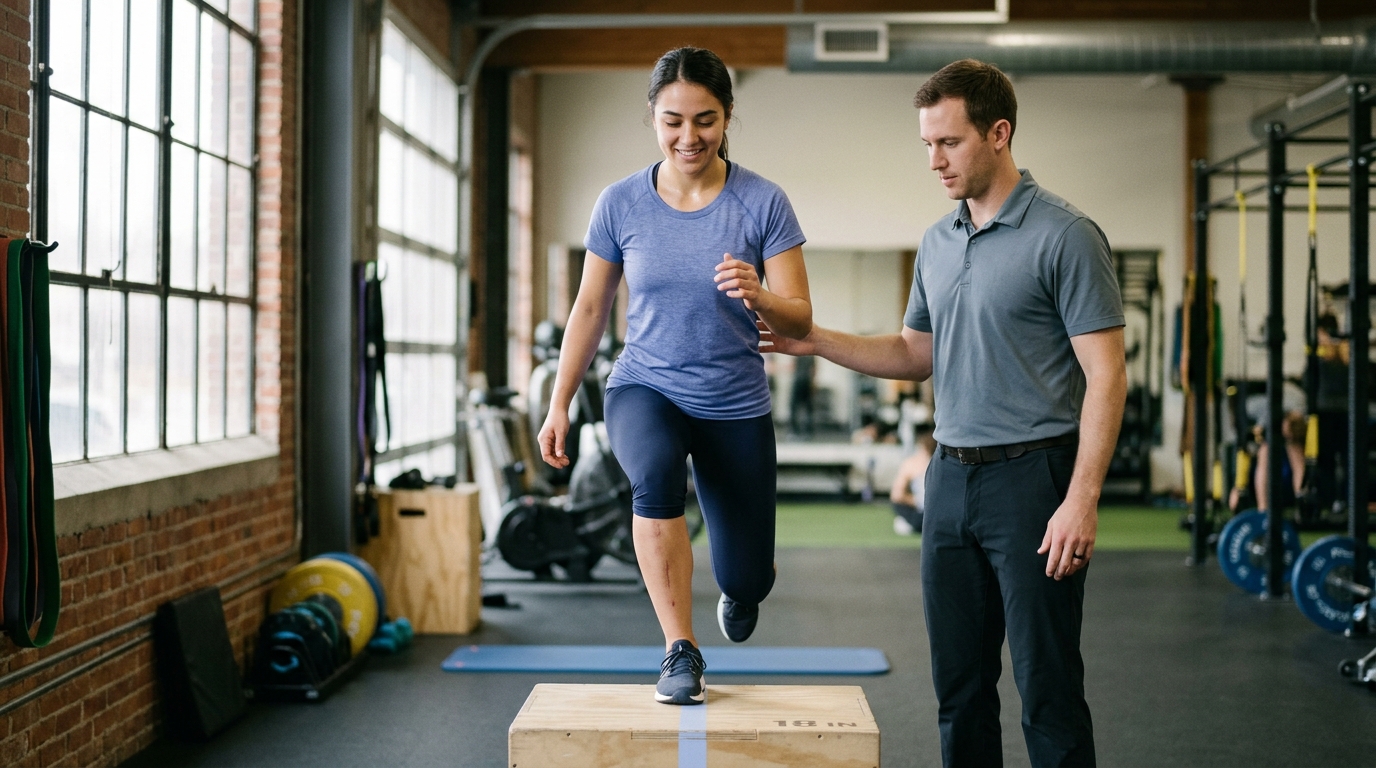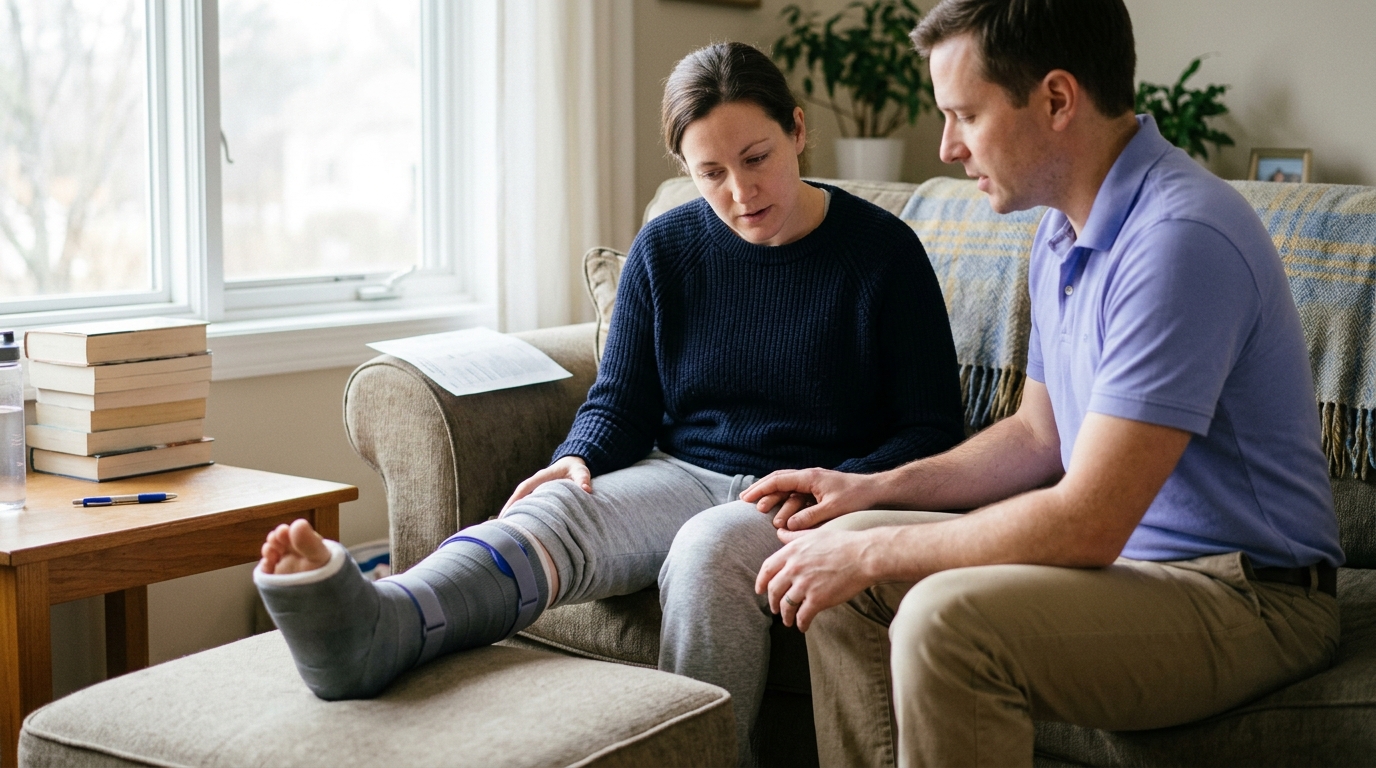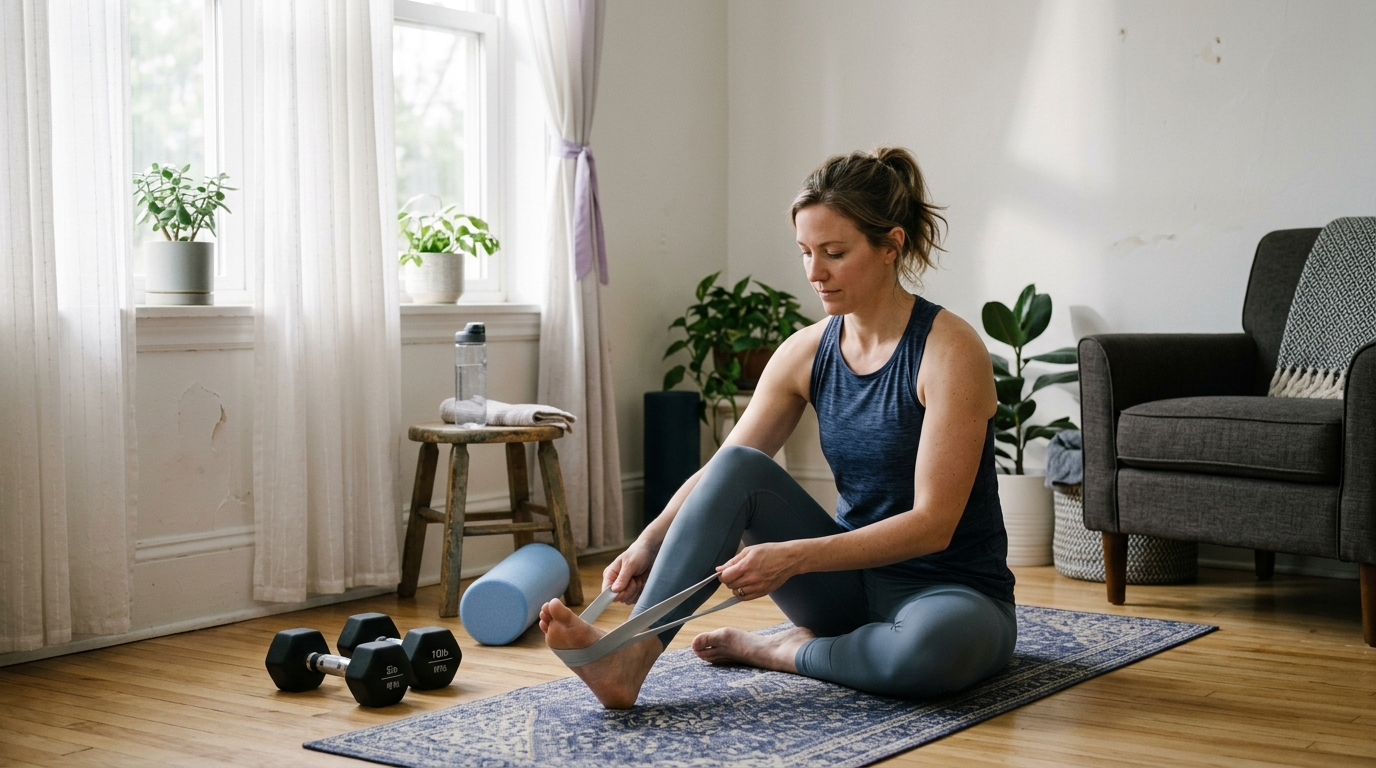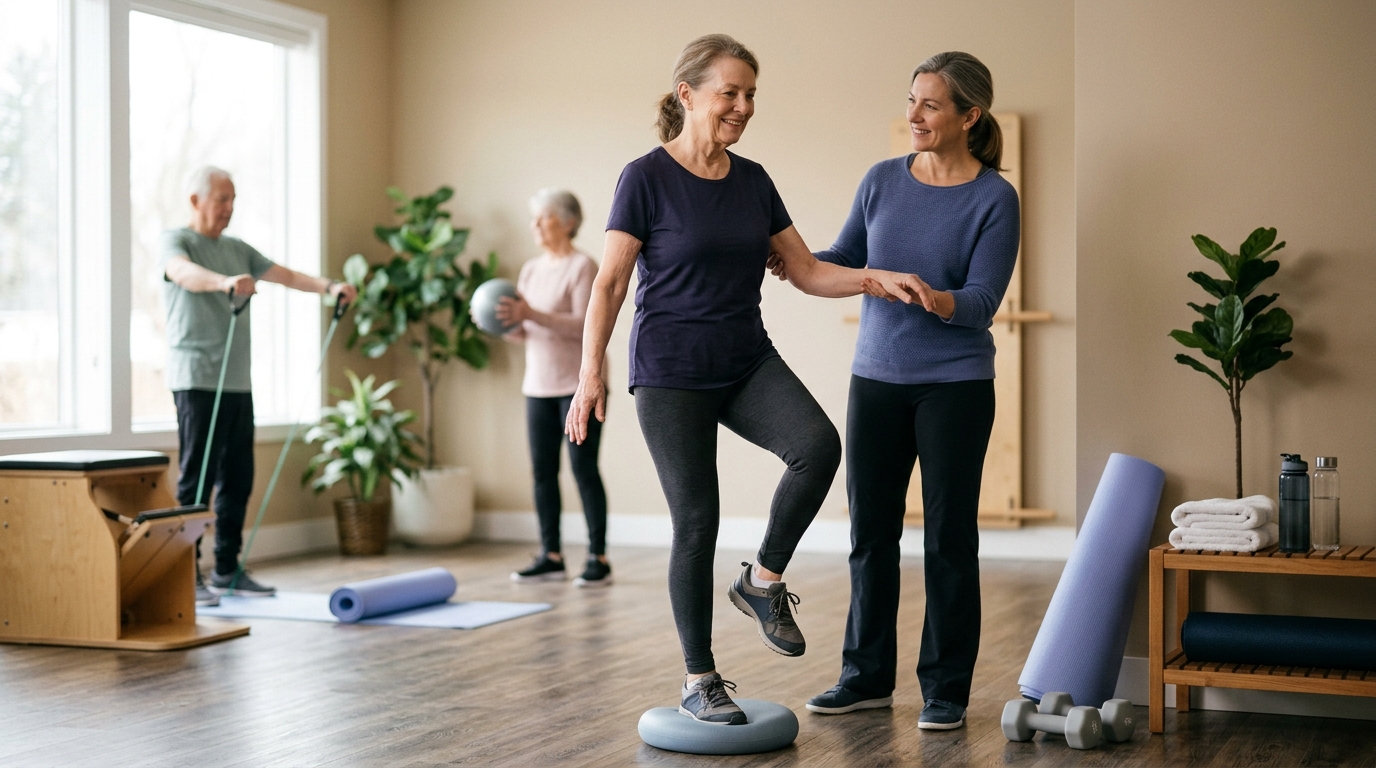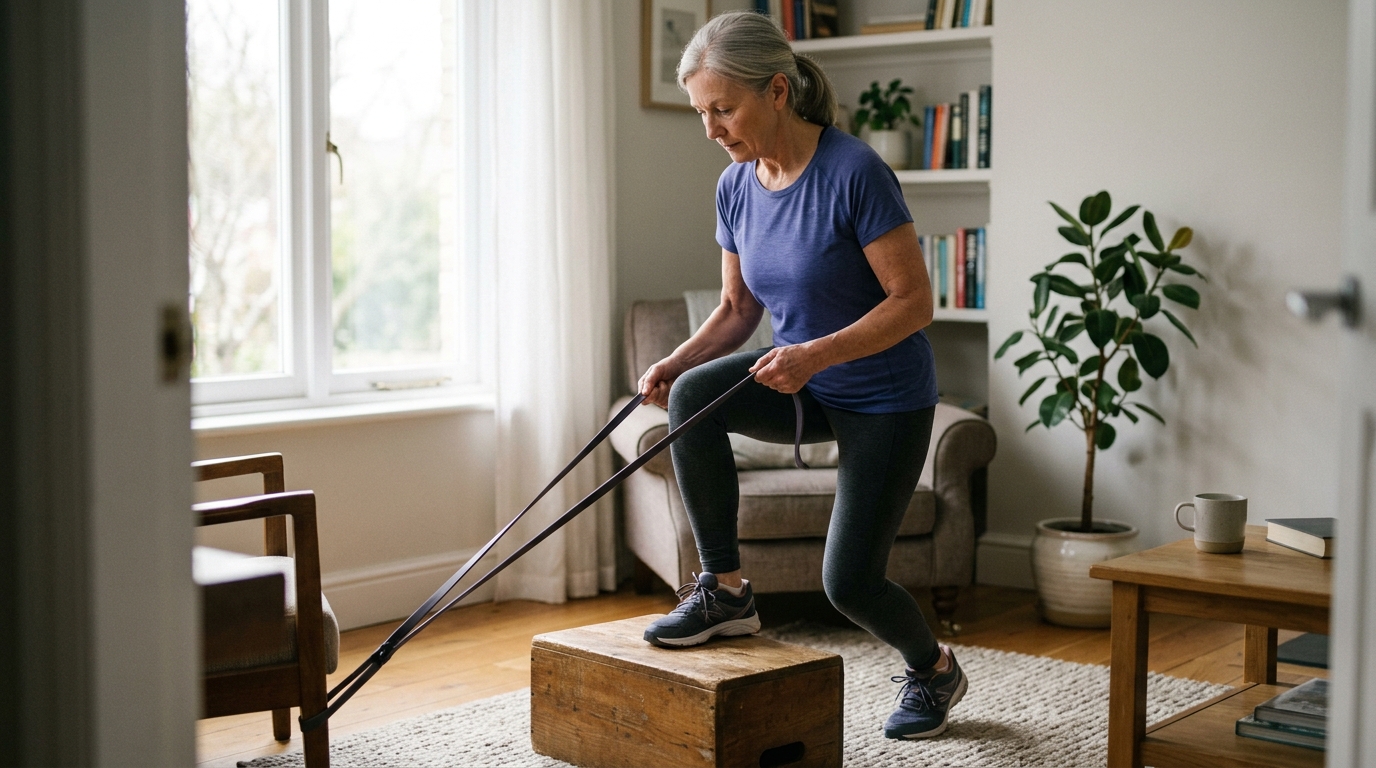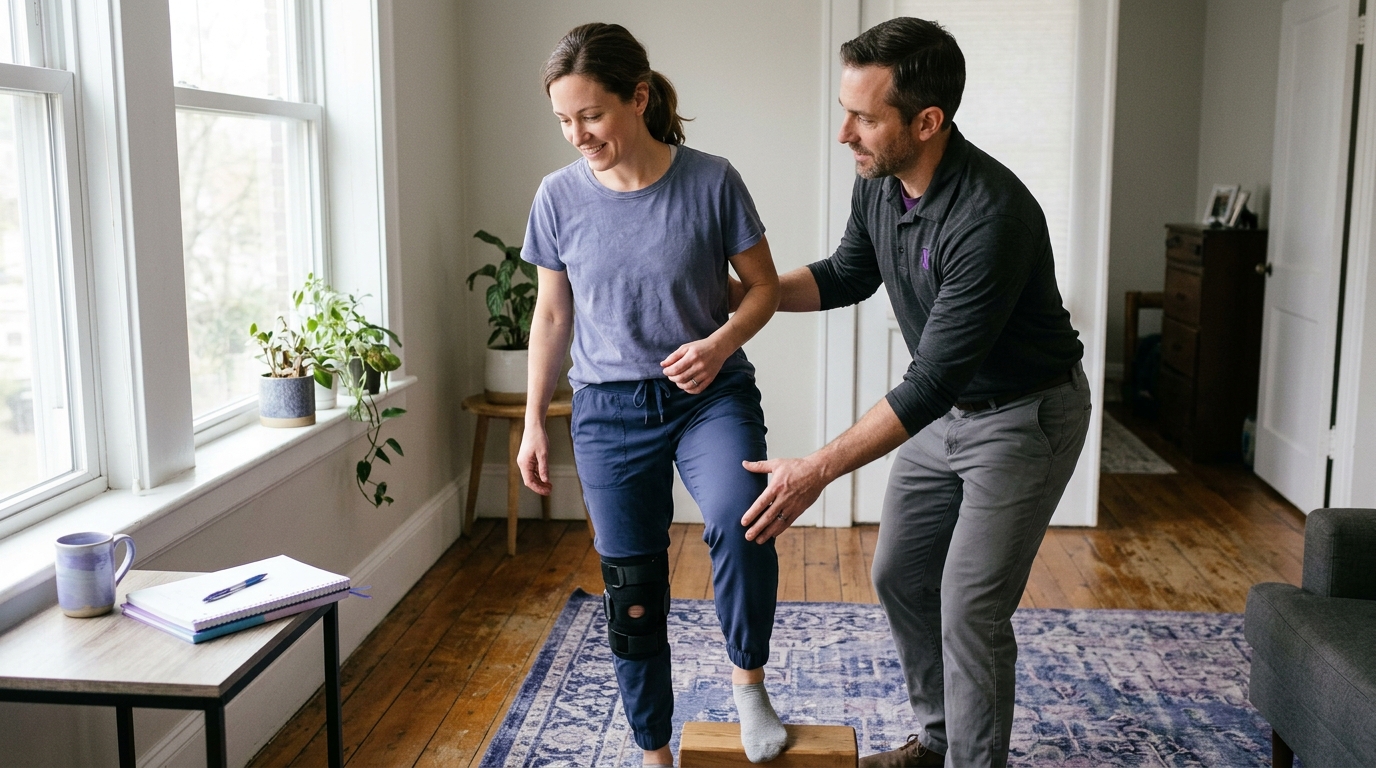

Adapted strength training allows individuals with limited balance or mobility to build muscle safely by modifying exercises according to clinical evidence and physical capacity.





Many people believe that you must already possess steady balance and full joint mobility before you can start lifting weights. This common assumption causes many adults to avoid resistance exercises entirely after an injury, a period of illness, or a loss of confidence. In reality, your skeletal muscles do not know whether you are standing on one leg in the middle of a room or sitting firmly in a sturdy armchair. Muscle tissue responds to mechanical tension, fatigue, and regular effort, regardless of the posture you use to create that challenge.
You do not need perfect balance to build meaningful strength. When balance or mobility is limited, the primary task is to adapt the exercise setup so you can challenge your muscles safely. By using stable external supports, seated positions, and thoughtful resistance choices, you can train effectively while controlling the risk of a fall. However, general exercise modifications cannot replace medical care. If you experience unexplained dizziness, frequent unexplained falls, or sudden joint pain, you should always consult a qualified healthcare professional before beginning.
People often group physical limitations into a single category, but physical performance relies on several distinct systems. Understanding how these elements differ makes it much easier to select the right exercise adaptations. A limitation in one area does not mean you are incapable in the others.
Strength refers to the amount of force your muscles can produce against resistance. You can build muscular force in almost any posture, including lying down, sitting, or standing with support. Strength training focuses on overloading muscle groups systematically over time to stimulate adaptations in muscle fibers and the nervous system.
Balance is your ability to maintain control of your body position, whether you are staying still or moving. It depends on sensory inputs from your eyes, your inner ear, and proprioceptors in your joints and muscles. Coordination is how smoothly your brain organizes those muscle actions to complete a motor task. Balance can be trained on its own, but it does not need to limit your ability to work on raw muscular strength.
Mobility describes the usable range of motion around a joint or a series of joints. Limited mobility might prevent you from squatting deeply or reaching your arms fully overhead. However, limited mobility does not stop you from strengthening the ranges of motion that you currently own. Modifying the depth of a movement or changing the angle of a press allows you to build strength within a comfortable and controlled range.
Confidence is your psychological trust in your physical ability to perform a movement without pain, stumbling, or falling. A fear of falling can cause people to avoid activity, which leads to physical deconditioning and further reduces balance over time. Recognizing fear as a distinct factor helps you choose exercises that feel safe and manageable, allowing you to rebuild trust in your body step by step.
Public health organizations and clinical researchers have evaluated how physical activity affects adults with functional limitations. The broad body of evidence shows that muscle strengthening offers clear benefits, though the type and certainty of the evidence vary across specific training formats.
The World Health Organization recommends that all adults perform muscle-strengthening activities involving all major muscle groups on at least two days per week. For adults aged 65 and older, the World Health Organization recommends varied multicomponent physical activity that emphasizes functional balance and strength training on three or more days per week. These guidelines aim to improve functional capacity and reduce the overall rate of falls.
Public health guidance from the Centers for Disease Control and Prevention notes that adults with chronic conditions or disabilities should engage in regular physical activity according to their ability. When standard targets cannot be met, adults should avoid inactivity and perform adapted movements tailored to their current capacity. Gradual progression and consultation with a healthcare provider are central features of this guidance.
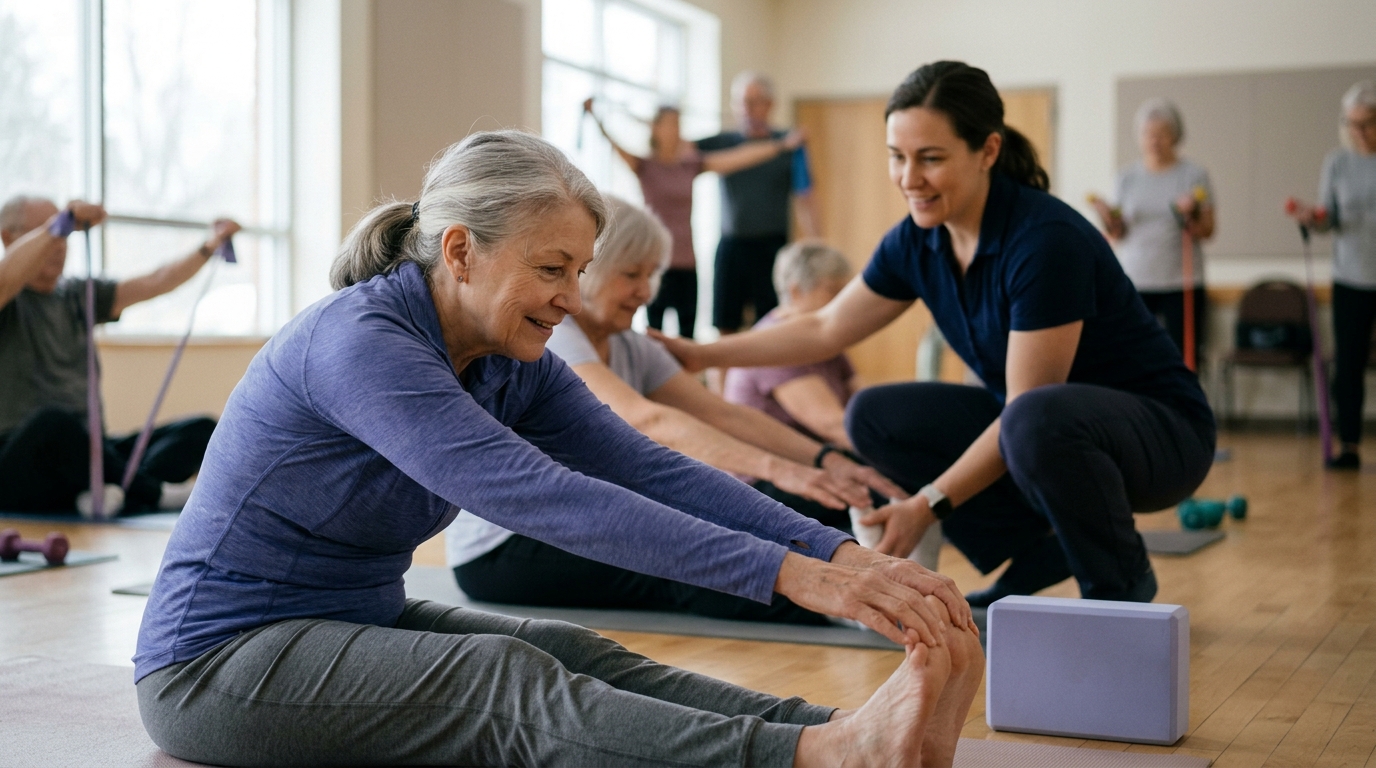
Chair-based exercise is widely used for individuals who find standing training difficult or unsafe. A systematic review and meta-analysis of chair-based exercise programs in older adults, encompassing 1,388 participants, identified clear functional gains. The analysis found improvements in handgrip strength, performance on the 30-second arm-curl test, and performance on the 30-second chair-stand test.
These findings show that seated exercises can effectively build strength and functional performance. However, seated exercise is not a complete replacement for balance-specific training if your goal is standing stability. A separate systematic review examining chair-based programs specifically for frail older people found a limited and lower-quality evidence base. While seated training is a valuable starting point, its effects on long-term mobility and fall prevention in frail populations remain mixed in the published literature.
Research shows that general resistance training can improve certain physical markers linked to balance. Systematic reviews of resistance exercise in older populations report measurable improvements in functional reach distance and faster completion times for the Timed Up and Go test. Stronger leg and hip muscles provide the mechanical force needed to stabilize the pelvis and react to small trips.
Even so, strength training alone is not equivalent to a comprehensive fall-prevention program. The World Health Organization emphasizes that multicomponent programs, which blend strength, functional movement, and direct balance challenges, offer the highest certainty of evidence for reducing falls. Strength provides the foundation, but balance requires task-specific practice.
A Cochrane systematic review evaluated the impact of exercise interventions on the fear of falling among community-dwelling older adults across 24 studies. The researchers observed a small to moderate immediate reduction in fear of falling following structured exercise programs. However, the authors rated the overall quality of this evidence as low, and the long-term persistence of this psychological benefit remains uncertain.
Exercise can help reduce movement-related apprehension, but it is not a guaranteed remedy for fear. Programs that rebuild confidence gradually through safe, predictable movement setups appear to provide the most supportive environment for ongoing participation.
There is no single exercise routine that suits every person with balance or mobility challenges. Several personal and environmental factors determine which positions, supports, and resistance levels are appropriate for you.
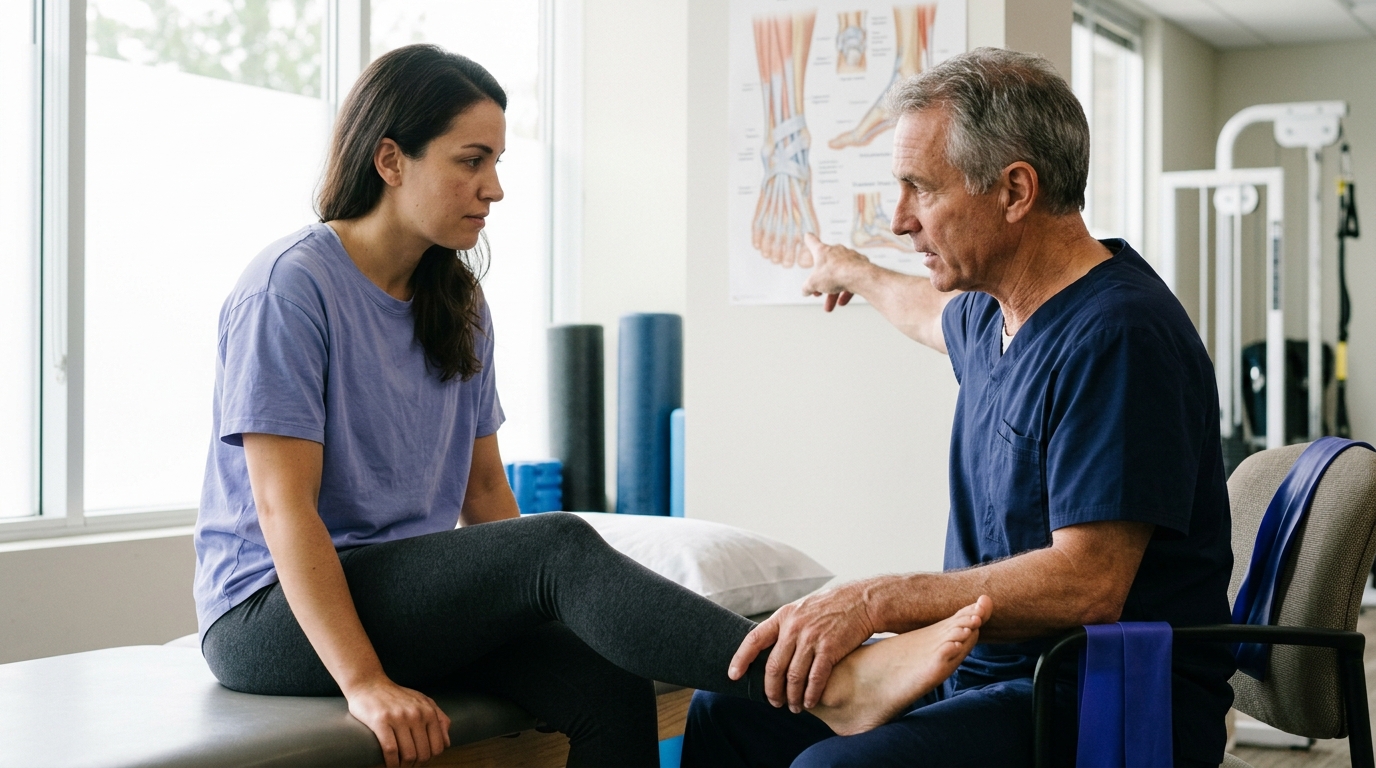
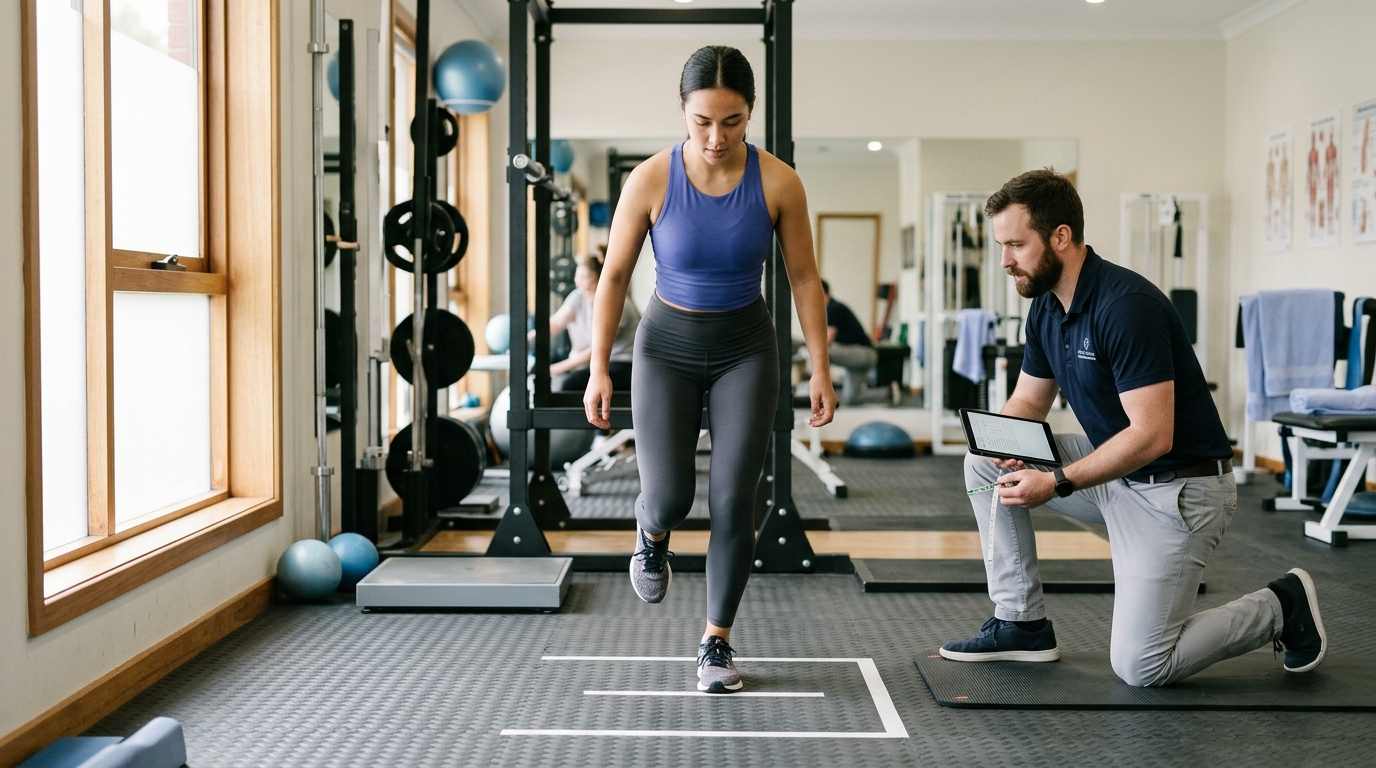
A history of recent falls changes how you should approach your workouts. If you have experienced recurrent falls or unexplained stumbles, self-directed home exercise may carry unnecessary risks. In these situations, clinical guidelines recommend an individualized assessment by a physical therapist or trained specialist before you attempt unsupported standing routines.
Many common medications affect balance, blood pressure, and alertness. Blood pressure medications, sedatives, muscle relaxants, and certain pain therapies can cause sudden lightheadedness or delayed reaction times. If your medications cause temporary dizziness when you change postures, seated or lying positions are often much safer choices than standing work.
Structural joint issues, such as severe osteoarthritis, recent joint replacement, or spinal stenosis, alter your available range of motion. Pushing a joint into sharp pain is counterproductive and increases the likelihood of compensatory movement faults. Modifying exercise depth, adjusting foot width, or using resistance bands instead of free weights can keep muscle tension high without stressing sensitive joint tissues.
The physical setup of your exercise area plays a major role in safety. Training near a sturdy, fixed structure offers reliable stability, whereas relying on light household furniture can introduce significant hazards. Your immediate environment should support your training goals rather than create additional balance demands.
Creating an effective training space requires intentional planning. Setting up your environment correctly ensures that you spend your mental and physical energy on muscle exertion rather than worrying about your surroundings.
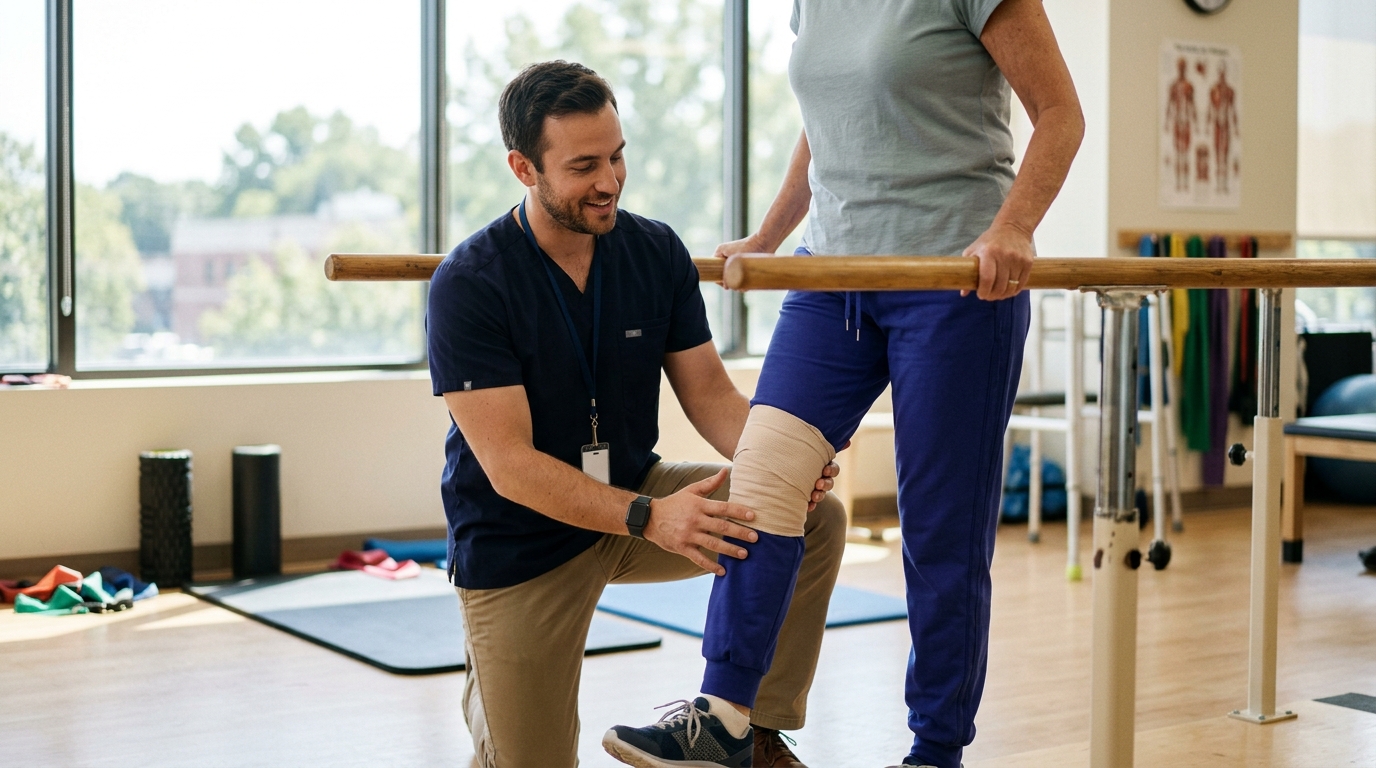
A support structure should remain completely motionless when you lean on it or grasp it. Heavy kitchen countertops, firmly anchored grab bars, or heavy wooden tables provide reliable handholds for supported standing exercises. Lightweight folding chairs, rolling office chairs, and towel racks should never be used as balance supports, as they can shift or break under sudden loads.
When using a chair for seated exercises, select one with a firm, flat seat and a supportive backrest. Chairs with thick, soft cushions make it harder to maintain upright posture and complicate the process of standing up. Ensure that the chair legs rest on a non-slip surface, such as a rubber exercise mat or bare floor, rather than a loose rug.
Injuries and balance losses often occur while moving into or out of an exercise position, rather than during the exercise itself. Plan how you will sit down, stand up, or retrieve your equipment before you begin your set. Keep all weights, resistance bands, and hydration bottles on a sturdy side table at waist height so you do not have to bend down to the floor between exercises.
Clear a wide perimeter around your workout area to remove trip hazards. Keep walkways free from power cords, pets, and loose items. Good lighting is also essential, as visual input plays a major role in your ability to orient your body and maintain spatial awareness.
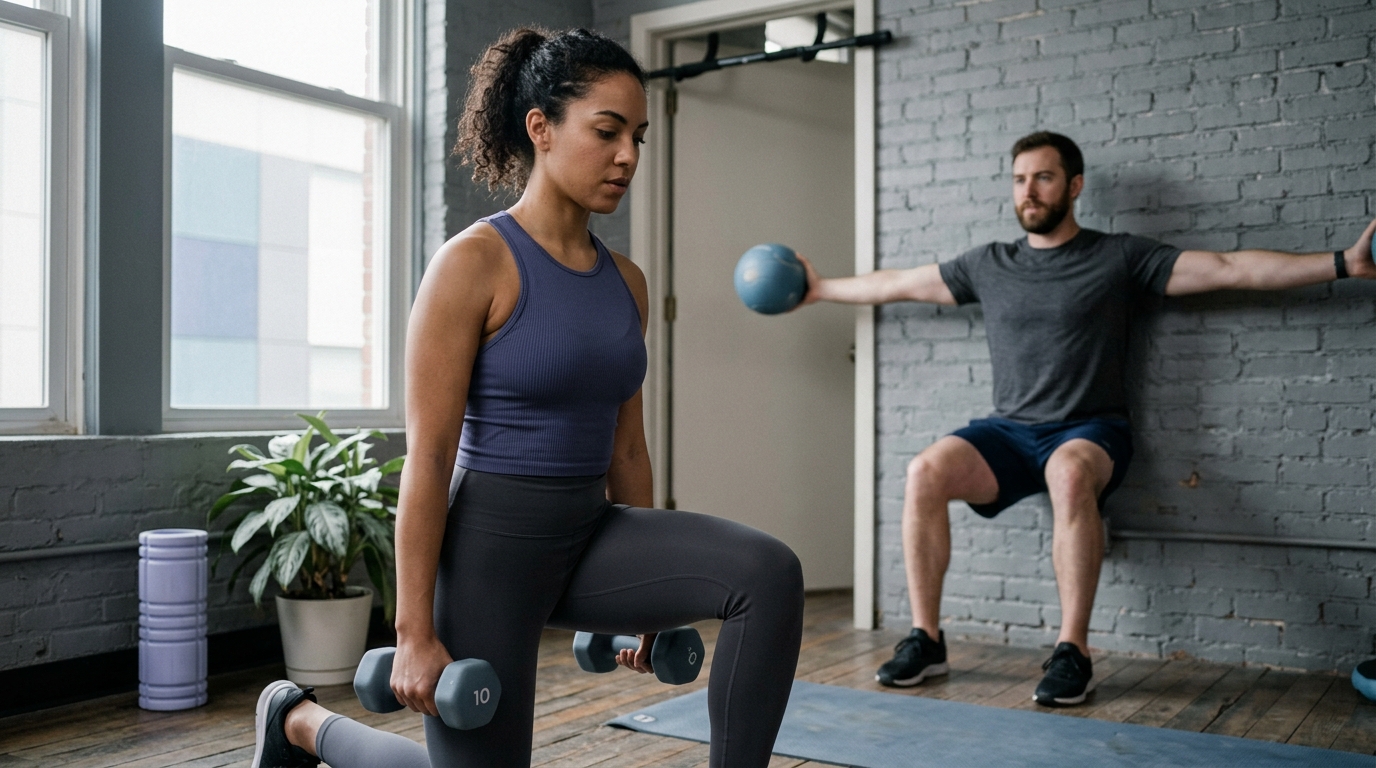
Muscular development relies on fundamental movement patterns: squatting, hinging, pushing, pulling, and core stabilization. You can train every one of these patterns using modifications that match your current balance and mobility levels. For those navigating broader recovery journeys, exploring resources on strength and performance rebuilding can provide helpful context on long-term physical conditioning.
The squat pattern trains the quadriceps, gluteal muscles, and calves. It is essential for maintaining the ability to rise from chairs, vehicles, and low surfaces.
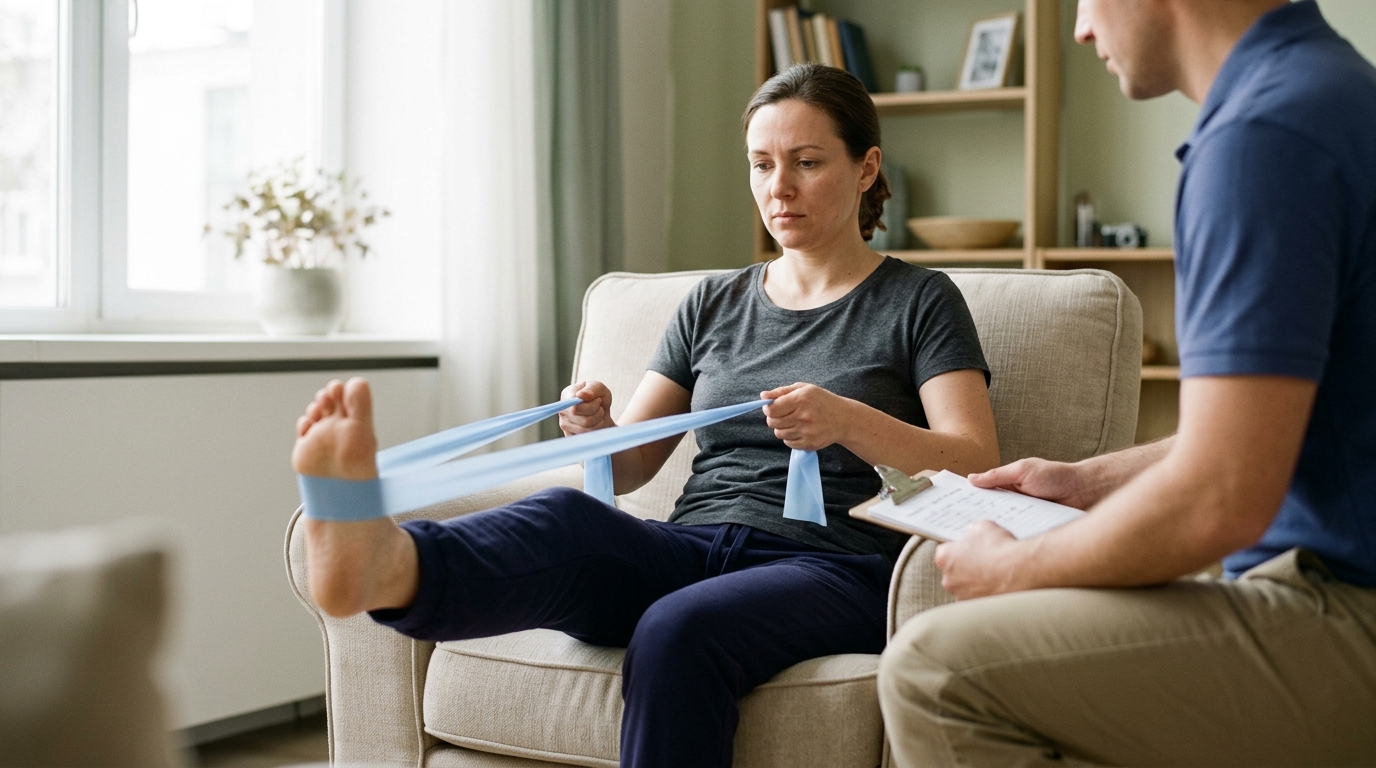
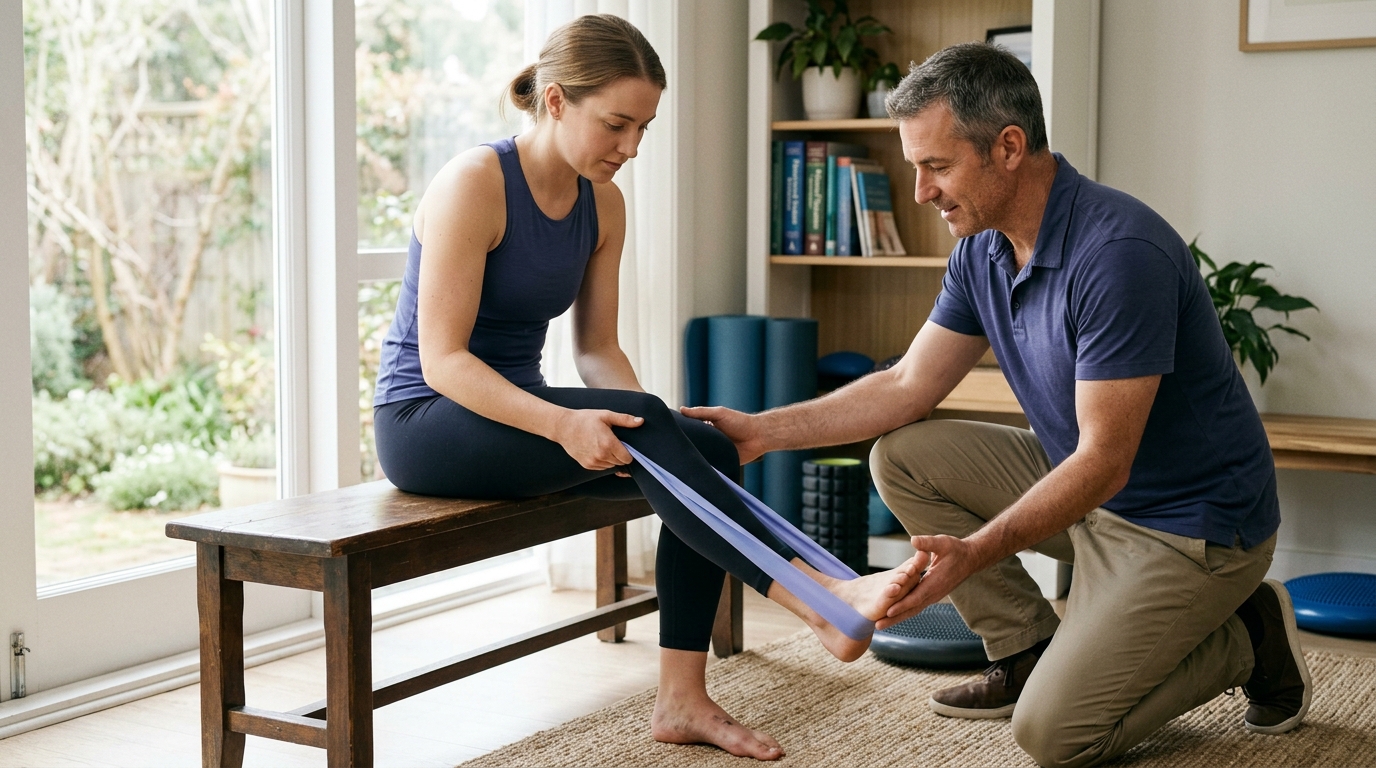
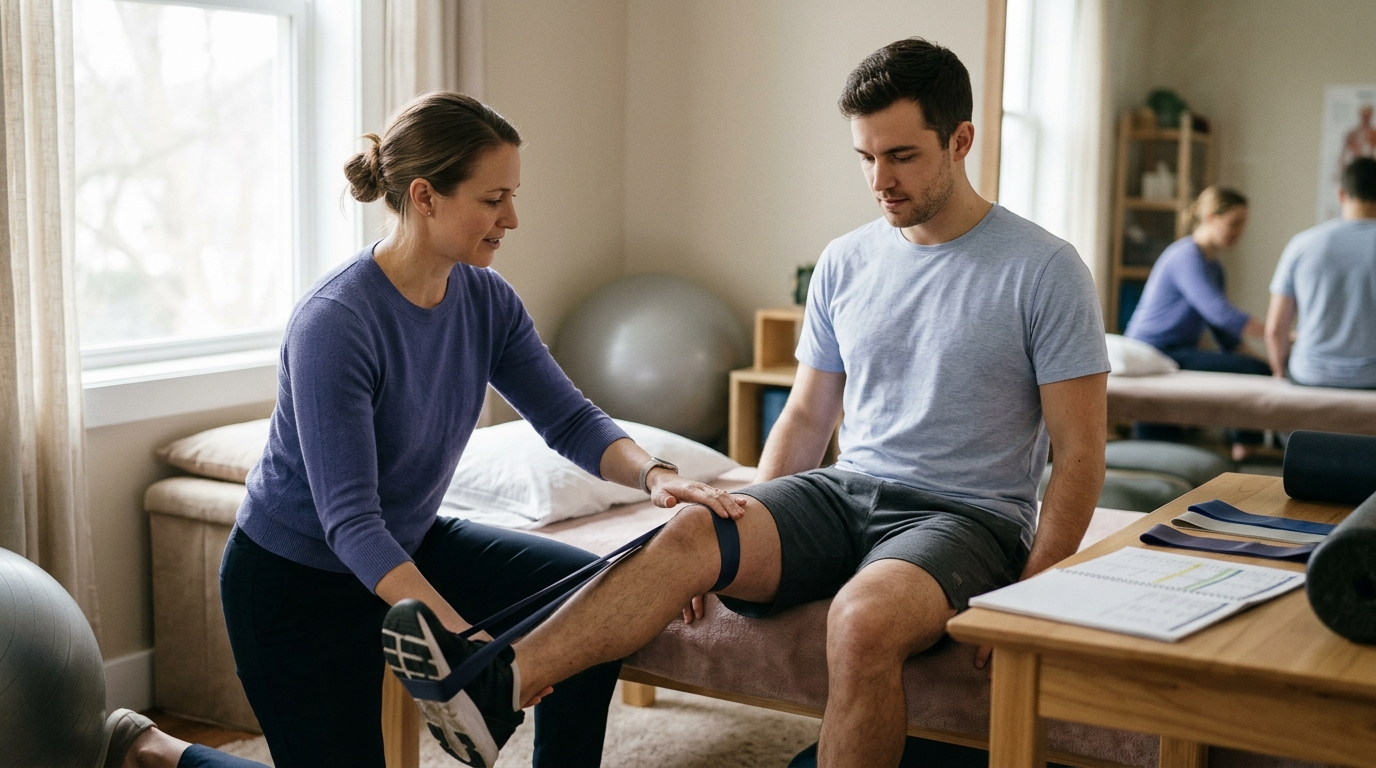
If standing is unsafe or painful, seated knee extensions allow you to strengthen the quadriceps directly. Sit upright in a sturdy chair with your back supported. Slowly straighten one knee until your leg is fully extended in front of you, hold the contraction for two seconds, and lower it slowly under control. You can increase the challenge by attaching an ankle weight or looping a light resistance band around your ankles.
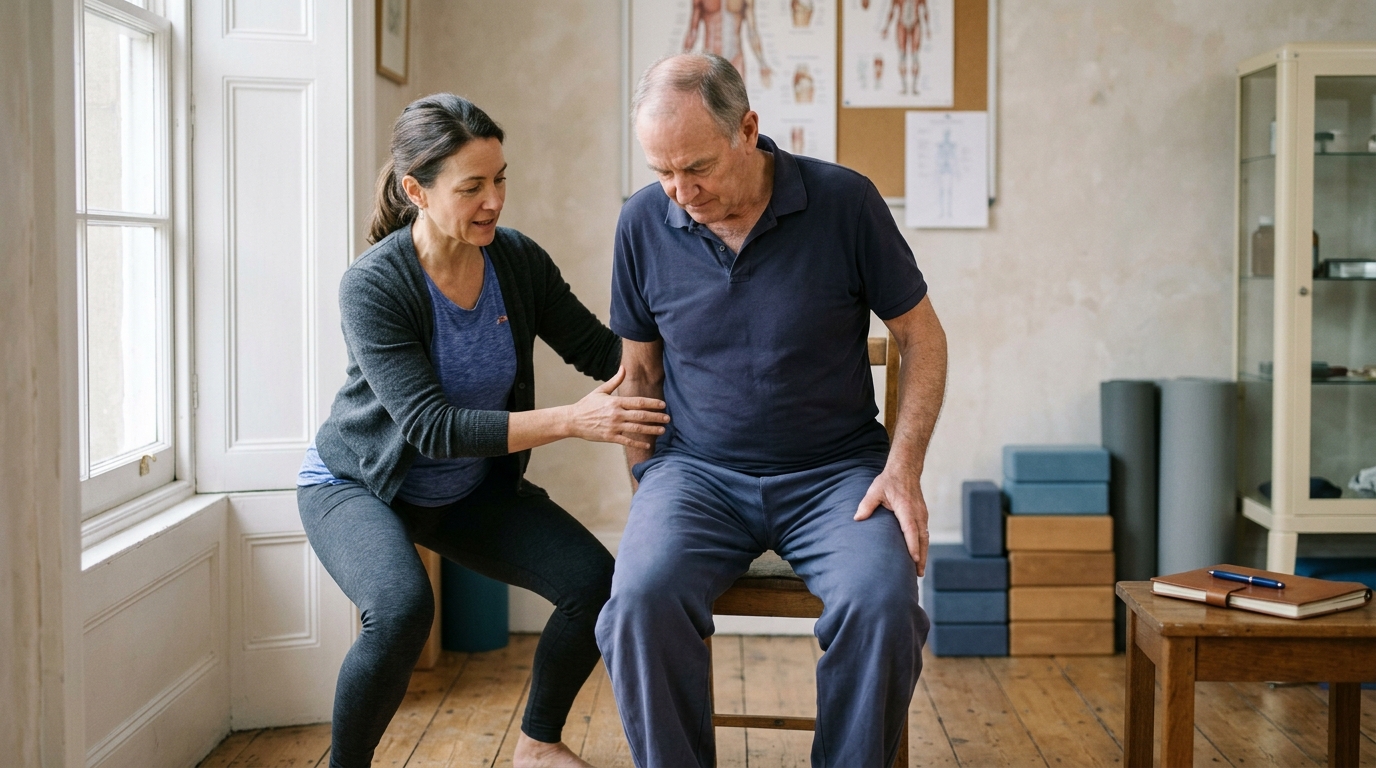
Place a sturdy chair behind you and stand facing a fixed kitchen counter or heavy table. Place your hands firmly on the counter for support. Lower your hips back and down until your buttocks lightly touch the chair seat, then press through your midfoot and heels to return to a full standing position. Using your hands allows your legs to perform heavy muscular work while keeping balance demands low.
When your leg strength and confidence improve, you can perform the sit-to-stand movement without hand support. Cross your arms across your chest or hold them straight out in front of you for counterweight. Lower yourself under control until you are fully seated, pause briefly to eliminate momentum, and stand back up by driving your feet into the floor.
The hip hinge pattern targets the hamstrings, gluteus maximus, and lower back muscles. This movement pattern is vital for bending over safely and lifting objects from low surfaces.
Sit tall on the front half of a firm chair with your feet flat on the floor, wider than hip-width apart. Place your hands on your thighs or across your chest. Keeping your spine straight and your chest open, hinge forward from your hips until your torso forms a 45-degree angle with your thighs. Squeeze your glutes and press your feet into the floor to pull your torso back to the starting upright position.
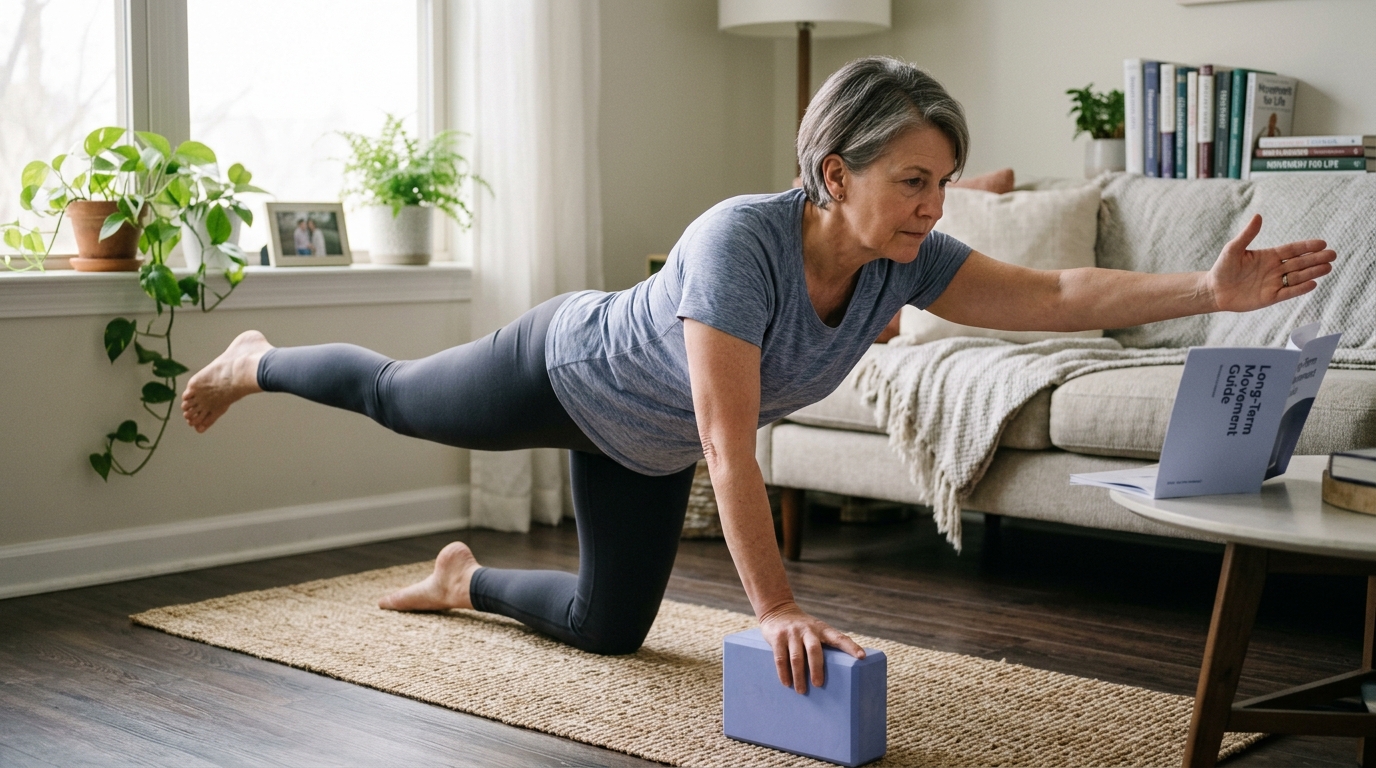
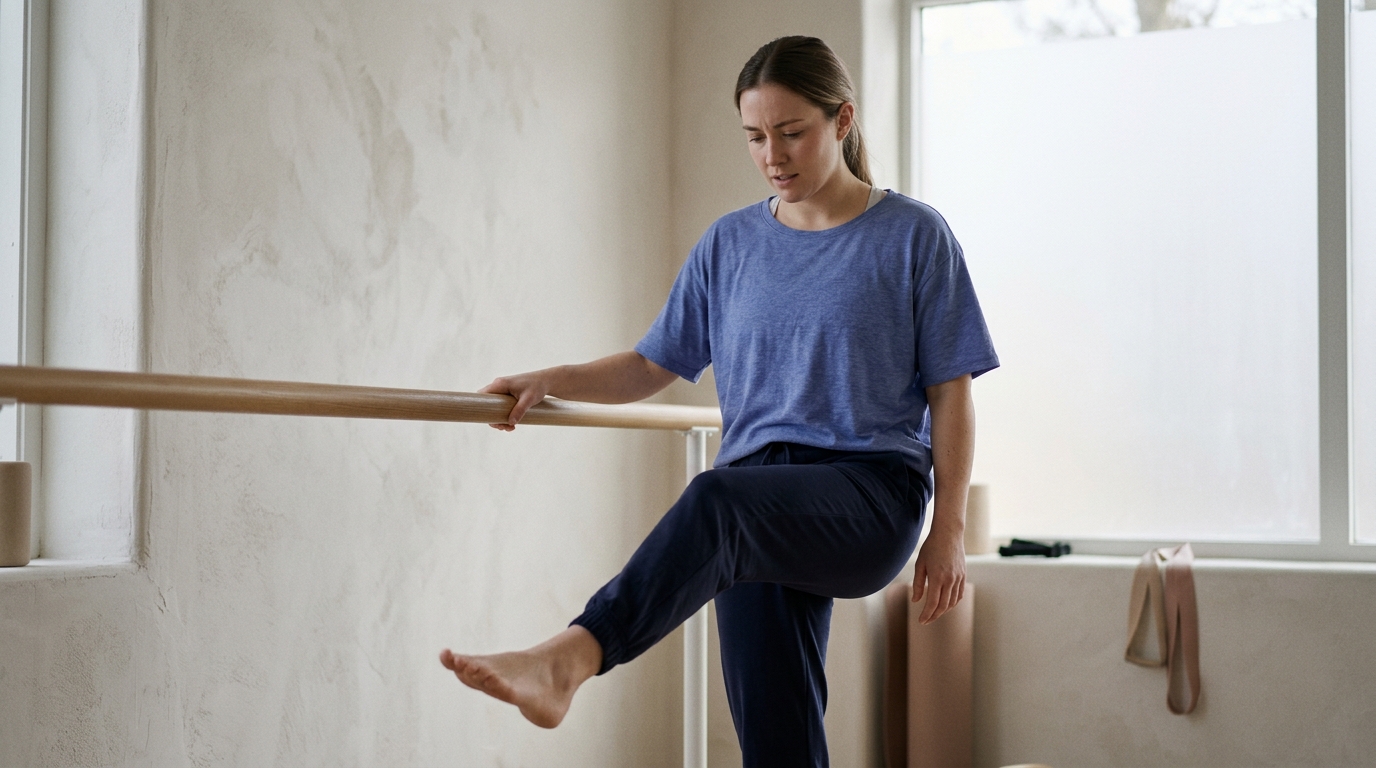
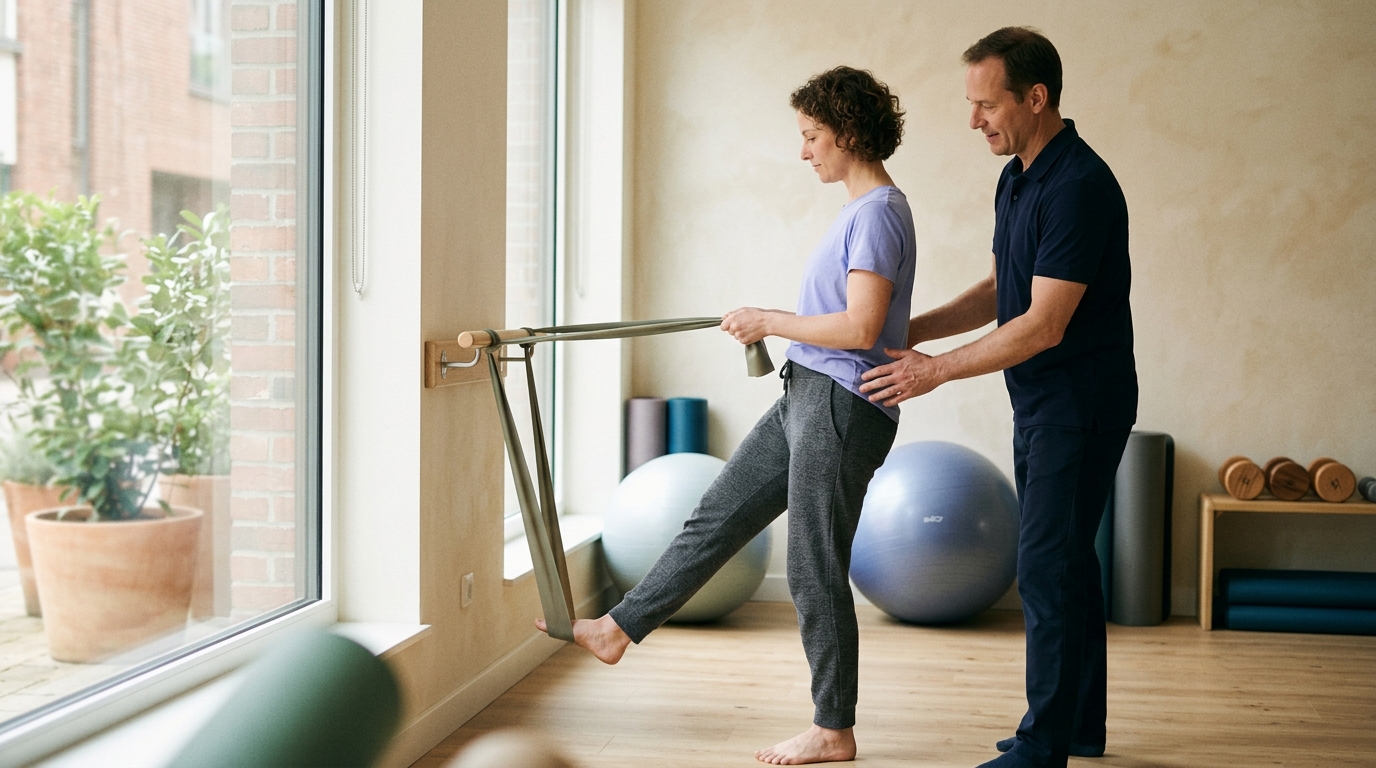
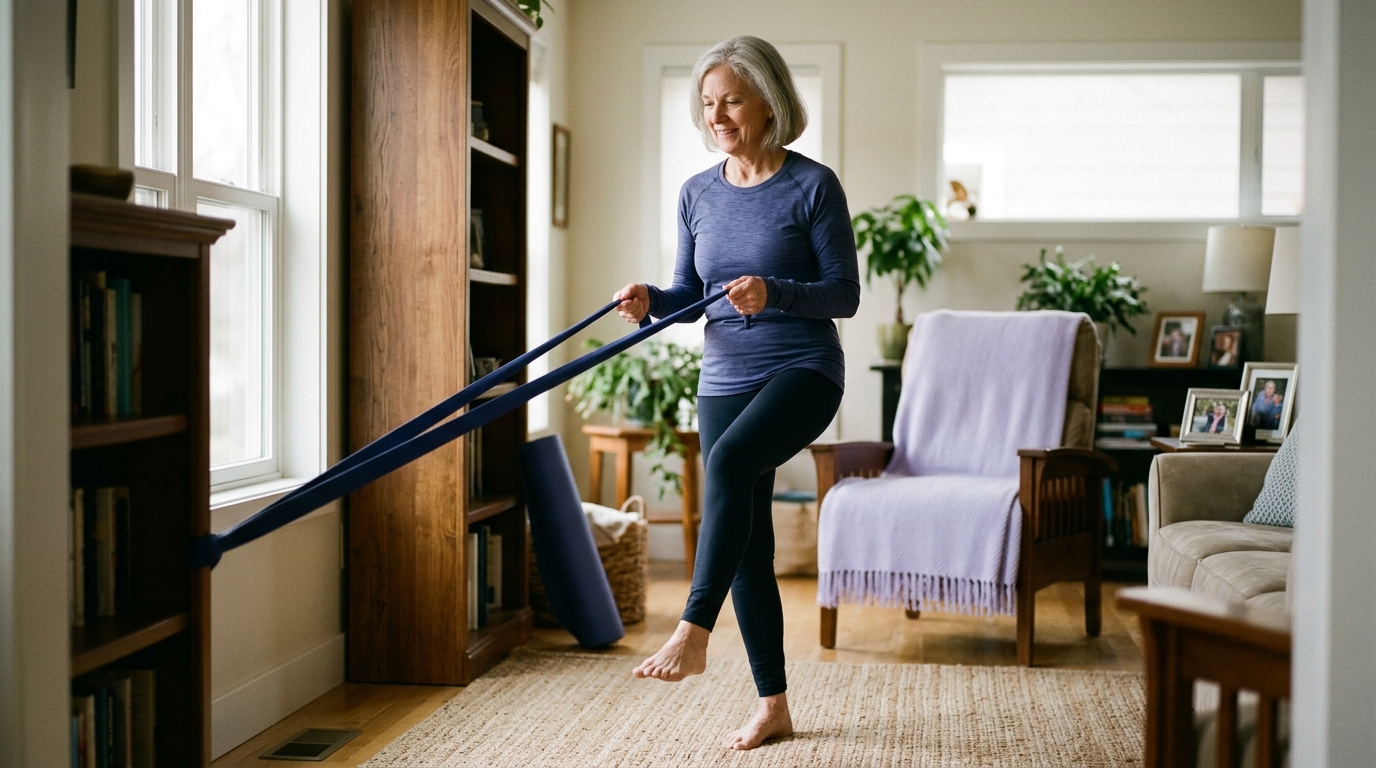
Stand facing a sturdy counter and place both hands on the surface for support. Keep your standing leg slightly bent and your spine neutral. Slowly extend your opposite leg straight back behind you by squeezing your gluteal muscles, keeping your toes pointed downward. Hold the top position for two seconds before returning the foot to the floor. This exercise strengthens the posterior hip without requiring unassisted single-leg balance.
Pushing exercises build strength in the chest, anterior shoulders, and triceps. These muscles assist with pushing open heavy doors, rising from armchairs, and maintaining upper-body posture.
Sit with your back pressed firmly against the backrest of a sturdy chair. Hold a light pair of dumbbells or water bottles at shoulder height with your palms facing forward or turned slightly inward. Press the weights upward in a smooth, controlled arc until your arms are extended overhead within a comfortable range of motion. Lower the weights slowly back to shoulder height, keeping your core muscles engaged throughout.
Stand facing a clear wall, roughly an arm's length away. Place your palms flat against the wall at shoulder height and shoulder-width apart. Keeping your body in a straight line from your head to your heels, bend your elbows to lower your chest toward the wall. Press firmly through your palms to return to the starting position. You can adjust the difficulty easily: standing closer to the wall makes the exercise lighter, while stepping your feet further back increases the resistance.
Pulling movements target the upper back, rear shoulders, and biceps. A strong upper back helps maintain upright posture and balances out the pushing movements of daily life.
Sit tall in a sturdy chair with your legs extended slightly forward and your heels on the floor. Loop the center of a long resistance band securely around the soles of your shoes, holding one end of the band in each hand. Begin with your arms extended, then pull your elbows straight back alongside your ribcage, squeezing your shoulder blades together at the end of the movement. Slowly release the tension back to the starting position.
Stand alongside a heavy table or bench, placing your inside hand flat on the surface for solid upper-body support. Stagger your feet so the leg opposite your working arm is forward, providing a wide base of support. Hold a dumbbell in your free hand, letting it hang straight down toward the floor. Pull the weight up toward your lower hip by driving your elbow toward the ceiling, pause for a moment, and lower it slowly under control.
The muscles of the abdomen, lower back, and pelvis form a muscular cylinder that transfers force between your upper and lower body. Strengthening the core improves seated stability and helps protect the spine during daily tasks. Learning more about active aging and prevention principles can help you integrate core work into a broader functional health plan.
Sit toward the front edge of a firm chair without resting against the backrest. Sit as tall as possible, lengthening your spine toward the ceiling while placing your feet flat on the floor. Draw your belly button gently inward toward your spine as if bracing for a light cough, and hold this contraction while breathing normally for 15 to 30 seconds. This simple isometric drill strengthens the deep stabilizing muscles of the trunk without requiring floor work.
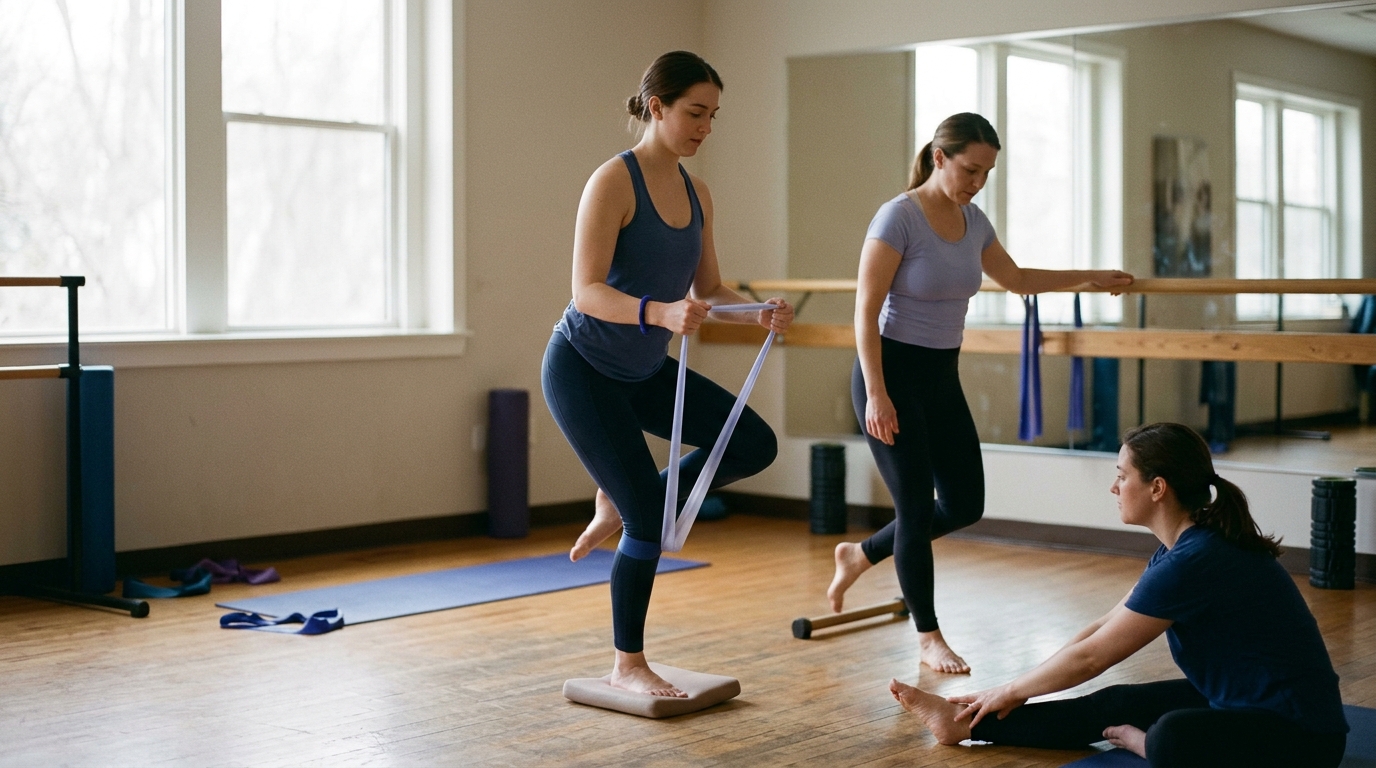
Loop a resistance band around a secure, immovable post at chest height. Stand sideways to the anchor point with your feet spread wider than shoulder-width for a broad, stable base. Grasp the band with both hands and hold it against the center of your chest. Slowly press the band straight out in front of you; the band will try to twist your torso toward the anchor, but you must resist this rotation by bracing your core. Hold for two seconds, bring your hands back to your chest, and repeat before turning around to train the other side.
Progressing an exercise program does not simply mean adding more weight to a bar. When working with limited balance or mobility, you have multiple training variables that you can adjust over time. Thinking of these variables as individual dials allows you to fine-tune your workouts safely.
A common mistake in strength training is changing several factors at once. If you increase the resistance, reduce your hand support, and add more repetitions in the same session, it becomes impossible to know which change caused fatigue or instability. Adjust only one variable during a training week so your body can adapt smoothly to the new demand.
For example, if you are performing supported sit-to-stands, you might first work on increasing your total repetitions from six to ten while keeping two hands on the counter. Once you can complete ten clean repetitions with ease, you might progress by using only one hand for support while keeping the repetition target the same.
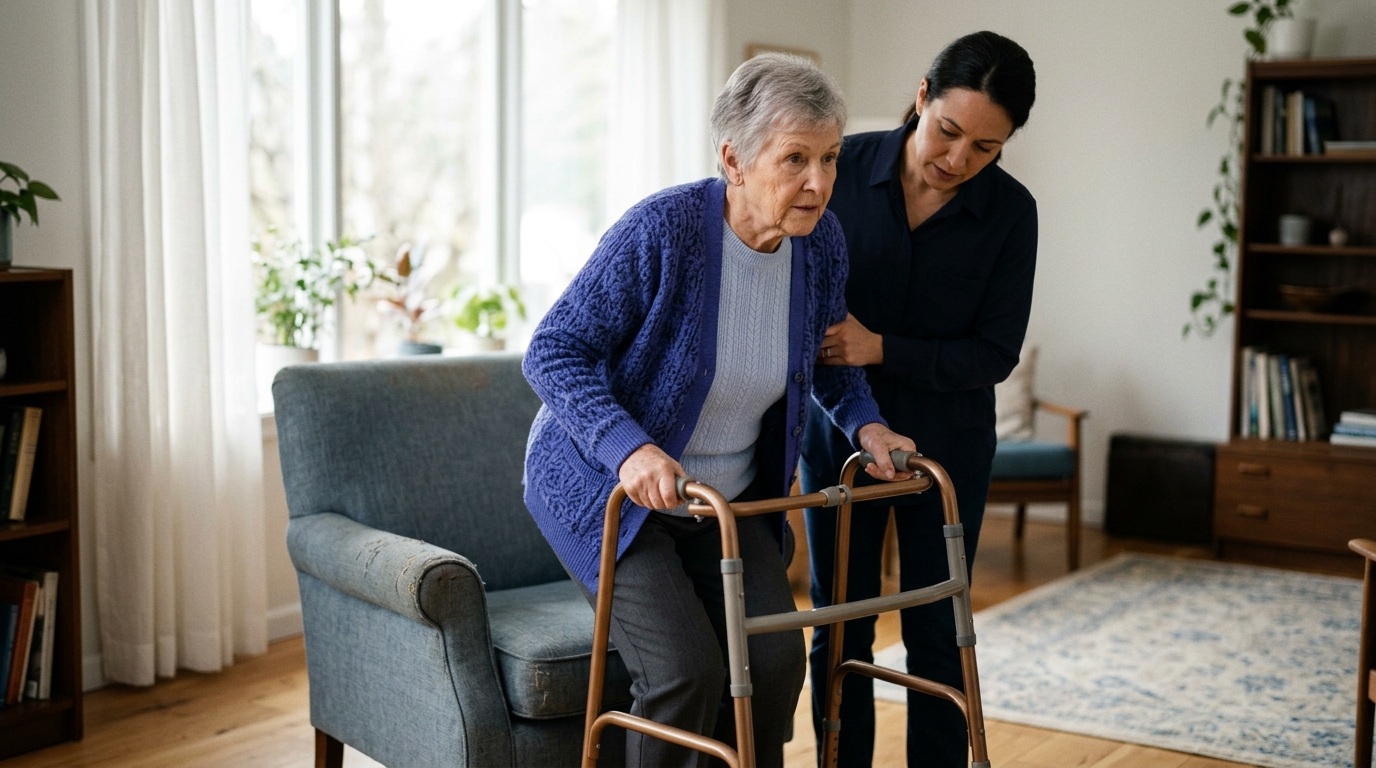
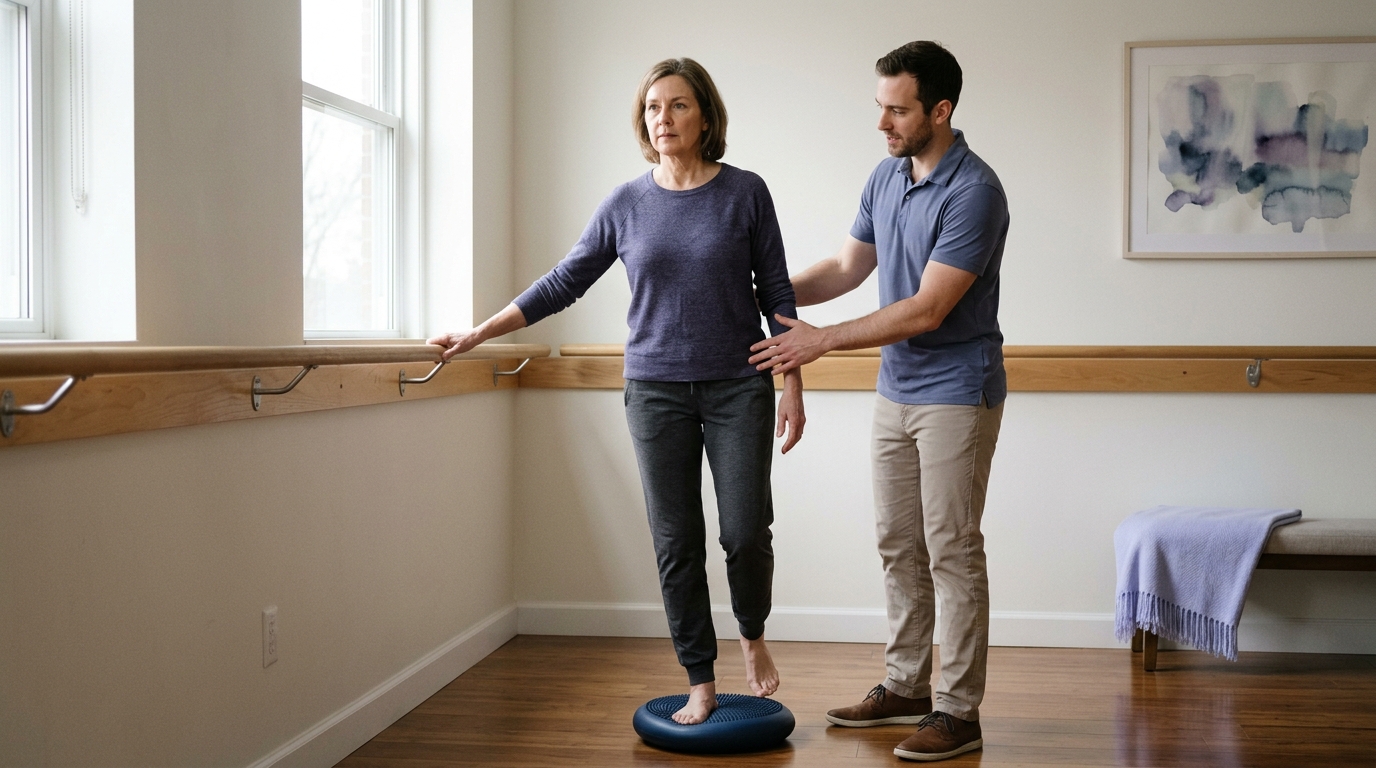
External support is not an all-or-nothing choice. You can gradually reduce support across several stages rather than letting go completely. Moving from a firm two-handed grip to a one-handed grip reduces assistance while keeping a handhold immediately available. From there, you can progress to a light fingertip touch before attempting movements with your hands hovering just above the support surface.
This graded approach keeps balance demands within a manageable threshold. If you experience a sudden wobble or loss of control, the support structure remains inches away, allowing you to steady yourself instantly without interrupting the set.
Volume refers to the total work completed, calculated as sets multiplied by repetitions. When balance is a concern, performing multiple shorter sets is often far safer than doing one long, exhausting set. Muscle fatigue can cause coordination to deteriorate quickly, increasing the chance of a stumble.
Instead of performing a single grueling set of 15 repetitions, consider doing three sets of five repetitions with adequate rest periods between them. This approach allows you to train your muscles with high effort while keeping your movement crisp, controlled, and stable on every single repetition. Readers looking into mobility and movement resources will find that prioritizing movement quality over raw fatigue yields the most consistent long-term results.
A loss of physical confidence can be just as limiting as a loss of muscular strength. When people feel unsteady, they naturally begin to restrict their daily movements, take shorter strides, and avoid physical challenges. Over time, this self-imposed restriction leads to muscle weakness, which further compromises stability.
Breaking this cycle requires creating exercise situations where you feel secure enough to exert real muscular effort. When you remove the immediate threat of falling by using a chair or a stable handhold, your brain can downregulate protective muscle guarding. This allows you to focus on moving your limbs smoothly through an active range of motion.
Experiencing successful, steady workouts builds genuine self-efficacy. Each session where you complete your planned exercises without feeling off-balance helps recalibrate your perception of physical capability, encouraging you to stay consistent over the long term.
Unpredictable environments increase anxiety for anyone dealing with balance concerns. Keep your exercise setup consistent from session to session by using the same chair, the same support structures, and the same room layout. When the physical environment is completely predictable, your nervous system can focus entirely on motor control and muscle activation.
Structure your workouts with clearly defined resting periods. Knowing that you have a secure chair to sit in immediately after a standing exercise removes the worry of becoming stranded on your feet while fatigued.
The following examples illustrate how different individuals can adapt strength training to their specific physical capabilities and constraints. These models represent practical training scenarios rather than personalized clinical prescriptions.
An individual experiences significant knee stiffness and feels unstable when standing for more than two minutes. Rather than avoiding lower-body exercise, they begin with a completely seated routine. They perform seated knee extensions with light ankle weights, seated hip hinges to work the lower back, and seated resistance band rows for upper-body strength.
Over eight weeks, their leg strength and tolerance for activity improve noticeably. Because the exercises are performed in a stable chair, they can train with high muscular effort on three non-consecutive days each week without fear of falling or joint irritation.
An active adult recovering from a period of bed rest wants to regain the ability to climb stairs and rise easily from low furniture. While they can stand, their single-leg balance is shaky, making unsupported lunges or step-ups unsafe. They position themselves in front of a heavy kitchen countertop and perform supported sit-to-stands, supported calf raises, and supported glute kickbacks.
By keeping both hands resting lightly on the countertop, they maintain complete stability while challenging their leg muscles through a full range of motion. As their strength improves over several weeks, they progress from a two-handed grip to a light two-finger touch on the counter, steadily increasing muscular demand while maintaining a reliable safety net.
An older adult with a history of a minor trip and fall wants to stay active at home but feels hesitant during exercise. Recognizing that strength alone does not address all fall-related factors, they choose a multicomponent routine. They perform seated dumbbell presses and seated rows for upper-body strength, combined with counter-supported side leg lifts and heel-to-toe balance holds.
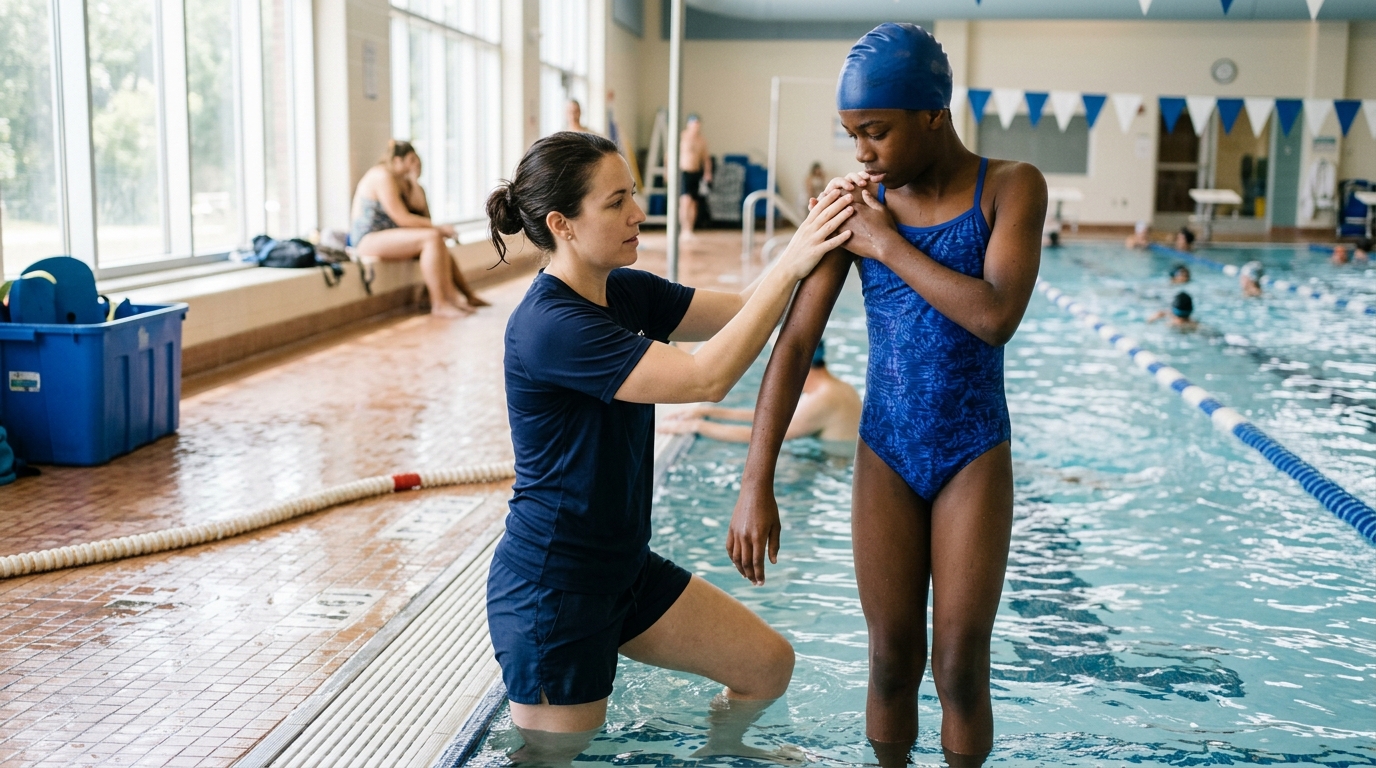
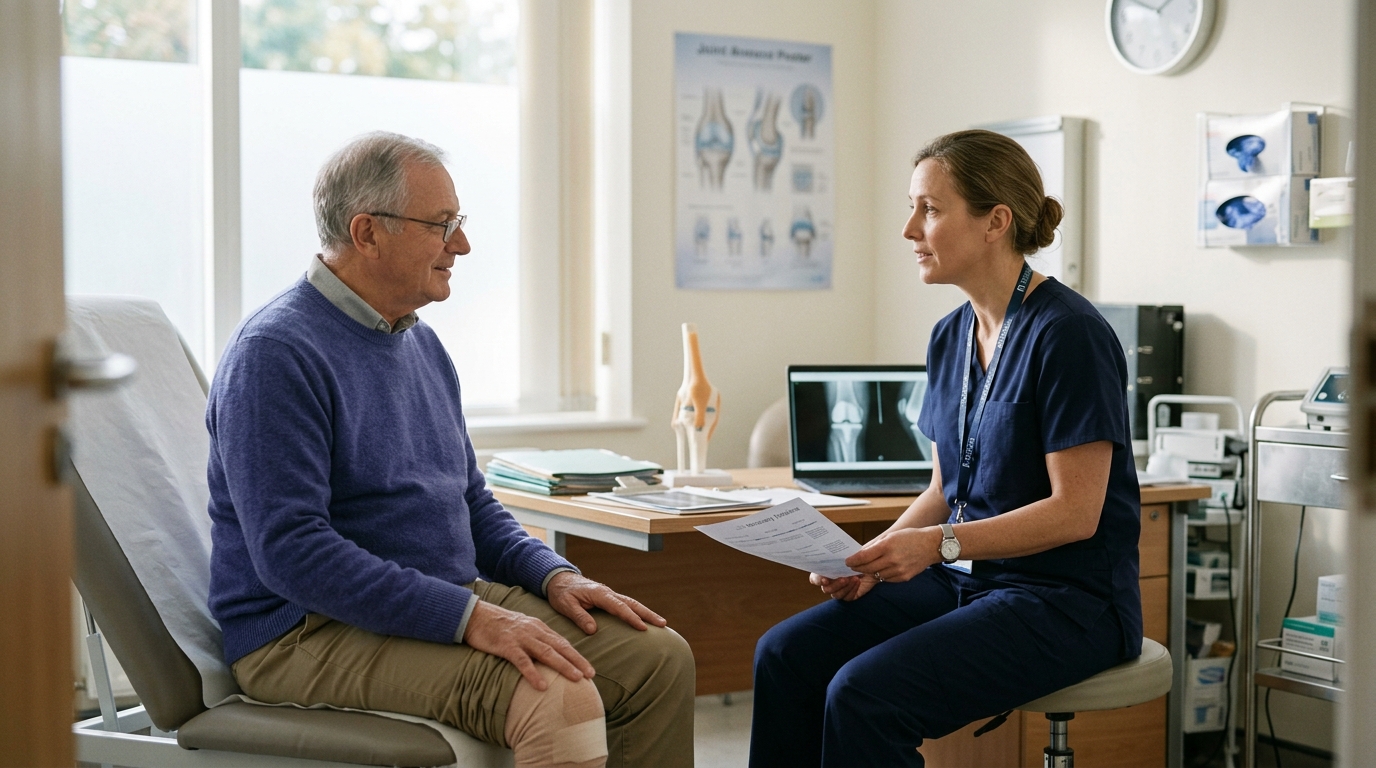
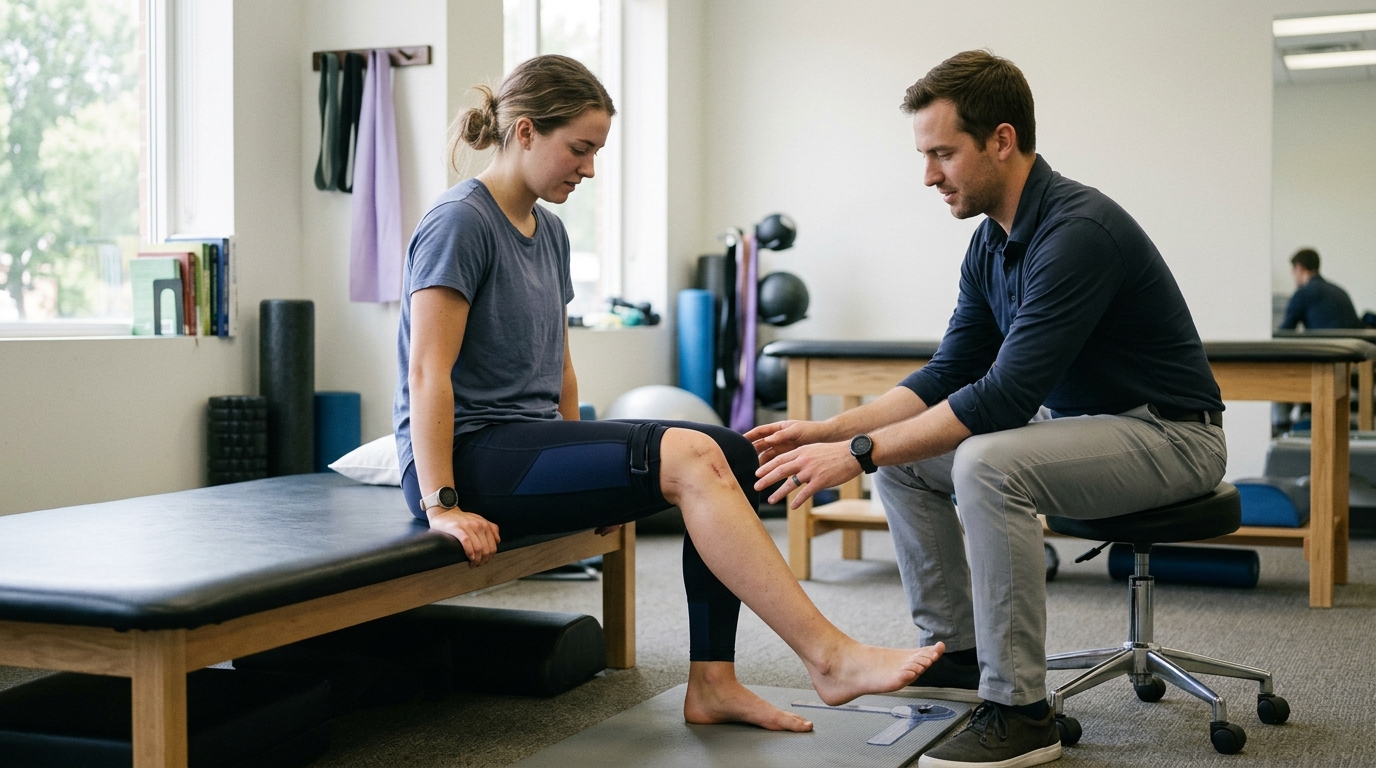
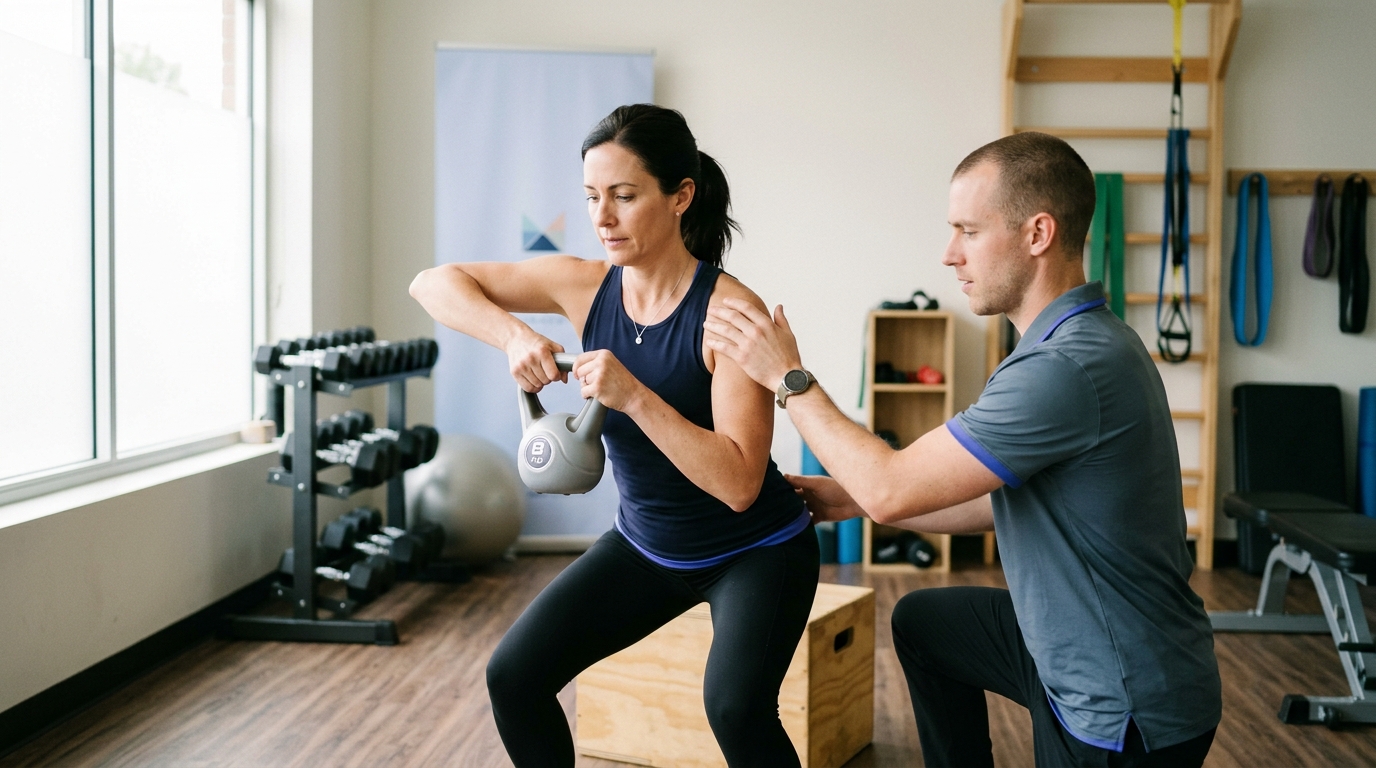
Because of their previous fall history, they also schedule an evaluation with a physical therapist to check their gait mechanics and verify that their home exercise choices are appropriate. This balanced approach provides the benefits of resistance training while ensuring that specific balance deficits receive professional oversight. For those managing recoveries from medical procedures, reviewing structured surgery and rehab concepts can clarify how therapy and home training intersect.
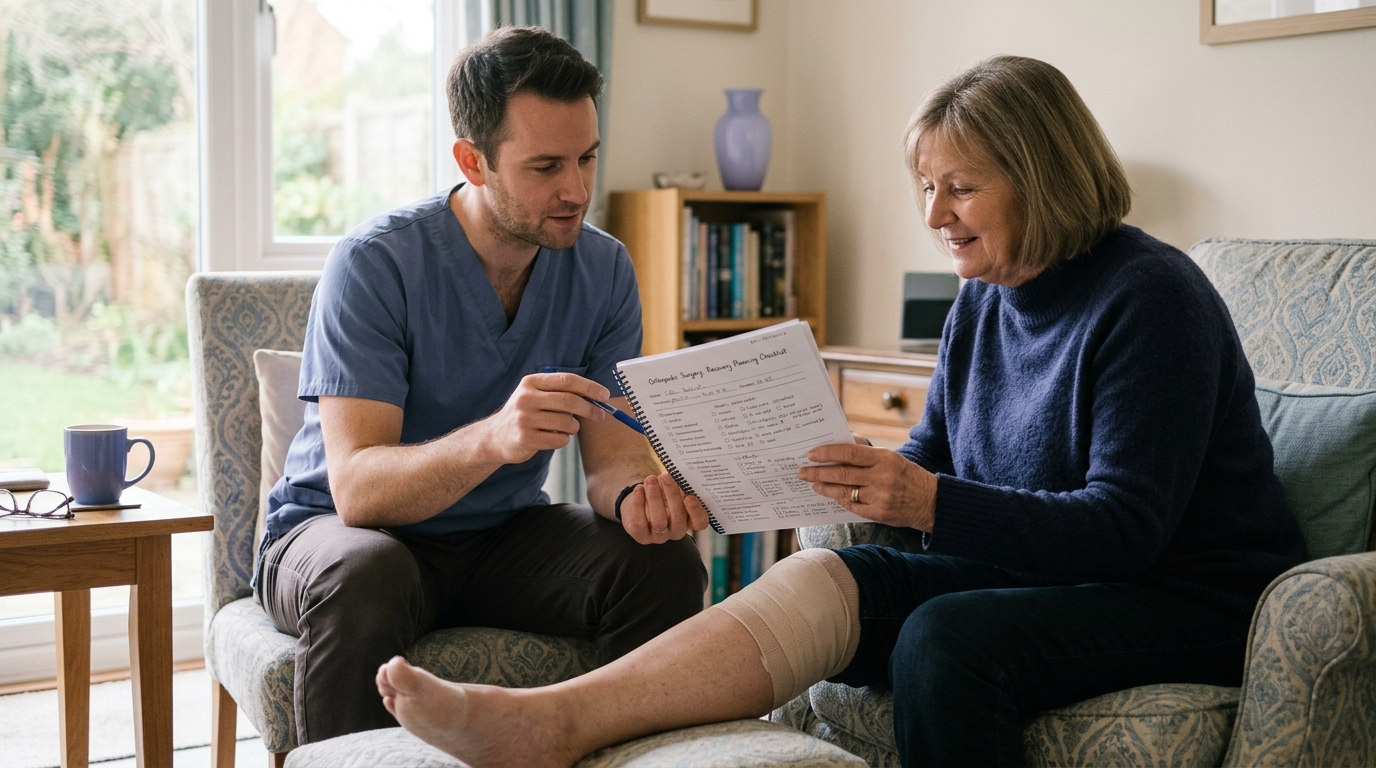
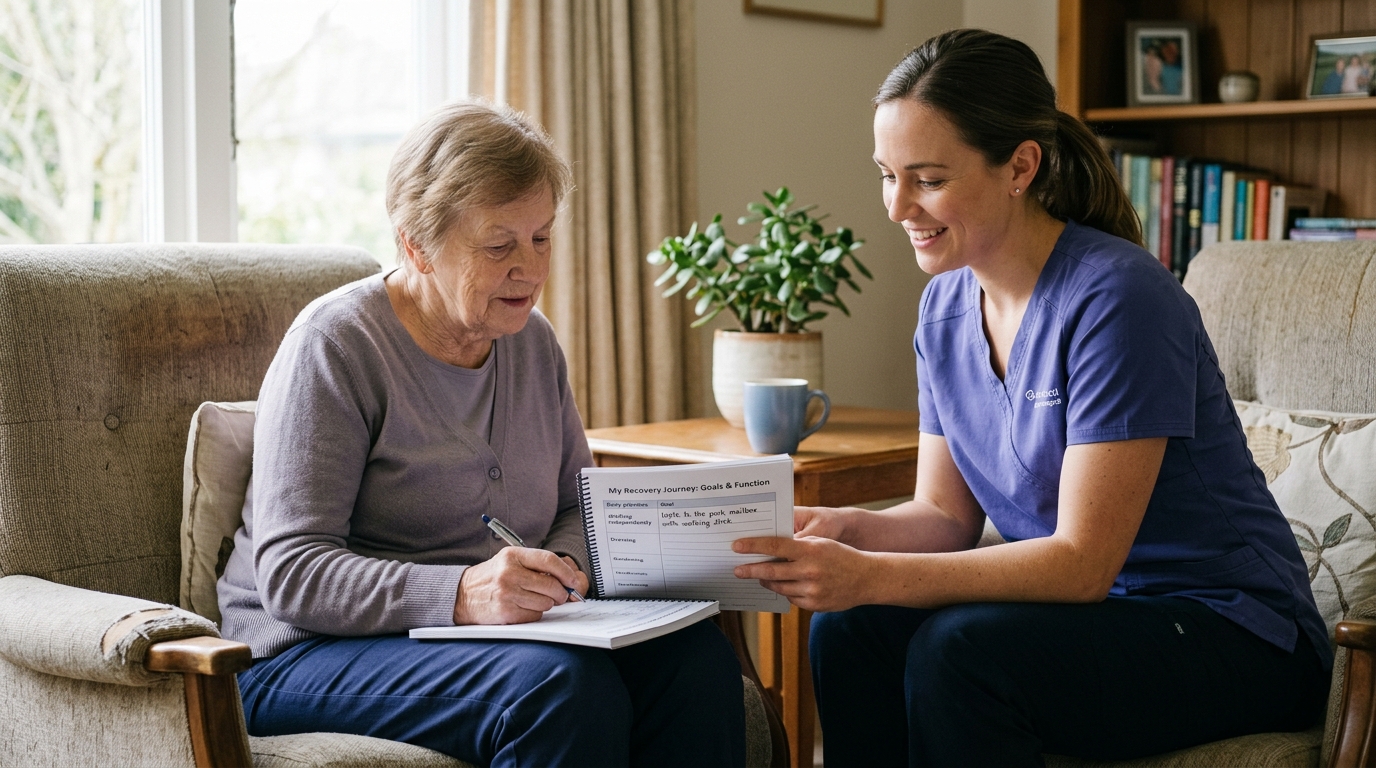
While adapted strength training is broadly accessible, clear communication with your healthcare team ensures that your routine fits your medical needs. If you are uncertain about symptoms, medications, or exercise safety, bring a structured list of questions to your next appointment. The educational standards at ReboundBody prioritize open, informed dialogue between individuals and their healthcare providers.
Ask your doctor whether any of your prescribed drugs might interfere with your workouts. You might ask: "Do any of my medications affect my heart rate response, blood pressure, or balance during physical exertion?" Understanding these pharmacological effects helps you decide whether seated exercise is preferable to standing work.
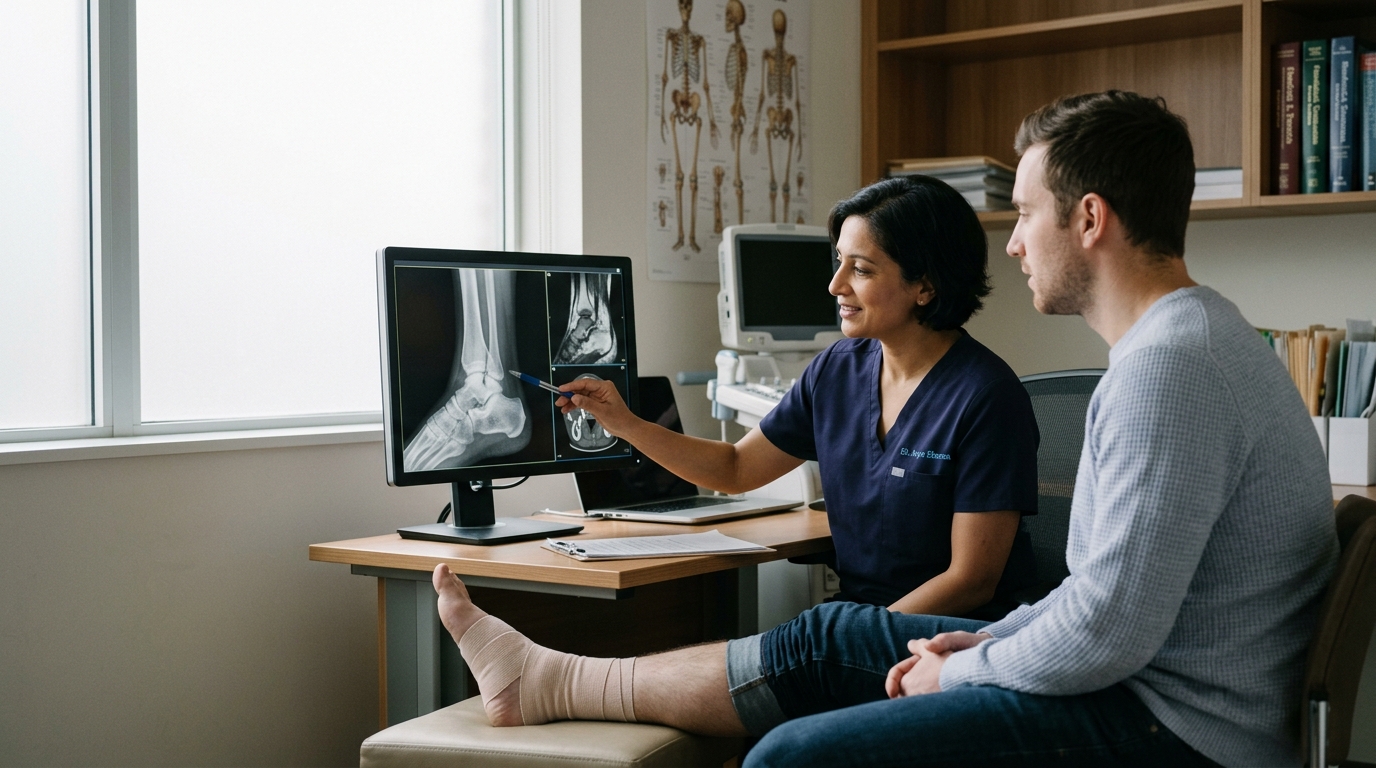
If you have underlying orthopedic conditions or joint replacements, ask your physical therapist or surgeon for clear movement boundaries: "Are there specific ranges of motion, joint angles, or loading methods that I should avoid while building strength?" This provides defined safety boundaries for your exercise selection.
If you experience frequent stumbling, unsteadiness, or a fear of moving around your home, ask about formal rehabilitation: "Would an individualized physical therapy evaluation be appropriate to assess my balance, gait, and fall risk before I progress my home workouts?" Clinical guidance supports individualized physical therapy for individuals with recurrent falls or significant gait deficits.
Adapting your strength training setup allows you to build muscular capacity, protect your independence, and move with greater confidence within the boundaries that fit your body today.

Use ReboundBody resources to understand common recovery stages, rehab terms, movement limits and strength rebuilding. Each guide is designed to make a complex comeback easier to understand.


Read practical guidance on injury recovery, rehabilitation, mobility and rebuilding strength as you work your way back to activity.
Explore Resources