

TrueSport’s ACL recovery advice highlights strength and individual planning. Learn why sex comparisons and symmetry scores need clinical context.





On November 1, 2026, TrueSport published “4 Things to Know About Male vs. Female Athlete Recovery.” Its ACL section emphasized that recovery principles are not necessarily different by sex. The practical focus was dedicated rehabilitation, quadriceps and hamstring strength, and an individual return-to-sport plan made with doctors and physical therapists.
The article features sports medicine physician Michele LaBotz, identified as a TrueSport Expert. Its ACL discussion is an expert interview rather than a clinical guideline or systematic review. The development is a new educational resource, not a replacement for an existing rehabilitation plan.
For readers comparing their progress with someone else’s, the useful point is that sex alone does not set a recovery timeline. TrueSport puts strength rebuilding and personal planning at the center of that discussion. Understanding how those ideas fit together is more useful than treating male and female recovery as two fixed schedules.
On October 14, 2026, a narrative review in Current Reviews in Musculoskeletal Medicine described return-to-sport decisions as a combination of time since surgery, functional criteria and psychological readiness. That review provides an evidence context for interpreting TrueSport’s later advice.
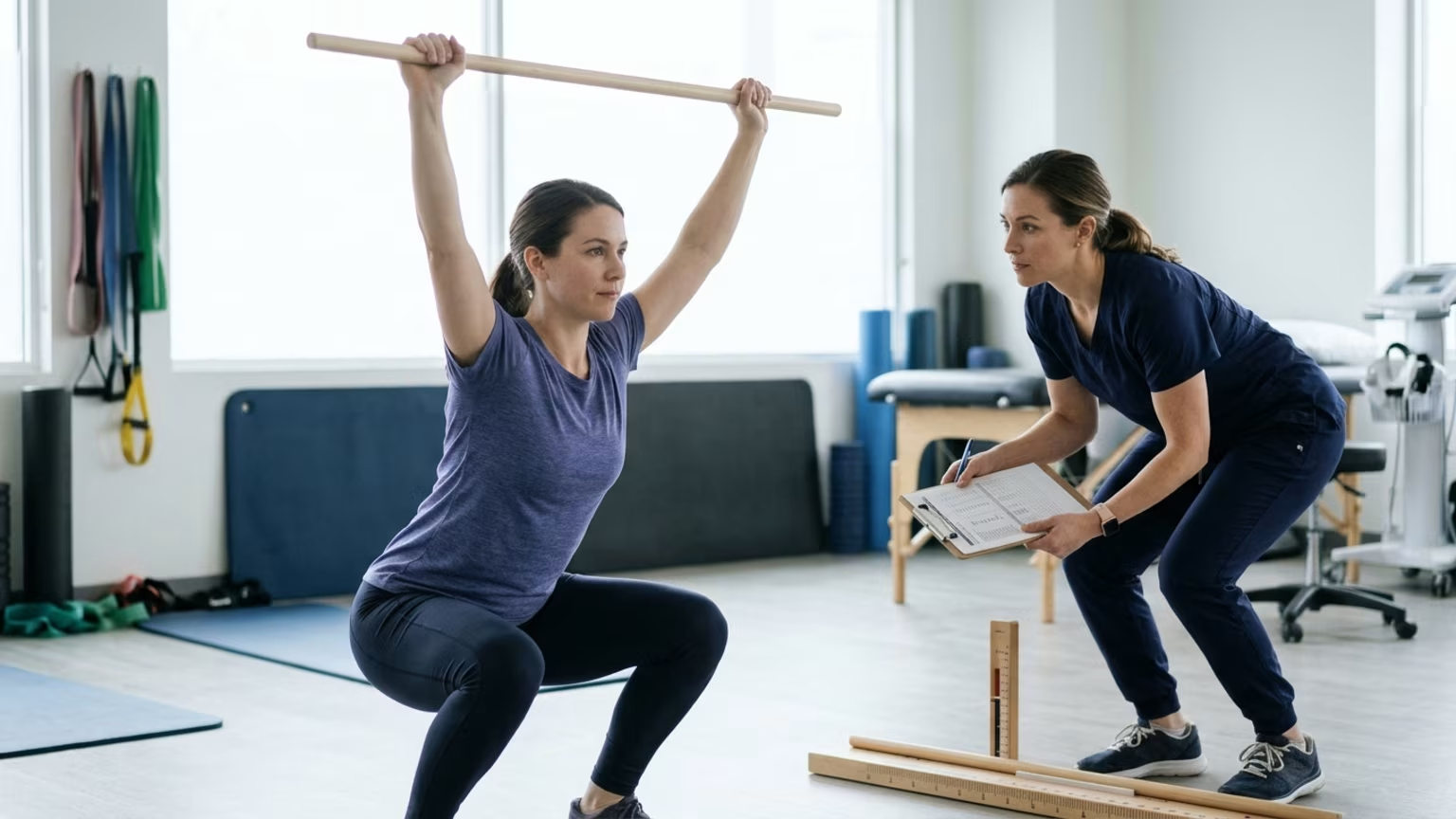
The review describes several commonly used assessment areas. These include quadriceps and hamstring strength, hop tests, movement quality and psychological readiness. In plain language, the discussion includes both physical performance and how ready a person feels to return.
This context matters because an expected return date and a readiness assessment serve different purposes. A date describes elapsed time. Strength and movement testing examine aspects of performance, while psychological assessment addresses another part of the return-to-sport decision.
TrueSport’s emphasis on rehabilitation and an individual plan fits that combined approach. It does not introduce the idea that strength or confidence matters for the first time. Instead, it brings those considerations into a discussion about possible differences between male and female athletes.
The useful comparison is therefore not simply whose recovery should be faster. It is how a care team will assess progress and connect that progress with the activity a person wants to resume.
LaBotz says female athletes often take longer to regain quadriceps strength. She discusses muscle-fiber and hormonal factors as possible explanations in young athletes. These are her interpretations in an interview, not settled causal findings that apply to every patient.
The distinction is between a broad observation and an individual forecast. A statement about female athletes does not tell a reader what their own strength test will show. It also does not establish when their clinician will recommend returning to sport.
TrueSport’s practical recommendation is shared rather than split into separate male and female pathways. It advises taking rehabilitation seriously and rebuilding quadriceps and hamstring strength. The return plan should be developed with medical and physical-therapy professionals.
For readers, that keeps attention on something their team can assess: their own progress. Sex-related observations can provide discussion points without becoming a prediction about how quickly any one person should recover.
The narrative review describes 90% limb symmetry as a common strength or hop-test threshold. Limb symmetry compares performance between the operated leg and the other leg. A similar result on both sides may sound like a complete measure of recovery, but the comparison has a specific weakness.
The review notes that the uninjured leg can also lose conditioning during rehabilitation. If that happens, the operated leg may look more recovered in comparison than it is relative to preinjury capacity. The reference leg is not necessarily an unchanged standard.
For that reason, the review warns that symmetry can overestimate recovery and should not serve as a stand-alone clearance test. The practical question is what a score means alongside other strength measures, movement assessment and the demands of the intended activity.
The evidence assembled here mainly concerns athletes returning to sport after ACL reconstruction. TrueSport’s sex-related explanations also include discussion of young athletes. That is the population context behind the headline.
These sources do not establish that the same sex-related patterns or athletic benchmarks apply to every adult in midlife or later life. Nor do they establish recovery timelines for people returning only to everyday movement or recovering from other orthopedic conditions.
For ReboundBody readers, that boundary matters. An athletic return-to-sport discussion may help explain why a clinician looks at several areas of progress. It should not be treated as a ready-made standard for every age, activity goal or physical setback.
The useful next question is which parts of the assessment fit the reader’s own goal. That interpretation belongs with the professionals overseeing their care rather than with a comparison drawn from an athlete-focused headline.
TrueSport recommends making an individual return plan with doctors and physical therapists. The narrative review helps explain what that conversation may cover. Neither source supports changing a rehabilitation program based on a headline or using a single result to make a personal return decision.
The following questions keep the discussion focused on assessment rather than on self-clearance.
A useful starting point is asking how the team will measure quadriceps and hamstring strength. Another is asking how those results will be interpreted alongside the rest of the assessment.
The purpose is to understand what is being measured and how it informs planning. This does not require a reader to choose a strength target or testing method independently. TrueSport’s advice places that work within a plan developed with qualified professionals.
The narrative review includes hop tests and movement quality among commonly used assessment areas. Readers can ask which functional measures are relevant to their intended activity and what those measures add to strength testing.
This shifts the conversation from collecting a passing score to understanding the reason for a test. It also creates space to ask how different results will be considered together. A clear explanation can make an assessment easier to understand without turning it into a universal formula.
LaBotz describes psychological challenges that may arise during recovery and recommends considering what level of team engagement supports well-being. The narrative review also includes psychological readiness in return-to-sport decisions.
That makes confidence a reasonable subject for a clinical conversation rather than something to leave unmentioned. Readers can ask how it will be assessed alongside physical performance. ReboundBody’s discussion of the gap between test results and felt readiness offers related context for that question.
A useful question is how the surgeon and physical therapist will revisit the plan as strength, function and confidence are assessed. The aim is to understand what informs the next stage rather than to obtain a date that must hold regardless of later findings.
This is also where an expected timeline can be placed beside measurable progress. ReboundBody’s explanation of calendar dates and rehabilitation milestones provides background for that distinction. Personal changes to activity still require the team’s evaluation.
The narrative review reports that test batteries and thresholds vary across institutions. It does not identify one universally accepted combination that resolves every return-to-sport decision. Which measures deserve the most weight remains an important part of the uncertainty.
The review also notes that reinjury can occur even after an athlete meets criteria and waits the recommended time. That finding puts a limit on what clearance can promise. An assessment can inform a decision without making future outcomes certain.
TrueSport’s interview does not provide a study sample size, an evidence-rating method or a recovery timeline. It therefore does not supply the information needed to calculate an individual’s expected pace from its sex-related discussion.
For readers, the practical response is to ask what evidence supports the proposed assessment and how their own results will be interpreted. The discussion should make room for remaining uncertainty while still explaining the reasoning behind the plan.
Recovery deserves a plan built around the person, not a label.
As attention shifts from sex-based comparisons to changing recovery milestones, ReboundBody explains rehabilitation and strength rebuilding through evidence-aware editorial content. For active adults unsure why recovery timelines vary, its independent coverage provides realistic context for understanding progress and preparing questions for their healthcare team without making medical promises.

Follow ReboundBody for practical articles on injury recovery, rehabilitation, mobility and rebuilding strength. New posts turn research into clear ideas for the road back to activity after injury or surgery.




Read practical guidance on injury recovery, rehabilitation, mobility and rebuilding strength as you work your way back to activity.
Explore Resources