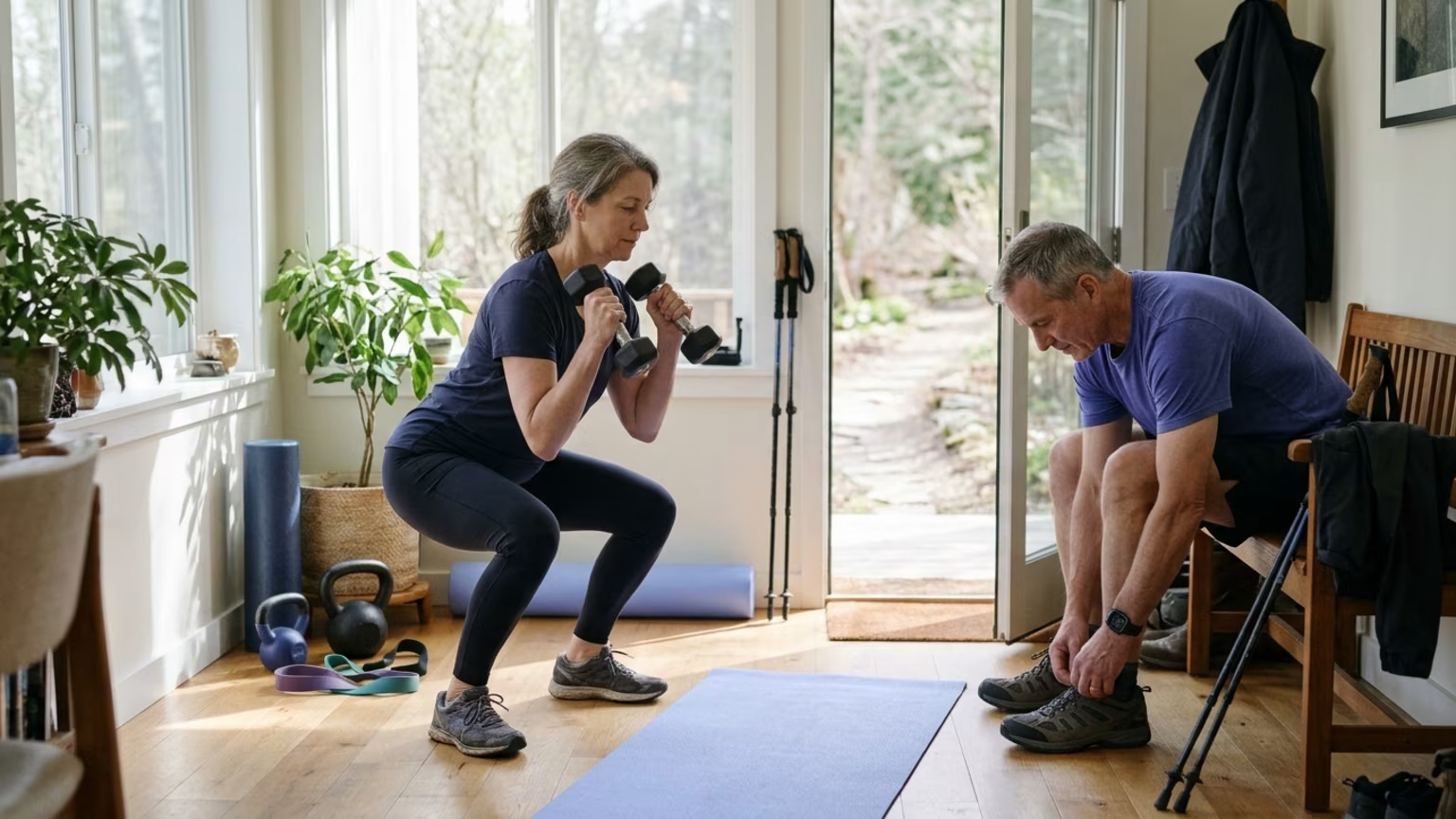

A healthy-aging feature highlights walking and progressive strength. Here is how its movement tests and research context relate to recovery.





On October 31, 2026, Yahoo republished a Tom’s Guide healthy-aging feature by Lucy Miller. It connected three movement tests with trainer Ramona Braganza’s approach to staying active: walk, lift progressively and keep getting stronger. Consistency was the thread running through her advice.
The story frames healthy aging around physical capacity rather than appearance alone. Standing from a chair, balancing and supporting body weight are its entry points into that discussion. For adults rebuilding after an orthopedic setback, the useful message concerns ongoing habits rather than a single performance score.
The distinction matters because a healthy-aging story and a recovery plan answer different questions. One offers a broad perspective on staying active. The other must account for a person’s condition and current restrictions.
Before the October 31 feature, a separate Yahoo Health report had discussed research involving a 10-second single-leg balance test. That report concerned a possible relationship between balance performance and health outcomes over time.
According to Yahoo Health, the observational study included 1,702 adults who were followed for a median of seven years. Participants unable to complete the test had an 84% higher adjusted hazard of death during follow-up.
That figure describes a comparison between study groups over time. It is not an individual’s chance of dying. The report cautioned that failing the test does not predict when someone will die and passing it does not promise a longer life.
Because the study was observational, it cannot establish cause and effect. It also does not show that practicing a balance test or improving its score will extend life. That boundary is central to understanding why a striking health statistic should not become a personal fitness verdict.
This was the relevant evidence context before the newer feature: balance performance had been discussed as an observation associated with later outcomes. Braganza’s story brought that wider conversation into an accessible fitness format with a different emphasis on daily habits.
The Tom’s Guide article describes a 30-second sit-to-stand, a single-leg balance test and a dead hang. Braganza suggests 15 or more sit-to-stands for women over 60 and at least 30 seconds of single-leg balance.
The balance duration is an important detail. Her suggested 30-second benchmark is different from the 10-second protocol in the separate research report. Results and conclusions from those protocols are not interchangeable.
Beyond the tests, Braganza’s stated approach emphasizes walking and progressive lifting. She also stresses continued strength development and consistency. Her commentary describes healthy aging as paying attention and making adjustments as the body changes.
Read together, those points shift attention toward activity over time. The tests supply a snapshot for the story. Walking and gradual strength development supply its longer-term theme.
That is the feature’s most useful addition for a recovery audience. It gives readers everyday language for discussing physical capacity without making athletic performance or appearance the only focus. Getting stronger remains part of the conversation rather than something reserved for a younger stage of life.
This is an editorial takeaway from Braganza’s training philosophy. The value lies in the questions it raises about ongoing activity, not in treating a brief test session as a complete account of how someone is aging.
The main feature follows a trainer and a writer rather than a rehabilitation study population. Braganza is 64, according to the article, while Miller is 44. Miller tries the tests herself and reports her personal results.
Those results were 18 sit-to-stands, 30 seconds of balance on each leg and just under 90 seconds in the dead hang. They describe one writer’s performance. They are not reference standards for everyone in midlife or later life.
A different perspective comes from CDC research published in Preventing Chronic Disease. Using 2024 National Health Interview Survey data, that analysis examined physical activity among US cancer survivors and their views of local walking environments.
The CDC analysis found that inactivity was more common among survivors with multiple chronic conditions or fair-to-poor health. Survivors reporting mobility disability were also more likely to be inactive than those reporting other disabilities or no disability.
These findings add context about barriers to activity. They make room for a less judgmental reading of advice about consistency: health and mobility limitations deserve attention alongside motivation.
The findings apply to the cancer-survivor population studied, not to all adults recovering from orthopedic problems. The analysis also did not account for muscle-strengthening activity. It therefore offers context about activity barriers rather than a complete picture of walking combined with strength exercise.
Keeping these groups separate preserves what each source contributes. A writer’s self-test illustrates a personal experience. An observational balance study examines an association, while the CDC analysis describes activity within a specific health population.
For readers returning to activity after a setback, the feature offers useful discussion topics. Its clearest contribution is a way to think about walking and strength development as continuing practices rather than a short-term challenge.
In Braganza’s approach, walking sits alongside progressive lifting. The story does not ask readers to choose one as the defining marker of healthy aging. Both appear within her broader philosophy of remaining active and continuing to develop physical capacity.
For recovery readers, this pairing provides language for discussing different activity goals with their healthcare team. Walking and strength work can be considered within the same conversation without assuming they have identical roles in an individual plan.
The same pairing is the focus of ReboundBody’s coverage of walking alongside strength work during a return to activity.
The word “progressive” directs attention toward development rather than a final score. In the feature, getting stronger is presented as an ongoing aim. That is a different emphasis from matching another person’s chair-rise count or hanging time.
For someone rebuilding after a setback, the relevant discussion is how strength development fits the recovery plan. Useful questions include what progress means for the person’s goals and which observations the healthcare team considers meaningful.
Related reading on gradual strength development in later life provides broader editorial context for that topic. The focus remains understanding the concept rather than borrowing a stranger’s performance target.
Braganza pairs consistency with paying attention to the body as it changes. Read together, those ideas offer a calmer perspective than treating consistency as an unbroken record of identical workouts.
For a recovery audience, the discussion can include how symptoms and restrictions affect the current plan. ReboundBody’s coverage of making sense of day-to-day physical responses addresses that broader recovery question.
The CDC findings also give this discussion an important human context. A message about maintaining activity should leave room for the health and mobility barriers described in that study. Consistency is a useful topic without becoming a judgment about someone’s effort.
The Tom’s Guide article is a lifestyle feature, not a clinical guideline or rehabilitation trial. It does not establish validated recovery thresholds for its tests. Its suggested benchmarks should not be used to judge healing after injury or surgery.
A test result is not a diagnosis, a rehabilitation milestone or clearance to resume sport. For people with recent surgery or pain, the same concern applies to balance difficulties and movement restrictions. The tests are optional observations rather than targets to force.
The feature also leaves practical adaptation questions unanswered. It does not explain how walking or resistance exercise should change for a particular diagnosis or post-operative restriction. It supplies no individualized return-to-activity plan.
Those decisions belong with qualified healthcare professionals who understand the person’s situation. The story can contribute talking points about activity and strength, while personal decisions require a different level of information.
The lasting distinction is between measuring a moment and understanding a recovery process. A chair rise or a period of balance records what happened during one attempt. The longer story is how movement fits into a life that continues to change.
Chair-rise counts and balance times are measurements to understand, and ReboundBody puts such findings in context for adults navigating physical recovery. ReboundBody explains movement research with clear language and realistic expectations. Its independent editorial coverage addresses the path from orthopedic setbacks through rehabilitation and back toward usual activity.

Follow ReboundBody for practical articles on injury recovery, rehabilitation, mobility and rebuilding strength. New posts turn research into clear ideas for the road back to activity after injury or surgery.


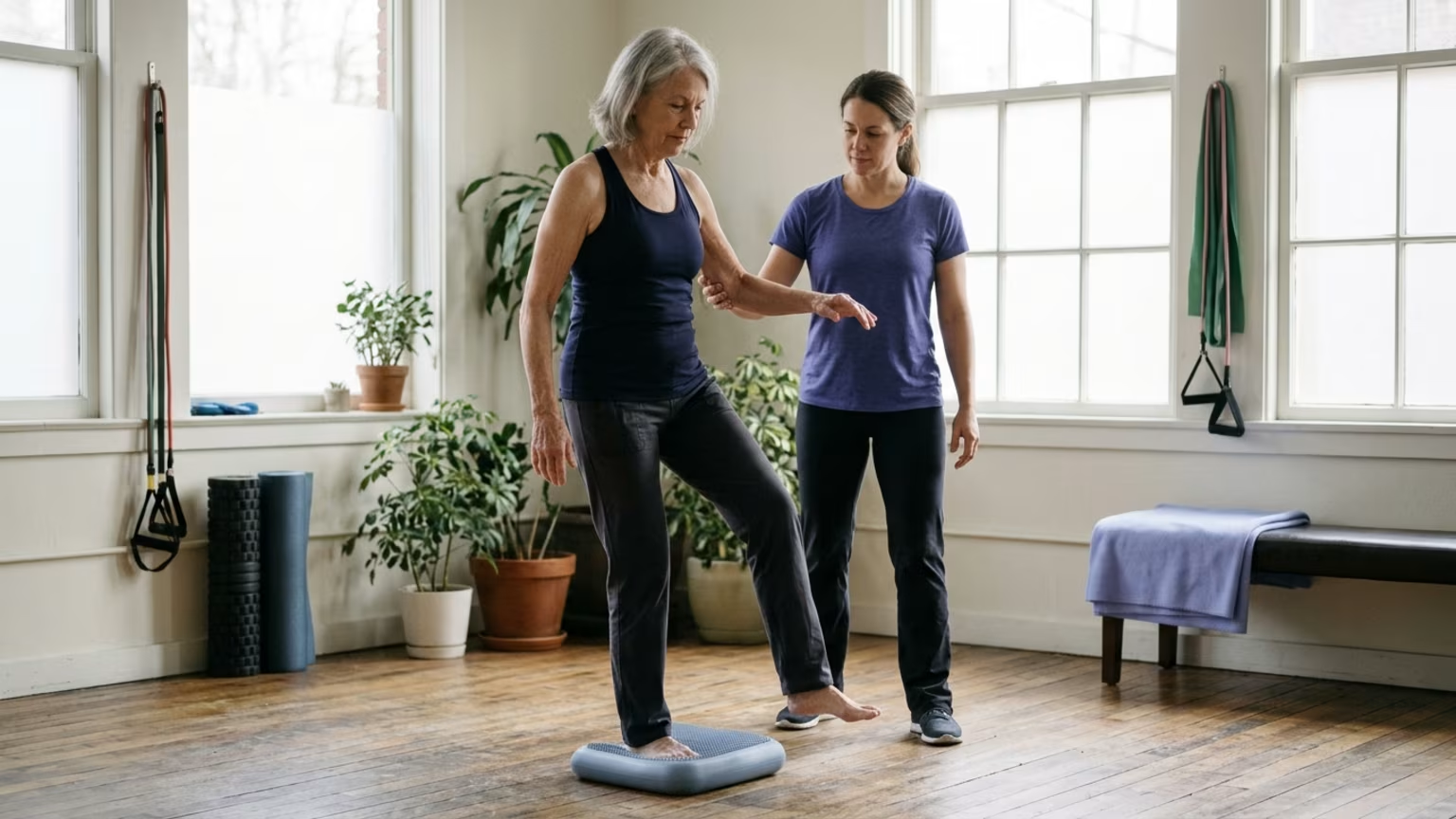

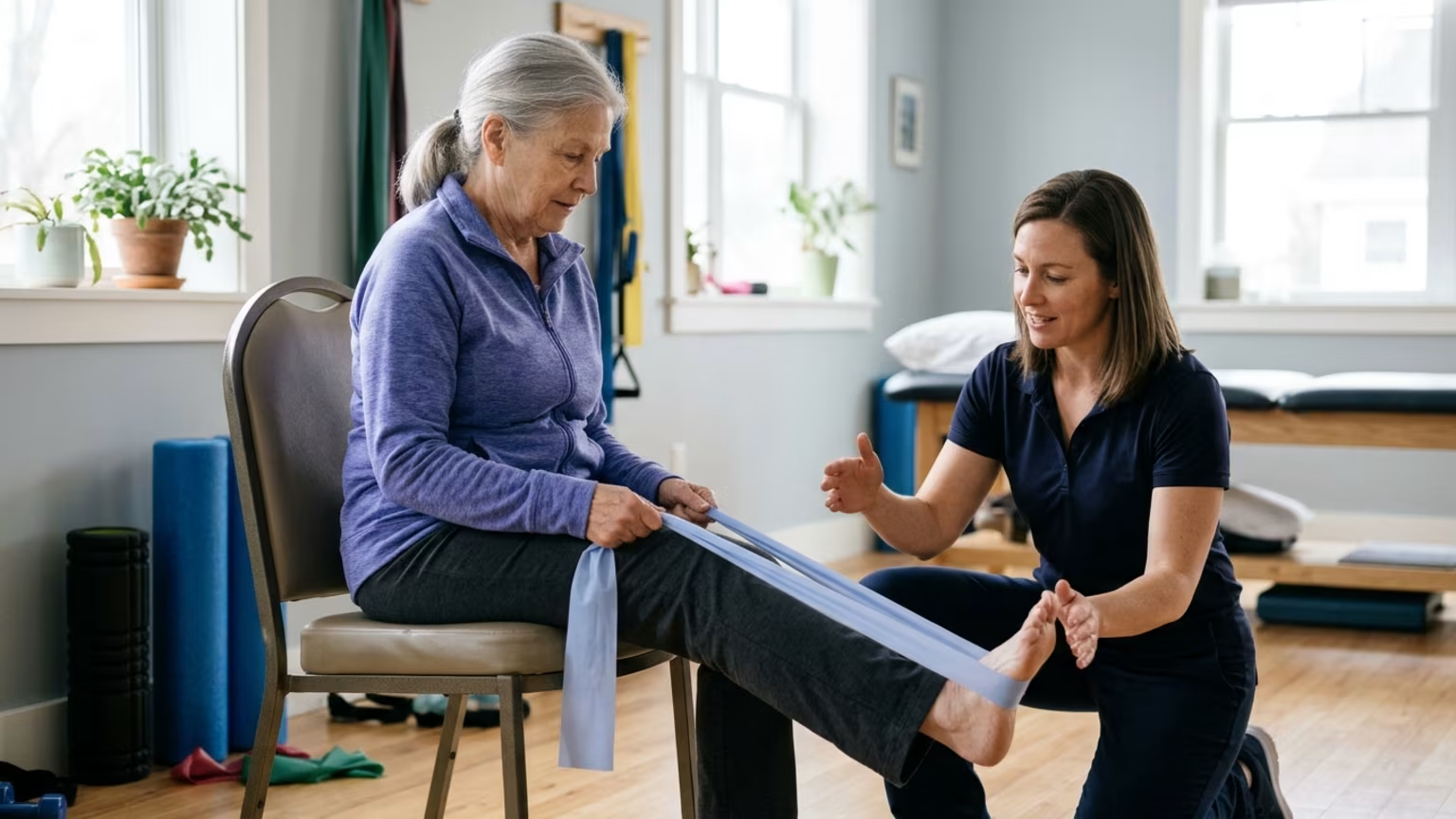

Read practical guidance on injury recovery, rehabilitation, mobility and rebuilding strength as you work your way back to activity.
Explore Resources