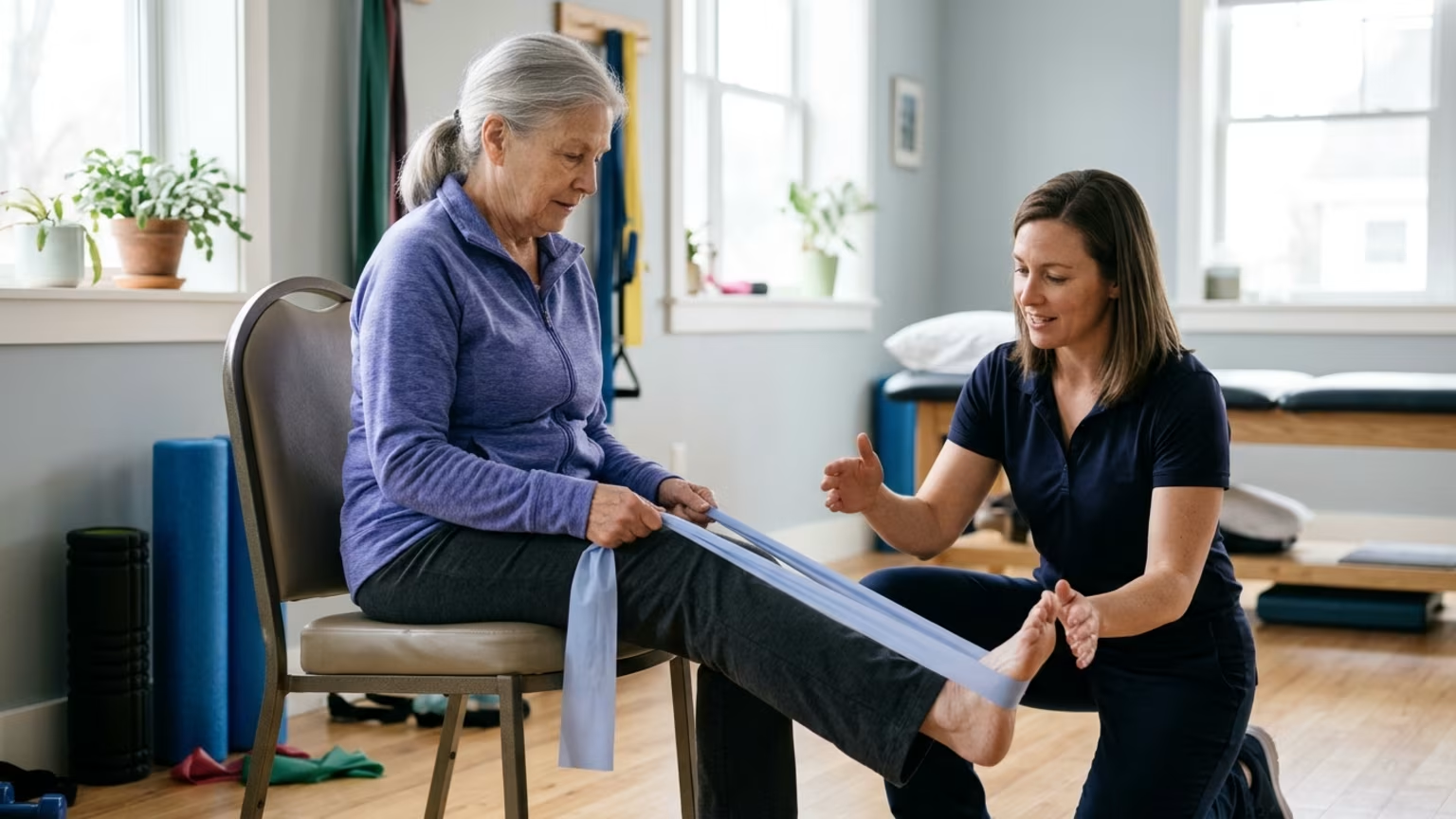

A physical therapy feature connects hip and ankle mobility with knee support, balance and movement breaks. Here’s how to put its advice in context.





On October 31, 2026, Northern Express published a feature about mobility and physical therapy for adults 55 and older. Its central message connected hip and ankle mobility with strength in the muscles supporting the knee. The therapists interviewed also discussed balance, short movement breaks and home exercise as parts of an individual movement plan.
The story draws on Ben Fuson, a doctor of physical therapy at Superior Physical Therapy, and Julia Otwell. Otwell owns Pure Form Physical Therapy and Wellness. Their comments frame physical therapy as something people might consider when stiffness or movement concerns arise, rather than only after an injury or operation.
For readers returning to activity after an orthopedic setback, the feature raises a useful question: would a broader movement assessment help clarify the problem?
Before the Northern Express feature, Health.com had also discussed sit-to-stands and balance exercises as options for staying mobile with age. Its article suggested considering a physical therapist’s help when significant mobility limitations, a history of falls or pain during exercise are concerns.
That earlier coverage provides context for the new story. Familiar activities and professional assessment were already part of the public discussion about mobility. The Northern Express feature adds local practitioners’ views on how those pieces might fit together.
The emphasis is not on finding an elaborate routine. It is on connecting everyday movement with a person’s abilities and goals. Walking and getting out of a chair appear alongside discussion of assessment and a home plan.
For someone reading conflicting exercise advice online, that distinction matters. A list of activities answers a different question from an assessment that considers why a particular person is having difficulty.
Otwell used a painful knee as an example of why therapists may consider movement above and below the area of discomfort. She told Northern Express that hip and ankle mobility and strength in the muscles supporting the knee can matter together when addressing comfortable movement.
The useful distinction is between identifying where a symptom occurs and deciding what needs assessment. Her example directs attention toward a broader movement picture, rather than choosing a treatment from the symptom’s location alone.
The therapists offered walking, sit-to-stands from a sturdy chair and supported balance practice as accessible movement examples. These activities gave the story a practical focus without centering it on specialized equipment or a complex workout.
Otwell also emphasized matching a plan to the person’s abilities and goals. In her view, consistent exercise matters more than having a perfect plan. The editorial takeaway is that a plan’s fit with someone’s daily life deserves attention alongside the activities it contains.
Otwell recommended interrupting long periods of sitting with what she called “movement snacks.” Her examples included short walks, quick stretches or a change of position.
This part of the feature broadens the discussion beyond a formal exercise session. It treats opportunities for movement during the day as another topic to consider when discussing activity habits with a professional.
Fuson emphasized home exercises because clinic appointments occupy only a small fraction of a patient’s week. That makes the relationship between an appointment and the home plan an important part of the story.
For readers thinking about the transition beyond formal rehabilitation, this is a useful distinction: attending appointments and understanding the plan outside them are separate parts of the recovery discussion.
The Northern Express feature focuses on adults 55 and older. Its discussion is relevant to people wondering whether stiffness, weakness or balance concerns deserve professional attention. For ReboundBody readers, that includes questions arising during a return to activity after an orthopedic injury or surgery.
Fuson described loss of mobility and reduced activity among the issues he sees in patients. He also mentioned shoulder and rotator cuff problems, balance concerns and recovery from joint-replacement surgery. These comments reflect the range of concerns in his practice rather than a single recovery pathway.
The feature also makes room for people who are not currently injured. Fuson said people do not need to be in pain to consult a physical therapist about movement concerns.
A useful starting point is being able to describe what has changed. ReboundBody’s guide to putting a movement difficulty into words offers a related way to frame that conversation without deciding on a diagnosis.
The most practical use of the feature is to prepare clearer questions for qualified care. It offers examples of what a therapist might consider, while leaving personal decisions to an assessment of symptoms, history and goals.
Otwell told Northern Express that her clinic’s initial evaluation takes 75 minutes. She described discussion of health history and goals along with movement assessment. Hands-on treatment and plan development may also be included. That describes her clinic, not a standard appointment length across physical therapy.
The content of the visit is more useful to a prospective patient than the clock alone. The story connects the person’s concerns with observed movement and a plan for what happens next.
A conversation with a prospective therapist could include:
These questions follow the feature’s emphasis on individual planning. They keep attention on the reason for an activity rather than treating a familiar exercise name as enough information to choose it.
Readers preparing for that discussion may also find it useful to think about how they describe changes in their physical response. The purpose is clearer communication, not self-diagnosis or an automatic change in exercise.
The feature advises people with significant balance concerns to choose exercises suited to their abilities and use support. Health.com similarly points readers with a fall history or substantial mobility limitations toward physical-therapy guidance. Supported balance practice belongs in that safety context, not as a challenge to copy from a headline.
The Northern Express story also advises discussing painful daily activities or declining strength, balance or mobility with a health professional. Otwell noted that severe arthritis may require medical or surgical intervention. Exercise and physical therapy should not be presented as replacements for that evaluation or treatment.
This was practitioner-led reporting, not a clinical trial, systematic review or formal guideline. It did not measure whether the suggested exercises prevent falls or treat a particular diagnosis. It also did not test a home program or establish that the same activities work equally well for every reader.
Health.com provides adjacent editorial context. Its discussion of similar activities does not independently confirm the Northern Express practitioners’ claims or their treatment estimates.
The movement-break advice also remains qualitative. The feature does not establish a tested interval for getting up or a measured amount of movement needed to preserve mobility. Its value is as a prompt to discuss long periods of sitting, rather than as a timed clinical prescription.
Otwell estimated that a preventative movement checkup may take one or two sessions. For some chronic or long-standing problems, she described therapy once or twice weekly for six to eight weeks. Those are estimates for care at her clinic, not evidence that a chronic problem will resolve within that period.
Important questions remain about the contribution of each suggested activity. Which combinations best suit different orthopedic concerns? How should progress be judged against someone’s own goals? The feature’s practical contribution is to bring those questions into a professional conversation rather than settle them through a general exercise list.
Here’s to informed movement and realistic expectations.
Turning a mobility headline into informed questions about recovery is the next step, and ReboundBody supplies plain-language editorial context for that task. Conflicting claims about exercises and treatment options can leave active adults unsure what to ask; its coverage helps readers understand rehabilitation and discuss personal decisions with qualified healthcare professionals.

Follow ReboundBody for practical articles on injury recovery, rehabilitation, mobility and rebuilding strength. New posts turn research into clear ideas for the road back to activity after injury or surgery.


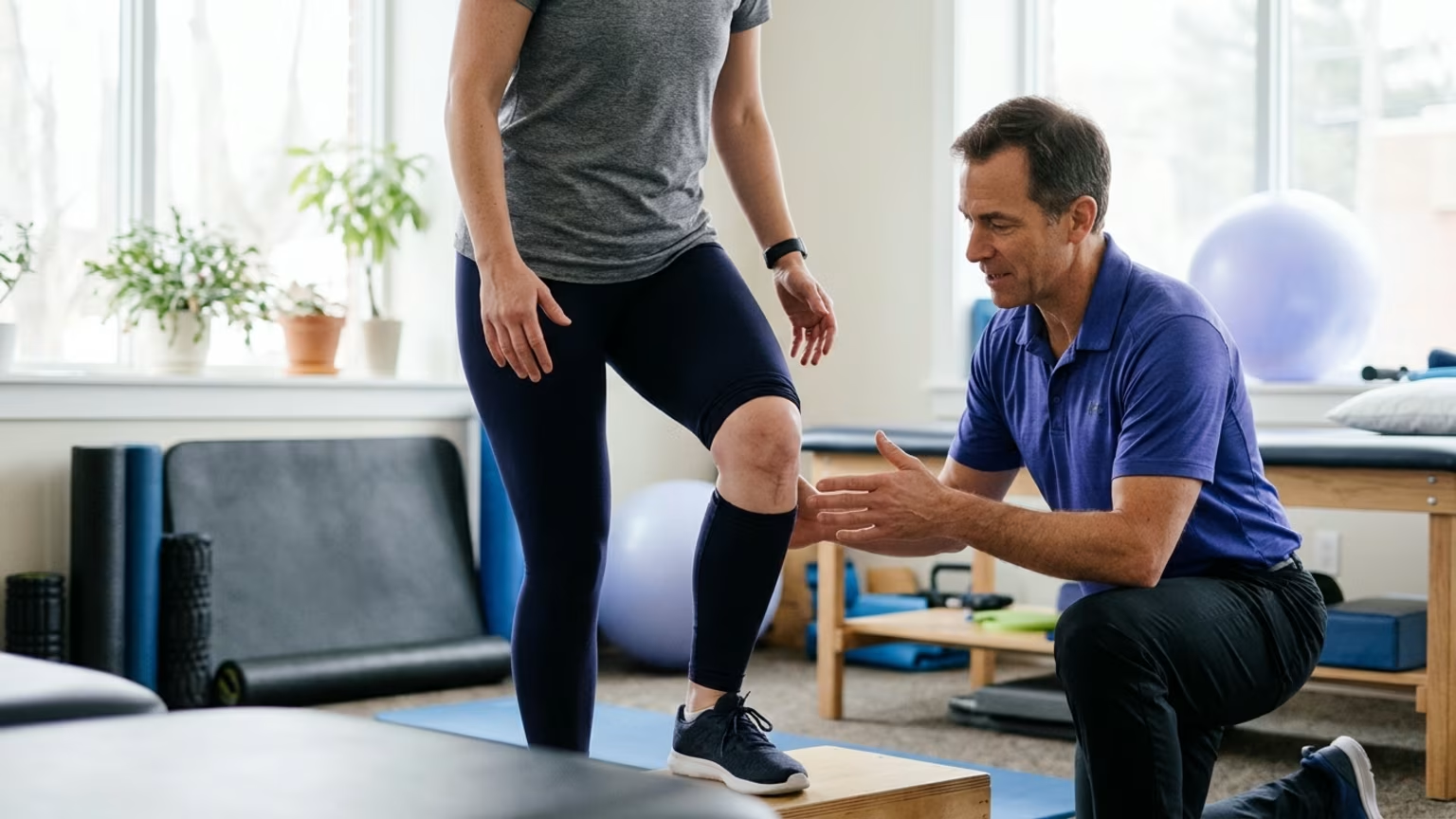

Read practical guidance on injury recovery, rehabilitation, mobility and rebuilding strength as you work your way back to activity.
Explore Resources