
A look at an NIH-funded trial of remote activity coaching after lumbar spine surgery, including planned outcomes and limits of the pilot findings.





On November 20, 2026, Vanderbilt University Medical Center announced a $4 million NIH grant for a remote activity trial after lumbar spine surgery. The grant was awarded to Kristin Archer.
The planned study will compare weekly support from a physical therapist with standard physical-activity education. The question is whether structured coaching and guided goals help people rebuild activity after surgery.
NIH RePORTER lists the project period as August 1, 2026, through July 31, 2031. Its $891,026 figure is FY2026 funding rather than the full project total. The $4 million amount comes from Vanderbilt's announcement.
For readers following recovery research, this is a funding and trial-design update. Its importance lies in the direct comparison: information about activity on its own versus information paired with regular support.
The announcement follows earlier research on exercise after lumbar surgery. That evidence includes a 2005 randomized study summarized by the Physiotherapy Evidence Database, or PEDro, that compared home strength training plus stretching with stretching alone.
Among 126 randomized patients, that study reported no significant between-group differences in physical function, pain or disability at 12 months. The record also noted low exercise adherence in the strength-training group.
This earlier comparison matters because a program's planned exercises and its actual use are separate issues. It provides context for paying attention to participation as well as outcomes when a new recovery program is studied.
The prior study tested a home exercise approach. The newly funded project asks about a different model: ongoing support aimed at activity in daily life.
Another 2026 randomized trial in BMC Musculoskeletal Disorders studied breathing exercises combined with back-muscle exercises after lumbar disc surgery. It randomized 87 patients, and 83 completed the 12-week assessment.
That study asked a different rehabilitation question from PASS. The broader point is that evidence about one exercise program should not be treated as evidence about every approach to activity after surgery.
Vanderbilt's announcement also describes why the team is studying this transition. Spine surgeon Byron Stephens said some patients fear movement or return to sedentary habits, which he believes can hold back recovery.
According to NIH RePORTER, the planned randomized trial will include 220 adults across three medical centers: Vanderbilt Health, Brigham and Women's Hospital and the University of Washington.
Participants will be assigned after surgery to one of two groups. One will receive standard physical-activity education. The other will receive eight weekly sessions of PASS, short for Physical Activity intervention to improve Surgical Spine outcomes.
The randomized design will compare people assigned to different forms of support, rather than only describe people who choose coaching. Standard education gives the researchers a defined comparison against which to assess PASS.
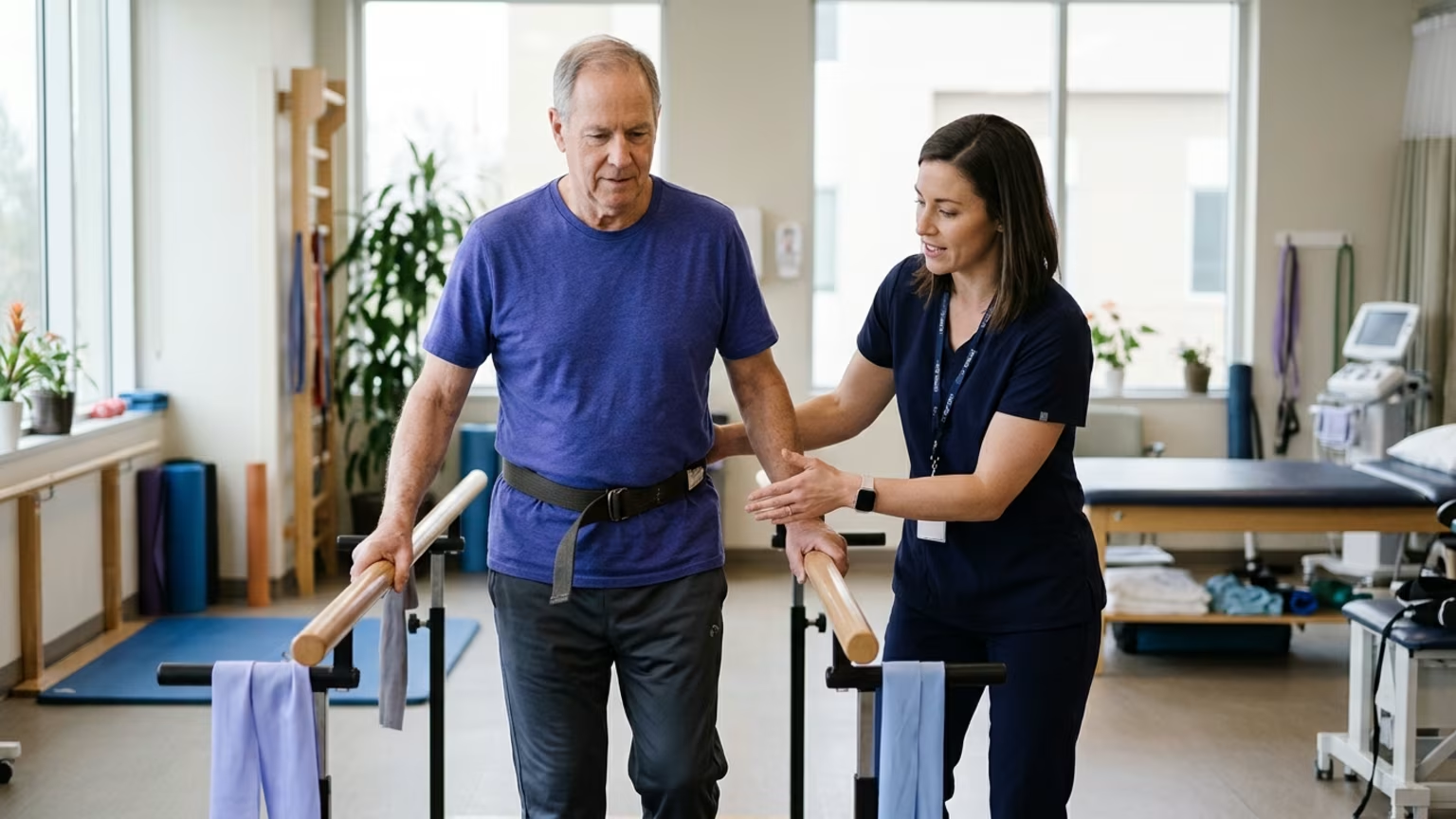
Vanderbilt describes PASS as a combination of activity coaching and support for coping with pain. A physical therapist will serve as a recovery coach during weekly Zoom meetings. Participants will use a Fitbit and an app to track activity.
The program also includes motivational interviewing and problem-solving. Coach and participant will set walking and activity goals that increase duration and/or intensity. Archer describes the approach as collaborative work to identify barriers and choose realistic goals.
That makes remote a description of how support is delivered, not an indication that participants are left to manage an app alone. The coaching relationship is part of the program being tested.
The NIH project record specifies the main outcomes:
Assessments are planned before surgery and at six and 12 months afterward. Calling activity the primary outcome means it is the central result the project is designed to test. The other measures broaden the picture of recovery. A program might affect one outcome differently from another, which is why the listed endpoints should be read separately.
The planned population is adults with degenerative lumbar conditions who are undergoing surgery. Findings will need to be interpreted within that group rather than automatically extended to other diagnoses or operations.
For an active adult hoping to resume recreation, it helps to match the trial's question to that goal. Its primary outcome concerns overall physical activity. The listed outcomes do not provide a personal standard for returning to a specific sport.
The useful takeaway is about the kind of support being studied. PASS combines tracking with conversations about obstacles and goals. It treats the move toward more activity as a supported process rather than just a written instruction.
That distinction may matter to readers sorting through advice about everyday movement after spine surgery. The research is examining whether continued guidance adds value to education alone.
Archer says patients have described accountability as helpful for staying on track. In the intervention, that accountability comes through regular contact with a therapist and review of goals.
The model also offers useful subjects for a discussion with the treating team:
The distinction between a goal and a deadline also matters here. PASS uses goals developed with a recovery coach, not a universal schedule stated in the announcement. For readers interested in exercise or recreation, questions about activity readiness belong in the conversation about longer-term recovery.
Because PASS goals are individualized with a coach, readers should follow their own surgical team's activity instructions rather than copy the study's progression. A grant announcement does not change that personal plan.
The central question is whether PASS outperforms standard physical-activity education in the planned trial. The grant announcement does not answer it.
Vanderbilt reports that its pilot found opioid use at 12 months in 4% of PASS participants and 21% of usual-care participants. It also reports that 97% of intervention participants completed at least seven of eight sessions.
Archer also described higher activity counts and more time in moderate-to-vigorous activity in the pilot group. Those are descriptions of preliminary findings, not results from the newly funded trial.
Vanderbilt's announcement does not provide the pilot sample size or enough methodological detail to judge the precision of those estimates. The opioid comparison therefore does not establish that coaching caused a reduction in medication use. The completion figure describes participation, not proof of improved recovery.
There is also a question about the program's ingredients. PASS brings together therapist contact and goal-setting with activity feedback and pain-coping support. A comparison of the whole package with education alone may leave questions about which elements matter most.
The planned follow-up will also leave a longer-term question: would any benefit continue beyond the listed assessments? And if the trial is positive, further work may be needed to understand how this level of structured support fits into routine care.
Stephens described a practical tool for surgeons as a possibility if the larger trial confirms the pilot findings. That conditional view is the right scale for this announcement.
Between receiving advice about activity and rebuilding an ordinary day lies a part of recovery that deserves careful study.
A patient's healthcare team remains responsible for decisions about walking goals after lumbar surgery. ReboundBody puts the uncertainty between formal rehabilitation and everyday life into context through plain-language recovery information. Its independent coverage gives active adults clear explanations without presenting uncertain findings as treatment promises.

Follow ReboundBody for practical articles on injury recovery, rehabilitation, mobility and rebuilding strength. New posts turn research into clear ideas for the road back to activity after injury or surgery.






Read practical guidance on injury recovery, rehabilitation, mobility and rebuilding strength as you work your way back to activity.
Explore Resources