

A 47-year study tracks physical capacity before sarcopenia cutoffs, with context on aging, activity and the limits for orthopedic recovery.





On October 19, 2026, EMJ reported on a 47-year study in which physical performance declined from adulthood while few participants fell below cited sarcopenia cutoffs at age 63. The study followed 427 people from age 16 to 63. Its findings draw attention to a distinction: a change in physical performance is not the same as crossing a clinical assessment threshold.
For adults rebuilding activity after an orthopedic setback, that distinction offers a calmer way to read aging headlines. The story is about changes across decades rather than a birthday that marks a deadline. It also separates maintaining physical capacity from waiting for an obvious problem to appear.
The research behind the October report was published in 2025. EMJ cited Westerståhl et al., “Rise and Fall of Physical Capacity in a General Population,” in the Journal of Cachexia, Sarcopenia and Muscle. The recent development is renewed attention to that study, not the release of a new rehabilitation standard.
Understanding its contribution starts with two different questions. How has someone's measured performance changed from an earlier level? And does that person fall below a particular clinical cutoff? A long-term study can track the first question even when relatively few participants meet the threshold used for the second.
That difference matters when reading claims about sarcopenia. A finding about declining performance should not automatically become a claim about a diagnosed condition. The measurements and the assessment criteria need to remain attached to the result.
There is also a separate federal guidance development. In October 2026, the US Office of Disease Prevention and Health Promotion reported that a supplement to the second edition of the Physical Activity Guidelines for Americans is planned for 2027. It will address steps and muscle-strengthening activity. That announcement concerns future guidance, not new recommendations already in force.
According to EMJ, the study assessed upper-body muscular endurance, lower-limb power and cardiorespiratory fitness. These are different aspects of performance. The findings concern what participants could do on the measures used, rather than simply how much muscle they had.
EMJ reported that muscular endurance and aerobic capacity peaked between ages 26 and 36. Muscular power peaked at age 19 among women and age 27 among men in this cohort.
There was therefore no single peak age shared by every measured ability. A headline that reduces the study to one age would lose an important part of the result. Endurance, power and aerobic capacity followed different patterns.
The EMJ summary reported initial annual declines of about 0.3% to 0.6%. By the seventh decade, the reported annual declines were more than 2.0%. Cumulative losses from peak performance to age 63 ranged from 30% to 48% across the measures.
Those percentages describe changes in the assessed capacities. They are not percentages of muscle mass lost. Keeping that distinction clear prevents a striking performance statistic from turning into a different biological claim.
At age 63, four women and no men fell below the cited sarcopenia cutoffs on handgrip or chair-stand assessments, according to EMJ. That result sits alongside the long-term performance declines.
The added insight is the gap between a person's earlier performance and a clinical threshold. Meaningful change in a measured ability can occur without that assessment placing someone below its cutoff. The study makes that distinction visible across a long follow-up period.
These findings describe the people in this general-population cohort. Its follow-up covered adolescence through age 63. It does not directly describe what happened to participants beyond that age.
The differences between participants also became larger over time. EMJ reported a 25-fold increase in relative aerobic-capacity variance and a nearly fivefold increase in muscular-power variance by age 63. In plain language, the results became more spread out as participants aged.
Those figures describe variation across the group. They do not mean that each participant experienced a change of that size. They are a reason to keep the average pattern separate from any one person's experience.
For a reader in midlife or later life, the useful comparison is therefore not simply with a published peak age. The relevant discussion concerns current abilities and personal recovery goals. An average curve is background information rather than a forecast of an individual's path.
ReboundBody's broader explanation of strength and mobility in everyday function provides another way to organize those topics without reducing physical capacity to a single score.
The practical relevance is long-term attention to physical capacity, not urgency to make up for a supposedly missed window. EMJ interprets the study as supporting proactive resistance and aerobic exercise during midlife to build functional reserves before later declines become more pronounced.
The report also describes associations between activity and better performance. Adolescent leisure-time activity or adopting exercise in adulthood was associated with gains across the assessed measures. EMJ reported an 11% increase in muscular endurance and up to 7% in aerobic capacity.
For someone returning to activity, these findings offer a framework for a conversation with a qualified healthcare professional. They do not supply a personal exercise schedule.
Strength-related abilities and aerobic capacity can be discussed as distinct parts of physical function. The study's separate measures make it easier to see why one result does not represent the whole picture.
A useful clinical conversation might address:
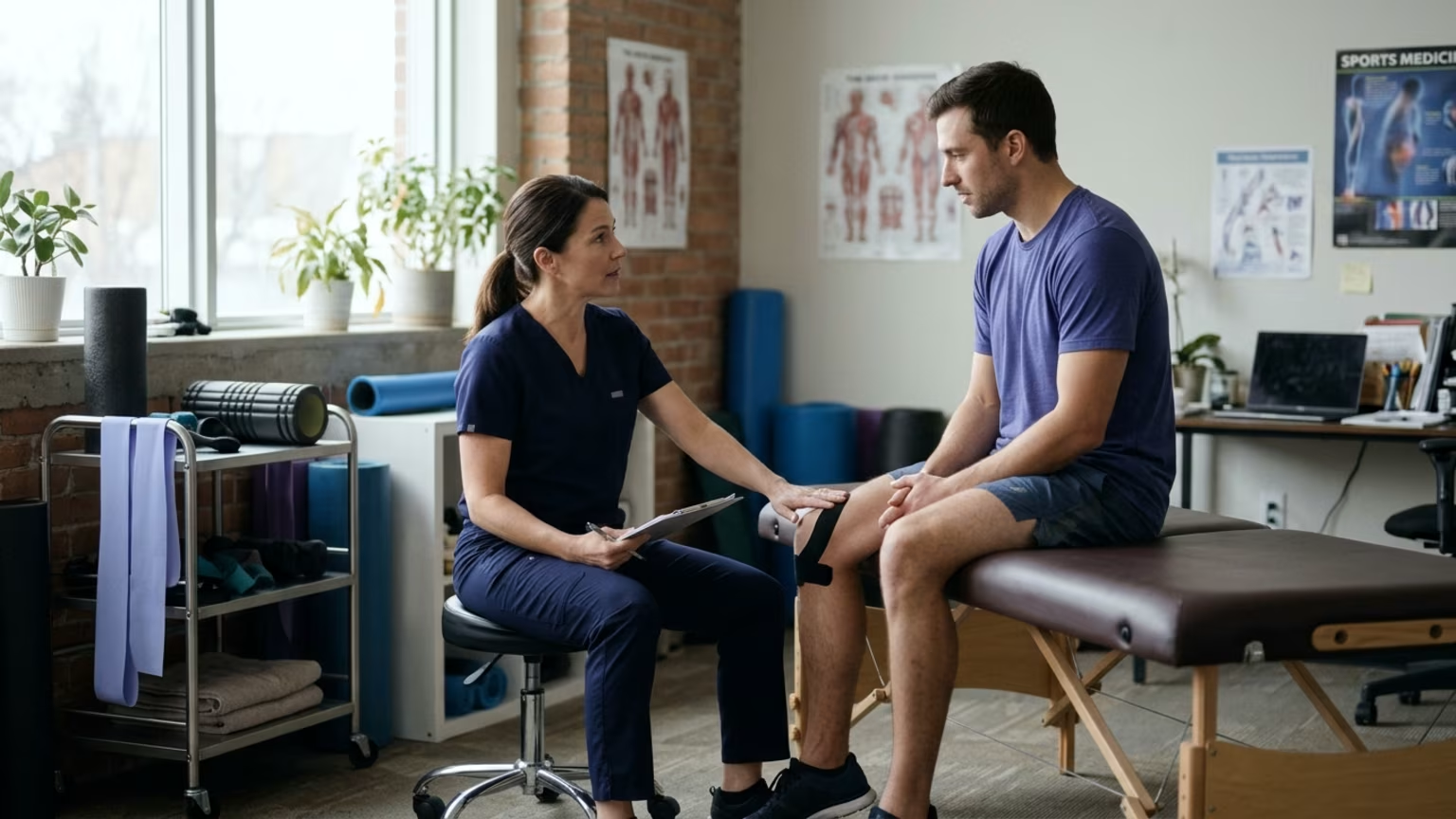
These are discussion topics rather than a self-testing checklist. Readers seeking background on that process can review the role of physical therapy after orthopedic surgery.
A decades-long pattern and an individual recovery plan answer different questions. The first describes how measured capacity changed across a group. The second concerns an injury or procedure alongside present symptoms and goals.
That separation allows strength and aerobic capacity to remain part of the conversation without turning an aging headline into permission to increase activity. Decisions about exercise belong with the treating clinician or rehabilitation professional who can account for the person's situation.
For related reading, ReboundBody's discussion of the variables involved in rebuilding training load offers context for understanding activity progression. The purpose is to make that conversation clearer, not to replace a recovery plan with a population average.
The underlying study was observational. Its activity findings show associations rather than proving that exercise caused the reported differences or stopped age-related decline. EMJ's recommendation about building reserves is a clinical interpretation of the findings, not an intervention tested by this cohort.
The sarcopenia result also has a specific boundary. It concerns the cited handgrip or chair-stand cutoffs in this group at age 63. It does not establish that sarcopenia generally remains undetectable until later life or that it was diagnosed decades earlier in these participants.
For orthopedic recovery, a separate evidence gap remains. This was not a rehabilitation trial and it did not report outcomes for patients recovering from orthopedic conditions. Questions about treatment choices and recovery timelines therefore require evidence specific to those situations.
Nutrition recommendations require separate evidence as well. These performance findings do not establish a diet or supplement plan for preserving strength or rebuilding after surgery. A claim about a particular protein product would go beyond what this report supports.
Further research could help clarify how these patterns differ across populations and later ages. It could also help distinguish which approaches change particular aspects of performance. For now, the strongest message is to keep physical capacity in view over time while preserving the distinction between research context and personal care.
Today, write down one question for your healthcare team: “Which parts of my physical capacity should we consider as I return to my usual activities?”
Age-related performance findings can be stretched into unsupported claims about recovery products, so ReboundBody separates observed findings from treatment promises. Through independent articles on rehabilitation and strength rebuilding, it helps sidelined adults understand conflicting nutrition and exercise messages before discussing recovery options with their healthcare team.

Follow ReboundBody for practical articles on injury recovery, rehabilitation, mobility and rebuilding strength. New posts turn research into clear ideas for the road back to activity after injury or surgery.




Read practical guidance on injury recovery, rehabilitation, mobility and rebuilding strength as you work your way back to activity.
Explore Resources