

Protein supports muscle maintenance and repair, but it does not replace rehabilitation. Understand the evidence and questions to discuss with your care team.





When movement is restricted after an injury, adding protein can seem like a way to keep rebuilding on track. The tension is that supplying nutrients and restoring strength are not the same task.
The belief is understandable: if protein helps maintain and repair muscle, eating more of it should help offset time away from normal activity. A protein-containing meal or supplement may also feel like a concrete contribution when exercise options are limited.
There is a sound idea at the center of that belief. Protein matters to muscle tissue. The problem comes when that role expands into an expectation that extra protein can do the work of rehabilitation.
That expectation blends two different questions. One is whether food supplies nutrients used in maintaining and repairing tissue. The other is whether strength returns after a period of reduced movement.
A fair correction should preserve the useful part of the belief rather than dismiss nutrition. Protein supports recovery, but it should not be treated as a replacement for suitable rehabilitation. Understanding that distinction also makes it easier to judge claims about recovery powders and high-protein products.
The American Academy of Family Physicians describes slow resistance exercises as an integral part of many musculoskeletal rehabilitation programs. This places exercise within rehabilitation itself rather than treating it as an optional addition to nutrition.
An injury-nutrition guide from Second Nature describes dietary protein as a source of amino acids used to maintain and repair muscle tissue. These are related roles, but they are not interchangeable.
A useful way to frame the distinction is:
The evidence supports a combined approach. It does not support assuming that a larger protein intake can stand in for the physical part of rehabilitation.
This distinction matters when reading the phrase “supports muscle.” Supporting tissue maintenance is not the same claim as restoring strength after an orthopedic setback. A statement about nutrition should not quietly become a promise about function.
ReboundBody’s explanation of protein within the wider recovery picture provides related context without making a supplement the center of rehabilitation.
The sources cover different settings. Reading them together is useful, but their findings should retain the limits of the situations they describe.
Second Nature’s guide summarizes a 2024 review as finding no clear evidence that extra protein or amino acids prevented muscle loss during bed rest or limb immobilization.
The wording matters. “No clear evidence” is not proof that protein never helps. The finding concerns extra protein during restricted movement, not whether dietary protein has a role in tissue maintenance and repair.
It is also a secondary summary of a review. The result should be understood as the guide’s account of that research rather than a direct examination here of every underlying trial.
Most importantly, preventing muscle loss during inactivity is a different outcome from regaining strength during rehabilitation. The finding should not be stretched into a verdict on every stage of surgical or injury recovery.
A review of musculoskeletal changes during immobilization reports that a week of strict bed rest can be associated with an approximately 1.6 kg reduction in lean mass.
That is a review-reported finding in a specific setting. It is not a forecast for someone who is moving less than usual after an injury. Strict bed rest should not be treated as equivalent to every reduction in walking or exercise.
The review discusses a combined nutrition-and-exercise approach. It also describes practical challenges to using exercise during immobilization. Its discussion draws on varied studies and does not supply a ready-made plan for a typical orthopedic patient.
The AAFP guidance establishes that resistance exercise belongs in many musculoskeletal rehabilitation programs. It does not mean that every exercise is appropriate at every recovery stage.
Taken together, these sources do not establish a universal protein target or calorie target. They also do not provide a single exercise dose or strength-recovery timetable. Nor do they establish faster orthopedic recovery from supplements, extra calories or a particular protein timing strategy.
Those limits leave a useful conclusion: nutrition and rehabilitation belong in the same conversation, while personal decisions belong with qualified care.
The practical value of this evidence is not a new set of numbers to follow. It is a clearer way to separate food needs from activity decisions and ask better questions about both.
Second Nature’s guidance recommends including protein in regular meals. That frames protein as part of eating rather than as a separate treatment expected to restore strength.
For someone reviewing recovery advice, this changes the central question. Instead of asking which product promises the most muscle support, the discussion can focus on whether current food intake meets the person’s needs.
That is a nutrition question. It does not answer which movements are permitted or how rehabilitation should progress. Keeping those questions separate helps prevent a food choice from being mistaken for an activity plan.
The same guide says protein powders may help people who struggle to meet their needs through food. It also says they are not necessary when food intake is sufficient.
This gives supplements a narrower role: they are a possible way to address a gap in intake. They are not a replacement for the exercise component described in rehabilitation guidance.
A useful conversation about a supplement therefore starts with the gap it is meant to fill. “What need would this product address?” is more informative than “Is this marketed for recovery?”
For related context, see the distinction between meeting protein needs through food and using a powder. The format of the protein should not become confused with the purpose of rehabilitation.
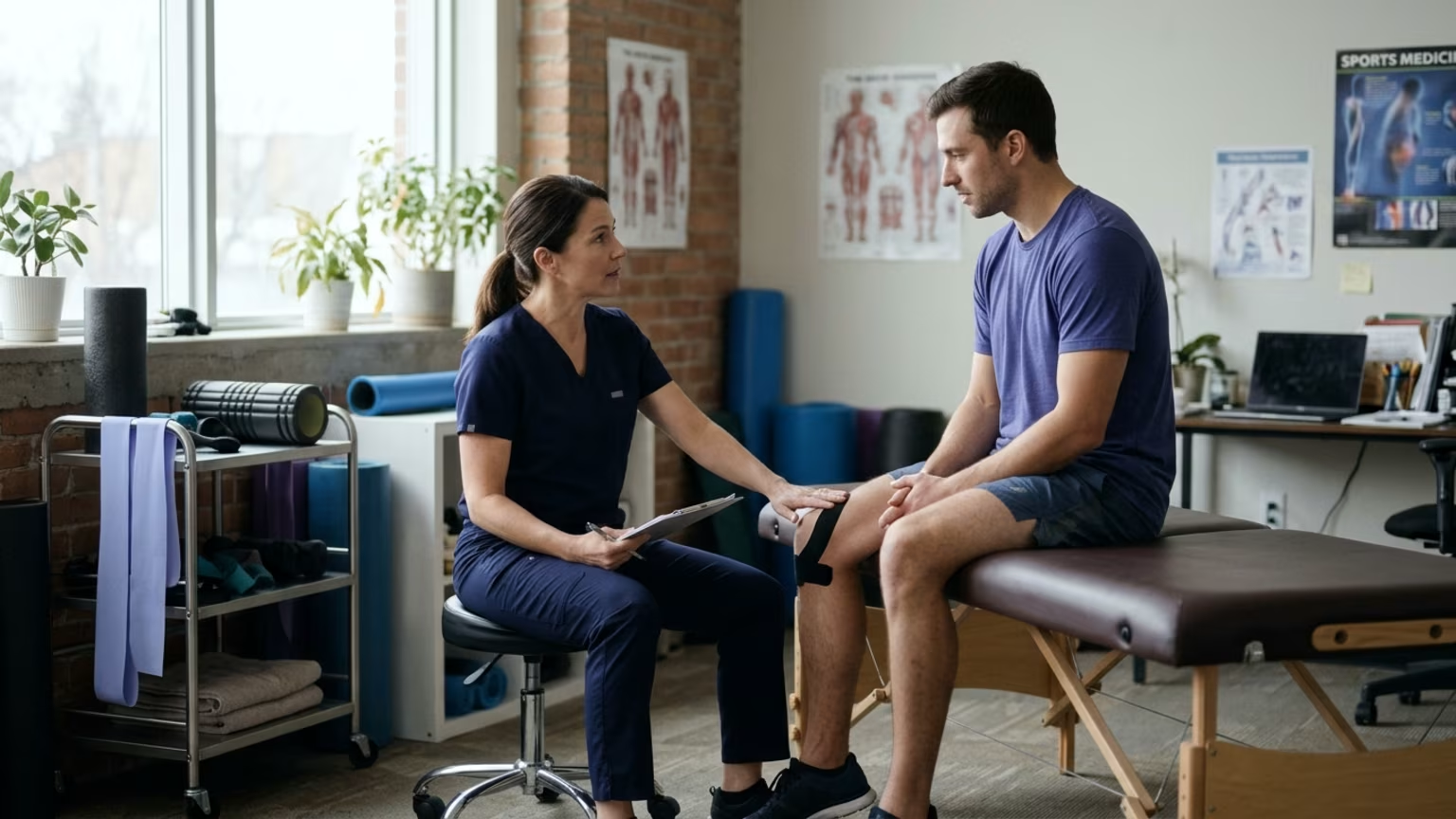
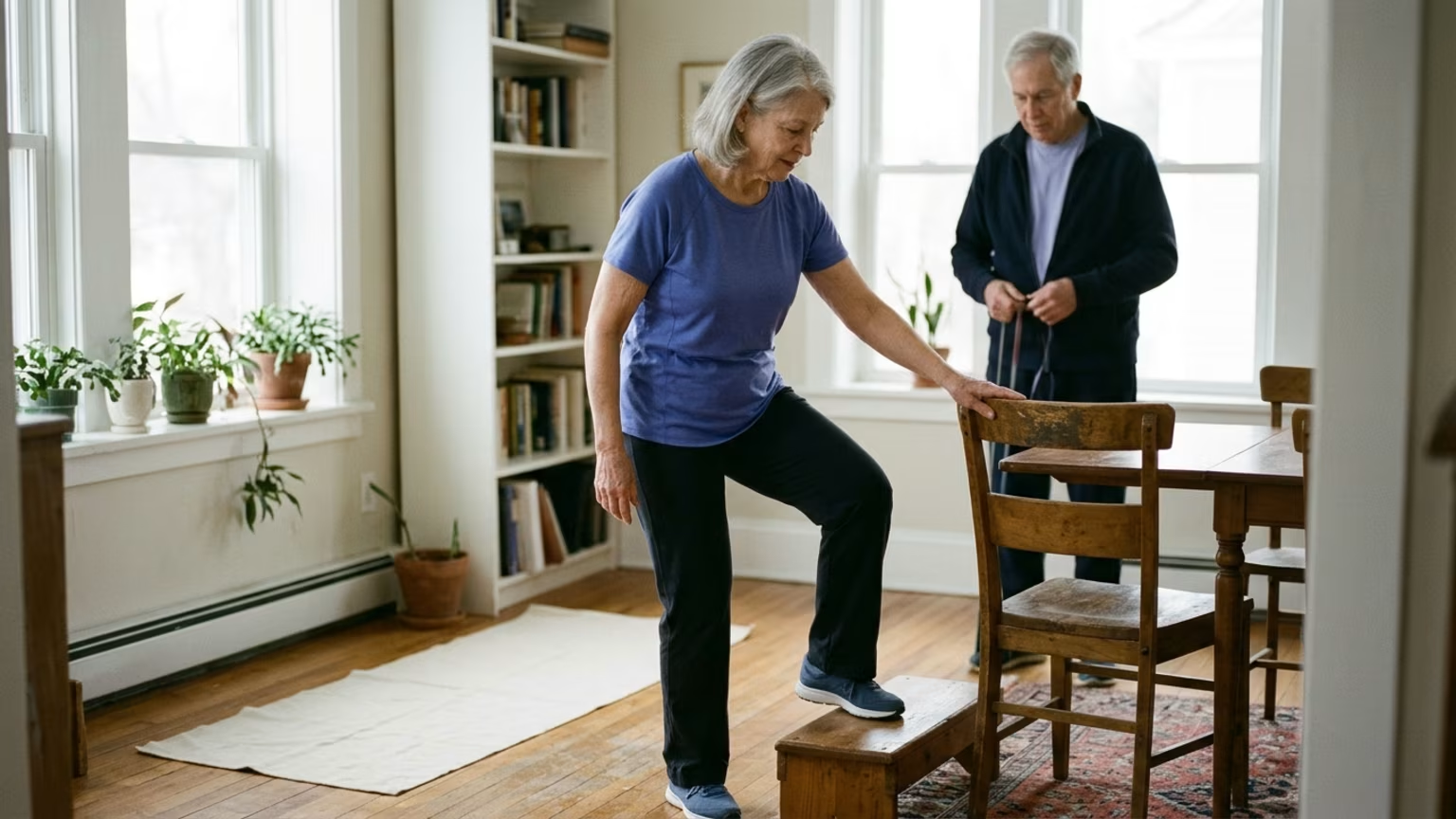
Second Nature’s guide also advises following physiotherapist-recommended exercises. Alongside the AAFP guidance, that supports discussing activity progression with the professionals overseeing recovery.
Questions for that discussion might include:
These are conversation prompts rather than a program. They help distinguish the role of an exercise from the role of a meal or supplement.
ReboundBody’s overview of how gradual loading fits into rehabilitation offers background for understanding that discussion. The relevant progression still depends on the person’s clinical circumstances.
“Am I getting enough protein?” and “Am I rebuilding strength?” deserve separate answers. A change in protein intake answers a question about food. It does not by itself establish that physical capacity has returned.
This separation can make recovery information less confusing. Nutrition advice can be assessed for its nutritional purpose. Rehabilitation advice can be discussed in relation to permitted movement and the goals of care.
Neither needs to compete with the other. The point is to avoid expecting one part of recovery to perform the job of another.
Protein matters because it supplies amino acids used to maintain and repair muscle tissue. Rehabilitation matters because appropriately selected exercise provides a physical stimulus for rebuilding strength.
The most useful message is not “eat more protein and wait” or “nutrition does not matter.” It is to understand their complementary roles and bring questions about food and activity to the appropriate healthcare professionals.
Nutrition supports the recovery process. It does not replace the work of rehabilitation.
Presenting protein as a replacement for rehabilitation turns a nutrition choice into an unsupported recovery claim, so ReboundBody explains the evidence with clear limits. Its independent articles help active adults make sense of conflicting nutrition and exercise advice while building a better understanding of physical recovery for conversations with qualified healthcare professionals.

Follow ReboundBody for practical articles on injury recovery, rehabilitation, mobility and rebuilding strength. New posts turn research into clear ideas for the road back to activity after injury or surgery.




Read practical guidance on injury recovery, rehabilitation, mobility and rebuilding strength as you work your way back to activity.
Explore Resources