
Learn how time frames and functional milestones fit together after orthopedic surgery, with evidence limits and questions for your treating team.





Together, these sources offer a way to discuss recovery through both time and function. The calendar identifies a stage of care. A functional milestone describes an ability being assessed within that stage. The useful question is how those pieces fit together in the treating team's plan.
The hip-arthroscopy paper is a professional consensus guideline. Its intended population is people receiving rehabilitation after hip arthroscopy. The panel organized its recommendations into proposed phases rather than reporting the recovery times of an enrolled patient sample.
The framework includes protection and pain or swelling management alongside progression of weight bearing. It also addresses strengthening, functional restoration and return to sport. Its time frames are proposed care windows paired with goals.
Those goals include pain-free hip motion and a normalized walking pattern. Other examples involve control of the pelvis during single-leg activity and control during sport-specific movement. These describe different aspects of recovery rather than one overall measure of being “finished.”
The hip-fracture paper is a narrative review focused on older adults. It considers recovery in relation to the person's function before the fracture. Its discussion covers perioperative and post-acute care rather than following one patient group through a shared observation period.
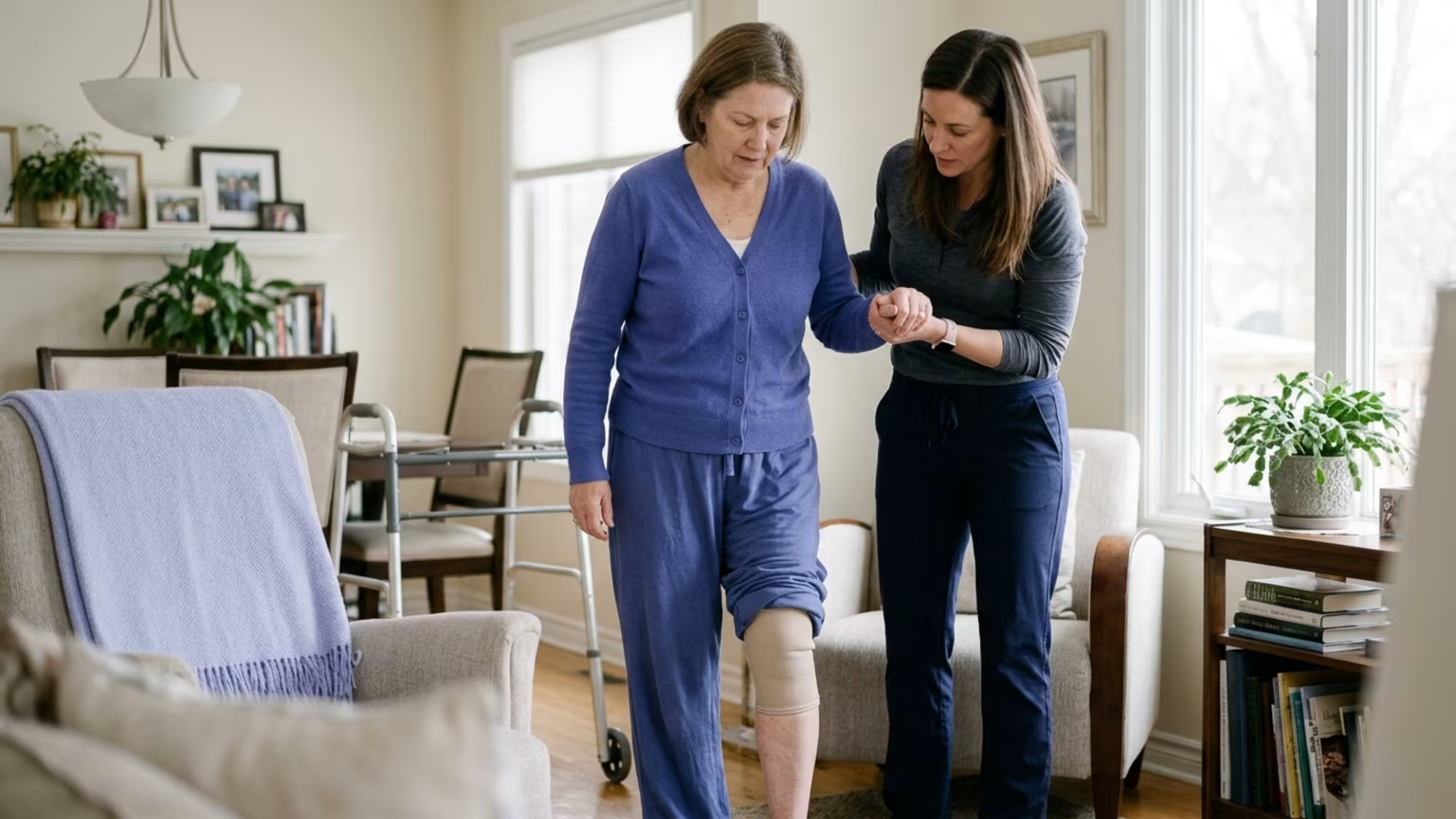
In that review, practical outcomes include sitting out of bed and standing. They also include transferring between positions or places and walking to a familiar chair or the toilet. These are concrete abilities that can make a progress discussion more specific.
The sources therefore address different populations and different outcomes. One organizes rehabilitation after a particular procedure. The other discusses recovery after hip fracture in an older population.
The clearest use of a milestone is to name what is changing. “I am further along” becomes more informative when the discussion identifies a task, a movement or a capacity. The published examples offer several ways to organize that conversation.
The hip-fracture review describes goals tied to familiar destinations rather than one universal walking-distance target. Reaching a chair or the toilet connects walking with a purpose. Transfers also matter because movement between places is part of daily function.
For a progress discussion, the question is not simply whether walking appears on a plan. It is which daily activity the treating team is working toward and how that activity relates to the person's previous abilities. That keeps the goal connected to the person rather than to an abstract standard.
This is the distinction behind describing progress through useful daily abilities instead of treating elapsed time as the whole recovery report.
The hip-arthroscopy panel includes walking pattern and pelvic control among its proposed goals. These examples distinguish completing a movement from how the movement is performed.
In plain English, a progress discussion can address more than whether a task happened. It can also address the quality of that movement as assessed by the treating team. A useful discussion prompt is: “What change in movement are you looking for at this stage?”
That question gives the word “better” a clearer meaning. It asks the clinician to name the feature being assessed rather than leaving the reader to judge it alone.
Strengthening is part of the panel's framework. Yet “getting stronger” is a broad description. A more specific conversation asks which strength goal belongs to the current phase and how the team will assess it.
The point is to understand the purpose of a prescribed goal. A strength goal and a daily-task goal may describe different parts of the same rehabilitation plan. Asking how they connect can make the plan easier to understand without changing it.
The hip-fracture review says rehabilitation should be adapted to the person's response. That makes the response to an agreed activity part of the progress conversation, not just the fact that the activity was completed.
A useful prompt is: “How are you assessing my response to this activity?” The treating team can explain what it is monitoring within the existing plan. ReboundBody's guide to discussing current ability alongside healing time offers related context for understanding these separate questions.
The sources identify several reasons that progress needs context. These are factors considered in rehabilitation planning, not a formula for calculating someone's recovery date.
The procedure and patient characteristics matter. The hip-arthroscopy panel allows for changes based on the procedures performed and the person receiving care. Its framework is not intended to erase those differences.
The starting point matters. The hip-fracture review considers function before the fracture. A recovery goal has a different meaning when viewed against the person's earlier mobility and daily abilities.
Medical and cognitive status matter. The review says rehabilitation should be adapted to medical stability and cognitive ability. These sit alongside physical function when clinicians consider the plan.
Response and available support matter. The review also discusses individual response and the support available during recovery. The setting around rehabilitation belongs in the discussion of progress.
These factors provide context, but context is not proof of cause. Their presence does not establish that any one factor caused a particular outcome. The sources do not isolate a separate causal effect for each factor.
For readers, the useful shift is away from asking why another person's calendar looks different. A more informative discussion asks which parts of the current plan reflect the procedure, starting abilities and present clinical situation. That is also relevant when understanding what physical therapy addresses after surgery.
The evidence supports a careful explanation of milestones. It does not support turning them into universal rules.
The practical boundary is clear: published examples can help readers understand a rehabilitation conversation. They are not a checklist for resuming restricted activity. Decisions about progression remain with the treating team using the relevant procedure-specific plan.
The evidence supports discussing recovery through both time and meaningful function. A useful progress report can identify the current stage of care and the next ability being assessed. It can also make clear how that ability connects with everyday movement or a later activity goal.
This approach gives the calendar a role without asking it to describe every part of recovery. It also gives milestones a role without treating one achievement as the end of the process.
What these sources cannot provide is an individual forecast. They do not tell a reader exactly when normal activity will return. Their value is a clearer framework for understanding the plan already being set by qualified professionals.
Today, write down one question for your surgeon or physical therapist: “What is my next procedure-specific milestone, and how will you assess it?”
Return-to-activity decisions sit with the treating healthcare team; ReboundBody supplies independent explanations to help readers understand the issues involved. For active adults uncertain about life after formal rehabilitation, its coverage of movement and strength rebuilding supports better-informed questions about the path back to normal activity, with realistic limits and no medical promises.

Follow ReboundBody for practical articles on injury recovery, rehabilitation, mobility and rebuilding strength. New posts turn research into clear ideas for the road back to activity after injury or surgery.






Read practical guidance on injury recovery, rehabilitation, mobility and rebuilding strength as you work your way back to activity.
Explore Resources