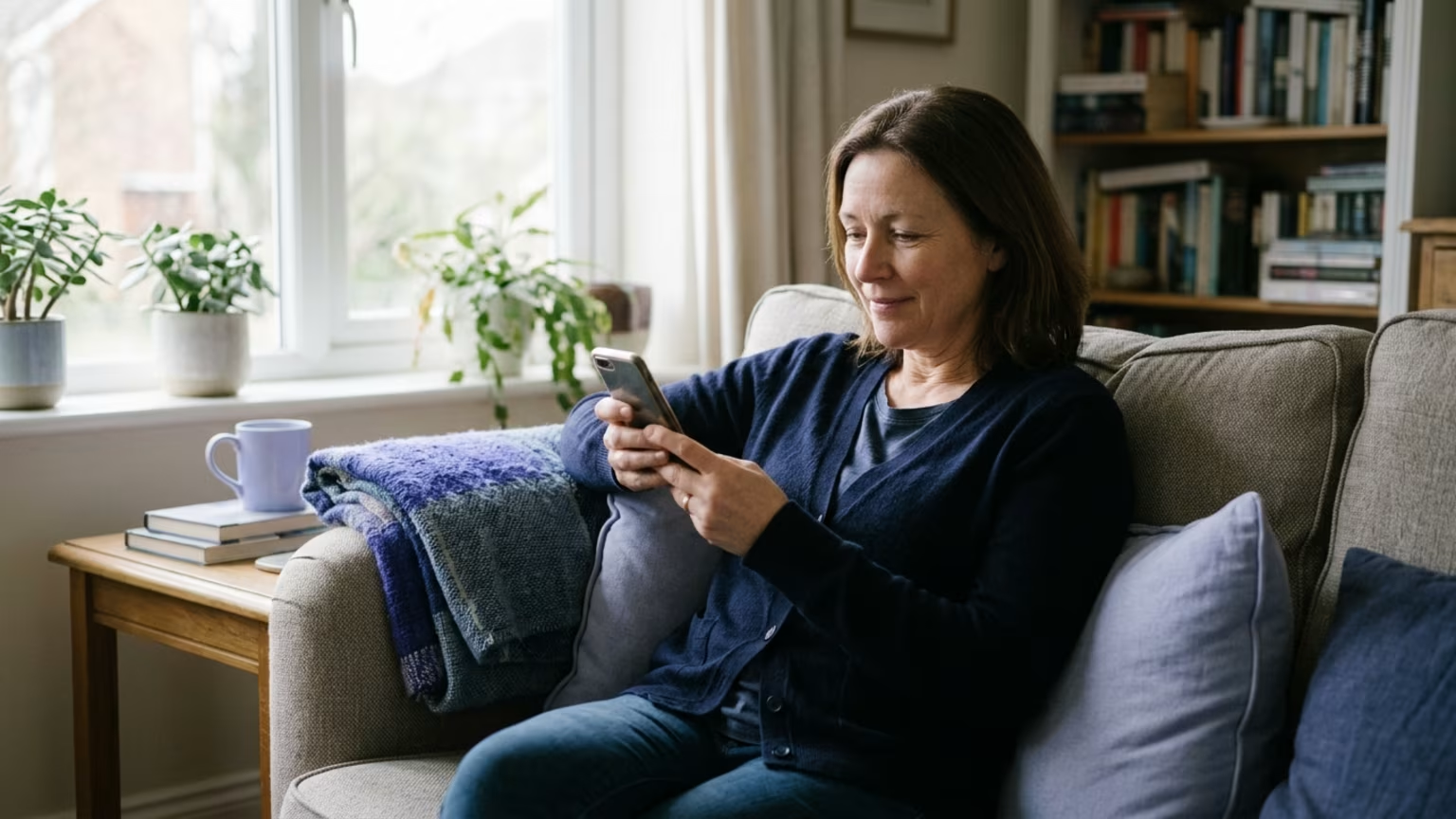

A randomized resilience-app trial reported lower pain and disability scores. Learn who was studied, what the findings add and what remains uncertain.





On September 30, 2026, the Journal of Pain Research published a randomized trial of “Enhancing Resilience to CP,” an eight-week smartphone program for chronic noncancer pain. The authors reported lower pain and disability scores in the app group than in groups receiving routine care or routine care plus text-message education.
The program combined short educational videos with resilience and self-management topics. Its curriculum included exercise, sleep and stress management. Recruitment also included orthopedic and rehabilitation clinics, making the findings relevant to conversations about recovery and persistent pain.
The important development is a reported difference in outcomes from a controlled study. Understanding that result means looking at the comparison groups, the people enrolled and the information available about their improvement.
The starting point was routine care and education delivered by text message. Researchers assigned 108 participants to three groups, with 36 in each: the app group, routine care or routine care plus SMS education. Those comparisons help frame the question the trial addressed.
The routine-care group provided one reference point. The text-message group provided another way to compare the app with access to educational material. According to the trial authors, the app group had better reported outcomes than both groups after the intervention.
Other research publications should be kept separate from this result. A trial protocol published on September 5, 2026 concerned a just-in-time adaptive intervention for pain catastrophising in people with chronic back pain. It was a protocol for a pragmatic randomized controlled trial, rather than a completed report of treatment outcomes.
That distinction matters when reading claims about digital pain tools. A study plan and a completed trial answer different questions. The September 30 resilience-app paper adds reported outcomes from a particular program; it should not be combined with a protocol as though both demonstrate a benefit.
The trial’s Android app provided 20 educational videos. Topics included pain and resilience skills, along with acceptance and communication. The curriculum also covered exercise, sleep and stress management. Participants could access the content without an internet connection.
Researchers assessed participants before the program, immediately after the eight-week intervention and three months later. They used a Numerical Rating Scale to assess pain intensity. Disability was assessed with the Pain Disability Index, which ranged from 0 to 70.
These were separate outcomes. Pain intensity addressed the severity of pain reported by participants. The disability measure supplied a second view of their experience. Reading both results is more informative than describing the study only as an app that reduced pain.
The authors reported lower mean pain and disability scores in the app group than in either control group at both follow-ups. They reported between-group differences at P=0.001. This was the central finding of the trial.
The authors interpreted the results as support for considering resilience-related components in chronic-pain management. That conclusion belongs to the authors of this study. It is useful to distinguish their interpretation from the narrower observation that the app group reported better scores under the conditions tested.
The intervention was also a package of content. Exercise education appeared alongside sleep, communication and other topics. The reported result therefore concerns the program as a whole, rather than a demonstrated effect from any single video or topic.
Participants were recruited through six outpatient clinics affiliated with Shiraz University of Medical Sciences in Iran. Their mean age was 46.79 years, and 83.3% were women. The study required Persian literacy and an Android smartphone.
Eligible pain types included trauma-related pain and spinal cord injury. They also included migraine, rheumatoid arthritis and postsurgical pain. This was a broad chronic noncancer pain study rather than a trial built around one orthopedic condition.
For ReboundBody readers, trauma-related and postsurgical pain provide a clear point of relevance. Recruitment through orthopedic and rehabilitation clinics also connects the trial with recovery care. Yet the study did not follow a defined post-injury or postsurgical recovery pathway.
These population details limit how confidently the findings can be transferred to other groups or US rehabilitation settings. The mean age also does not establish how well the program worked for every age group. A midlife reader may recognize parts of the study population without being an exact match for it.
The useful distinction is between relevance and direct applicability. A study can raise a worthwhile question for someone recovering from an orthopedic setback without establishing that the tested program fits that person’s condition or stage of recovery.
The practical relevance is a conversation about education and self-management. Someone rebuilding movement after an orthopedic setback could ask a qualified clinician whether resilience-oriented support has a place alongside their recovery plan. The study gives that conversation a specific research example rather than only a general claim about apps.
Its content also provides a clearer starting point for discussion. “Digital pain support” is a broad description. In this trial, the program meant educational videos covering several topics, including exercise and communication. Naming the content helps keep the conversation focused on what was actually studied.
Questions for a healthcare discussion could include:
These questions do not require choosing an app first. They begin with the reader’s situation and the goals already being discussed with qualified care. ReboundBody’s guide to discussing pain-management options offers related context for those conversations.
Another useful distinction is between a program’s topic list and its treatment role. A video about exercise is educational content. Whether that content belongs in a particular recovery plan is a separate question for the healthcare team. Keeping those questions separate avoids treating an appealing app description as a personal recommendation.
The study’s inclusion of sleep and stress management may also prompt questions about the wider context of persistent pain. Readers looking for background can find more on everyday factors around ongoing pain. That context can help organize a discussion without assuming that one factor explains the whole recovery experience.
For readers approaching a return to exercise, the next conversation may concern how educational support fits with activity goals. Related reading on readiness beyond symptom relief addresses that broader recovery question. The app trial itself is evidence about the outcomes it measured, not a personal activity plan.
The article text available for review reports statistical significance but does not provide group-specific mean outcome scores or numerical effect sizes. It also does not supply responder rates or a minimal clinically important difference. These are the details needed to judge the size and practical importance of the reported changes.
A P value is not a measure of how much better someone felt. Without the missing outcome details, readers cannot tell whether the average differences were modest or substantial. They also cannot estimate how many participants experienced a meaningful improvement.
The evaluator and data analyst were blinded to group assignment, meaning they did not know which group participants belonged to. Participants themselves were not blinded. The authors also noted that questionnaire responses may be subject to bias.
These features belong in the interpretation of the reported outcomes. The blinded assessment and analysis are important study details, but they do not remove the authors’ concern about questionnaire-based responses.
Follow-up lasted three months after the intervention. The authors identified longer-term sustainability as an open question. The trial therefore provides no answer about whether the reported differences would persist over a longer recovery period.
The article does not clearly specify whether app-group participants continued routine medical care. It also does not report a comparison with a structured individualized rehabilitation program. Those gaps matter when interpreting the app as a possible complement to rehabilitation.
The trial does not establish that the program can replace clinician-directed rehabilitation. It also does not show that its videos can substitute for a person’s specific strength, mobility or return-to-sport program. Personal decisions about that relationship remain with qualified healthcare professionals.
The authors suggested further app development, including possible weekly challenges, reward badges and reminders. These were proposed additions rather than features with demonstrated benefits in this trial. Future evaluation would need to distinguish changes to the app from evidence that those changes improve outcomes.
The study was funded by Shiraz University of Medical Sciences. The article states that the university had no role in its design, conduct, analysis or reporting. The authors declared no conflicts of interest. Those disclosures provide context but do not resolve the unanswered questions about the results.
Keep the evidence in perspective, and keep personal recovery decisions with qualified care.
Pain-app decisions belong in conversations with the reader’s healthcare team; ReboundBody supports those conversations by explaining recovery research in plain language. Its independent editorial content helps active adults in midlife and later life sort through competing claims about recovery tools and treatment options, with realistic limits on what the evidence means for rehabilitation and return to activity.

Follow ReboundBody for practical articles on injury recovery, rehabilitation, mobility and rebuilding strength. New posts turn research into clear ideas for the road back to activity after injury or surgery.




Read practical guidance on injury recovery, rehabilitation, mobility and rebuilding strength as you work your way back to activity.
Explore Resources