

A review of recent clinical data explaining how disc-related sciatica often improves as inflammation settles and herniated material naturally resorbs over time.





In September 2026, new clinical reports shifted the understanding of how disc-related sciatica heals. On September 3, a research article published in PMC detailed the specific biological mechanisms of disc resorption. The study described how immune activity, new blood-vessel growth, and tissue breakdown help the body clear displaced disc material.
Shortly after, Biology Insights published an extensive review on September 30. This publication explained that disc-related sciatica involves both mechanical pressure on a nerve root and localized chemical irritation.
These combined reports emphasize that resolving nerve pain is an active physiological process. The body relies on inflammation to trigger the initial cleanup of the herniated material. Macrophages infiltrate the affected area to slowly break down the separated disc fragments.
This immune response acts as a natural disposal system for the problematic tissue. Recognizing this biological process helps patients understand why symptom relief often requires significant time.
Prior to these detailed biological explanations, many people viewed nerve compression primarily through a simple mechanical lens. The prevailing assumption was that a herniated disc acted like a permanent physical block resting on a nerve. This perspective suggested that physical removal of the offending disc material was the only way to achieve lasting relief. Many active adults assumed they needed immediate structural correction to ever return to their normal routines.
This structural view often led to early reliance on absolute rest or rapid surgical intervention. Healthcare advice historically leaned heavily on extended periods of bed rest for acute back issues. Patients were often told to avoid all movement until the pain completely subsided. We now understand that prolonged inactivity can actually hinder proper physical rehabilitation.
The shift away from immediate surgical defaults for uncomplicated cases stems from observing natural patient outcomes. Clinicians noticed that many individuals improved significantly given enough time and proper symptom management. Understanding this historical context is vital for grasping why conservative management strategies have gained prominence. Evidence now consistently shows that the chemical environment around the nerve matters just as much as the structural compression.
This shift in context helps explain why symptoms often improve naturally without operative care. The medical community gradually realized that a robust immune response is actually necessary for clearing the debris. This realization laid the groundwork for trusting natural injury recovery timelines over immediate medical fixes.
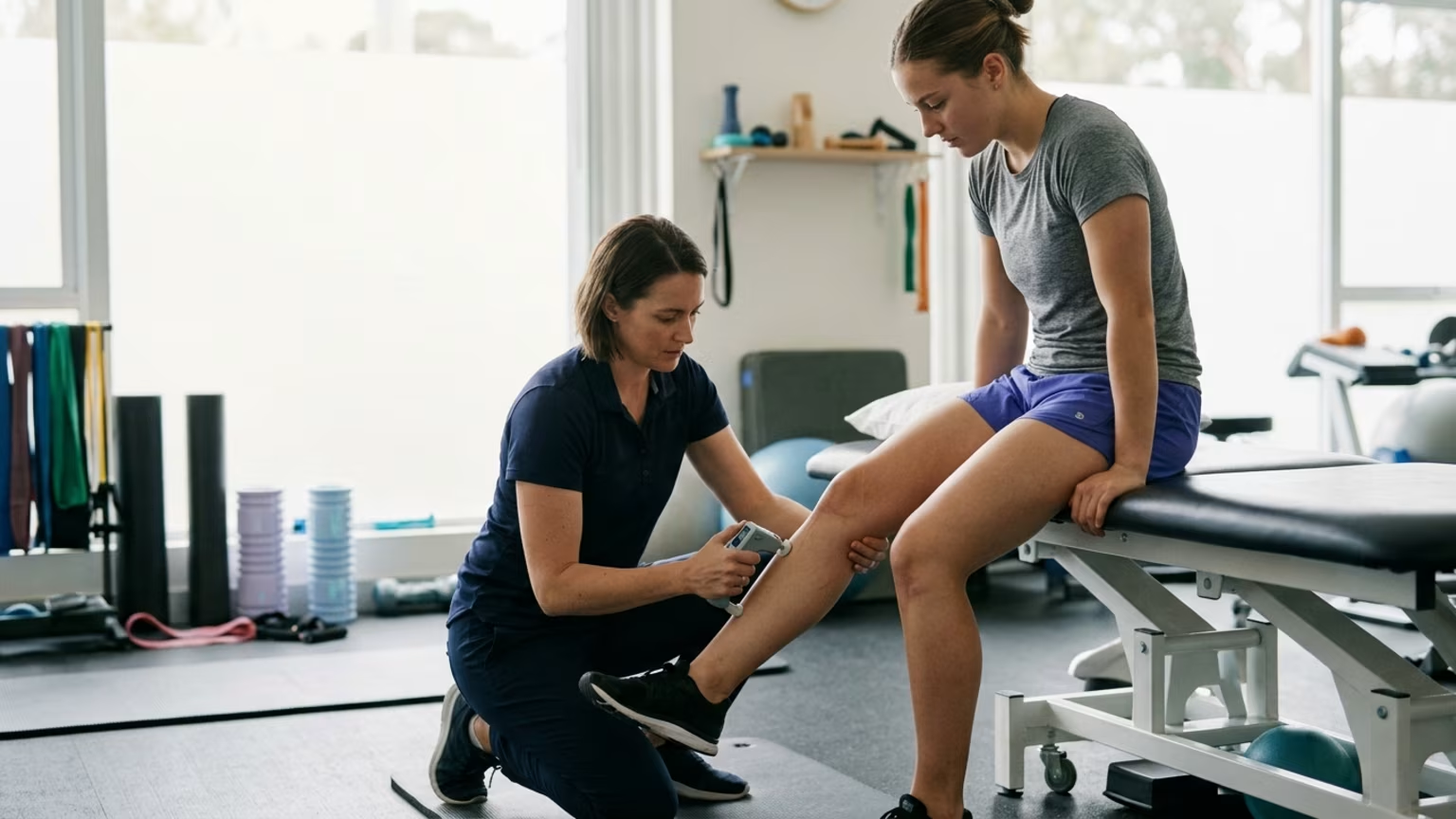
The latest evidence adds specific clinical data to these natural recovery expectations. Biology Insights summarized a notable physical therapy trial to evaluate conservative treatment effectiveness. In this trial, 79 percent of participants receiving physical therapy alongside general practitioner care reported improvement at twelve months. This result compared favorably with the 56 percent of participants receiving general practitioner care alone.
This data highlights the potential value of structured movement, although it represents one specific study outcome rather than a universal guarantee. The recent publications also clarify the limited role of pharmaceutical options during the recovery window. Biology Insights reported that medications may help manage symptoms, but the publication identified no pill that directly speeds disc resorption or nerve repair.
The review pointed out that evidence supporting several common drug classes remains notably limited. It also noted that adverse events were more common with active drugs than with placebos in the data reviewed. Therefore, patients should view medication strictly as a tool for temporary symptom management.
Alongside the conservative recovery data, clinical guidance for persistent cases also saw significant updates. On September 22, 2026, AO Spine issued clinical practice recommendations outlining specific surgical criteria. The organization conditionally recommends discectomy for some patients with imaging-confirmed lumbar disc herniation and persistent radicular symptoms. The guidelines state this approach offers greater and more durable improvement in pain and physical function compared with nonoperative care for that specific group.
Additionally, a related PubMed record established that decompression within three days should be the goal for moderate-to-severe motor weakness. This specific timeframe highlights the urgency required when nerve compression causes significant motor deficits. Such clinical guidelines ensure that patients with severe complications receive appropriate care rather than passively waiting for natural resorption.
This compiled evidence applies specifically to individuals diagnosed with imaging-confirmed lumbar disc herniation and disc-related sciatica. The AO Spine surgical recommendations focus narrowly on patients who have persistent radicular symptoms or severe motor complications. The data regarding immune-mediated disc resorption applies to those with physical disc material directly irritating a nerve.
Readers must note that the term sciatica describes a broad symptom pattern rather than a single distinct medical diagnosis. Biology Insights lists other potential causes of these leg symptoms, including spinal stenosis and piriformis syndrome. People suffering from those alternative conditions would not necessarily follow the biological recovery process outlined in the recent research. A bone spur resulting from spinal stenosis does not reabsorb through the macrophage activity detailed in the PMC article.
Therefore, the timeline of weeks to months cannot be generalized to every person experiencing radiating leg pain. The physical therapy trial results also reflect outcomes for a specific study population in a defined clinical setting. These findings should never be interpreted as a guarantee that every person will see identical improvements from physical therapy.
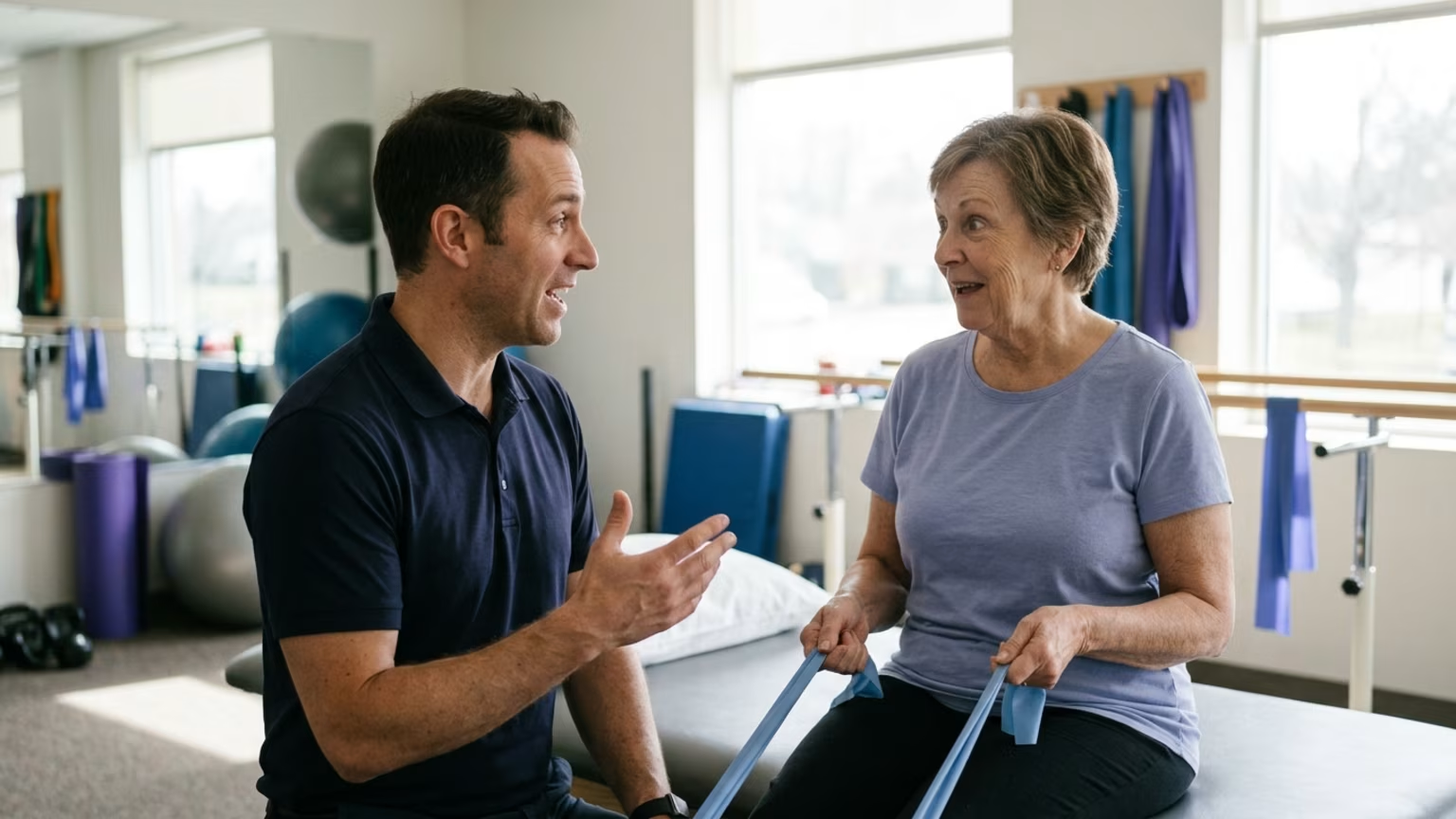
For active adults navigating a physical setback, these clinical updates offer a framework for setting realistic expectations. Biology Insights states that many cases improve over weeks to months, providing a broad window for natural healing. The primary goal during this waiting period is maintaining tolerable function and actively avoiding prolonged inactivity.
The available evidence does not outline a single universally tested exercise prescription for everyone to follow. Instead, conservative management can help people find safe ways to stay moving while the body does its work. A crucial takeaway for readers is the frequent disconnect between medical imaging and daily pain levels. Improvement in pain does not always demonstrate that an MRI abnormality has completely disappeared.
The Biology Insights article clearly states that symptoms may improve even before the disc visibly changes shape on a scan. This means that achieving a perfectly clean MRI is not a strict requirement for feeling better or resuming activity. Understanding how early inflammation helps tissue repair clarifies why the nerve might calm down while the disc remains visibly unchanged.
The guidance to remain active comes with clear safety boundaries that readers must respect. Moving to preserve daily function should never mean ignoring new or worsening neurological problems. The Biology Insights review advises further diagnostic evaluation for symptoms that fail to follow a typical recovery pattern. Readers must seek immediate medical assessment for bilateral leg pain, progressive weakness, or any bowel or bladder changes.
These specific warning signs indicate that the situation may require immediate clinical intervention rather than continued patience.
Despite a clearer understanding of localized inflammation, exact individual recovery timelines remain highly unpredictable. The medical community still cannot perfectly predict when inflammation will settle for any given individual. Biology Insights reports that about 20 to 30 percent of people may have lingering symptoms after one or two years. Clinicians lack a foolproof method to determine which patients will fully reabsorb the disc material and which will experience persistent issues.
The precise reported rates of disc resorption differ based on disc morphology, confirming there is no single universal prognosis. The exact magnitude of benefit from physical therapy in milder cases also remains a subject of ongoing study. Biology Insights characterizes physical therapy as potentially more helpful for people with greater initial disability.
The publication notes that the underlying meta-analysis for physical therapy had wide confidence intervals, leaving the size of the average benefit uncertain. This statistical variance means the expected outcome for someone with only mild symptoms is much harder to firmly quantify. Understanding inflammation after injury is helpful, but it does not remove the uncertainty from the rehabilitation process.
Furthermore, the search for a comprehensive and universally effective medication protocol is still ongoing. The current evidence does not establish a definitive medical guideline that dictates patient-specific prescribing for nerve repair. Healthcare providers must weigh the limited evidence for various drug classes against the potential for adverse side effects. This lack of a clear pharmaceutical solution leaves symptom management highly dependent on individual trial and careful observation.
The medical field continues to search for better ways to support the body during this extended recovery window.
Healing from localized nerve irritation requires a challenging balance of steady patience and careful daily observation. Trusting the body to gradually clear displaced material takes time, and the physical path forward is rarely a straight line.
Determining how to safely rebuild your fitness routine after sciatic nerve inflammation settles requires careful, structured progression. ReboundBody addresses the uncertainty about the transition from formal rehabilitation back to normal activity, helping you regain your physical capacity without overstepping realistic biological limits.

Follow ReboundBody for practical articles on injury recovery, rehabilitation, mobility and rebuilding strength. New posts turn research into clear ideas for the road back to activity after injury or surgery.




Read practical guidance on injury recovery, rehabilitation, mobility and rebuilding strength as you work your way back to activity.
Explore Resources