

Understand the difference between early tissue inflammation and persistent fibrosis, and why joint stiffness does not automatically mean permanent scar tissue.





In late 2026, the Blue Portance Knowledge Base published a detailed article on fascia inflammation and fibrosis. The publication clarified the crucial difference between a helpful early healing response and persistent tissue restrictions. It highlighted that inflammation is a necessary reaction to actual tissue injury rather than a negative consequence of ordinary physical loading. This specific finding helps separate normal tissue repair from the excessive tissue buildup seen in pathological conditions.
For decades, active adults have viewed any swelling or heat around a joint as a problem to be eliminated. Many people believed that inflammation only caused pain and delayed their return to normal activity. Previous guidance sometimes encouraged patients to aggressively suppress this natural process. This led to widespread confusion about what physical recovery should actually feel like.
Patients frequently assumed that any lingering stiffness meant permanent scar tissue had formed in their joints. People commonly grouped all structural changes under broad labels without understanding the underlying biology. They worried that restricted movement was definitive proof of deep anatomical adhesions. As a result, many adults sought out intense manual therapies to break up suspected scar tissue.
The 2026 Blue Portance article offers a clearer picture by presenting tissue repair as a sequence of overlapping stages. Rather than a single event, healing requires an organized series of biological shifts. Each phase relies on the successful completion of the one before it to build stable, functional tissue over time.
The healing process begins with an early inflammatory phase that serves a very specific biological purpose. During this initial window, local vascular permeability increases to allow fluid and healing factors to reach the damaged area. This early inflammation helps recruit specialized cells to the injury site. These recruited cells then organize the entire repair process, clearing away damaged material and preparing the ground for new growth.
Following this initial stage, the body enters a proliferation phase where new structural materials are built. During this active period, fibroblasts become highly active and begin producing a new extracellular matrix. This matrix bridges the physical gap in the damaged tissue and creates a biological scaffold. The proliferation stage is absolutely essential for generating the raw materials needed for long-term recovery.
Finally, the tissue enters a much longer remodeling phase. During this extended period, the newly produced matrix is carefully reorganized to handle physical stress better. The body slowly aligns the tissue fibers to match the typical mechanical demands placed on the joint or muscle. This phase can take considerable time, and patience is required as the tissue gradually regains its normal function.
The central distinction in the Blue Portance article is the clear difference between a time-limited repair response and a pathological process. Normal healing has a definitive beginning and end, while fibrosis involves persistent and excessive matrix accumulation. The article specifically describes fibrosis as an abnormal form of remodeling that can severely disrupt normal tissue structure and function. It represents a specific cellular misstep rather than a general term for post-workout tightness.
Crucially, the article cautions that stiffness or reduced mobility alone does not establish a diagnosis of fibrosis. Many people experience joint tightness or restricted movement for reasons completely unrelated to permanent structural changes. For example, simple fluid accumulation or temporary protective guarding by the nervous system can limit how far a joint moves. The publication explicitly notes that densification, adhesions, scars and fibrosis denote completely different physiological states.
They are not interchangeable concepts, and using them loosely can cause patients unnecessary panic. Furthermore, the Blue Portance article warns against assuming that temporary movement restrictions always reflect a deep anatomical adhesion. It also points out that experiencing improved mobility after a manual treatment does not prove an adhesion was physically broken. Temporary improvements in range of motion often relate to changes in fluid dynamics or neural tolerance rather than the literal breaking of hard scar tissue.
This biological framework applies specifically to people who have experienced an actual tissue injury. It is highly relevant for adults recovering from orthopedic surgery or significant physical trauma. The Blue Portance article focuses on how the body responds to structural damage rather than typical muscle fatigue. It does not describe the normal physical response to a standard workout or general physical labor.
For individuals navigating the transition from hospital care back to daily life, this information provides realistic expectations for the healing journey. It speaks directly to patients managing the sensitive period between early clinical care and independent rehabilitation. The evidence is not meant for people seeking to prevent everyday muscle soreness. It strictly addresses the defined cellular repair process that follows a verifiable physical setback.
For active adults trying to regain their strength, the most practical message is to avoid treating all inflammation as inherently harmful. The early swelling around a new injury is actively organizing your body for structural repair. Attempting to shut down this process completely may interfere with the recruitment of vital healing cells. Understanding this underlying biology allows you to view early swelling as a functional step rather than a failure of your recovery.
You should also avoid self-diagnosing true fibrosis simply because a joint feels stiff or restricted on any given day. Morning tightness or mild discomfort during movement does not automatically mean your tissues are permanently glued together. Recognizing that normal healing involves temporary stiffness can help significantly reduce anxiety during your rehabilitation. This realistic perspective is especially helpful during physical therapy progress reviews, where mobility measurements naturally fluctuate.
The Blue Portance article also emphasizes that physical loading is not inherently harmful to healing tissue. Your body needs appropriate mechanical signals to guide the remodeling phase effectively. However, the actual effects of loading depend heavily on its intensity, direction, frequency, and your current stage of healing. Moving too aggressively during the early inflammatory phase can disrupt the fragile new matrix, while avoiding movement during the remodeling phase can leave the tissue weak.
Because these variables matter so much, a well-timed, gradual return to movement safely supports your long-term recovery. Returning to physical hobbies requires carefully matching your physical activity level to the correct phase of tissue repair. You must evaluate the intensity of your exercise, the direction of the physical stress, and how frequently you apply that load.
While this three-phase model of tissue repair is incredibly useful, the Blue Portance article notes that it is only a general framework. The actual duration, overall intensity, and specific cellular participants vary drastically from person to person. Healing responses change significantly depending on the specific type of tissue involved, the severity of the initial injury, and varying mechanical conditions. Because of these complex variables, the exact timeline of tissue repair remains highly unpredictable for any given individual.
The available evidence does not establish a universal rehabilitation timeline that applies cleanly to all orthopedic injuries. A muscle strain will progress through these phases at a completely different rate than a torn ligament or a surgical incision. Furthermore, there is no specific exercise prescription proven to optimize the tissue remodeling phase for every patient. Researchers are still studying how different connective tissues respond to varied physical loads over extended periods of time.
Until more definitive data emerges, physical recovery will continue to require a highly individualized, adaptable approach. Additionally, the current research does not identify a single, specific treatment that reliably prevents or reverses true fibrosis once it occurs. If pathological remodeling and persistent matrix accumulation do happen, clinical options for completely clearing that excessive tissue remain limited. The medical and scientific community continues to investigate how persistent inflammatory signaling might be safely managed in the future.
If you are currently recovering from an injury, track your joint mobility over several weeks rather than evaluating it daily. Because normal stiffness fluctuates based on recent activity and minor swelling, day-to-day tightness is a poor indicator of permanent tissue changes. Write down your comfortable range of motion once a week to clearly see your actual healing trend.
Accurately interpreting your daily joint stiffness instead of forcefully trying to break up suspected scar tissue protects delicate healing structures from unnecessary physical stress. ReboundBody resolves the conflicting online claims about recovery tools, exercises, nutrition and treatment options, helping you distinguish a normal biological repair process from permanent structural restrictions.

Follow ReboundBody for practical articles on injury recovery, rehabilitation, mobility and rebuilding strength. New posts turn research into clear ideas for the road back to activity after injury or surgery.


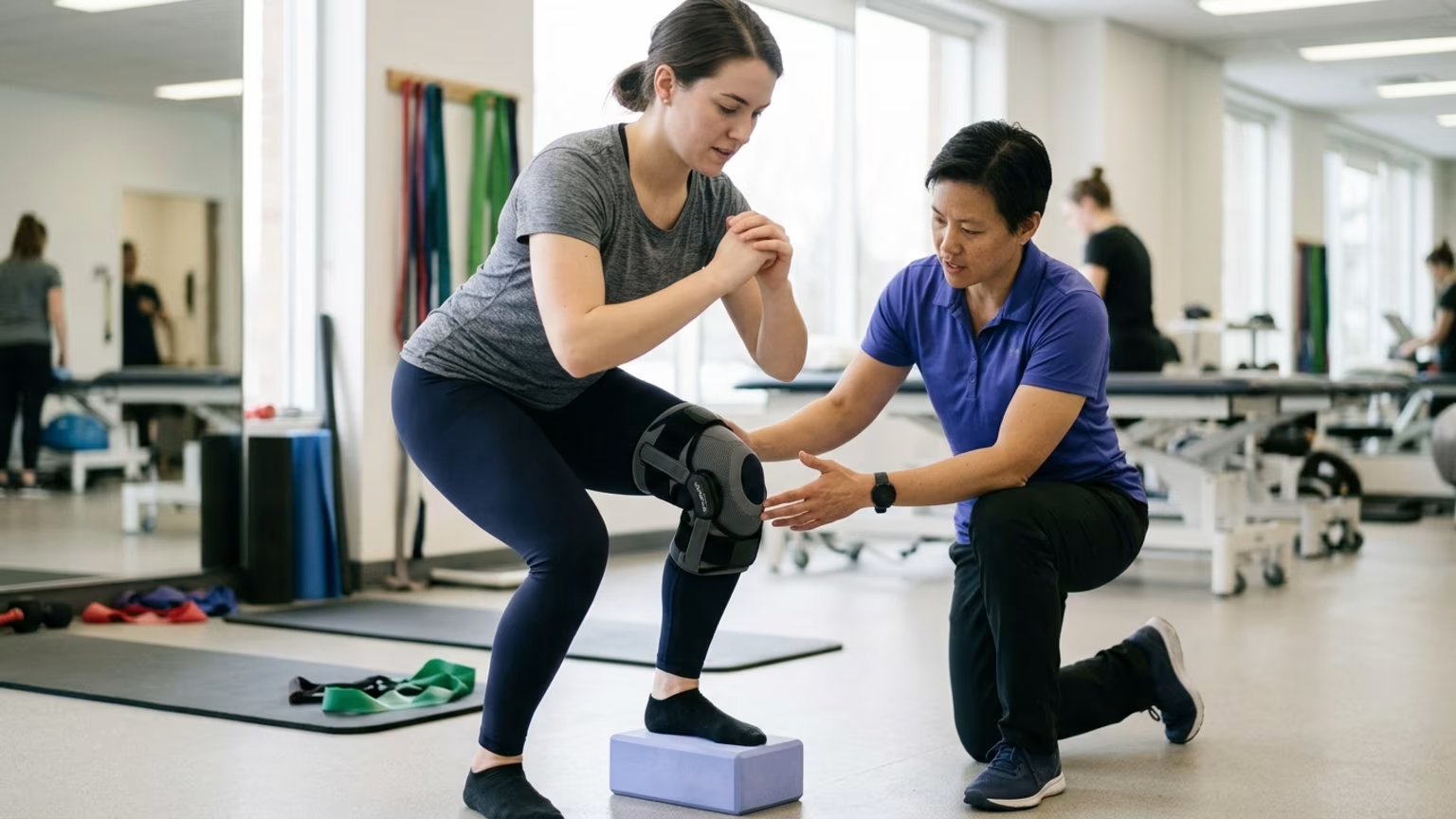



Read practical guidance on injury recovery, rehabilitation, mobility and rebuilding strength as you work your way back to activity.
Explore Resources