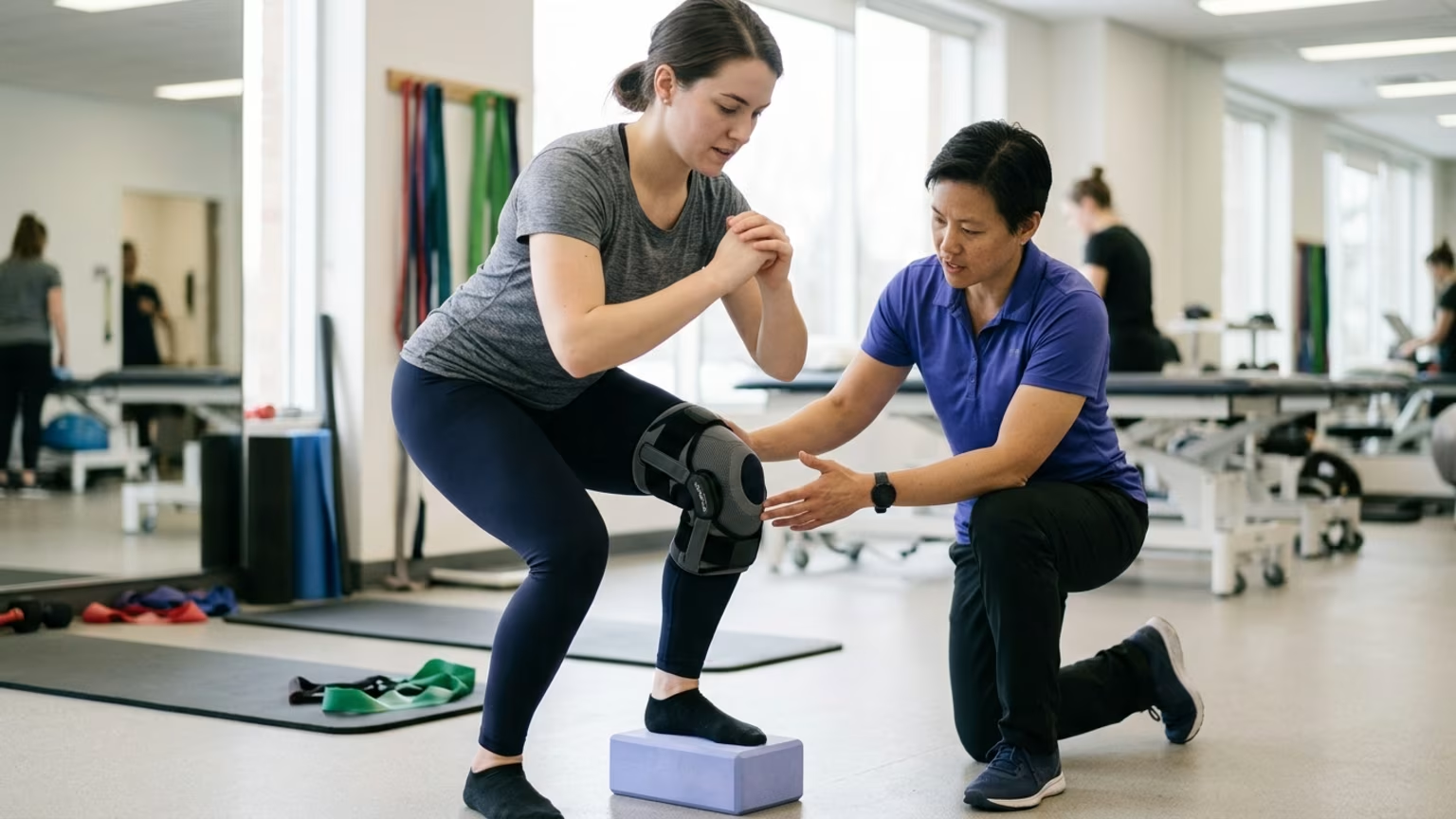

A recent randomized trial shows supervised physiotherapy can speed up short-term symptom and strength improvements for adults with persistent knee problems.





Recovering from a major joint operation is rarely a completely straight line. Many people assume they will return to full physical capacity as soon as their initial clinical milestones are met. Unfortunately, persistent physical limitations can sometimes linger for months or even years. When these setbacks happen, active adults often wonder if they should return to professional rehabilitation.
In late 2026, new clinical data offered some clarity on this exact question. The Annals of Internal Medicine published a randomized clinical trial named the SUPER-Knee study. This trial examined young adults who were still experiencing ongoing knee problems 9 to 36 months after anterior cruciate ligament reconstruction. The researchers wanted to measure how a highly structured rehabilitation program compared against independent exercise.
To appreciate these findings, it helps to look at how post-surgical recovery is typically handled. Most medical attention focuses heavily on the initial healing phase. Patients usually complete a standard physical therapy protocol during their first few months of recovery. After that initial window closes, many individuals transition entirely to self-directed workouts.
According to reporting by MedicalXpress, this trial was the first assessment of exercise-based rehabilitation and education more than nine months after ACL surgery. Prior to this study, there was very little specific data comparing supervised and independent exercise this late in the recovery timeline. Patients had to rely mostly on early-stage recovery protocols to guide their late-stage decisions. This lack of long-term data can make it difficult to plan a safe return to normal activities.
When symptoms persist for years, people often question if they have permanently plateaued. They might feel unsure if they are simply doing the wrong exercises at home. Addressing strength imbalances after injury without guidance can feel overwhelming. The introduction of specific data for this delayed recovery window helps clear up some of that confusion.
The researchers split 184 participants evenly into two separate groups. The first 92 participants were assigned to a highly structured program. This group received four months of physiotherapist-supervised exercise twice a week alongside educational sessions. The remaining 92 participants were assigned to a comparison group.
This second group received just one educational session. They were then given resources to manage a self-directed exercise program on their own. By comparing these two distinct approaches, the trial aimed to see if professional supervision actually changed the recovery timeline. To gauge physical progress, the study relied on the KOOS-4 score.
This specific scale reflects knee symptoms and overall joint function. Higher scores on this assessment indicate better physical status and reduced symptoms. The primary measurement for this trial was taken at the four-month mark. At four months, the supervised group saw their KOOS-4 score improve by 14.1 points.
In contrast, the comparison group improved by 9.4 points. This resulted in a reported between-group difference of 4.8 points. Trial coverage noted that the supervised group experienced greater short-term improvements in knee symptoms. They also demonstrated faster gains in thigh-muscle strength and overall quality of life during this window.
While the initial gap was notable, the outcome data looked slightly different a few months later. By the 12-month mark, the group differences in these KOOS scores became much closer. The early advantage of the therapist-led program narrowed as the self-directed group continued to improve. At 12 months, the supervised group showed a 15.8-point change from their baseline.
Meanwhile, the comparison group reached a 14.5-point improvement. This narrowing gap suggests that the central benefit of the supervised program is faster short-term relief. It does not necessarily prove that professional supervision produces a massive, permanent functional advantage over independent management. Both paths ultimately led to improved physical outcomes.
Understanding the exact demographics of a clinical trial is essential for interpreting its results. The results of this study directly concern adults between the ages of 18 and 40. Every single person in this group was actively dealing with persistent knee problems. They were enrolled specifically because they were 9 to 36 months out from their reconstruction procedure.
These specific parameters mean the findings should not be applied to every single orthopedic patient. The results do not serve as direct evidence for older adults over the age of 40. They also should not be generalized to individuals recovering from different joint operations. Finally, the data does not apply to patients who are recovering smoothly without persistent symptoms.
Applying research to your own physical rehabilitation requires careful attention to these boundaries. If you are outside the 18 to 40 age bracket, your body might respond differently to a rigorous, twice-weekly exercise program. Your joint tissues and metabolic recovery rates change as you get older. The trial specifically looked at one type of ligament reconstruction, so the findings only reflect the physiological responses associated with that specific procedure.
If your physical limitations have persisted long after your surgery, this trial offers valuable perspective. It demonstrates that returning to a structured, physiotherapist-supervised program can speed up your physical improvements. You do not necessarily have to accept persistent limitations as a permanent reality. This is an important concept when you are understanding the latest evidence on exercise therapy.
If you are struggling to return to your normal routine, you should speak with your treating clinician. You can ask them if your current symptoms warrant a thorough reassessment. They might suggest a progressive rehabilitation plan that aligns with this new research. However, remember that the trial does not establish that its exact twice-weekly program is suitable for every individual.
When planning your next steps, it helps to establish realistic expectations for both the short and long term. The study showed that supervised therapy works faster over the first few months. However, the self-directed group continued to make steady progress as the year went on. This means you have to consider how quickly you need to reach your physical goals.
If you need to return to demanding activities quickly, supervised physical therapy might be the best route. If you have a more flexible timeline, a home-based program might be perfectly adequate. These timelines can heavily influence what to do after physical therapy ends. Your personal schedule and physical goals should guide this decision alongside your clinician's advice.
While the functional improvements were clear, questions remain regarding structural changes inside the joint. The available reports indicated that cartilage thickness did not differ between the two groups at follow-up. La Trobe lead researcher Adam Culvenor stated that participants improved outcomes and muscle strength without deterioration in knee cartilage. This is a positive note for the safety of the program.
However, you must be careful not to overstate what this cartilage data actually means. Maintaining cartilage thickness over a short period does not establish that exercise definitively prevents knee osteoarthritis. The reports only describe these initial measurements, not a demonstrated reduction in long-term arthritis incidence. Therefore, this structural finding does not ensure total cartilage protection for the rest of your life.
Another key area of uncertainty relates to the absolute necessity of professional supervision. The trial compared a structured supervised program against education and self-directed exercise. Because the self-directed group also experienced notable improvements, the findings do not show that supervision is universally required. Home exercise clearly is not ineffective.
This evidence simply highlights that professional oversight can provide a faster initial trajectory. You must evaluate these findings against your own physical needs, schedule, and available resources. Physical recovery is a detailed process that extends far beyond the initial healing phase. Clinical studies like this one help outline the realistic benefits of continued professional support.
By understanding how structured programs influence the speed of your improvement, you can make more informed decisions about your ongoing physical rehabilitation. Whether you choose clinical supervision or a home routine, gradual progression remains essential for rebuilding strength after a long period of inactivity. The most important step is finding a safe path forward that keeps you moving consistently.
Choosing between structured professional supervision and independent physical routines can be challenging when your physical symptoms persist for months. ReboundBody addresses the conflicting online claims about recovery tools, exercises, nutrition and treatment options by separating broad clinical data from realistic physical limits. We provide the independent context required to understand your options, so you can confidently discuss the safest next steps with your qualified healthcare professionals. Browse Resources

Follow ReboundBody for practical articles on injury recovery, rehabilitation, mobility and rebuilding strength. New posts turn research into clear ideas for the road back to activity after injury or surgery.




Read practical guidance on injury recovery, rehabilitation, mobility and rebuilding strength as you work your way back to activity.
Explore Resources