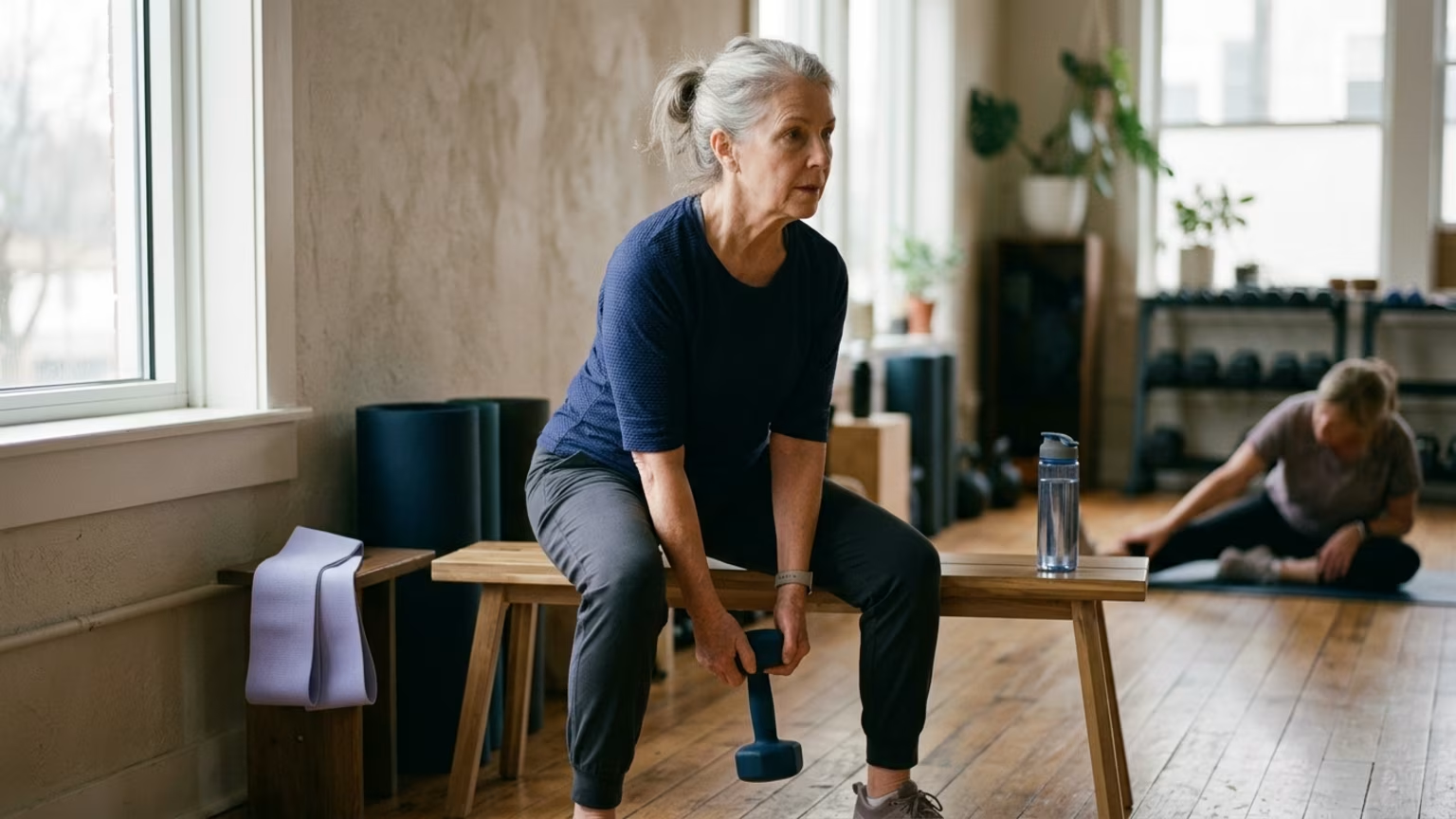

A practical look at a five-exercise routine for maintaining strength as you age. Learn how hip power, balance, and grip strength support long-term mobility.





In early October 2026, the publication Men's Health UK profiled a specific approach to preserving physical capability over time. The feature highlighted Jeff Sutherland, a 54-year-old trainer and founder of the Midlife Fit Club. Sutherland outlined his personal five-exercise routine designed to maintain strength and functional capacity as people age. His regimen includes brisk walking, bodyweight squats, and kettlebell swings. He rounds out the weekly routine with push-ups and pull-ups.
Sutherland states that this particular selection of fundamental movements covers several essential physical demands. He notes that the exercises address cardiovascular conditioning, lower-body strength, and explosive hip power. Furthermore, the trainer explains that his routine builds pushing strength, core stability, and vital grip power. The magazine presented this focused routine as a highly practical way to stay athletic and capable for everyday life.
The article positions this routine as a strategy to keep doing enjoyable activities for as long as possible. Simplifying a fitness plan into five pillars makes long-term adherence more manageable for busy adults. Sutherland treats these exercises as the cornerstone of his personal health maintenance plan.
The necessity of maintaining physical capacity is evident when reviewing existing public health data regarding older adults. The Centers for Disease Control and Prevention notes that more than one in four adults aged 65 and older falls each year. This striking statistic highlights a significant physical vulnerability in aging populations. Furthermore, experiencing a single fall doubles a person's chances of falling again in the future.
These incidents frequently lead to serious medical consequences that threaten long-term physical independence. The agency reports that about 37 percent of older adults who fall sustain a meaningful injury. These injuries often require direct medical treatment or restrict daily activity for at least one day. Additionally, falls cause approximately 4.5 million emergency department visits annually across the country.
The physical consequences of a loss of balance can severely alter a person's quality of life. Hospitalizations for severe injuries like hip fractures create long and difficult recovery timelines for older individuals. Recognizing these risks is the first step toward implementing proactive physical maintenance strategies. The medical community widely recognizes the importance of addressing these physical vulnerabilities early.
To combat these significant health risks, federal agencies provide broad recommendations for ongoing physical maintenance. The National Institutes of Health maintains dedicated fall-prevention guidance specifically for older adults. The agency points out that balance exercises can help prevent falls and improve overall body stability. The guidance also notes federal recommendations for performing muscle-strengthening activity at least two days a week.
The recent fitness feature translates these broad national guidelines into one trainer's highly personal routine. The magazine article reports that explosive hip power typically declines as people get older. Maintaining this specific kind of physical power is critical for preserving everyday mobility. It also enables the rapid physical reactions that can help prevent falls when a person loses their balance.
Sutherland uses kettlebell swings specifically to build and maintain this essential hip power over time. He describes the dynamic movement as a powerful way to train his core, hamstrings, glutes, and grip. By driving the weight forward with his hips, he actively trains the rapid muscle contractions necessary for athletic movement.
The article also touches extensively on cardiovascular health through the simple habit of brisk walking. It reports that people averaging around 7000 steps daily have a significantly lower risk of premature death. According to the reported research claims, accumulating 7500 to 10000 steps daily yields the lowest overall early-death risk. Sutherland notes that regular walking supports his heart health while also helping to clear his mind.
Upper body capacity represents another major component of the featured maintenance routine. The publication reports that research suggests grip strength reliably predicts overall health and longevity in adults. Sutherland incorporates pull-ups to directly address this gripping capacity and promote healthy overhead movement. He personally considers pull-ups to be the absolute best bodyweight exercise for building a strong back.
He completes his weekly routine with push-ups for fundamental pressing strength. Bodyweight squats are also included to keep his legs strong and capable for normal everyday tasks. Squats directly mimic the motion of standing up from a low chair or safely picking items off the ground. Together, these exercises provide a comprehensive approach to general physical maintenance.
This five-pillar routine directly represents the personal fitness choices of an active 54-year-old professional. It is presented in a commercial fitness feature rather than a newly issued clinical guideline or formal medical protocol. No independent rehabilitation specialists, physical therapists, or clinicians evaluated the specific program in the retrieved publication. The routine is primarily relevant for active aging adults looking for general movement and prevention strategies.
The cited public health statistics regarding fall risks apply specifically to adults aged 65 and older. These specific incident rates should not be automatically assumed to represent identical risks for younger adults. A person in their late thirties faces different immediate physical risks than a person in their seventies. However, building strength early can help mitigate future physical decline.
The routine itself serves as a general maintenance plan for generally healthy individuals. It is not an established clinical pathway for staying active as you age following a severe injury. Readers should view this routine as merely one trainer's preferred method for staying strong and athletic over time. The article does not firmly establish whether these exact movements are appropriate for every single individual.
Furthermore, the feature lacks clear guidance on how to safely begin if a person has been completely inactive. The program is inherently designed for an individual who already possesses a solid baseline level of physical capability. Attempting high-impact kettlebell swings without prior instruction poses clear physical risks for untrained individuals.
Active adults can use this article as a helpful conceptual prompt to evaluate their own physical capacities. Maintaining walking tolerance, foundational leg strength, and grip power are highly practical goals for daily living. A structured approach to rebuilding muscle power with age can effectively support long-term mobility. Focusing on fundamental human movements often provides the best return on your physical effort.
However, adopting a general fitness plan is never an adequate substitute for prescribed clinical rehabilitation. Individuals currently recovering from an orthopedic injury must carefully account for their specific symptoms and clinical restrictions. The featured article does not supply injury-specific exercise substitutions, regression options, or gradual progression rules. You must navigate those complex decisions with the help of a qualified medical professional.
The National Institutes of Health clearly supports routine muscle-strengthening work for aging adults. However, the agency does not strictly mandate Sutherland's exact exercise selection for achieving those health benefits. You can build leg strength and hip power through many different exercises that might better suit your current joints.
For adults aged 65 and older, proactive fall prevention is a highly relevant subject to raise with a doctor. A clinical team can help you design a customized routine that safely addresses your specific mobility limitations. They can ensure you choose specific movements that protect your healing joints while gradually increasing your physical capacity. Building a truly sustainable plan requires aligning your daily exercise choices with your current medical realities.
Understanding what recovery actually rebuilds can help you set realistic expectations for your physical progress. Strength training and neuromuscular balance work require highly consistent effort over long periods of time. Sutherland's firm commitment to five fundamental exercises demonstrates the undeniable value of simplicity in a long-term routine. A clearly focused approach often yields better physical results than constantly changing your fitness plan.
Several aspects of this featured routine lack formal clinical validation for broader, untrained populations. The magazine article reports a strong association between daily step counts and lower premature death risk. However, it does not provide the underlying study details needed to properly assess the research design or participant demographics. The specific scientific studies supporting the grip strength and explosive hip power claims are also omitted from the publication.
Furthermore, the fitness feature does not supply defined progression criteria for safely advancing the exercises. It offers absolutely no guidance for people currently managing joint pain, balance limitations, or post-operative restrictions. A general goal of fall prevention does not mean that dynamic kettlebell swings or pull-ups are safe for every person. The safest path forward remains completely uncertain for anyone attempting these movements without formal medical guidance.
The federal public health guidance clearly supports basic strength and balance training as relevant prevention components. However, this broad consensus does not validate Sutherland's specific five-exercise selection as the only acceptable path to health. It remains unclear how heavily an individual should prioritize demanding pull-ups if they lack basic shoulder mobility. The best way to safely modify these movements for restricted populations continues to depend entirely on individualized clinical advice.
The recent magazine feature profiling Jeff Sutherland provides a clear picture of one man's dedication to physical longevity. His firm focus on five fundamental movements highlights a straightforward path to maintaining cardiovascular health, grip strength, and hip power. These basic physical capacities remain critical for successfully navigating the daily demands of life as we age.
While stark public health data underscores the severe consequences of falls, it also points toward proactive, manageable solutions. Strength and balance training offer highly practical ways to protect our physical independence over time. Sutherland's Midlife Fit Club approach serves as an excellent reminder that consistency in basic movements often matters more than complexity. Ultimately, finding a sustainable physical routine that fits your own reality is the most important step in lifelong movement.
Adopting a generalized fitness routine without accounting for specific joint limitations can easily result in unnecessary physical setbacks. Conflicting online claims about recovery tools, exercises, nutrition and treatment options make this transition even harder, but ReboundBody provides the clear editorial context required to navigate these choices. The publication helps active adults understand realistic recovery timelines, empowering them to make informed decisions with their clinical teams. Browse Resources

Follow ReboundBody for practical articles on injury recovery, rehabilitation, mobility and rebuilding strength. New posts turn research into clear ideas for the road back to activity after injury or surgery.




Read practical guidance on injury recovery, rehabilitation, mobility and rebuilding strength as you work your way back to activity.
Explore Resources