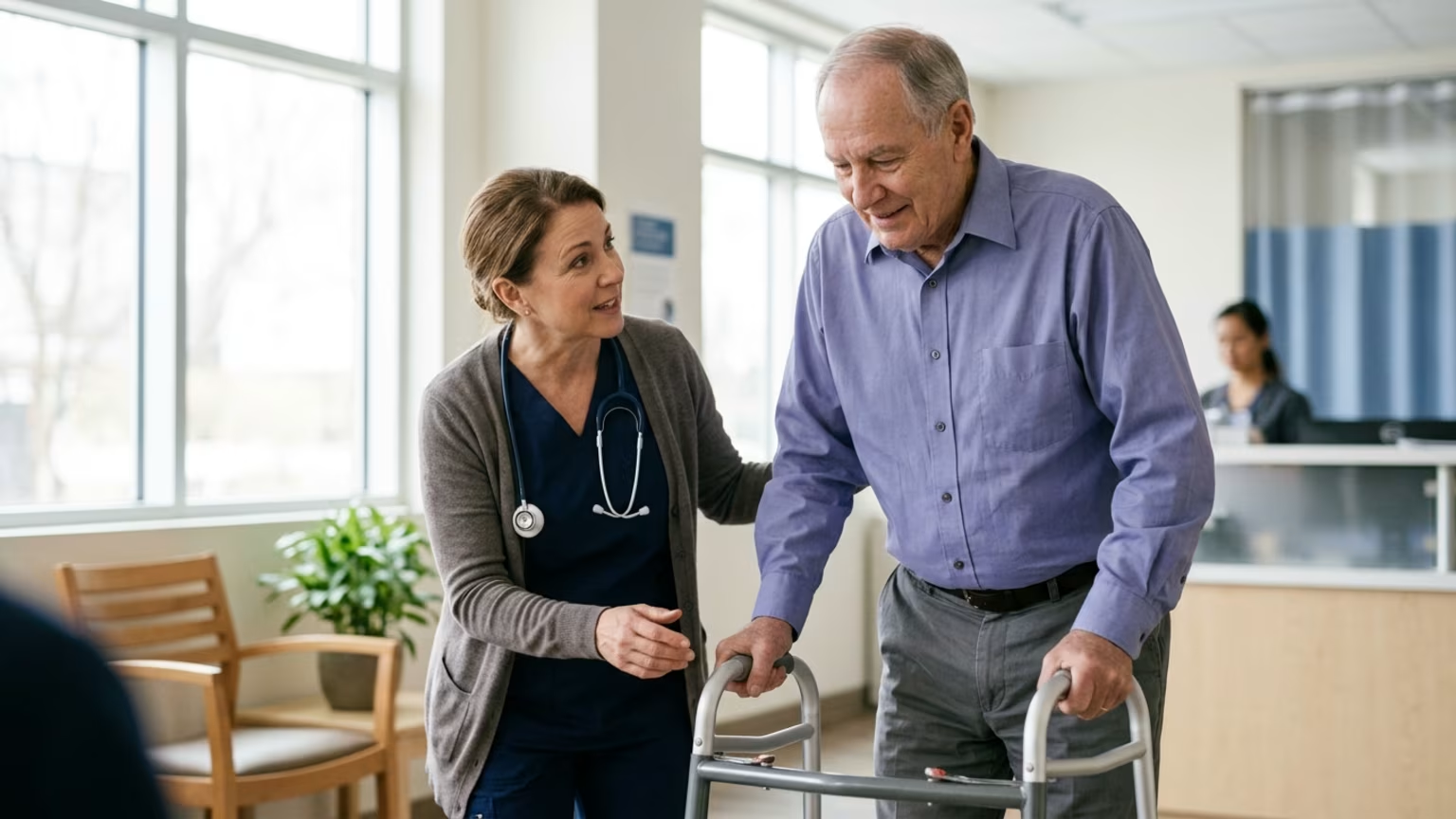

The AMA’s 4Ms framework helps active adults make mobility discussions practical. Learn how defining everyday function improves physical recovery planning.





On October 5, 2026, the American Medical Association published an article explaining what age-friendly care means for older adults. The publication details the Age-Friendly Health Systems initiative and its core structure. This system relies on a model known as the 4Ms framework. The pillars of this model are What Matters, Medication, Mentation, and Mobility.
The framework is intended to consider these four areas together in support of healthy aging. This shift provides a more comprehensive way to view patient health. It asks medical providers to look beyond isolated symptoms to understand how health factors interact. For patients focused on rehabilitation, this model elevates physical movement in routine medical care.
This structured effort ensures that medical visits address the whole person. The initiative connects physical health directly to mental well-being and medication side effects. For years, active adults have had to manage these overlapping issues on their own. The 4Ms framework formally brings that responsibility back into the primary clinical setting.
Medical care has historically leaned heavily toward treating specific diseases. Patients recovering from an orthopedic injury often receive treatment plans that isolate a single joint. The AMA states that the 4Ms are not meant to compete with disease-specific care. Instead, they provide a framework for bringing essential care elements together around the patient.
This compartmentalized approach to medicine often leaves patients feeling disconnected from their own healing process. A surgeon might repair a torn ligament perfectly, but the patient might still struggle to safely walk down their driveway. Integrating physical function with general healthcare represents a necessary evolution in patient care. It recognizes that true healing requires more than just biological repair.
The scale of this shift is visible in recent industry adoption. A September 2026 report from Dartmouth highlights the growing reach of this structured medical approach. The report quotes geriatric-care researcher Terry Fulmer as saying the 4Ms framework had been adopted in more than 6,000 care locations across more than 12 countries.
Institutional support continues to drive the expansion of this care model. The same Dartmouth report says the framework had been picked up by the Centers for Medicare & Medicaid Services. The report notes this adoption serves as a required attestation measure. As major organizations embrace these priorities, patients will experience more structured mobility conversations.
The AMA article expands the traditional clinical view of human movement. The AMA describes mobility as much more than simply walking. It includes getting out of bed, bathing, shopping, and navigating the community safely. The definition also covers using the bathroom and performing other daily routines.
This shift in perspective is highly valuable for adults managing long-term physical setbacks. When doctors measure progress by your ability to comfortably visit a local store, your rehabilitation targets become tangible. You are no longer just trying to improve a joint angle on a clinical chart. You are actively working toward regaining your normal rhythm of life.
This broader definition prompts clinicians to offer highly practical solutions for physical limitations. The AMA notes that mobility discussions might cover physical activity and fall prevention. They may also include the use of canes, walkers, grab bars, or physical therapy. The guidance states that patients should choose these supports with an appropriate health professional.
Linking movement to other health factors reveals a deeper understanding of physical capacity. The framework asks providers to consider how cognitive states or medications might impact steadiness. A medication that causes dizziness directly threatens a patient's ability to walk safely. Treating mobility as a foundational health pillar makes these hidden barriers easier to address.
This care model targets the evolving needs of older adults navigating physical changes. Fall prevention serves as a critical focus area when assessing safe movement. The Centers for Disease Control and Prevention reports that falls among adults aged 65 and older caused more than 43,000 deaths in 2024. The CDC notes these falls led to roughly 4.5 million emergency-department visits that year.
While these statistics reveal significant concerns, the guidance requires careful application. The fall figures apply specifically to adults aged 65 and older. They should not be used as direct estimates for younger adults managing post-surgical rehabilitation. For practical prevention guidance, the National Institutes of Health recommends physical activity and medication management.
The NIH also suggests vision checks and making the home safer to help prevent falls. The NIH recommendation to try for at least 150 minutes of physical activity per week is general guidance in its falls-prevention material. It is not an individualized post-injury or post-surgical return-to-exercise plan. Setting realistic recovery goals requires a clear understanding of these baseline guidelines.
Active adults should view these broad public health strategies as foundational habits. They must still seek targeted clinical advice to heal a specific orthopedic issue.
Patients can use the 4Ms framework to make their medical appointments more personal. A key strategy involves bringing concrete daily activities to your mobility conversations. You should discuss your ability to navigate stairs, manage your garden, or handle chores. Explaining what a return to movement would make possible for you connects your physical goals to the framework's What Matters component.
Preparing for these appointments requires a bit of thoughtful reflection beforehand. Take time to write down the specific movements that cause you pain or hesitation during your week. Note whether you feel unsteady when standing up from a low chair or stepping over a curb. Bringing this detailed list to your appointment gives your doctor the exact context they need to help.
Creating a personal recovery plan becomes easier when you communicate clearly with your doctor. The AMA notes you can ask if your function warrants a fall-risk discussion, a mobility aid, or physical therapy. The NIH advises using a cane or walker if needed for steadiness. A physical or occupational therapist can help someone choose an appropriate device and learn to use it safely.
Using this framework empowers you to ask for specific tools and training. When recovering from an orthopedic problem, treat general activity recommendations as a starting point for discussion. You should ask your treating clinician how your current abilities and precautions should shape your equipment choices. This approach helps you pace physical activity during recovery without guessing about your limits.
When evaluating your progress, focus on practical improvements rather than perfection. You might not run as fast as you did before an injury. However, being able to safely carry groceries up your front steps is a massive clinical victory under this framework. Celebrating these functional milestones keeps you motivated throughout the long rehabilitation journey.
This comprehensive approach gives you a clear vocabulary for advocating for your health. Asking for a physical therapy referral to improve bathroom safety is a highly appropriate medical request. You do not have to wait for a severe fall to talk about walking aids. Addressing these factors early helps you maintain your independence and stay active for years to come.
The AMA framework provides professional guidance for organizing care rather than a rigid set of physical promises. It is not a clinical trial showing that adopting the 4Ms produces a specific improvement in strength or recovery time. The available sources do not offer a universal post-surgical protocol for readers to follow. Individual patient outcomes will always depend on specific biological factors, personal effort, and the underlying injury.
The interventions listed in the AMA article should be viewed as potential tools rather than mandatory solutions. A cane, walker, grab bar, or therapy referral is not automatically right for every person or every recovery phase. These options are presented as potential topics to discuss with a qualified professional. Patients must ensure any general mobility advice aligns with their unique orthopedic restrictions.
There is also uncertainty around how quickly smaller clinics will fully adopt this structured approach. While large healthcare systems are integrating the 4Ms, community providers might still rely on traditional diagnostic models. Patients visiting specialized orthopedic surgeons may need to introduce these holistic concepts themselves. Understanding the framework allows you to bridge those communication gaps during shorter medical appointments.
As the medical industry adopts the 4Ms, the specific ways clinics measure success will likely vary. Broad adoption across thousands of facilities means implementation might look different from one hospital to the next. Some clinics may focus primarily on medication reviews, while others emphasize physical therapy referrals. Patients must take an active role in these conversations to ensure their specific mobility concerns are addressed properly.
Defining movement by the ability to bathe, shop, or safely navigate a community grounds clinical medicine in daily life. It strips away complex rehabilitation jargon and highlights the simple human desire for independence. When healthcare treats everyday function as a central priority, the long process of physical recovery finally anchors itself to the life waiting outside the clinic doors.
Navigating clinical discussions about everyday mobility and appropriate physical supports requires clear context to ensure you make the best decisions for your body. ReboundBody addresses the fear of reinjury or doing too much too soon, helping you translate broad medical frameworks into realistic expectations for your physical recovery.

Follow ReboundBody for practical articles on injury recovery, rehabilitation, mobility and rebuilding strength. New posts turn research into clear ideas for the road back to activity after injury or surgery.





Read practical guidance on injury recovery, rehabilitation, mobility and rebuilding strength as you work your way back to activity.
Explore Resources