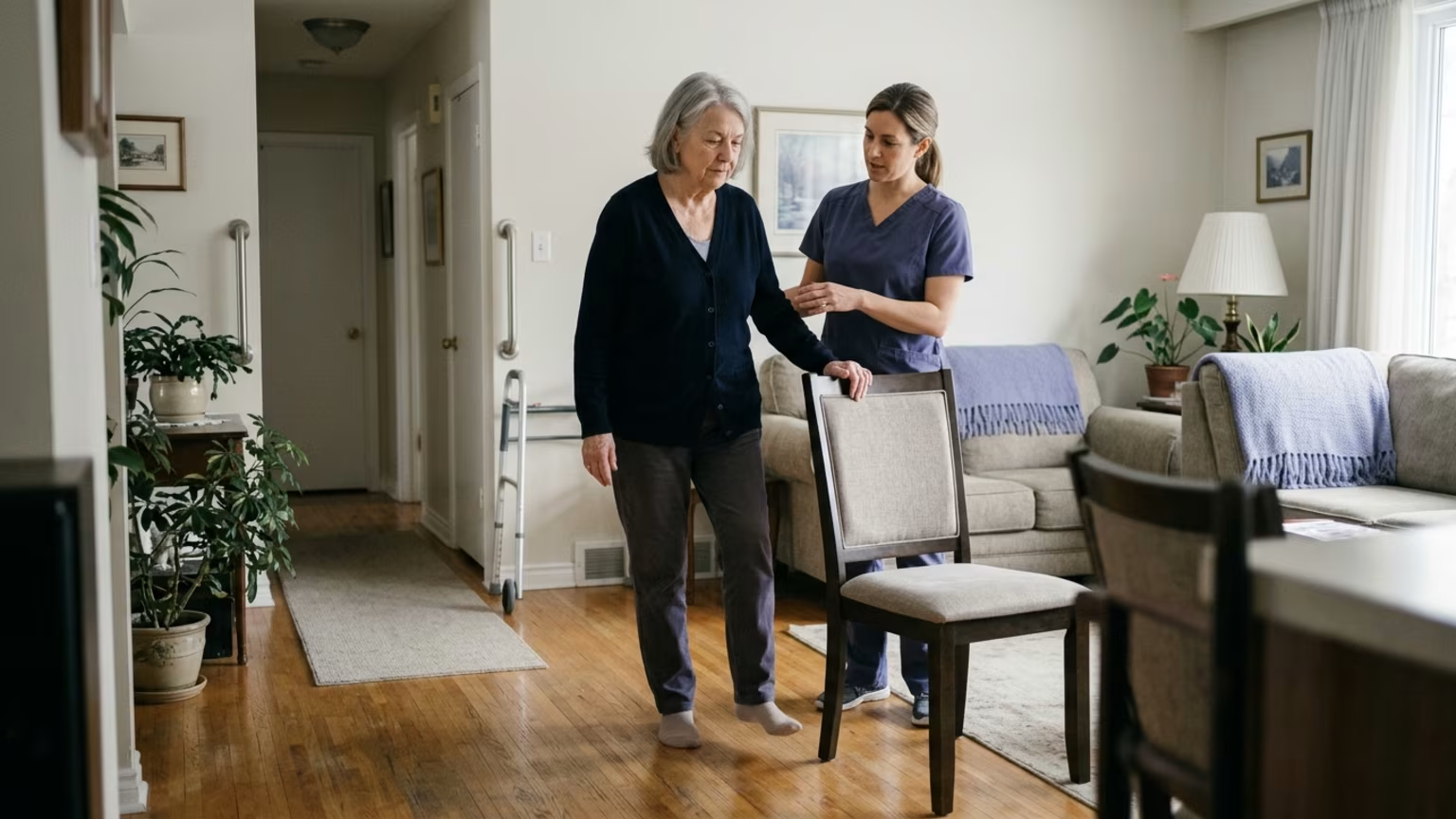

Reuters reports that fall prevention requires targeted strength exercise and home safety measures. Learn why walking alone is rarely enough for joint stability.





On October 6, 2026, Reuters published a detailed report outlining how older adults can better protect themselves against falls. The article detailed how preventing falls requires a combination of targeted physical exercise and specific home safety measures. Reuters highlighted that falls are the leading cause of injury death among adults aged 65 and older in the United States. Washington University professor Susan Stark told Reuters that falls commonly reflect an interaction among a person, what they are doing, and their environment.
This development underscores the need for a comprehensive approach to physical safety as we age. Understanding this interaction changes how we view physical rehabilitation entirely. The Reuters article shifts the focus from simple bad luck to a series of manageable risk factors. By recognizing that falls occur at the intersection of personal capacity and environmental demand, individuals can take a more structured approach to their safety.
Historically, many people have assumed that staying generally active is enough to maintain stability. A common approach to mobility after an injury relies heavily on simple daily walking. People often believe that maintaining a daily step count will automatically preserve the physical capacities needed to avoid a stumble. On the environmental side, traditional advice often focuses on isolated fixes like moving a single loose rug.
While these habits are helpful, they often miss the specific physical demands of daily household tasks. Relying solely on general activity leaves gaps in a person's physical readiness. General movement does not always challenge the specific muscles required to catch yourself when you lose your footing. A routine built entirely around walking might improve endurance, but it may not adequately prepare the body for sudden shifts in balance.
The Reuters report provided specific data on how targeted interventions change outcomes. According to the report, one systematic review found that exercise reduced fall rates by 23 percent among adults aged 65 and older. The coverage specifically emphasized that not all activity provides the same protective benefits. Stark told Reuters that walking offers cardiovascular and coordination benefits, but it is not as effective at building the strength and balance needed to prevent falls.
When a person walks on a flat surface, their body moves in a predictable, straight line. The muscles learn to operate in this straightforward motion without needing to adapt to sudden changes. If a person trips or slips, their body must suddenly move sideways or backwards to catch their balance. Because walking does not train these recovery steps, the body may lack the specific reflexes required to prevent a fall.
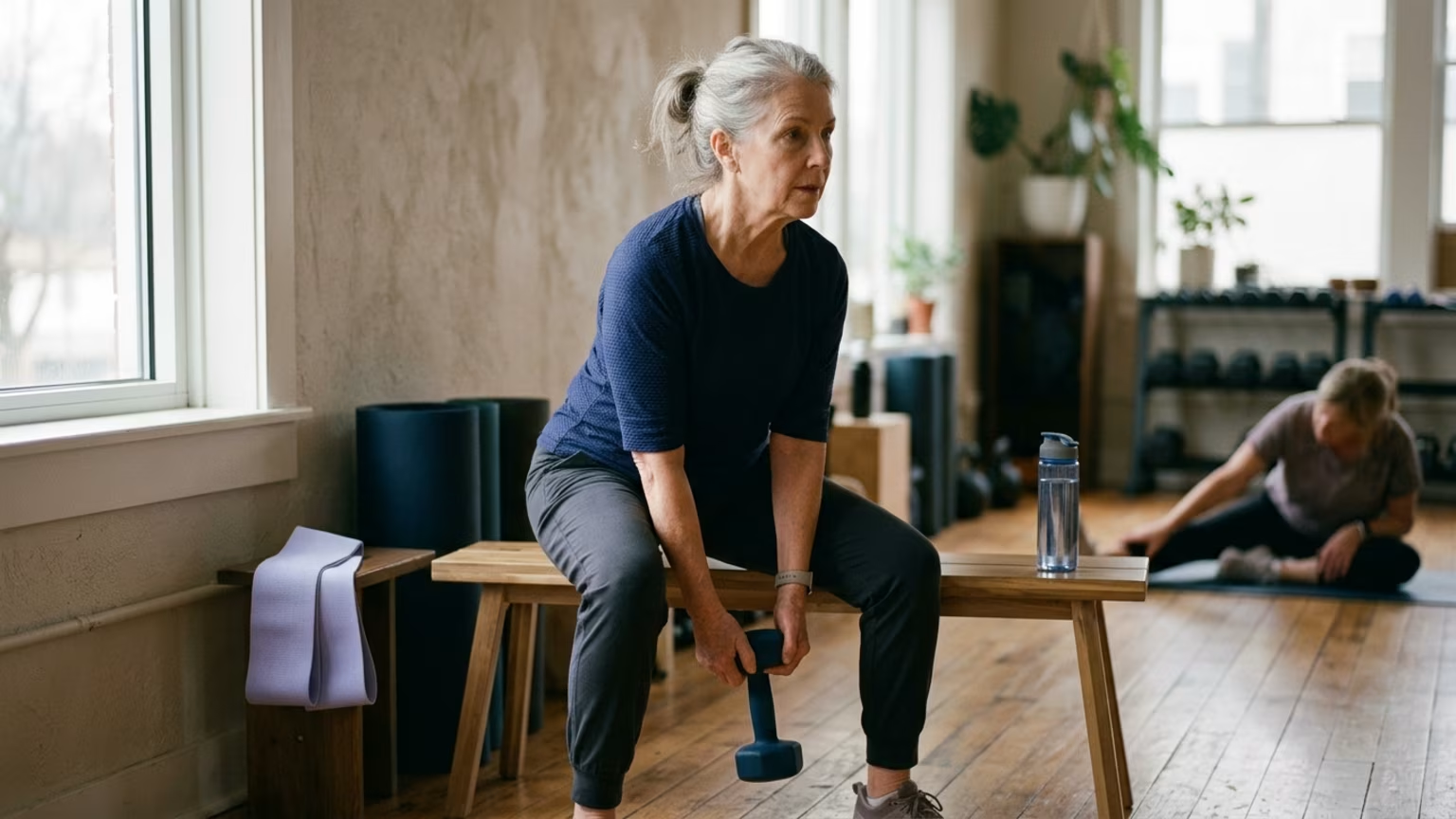
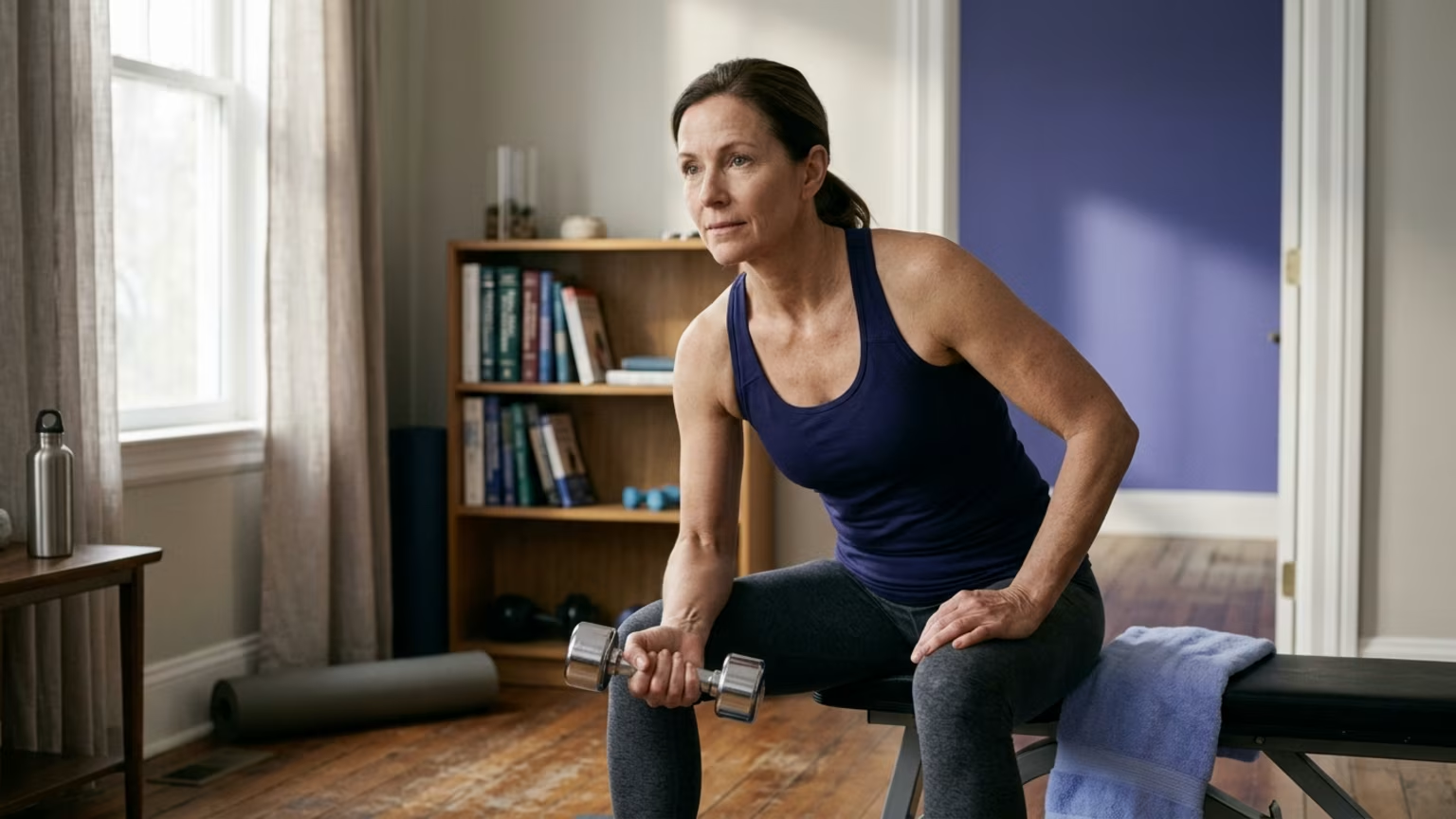
Targeted balance exercises deliberately place the body in slightly unstable positions under controlled conditions. This structured practice forces the nervous system and muscles to adapt to unpredictable shifts in weight. By training these specific recovery reflexes, a person builds a broader foundation of physical stability than walking alone can provide.
Suzanne Morley, health promotion program coordinator for the Wisconsin Institute for Healthy Aging, added valuable context to these findings. She explained that simple balance and strength movements can make a great difference in mobility and confidence. This reporting clarifies that targeted balance work is a distinct requirement alongside general cardiovascular habits. The 23 percent reduction is a significant finding that demonstrates the measurable value of moving beyond basic walking routines.
However, this is a review-level result for a specific age demographic rather than a personal guarantee. The evidence points toward structured physical preparation instead of passive activity. It highlights the importance of training the body for the specific demands of upright stability. These findings are specifically directed at adults aged 65 and older.
The practical risk management advice applies broadly to anyone navigating increased physical vulnerability. Reuters notes that lingering pain, weakness, altered walking, and fear-driven inactivity may contribute to vulnerability after a prior fall or injury. If a person has fallen in the past year, feels unsteady, or worries about falling, they fit the profile for these interventions. The guidance is particularly relevant for individuals rebuilding physical capacity after an orthopedic setback.
The psychological impact of a prior fall is a major consideration in recovery planning. When a person is afraid of falling, they often restrict their movements. This loss of strength and mobility then makes a future fall even more likely. Addressing this fear requires a clear approach to rebuilding physical confidence under professional guidance.
This physical detraining process is often subtle and happens over several months. A person might stop reaching for high shelves, avoid using the stairs, or stop walking on uneven grass. While these choices feel safer in the short term, they slowly eliminate the natural strength challenges that keep joints healthy. Over time, the muscles that support upright posture begin to weaken from lack of use.
This creates a dangerous cycle where the effort to avoid a fall actually increases the physical risk of having one. Professional guidance can help individuals safely test their limits and break this cycle of fear-driven inactivity.
It is important not to assume that the 23 percent reduction in falls applies uniformly to every single condition. The research applies to a population average. Individual results depend heavily on a person's specific health status and medical history. The Reuters article advises involving a clinician or physical therapist to assess factors such as walking, leg strength, balance, vision, and blood pressure.
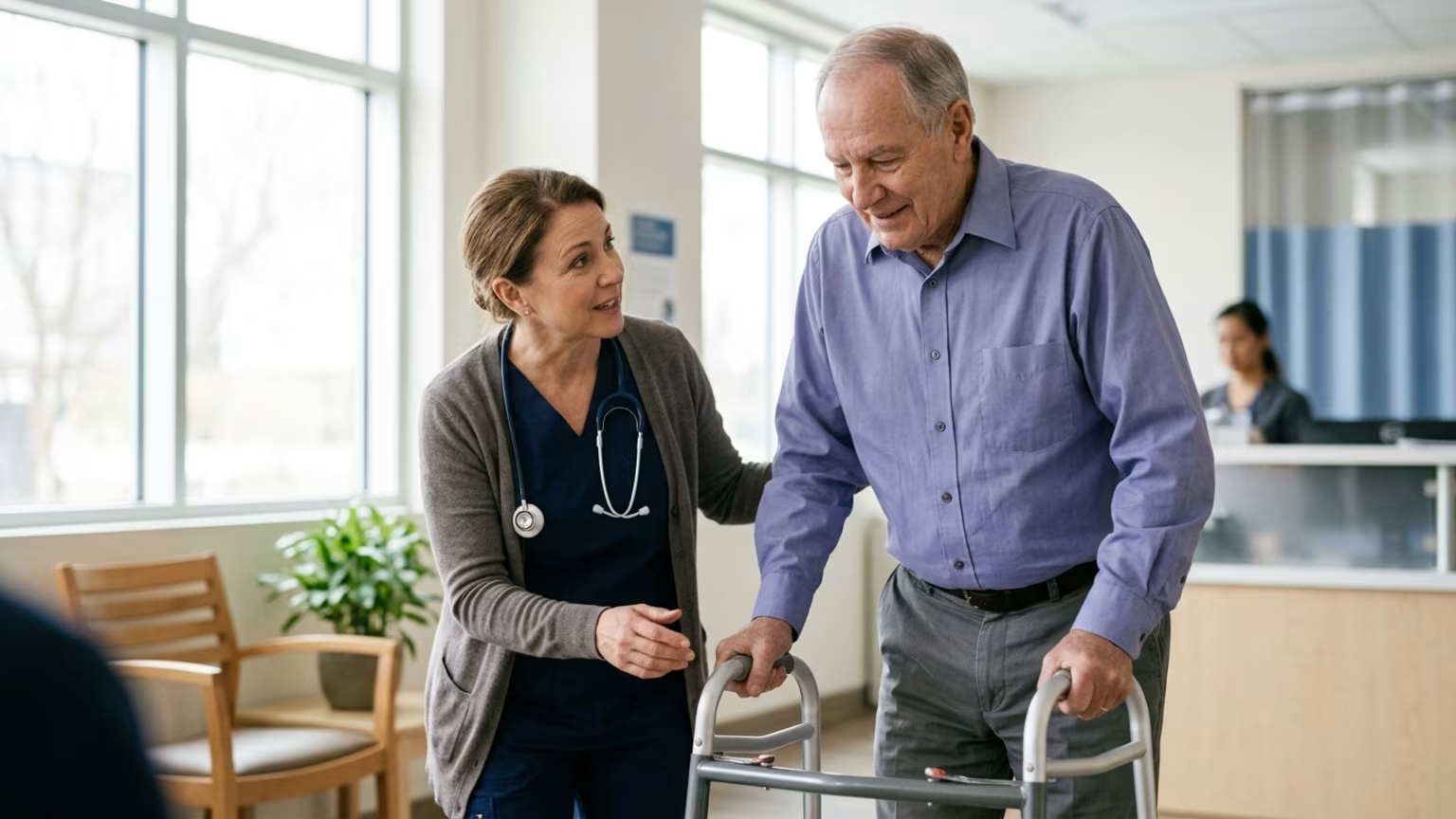
For adults managing joint recovery or general aging, this information provides a clear path forward. Walking can and should remain a core part of an activity routine for its cardiovascular benefits. But readers concerned about stability should ask a physical therapist if targeted exercises are appropriate for their recovery status. Moving from general movement to strength training for injury prevention requires professional guidance.
A previous fall, unsteadiness, or worry about falling is a reason to raise the concern with a doctor immediately. Waiting until a further fall occurs only increases the risk of a severe setback. Your healthcare team can design a routine that respects your current limitations while steadily building your capacity. This targeted approach ensures that you are spending your energy on the exercises most likely to improve your stability.
Physical capacity is only one part of the equation, as the environment dictates how hard your body has to work. Reuters recommends several practical environmental modifications to support your physical training. These include clearing walkways, improving lighting, adding secure rails, and using non-slip surfaces. Keeping frequently used items within easy reach can also reduce the need for risky reaching or climbing.
Managing your environment reduces the daily physical demands placed on recovering joints and muscles. This approach allows you to save your energy for structured rehabilitation rather than navigating household hazards. Another practical step involves reviewing what you wear on your feet. The report advises using securely fitting footwear with low heels and slip-resistant soles.
It also recommends avoiding loose slippers, flip-flops, worn soles, and walking in socks on smooth floors. These simple wardrobe choices act as a first line of defense against slipping. When your feet are secure, your leg muscles do not have to work overtime to stabilize your body on smooth surfaces. Appropriate footwear provides a reliable foundation for all other movement tasks.
Managing internal health factors plays a major role in your daily stability. Reuters suggests keeping up with eye exams to ensure you can clearly see potential obstacles. The article also recommends asking a clinician or pharmacist to review your prescriptions, over-the-counter medicines, and supplements. Medication interactions can cause sleepiness, confusion, dizziness, or low blood pressure.
Addressing these medical factors ensures that your physical training is not undermined by an easily correctable chemical imbalance. Integrating these steps bridges the gap between everyday activity versus formal exercise. While the combination of exercise and home safety makes logical sense, the exact scientific benefit of packaging them together remains nuanced. A September 2026 Cochrane summary provides important context on this topic.
The University of Exeter’s account of that review similarly reports little or no difference in falls compared with advice or education, a small effect compared with usual care, and unclear results compared with exercise. This means that tailored multifactorial programs may not definitively outperform a strong, independent exercise routine. It remains uncertain if adding every single environmental and medical intervention provides a measurable compound benefit over simply improving physical strength. The evidence versus exercise alone is considered very uncertain.
This is a useful qualification to any suggestion that simply combining many interventions is necessarily superior. Readers should focus on targeted exercise as the primary driver of physical resilience. Home modifications should be treated as sensible, complementary habits rather than a replacement for physical conditioning.
The most practical step you can take today is to schedule a medication review with your local pharmacist to identify any prescriptions or supplements that might be affecting your daily balance.
Treating general walking as a complete fall prevention strategy without addressing specific muscular weakness can leave recovering joints vulnerable to sudden setbacks. ReboundBody addresses the fear of reinjury or doing too much too soon, helping you safely transition from broad safety guidelines into a structured, realistic physical progression.

Follow ReboundBody for practical articles on injury recovery, rehabilitation, mobility and rebuilding strength. New posts turn research into clear ideas for the road back to activity after injury or surgery.



Read practical guidance on injury recovery, rehabilitation, mobility and rebuilding strength as you work your way back to activity.
Explore Resources