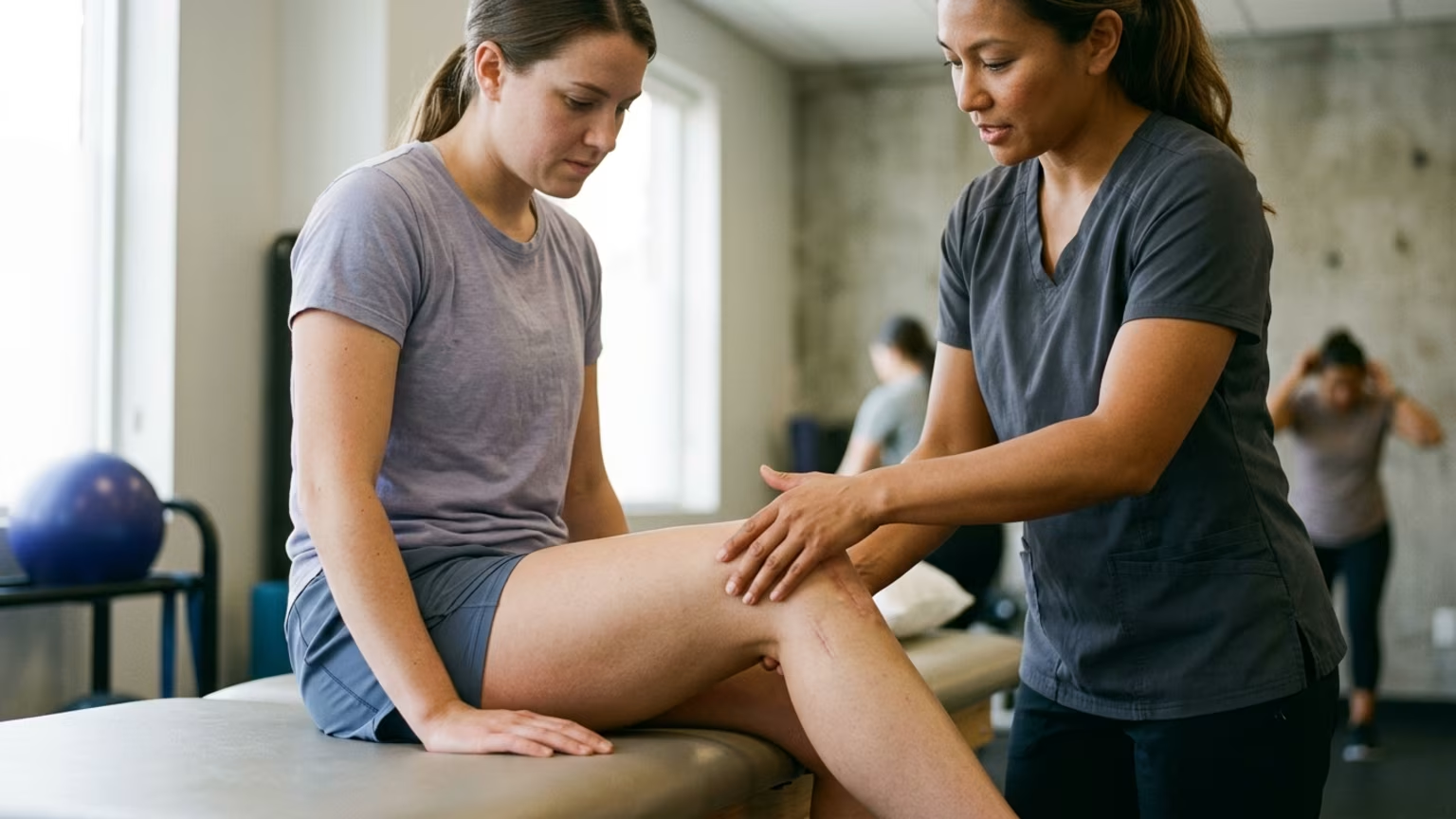

A recent clinical trial reveals how supervised exercise therapy improves short term strength and knee symptoms for young adults after ACL reconstruction.





In September 2026, research published in the Annals of Internal Medicine shed new light on long term joint health. The La Trobe University SUPER-Knee trial investigated whether structured rehabilitation could help a very specific group of patients. These were individuals dealing with persistent knee problems after anterior cruciate ligament reconstruction. The trial examined how professional guidance influences physical recovery during a physically challenging phase.
The study focused on a physical recovery period extending well beyond the initial surgical healing phase. Lead researcher Associate Professor Adam Culvenor shared his professional perspective on the new trial findings. He stated the study found that physiotherapist supervised exercise therapy and education were safe. He recommended the approach to improve knee health in young people at risk of early onset osteoarthritis after ACL reconstruction.
Returning to normal activity after a major joint procedure requires significant time, immense patience, and careful physical management. A full recovery is often broadly expected beyond nine months after an ACL surgery. A La Trobe related report noted that this timeline is common but not always achieved by every patient. Many people still face physical challenges and pain long after their initial clinical clearance.
The reality of joint surgery involves more than just structural repair of the damaged ligament. A 2026 review on knee osteoarthritis management pointed out a critical detail about these specific surgical procedures. It noted that while ACL reconstruction can improve mechanical stability and function, it does not reliably prevent post traumatic osteoarthritis. The joint remains physically vulnerable even when the ligament itself is mechanically secure.
Because of this clinical reality, recovering patients often look for safe ways to protect their knees. The transition from formal medical care back to independent, daily activity can feel highly uncertain. Understanding how to support the knee joint properly is a major, ongoing focus for modern clinical researchers. This persistent need for safe movement strategies is exactly what prompted the researchers to conduct the SUPER-Knee trial.
Navigating this specific stage of physical recovery requires patience and highly realistic physical expectations. Active adults often seek guidance on building a long term plan for strength and mobility following their formal rehabilitation sessions. The research community constantly aims to clarify which physical methods actually produce measurable, long term physical benefits. Patients rely on this clinical clarity to make safer choices regarding their ongoing fitness routines.
The SUPER-Knee trial compared two distinct clinical approaches to ongoing knee rehabilitation. Researchers assigned patients to either a physiotherapist supervised program or a more independent, self managed path. The control group received a single education session along with self directed exercise reading resources. This study design allowed the researchers to measure the specific, isolated impact of sustained professional physical supervision.
The active intervention involved a highly structured and consistent time commitment for the study participants. MedPage Today reports that the physiotherapist supervised program ran for four full months. It included physiotherapist led leg and neuromuscular exercises for 30 to 60 minutes twice weekly. Participants in this supervised group also completed a weekly unsupervised exercise session on their own time.
At the four month mark, the supervised group demonstrated clear, measurable physical advantages. The trial reports greater muscle strength gains in this supervised group compared to the control group. Researchers used the composite Knee injury and Osteoarthritis Outcome Score to measure overall patient progress. This standardized assessment tool is widely used by clinicians to track physical symptoms and overall joint function.
The numerical differences at four months highlighted the short term benefits of the structured rehabilitation program. The supervised group saw their symptom score improve by 14.1 points. In comparison, the self managed group experienced a 9.4 point improvement over the exact same timeframe. This resulted in a reported between group difference of 4.8 points, with a 95 percent confidence interval of 1.4 to 8.2.
This research offers valuable insight, but it is incredibly important to understand the exact population studied. In the SUPER-Knee trial, researchers studied 184 adults aged 18 to 40. These individuals specifically had persistent knee problems 9 to 36 months after their ACL reconstruction. The findings apply most directly to younger adults who still experience knee symptoms long after surgery.
The study simply does not represent every single person recovering from orthopedic surgery today. Adults outside the trial's specific age range should treat the evidence as informative but not as a direct clinical prediction. People without ongoing symptoms or those recovering from entirely different operations fall outside this specific demographic group. The trial results cannot be broadly generalized to all joint recovery scenarios.
The research also compared two complete, multi layered packages of care rather than isolated physical exercises. The supervised group received repeated, ongoing sessions with a trained physiotherapist over four months. The control group only received a single education session and independent reading resources to guide them. Therefore, the results do not isolate the specific effect of the exercise itself from the ongoing professional supervision.
Furthermore, the evidence does not establish that the exact same program is appropriate for every single patient. Exercise selection, physical intensity, and movement progression should always be individualized by a qualified clinical professional. Copying a study protocol without professional guidance can easily lead to inappropriate loading on a recovering joint. Medical professionals are trained to adjust these protocols based on individual physical responses.
For an adult still experiencing knee symptoms months or years after surgery, this trial offers helpful perspective. It provides clear evidence that a structured program may improve symptoms and strength over several months. You might use this new information to guide highly productive conversations with your personal healthcare provider. Discussing supervised rehabilitation options with a treating clinician is a sensible, proactive step forward.
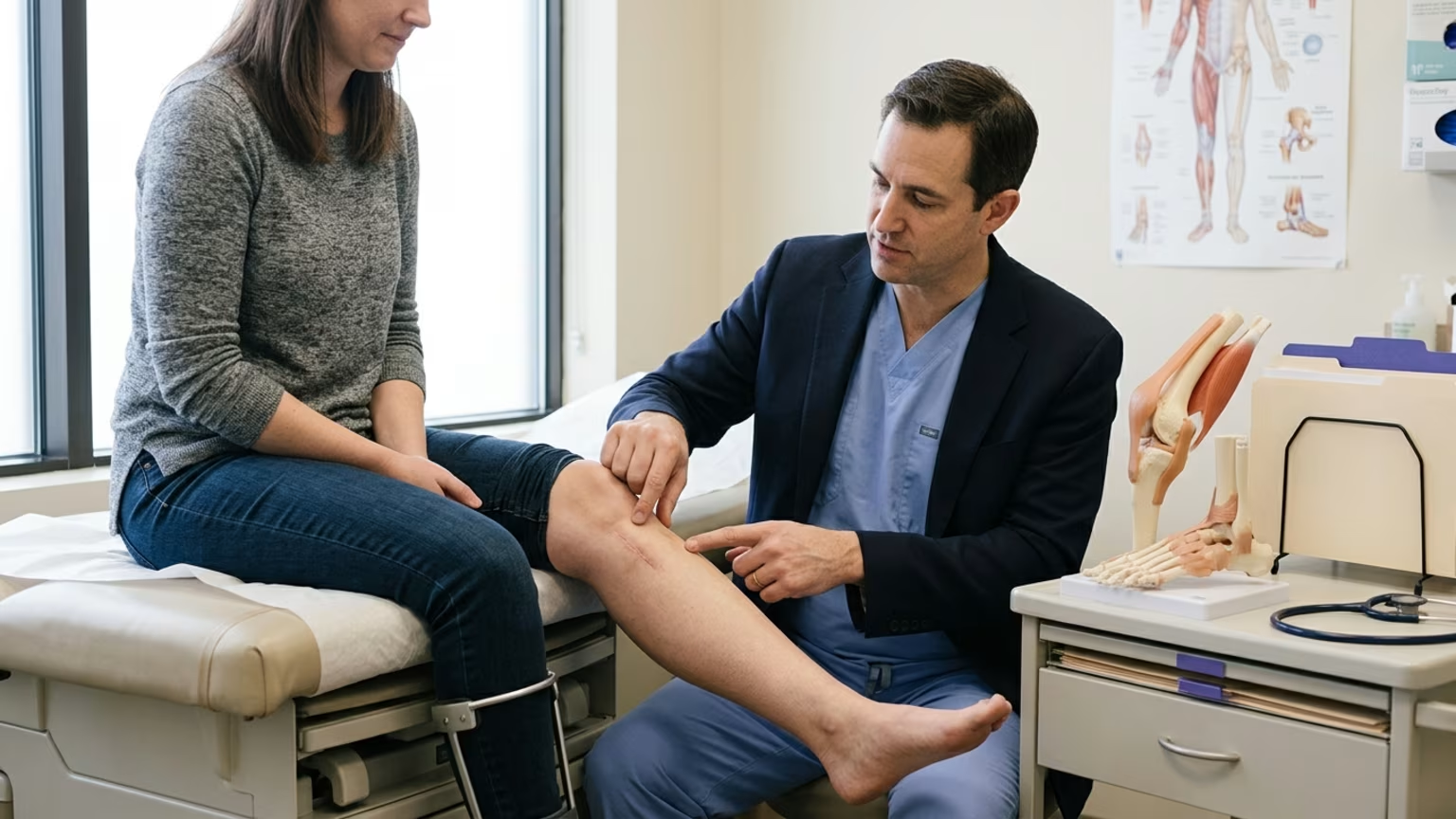
Knowing what to expect from physical therapy evaluations can help you prepare for these clinical conversations. A physical therapist can accurately assess your specific physical deficits and design an appropriate, personalized plan. The trial strongly supports the value of this professional guidance for improving short term joint function. It highlights how targeted neuromuscular exercises can benefit a vulnerable, recovering knee joint.
However, it is absolutely vital to set realistic expectations for your overall physical progression. The trial does not establish that recovering patients should attempt the study exercises entirely on their own. Managing joint health requires careful professional oversight, gradual physical adjustments, and constant patient monitoring. You should rely on your dedicated care team to determine the right exercise intensity and frequency.
The cartilage findings from the trial also offer a very specific type of reassurance for active adults. The study did not find worse cartilage measures in the supervised group than in the comparison group. This simply suggests that the supervised exercise program was physically safe for the joint during the actual study. It shows that appropriate physical activity does not automatically cause measurable cartilage deterioration.
While the short term symptom improvements are clear, several highly important clinical questions remain unanswered today. The most obvious advantage for the supervised group appeared at the four month evaluation mark. By 12 months, the reported symptom score improvements were much closer between the two distinct study groups. The self managed group had largely caught up on their overall symptom score change.
The long term data shows a narrowing gap between the two distinct recovery paths over time. MedPage Today reported changes of 15.8 points in the supervised group by the 12 month mark. The control group reached a very similar 14.5 point improvement over the exact same period. This suggests the supervised program may accelerate early symptom relief without maintaining a massive long term advantage.
Furthermore, the results absolutely do not establish that this exercise program prevents knee osteoarthritis. Cartilage measures did not differ between the groups at four or 12 months. This means the trial did not demonstrate that the exercise actually reversed any existing cartilage damage. It also does not prove that the specific routine ensures any physical protection from future joint disease.
The phrasing regarding joint preservation requires careful attention from readers and clinicians alike. The sources report no differences in cartilage measures between groups, rather than proving the joint was completely protected. Understanding reinjury risk and planning a safer return to activity remains a highly complex physical process. Medical guidance will likely continue to evolve as researchers study these specific patients over longer, multi year timeframes.
If you are currently managing persistent knee symptoms after a past surgery, schedule a review with a physical therapist to discuss structured, professionally supervised movement options.
Finding clarity on structured rehabilitation after an ACL surgery requires careful analysis, and ReboundBody provides independent editorial guidance on these clinical updates. We address the conflicting online claims about recovery tools, exercises, nutrition and treatment options, helping you understand your situation and make more informed decisions with qualified healthcare professionals.

Follow ReboundBody for practical articles on injury recovery, rehabilitation, mobility and rebuilding strength. New posts turn research into clear ideas for the road back to activity after injury or surgery.



Read practical guidance on injury recovery, rehabilitation, mobility and rebuilding strength as you work your way back to activity.
Explore Resources