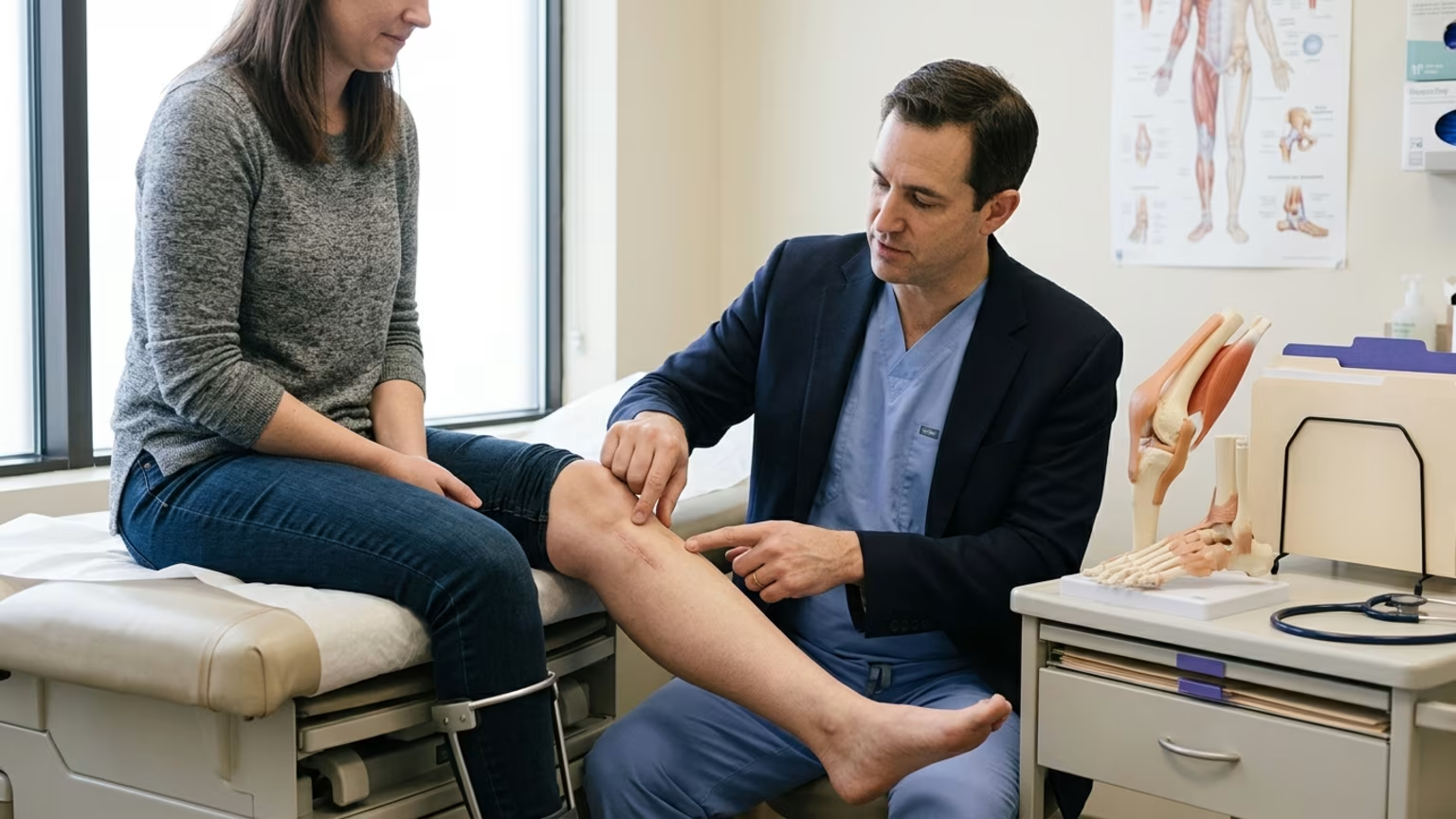

Understand how bone, tendon, ligament, cartilage, and muscle heal differently. Learn the biological stages of tissue repair and what limits physical recovery.





A sudden physical setback often sends active adults searching for a strict recovery timeline. They naturally want to know exactly when pain will stop and normal movement can resume. But the body repairs itself based on the specific material that was damaged. A single calendar simply cannot predict how every injury will respond.
The human skeleton relies on several distinct tissues like bone and muscle to function. Other crucial structures include tendons, ligaments, and articular cartilage. Each of these unique physical structures has a remarkably distinct biological makeup and cellular environment. Consequently, each tissue has a vastly different intrinsic capacity for biological repair following an injury.
This article clearly explains how these different tissues function, fail, and slowly recover over time. It details their structural differences, unique cellular environments, and the broad biological stages of natural healing.
This guide cannot answer how long a specific personal injury will take to heal completely. Medical research simply does not support a rigid, universal timeline that applies to all five tissues. Every person has a unique cellular environment, different nutritional habits, and varying levels of local blood supply. A minor muscle strain and a severe tendon rupture operate on entirely different physiological calendars. You should always discuss your specific healing expectations directly with a qualified clinical specialist.
To make sense of physical recovery, it helps to thoroughly understand how these tissues function in a healthy state. The musculoskeletal system relies on a highly complex network of physical structures to produce fluid movement. Each unique tissue type plays a highly specialized mechanical role. Their daily function relies on specific microscopic cells and specialized structural proteins.
Bone acts as the rigid structural foundation of the entire human body. It provides necessary physical support for posture and protects vital internal organs from traumatic harm. It is a highly active, dynamic biological tissue with a remarkably rich blood supply. The specific cells inside bone constantly break down old material and build new structure to maintain mechanical strength.
This continuous cycle ensures that the skeleton can safely withstand heavy daily physical stress. Normal daily movement helps naturally stimulate this highly beneficial biological turnover.
Muscle tissue generates the strong physical force required for active bodily movement. Skeletal muscles connect directly to bones across physical joints and contract to create mechanical motion. A healthy muscle requires a highly robust vascular network to deliver oxygen and cellular nutrients continuously. It also relies heavily on a complex web of neural pathways to coordinate smooth, controlled physical contractions.
These dense biological muscles contain distinctly different types of fibers that handle rapid bursts of speed or long sustained endurance.
Tendons serve as the critical mechanical bridge between living muscle tissue and dense bone. They actively transmit the strong pulling force generated by a muscle directly into the rigid skeleton. This highly efficient transfer of kinetic energy allows a joint to move effectively against physical gravity. Tendons are incredibly dense structures made primarily of very tough structural collagen fibers. They are perfectly designed to safely withstand exceptionally high levels of pulling tension during vigorous physical activity.
Ligaments securely connect one bone directly to another bone entirely across a joint space. They act as remarkably strong biological stabilizers to forcefully prevent excessive or unnatural skeletal movement. By physically limiting a joint's extreme range of motion, they safely protect the structural integrity of the entire limb. Like tendons, they are composed primarily of densely packed physical connective tissue. Their natural local blood supply is generally far less abundant than that of a muscle or a healthy bone.
Cartilage is a remarkably firm, smooth biological tissue that coats the extreme ends of bones within a joint. It provides a specialized low-friction physical surface that allows heavy bones to glide against each other easily. It also heavily acts as a highly crucial shock absorber during high-impact physical weight-bearing activities. Unlike rigid bone and dense muscle, articular cartilage totally lacks its own dedicated network of blood vessels. It relies primarily on the surrounding local joint fluid to passively receive necessary cellular nutrients.
Physical setbacks happen when a specific tissue is subjected to extreme mechanical loads it simply cannot handle. A sudden intense trauma or heavily prolonged repetitive stress can totally disrupt the structural integrity of the area. When this occurs, the body quickly initiates a local biological repair response to fix the physical damage. However, this physiological response varies heavily by the specific tissue type involved. Some structural tissues naturally struggle to fully regenerate due to their inherent biological environment.
Articular cartilage faces highly significant physiological hurdles after a sudden acute injury. A recent review identifies articular cartilage's lack of blood vessels as a primary problem. This avascular nature and a limited intrinsic healing capacity act as severe challenges for repair. Without a direct local blood supply, living cartilage cells cannot easily access the vital resources needed for complete regeneration.
Ligament injuries also face highly specific biological obstacles based on their exact physical location. A recent ACL review describes its blood supply as modest and regionally variable. The review also notes that the ACL biological environment differs from that of extra-articular ligaments. Because of this extreme physical variation, it is strictly unwise to treat ligament blood supply as totally uniform.
Tendons very often experience frustratingly incomplete biological healing after a major structural disruption. A sudden heavy load can easily cause the dense collagen fibers to painfully tear or fully rupture. A recent tissue-engineering paper describes tendon ruptures as healing poorly in association with low cellularity, disorganized extracellular matrix, and inadequate mechanical loading.
Without the exactly right balance of physical rest and carefully applied stress, the tissue often remains structurally weak. This biological reality highlights the deep importance of highly progressive, structured physical rehabilitation.
Bones typically fail rapidly when they encounter an extreme traumatic impact or highly prolonged repetitive mechanical stress. A skeletal fracture simply represents a total or partial biological break in the rigid cellular structure. Muscles very usually fail when they are stretched far too forcefully while simultaneously actively contracting under heavy physical loads. While both of these robust tissues have amazingly strong repair capacities, severe damage still causes significant temporary functional decline.
Repairing heavily damaged musculoskeletal tissue naturally involves an intricate series of overlapping biological events. The physical repair process is far more scientifically complex than just passively waiting for local pain to subside. Understanding these broad physiological phases can easily help individuals form highly realistic physical recovery expectations. The total clinical duration of these phases varies incredibly widely depending heavily on the absolute severity of the specific injury.
Fracture repair involves highly complex overlapping stages to restore normal skeletal strength safely. These overlapping stages include inflammation and the recruitment of repair-related cells. Subsequent stages involve new blood-vessel growth, bone formation, and lengthy tissue remodeling. This highly coordinated biological activity relies extremely heavily on fully restoring a local vascular network. Blood-vessel growth and bone formation are closely linked during fracture repair.
The initial inflammatory stage quickly clears damaged cellular debris and safely sets the early healing foundation. Over time, the body safely deposits soft new bone material to fully bridge the physical fracture site. The final biological remodeling stage can easily take many months or even long years to complete fully. Active adults navigating this complex process may read more about inflammation after injury to better understand the earliest stages.
Muscle tissue heavily relies on highly specific cellular mechanisms to physically recover from acute mechanical damage. A recent review describes satellite cells as resident stem cells that support skeletal-muscle regeneration. When a severe tissue injury actively occurs, these specialized dormant biological cells quickly activate and multiply rapidly. They then slowly fuse perfectly with the severely damaged muscle fibers to safely restore normal strength and full functional capacity.
However, a highly successful physical recovery clearly requires far more than just local stem cell activity. A recent review describes muscle regeneration as a highly coordinated biological process. This repair process involves muscle formation, vascular restoration, nerve regrowth, and supporting cells. Understanding this deep complexity helps explain why movement feels different after injury even when the muscle itself begins to physically heal.
Tendons and ligaments generally slowly progress through similar broad biological phases of physical inflammation and structural remodeling. However, their physical recovery safely takes considerably more time due heavily to their naturally less robust vascular networks. The early biological repair tissue is often incredibly highly disorganized and seriously lacks normal mechanical strength. It can strictly take many long months of highly carefully applied physical loading to fully align these completely new structural collagen fibers.
Healthcare professionals naturally often use highly specialized vocabulary when clinically discussing tissue repair and physical rehabilitation. Translating these highly complex clinical terms directly into plain English can massively help you better understand your specific medical situation. Clear communication remains a strictly critical part of safely navigating long-term orthopedic physical rehabilitation. Knowing these exact clinical terms can make your follow-up medical appointments and injury recovery plans much less frustratingly confusing.
Angiogenesis: This specific biological medical term clearly describes completely new blood-vessel growth in a severely damaged physical area. It remains a critically vital biological step in tissue repair because it fully restores necessary cellular oxygen delivery.
Avascular: This highly descriptive medical word specifically identifies a biological tissue that entirely lacks its own direct blood vessels. Articular cartilage is highly avascular, which severely heavily limits its normal intrinsic natural healing capacity.
Osteogenesis: This clinical scientific term refers highly specifically to the fundamental biological process of brand new skeletal bone formation. It happens constantly during physical fracture repair as the natural human body slowly lays down completely new rigid structural material.
Progenitor Cells: These are uniquely immature biological cells that can naturally easily differentiate into highly specialized mature cellular types. Their rapid early recruitment remains an incredibly vastly important early biological stage of completely healthy skeletal fracture healing.
Satellite Cells: These are vastly highly distinct resident biological stem cells located deeply within entirely normal skeletal muscle tissue. They naturally heavily remain largely dormant until a sudden acute physical injury actively triggers them to heavily support early muscle regeneration.
Extracellular Matrix: This is the naturally highly dense non-cellular structural network that securely physically surrounds the living biological cells in a tissue. It efficiently naturally provides immense physical scaffolding and critically heavily helps safely organize complex tissue repair during the active rehabilitation process.
Collagen: This is exactly the primarily critical structural biological protein found incredibly abundantly in human tendons, strong ligaments, and joint cartilage. It fully reliably provides the incredibly highly necessary dense tensile physical strength that actively strictly allows these connective tissues to resist massive mechanical pulling forces.
Remodeling: This strictly refers directly to the absolutely final physiological phase of incredibly long-term structural physical tissue healing. During this highly lengthy biological period, the safely physically repaired connective tissue slowly mechanically reorganizes itself to comfortably safely withstand totally normal daily physical mechanical stress. Understanding this phase is incredibly helpful when working on rebuilding muscle power with age safely.
The amazing human body naturally utilizes vastly entirely different physiological biological strategies to slowly safely repair bone, dense tendon, strong ligament, joint cartilage, and muscle. Physical biological healing heavily entirely depends on a remarkably highly complex active interplay of deep cellular biological activity, local vascularity, and applied physical mechanical loading. You strictly precisely cannot safely clinically apply one rigid highly universal biological timeline to every single active physical structural setback. Natural physical tissue repair biology remains always incredibly highly clinically specific strictly to the exactly particular anatomical structure directly physically involved.
This extreme intrinsic biological variability clearly naturally remains exactly entirely why active highly professional clinical medical guidance remains strictly absolutely safely essential for active recovering adults. Only a fully clinically qualified healthcare medical professional can completely accurately physically evaluate your unique highly specific orthopedic physical tissue structural damage. They will carefully safely highly thoroughly monitor your individual personal clinical physical progress and directly clinically firmly determine exactly precisely when it remains strictly medically safe to slightly increase your physical daily activity. Always rely firmly directly completely on a highly qualified clinical medical care team for a completely highly totally accurate physical diagnosis and formal medical clinical exercise physical clearance.
An orthopedic surgeon or physical therapist oversees the daily clinical treatment of a damaged muscle or fractured bone, and ReboundBody provides the independent editorial context needed to understand that biological repair process. We address the fear of reinjury or doing too much too soon by publishing clear, evidence-aware content that explains physical recovery with realistic limits. Browse Resources

Follow ReboundBody for practical articles on injury recovery, rehabilitation, mobility and rebuilding strength. New posts turn research into clear ideas for the road back to activity after injury or surgery.





Read practical guidance on injury recovery, rehabilitation, mobility and rebuilding strength as you work your way back to activity.
Explore Resources