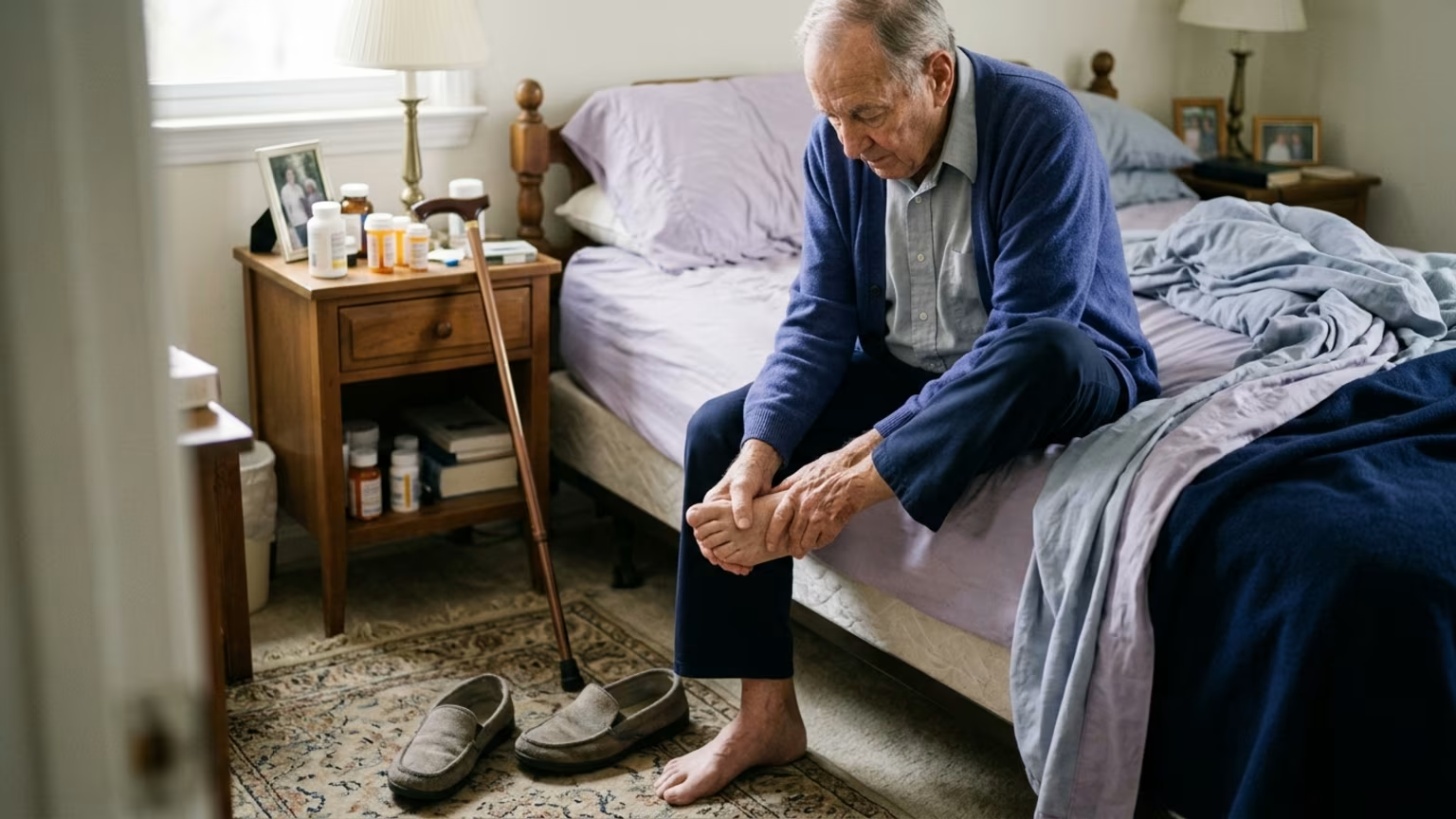

A foot-health report highlights movement limits with age. See how its claims compare with NIH guidance and what to discuss during recovery.





On October 14, 2026, ABC17 published a report produced by KURU Footwear and reviewed and distributed by Stacker. It argued that persistent foot discomfort may have wider consequences when it changes how people walk or stand and leads them to avoid activity.
This was branded content rather than independent medical reporting. Its useful point was about function: a foot problem may deserve attention because it interferes with everyday movement, even when pain is not its most noticeable feature.
For adults rebuilding activity after an orthopedic setback, that framing raises a practical question. Is foot discomfort staying a manageable inconvenience, or is it starting to reduce participation in ordinary life? The distinction matters more to this discussion than whether someone describes the problem as small.
The broader activity message was already part of healthy-aging guidance. NIH recommends at least 150 minutes of moderate-intensity aerobic exercise weekly and muscle-strengthening activities at least twice weekly. Foot comfort enters this conversation because the KURU-produced report describes discomfort as a possible barrier to maintaining movement.
NIH fall-prevention guidance also advises older adults to aim for at least 150 minutes of physical activity each week and muscle-strengthening activity on at least two days weekly. It notes that balance activities can improve stability and help prevent falls.
These recommendations place several kinds of movement in view:
The foot-health report adds a question about access to those activities. If discomfort makes walking or standing less appealing, the issue is not just how a foot feels. It is also whether the person is still participating in the movement that matters to daily life.
That is the useful connection between the report and established guidance. NIH supports the broader value of activity. The report asks readers to notice when foot discomfort becomes an obstacle to it.
The KURU-produced report discusses bunions and stiffness. It also names heel soreness, heel spurs and plantar fasciitis as problems that may interfere with movement when they persist. Its emphasis is on their effect on activity rather than on the condition name alone.
The report describes a possible chain of events: discomfort changes walking or standing, movement becomes less appealing and activity is reduced. It argues that prolonged movement avoidance may contribute to a loss of conditioning over time.
The useful addition is a broader way to judge impact. Pain intensity is one part of the picture. Whether a person is avoiding ordinary movement is another.
For example, the relevant questions are not limited to whether a foot feels sore. They also include whether discomfort is changing walking habits, reducing standing time or interfering with exercise. These are questions about function rather than a way to identify a diagnosis.
This framing also changes what a conversation about recovery can cover. A discussion focused only on symptoms may miss the activities that have become difficult or have quietly dropped away. Describing those changes gives the conversation a clearer focus.
For background on everyday movement, ReboundBody's guide to how feet contribute to walking and standing provides related context. The report's contribution is to draw attention to lost participation before the discussion becomes only about pain.
The ABC17 piece is a health report rather than a new clinical study with enrolled participants. There is no newly studied patient group to describe. Its subject is foot discomfort and mobility with aging, while the NIH pages address older adults and healthy aging more broadly.
The topic is relevant to active adults in midlife and later life who notice foot symptoms interfering with walking or other daily activities. That includes readers trying to understand the transition from rehabilitation back to familiar routines.
Relevance, however, is different from evidence tested in a particular recovery group. The report does not establish outcomes for people after a specific operation or orthopedic injury. It should not be read as a prediction of how an individual person's recovery will unfold.
The report also acknowledges that injury and chronic health conditions can affect mobility. It cautions against assuming that a substantial or abrupt loss of mobility is simply part of getting older.
For readers, the useful focus is the actual change in function. Age provides context for the discussion, but it does not explain every change in movement or replace an individual assessment.
The report recommends seeking professional help when a foot problem limits movement. For someone returning to activity after injury or surgery, the practical relevance is to bring the effect on daily life into that conversation rather than relying only on a description of pain.
Questions that fit this function-focused approach include:
These questions do not identify the cause of symptoms. They help describe the problem that needs to be understood. A condition name and an account of lost activity provide different information, so both may have a place in a healthcare discussion.
NIH's weekly activity targets are general guidance, not personalized rehabilitation prescriptions. They do not specify how someone recovering from a particular injury or operation should modify activity. Those decisions belong with qualified healthcare professionals who can consider the person's situation.
The goals are useful as background for a conversation about aerobic activity and strength work. They are not a reason to abandon a recovery plan or increase activity simply to meet a number. The question is how broader healthy-aging goals relate to the current stage of recovery.
The KURU-produced report recommends rebuilding activity and strength gradually after a period of rest. That is the report's broad recommendation, not a detailed progression schedule. ReboundBody's discussion of pacing activity during recovery offers related reading without turning this news item into a personal program.
Returning to normal activity involves more than resuming formal exercise. The report specifically discusses walking and standing, which gives readers a useful reason to describe everyday movement as well as workouts.
A healthcare conversation can therefore include what has become harder and what has been avoided. This keeps the concern concrete without assuming that every change has the same cause or solution.
Readers uncertain about where to raise the issue can learn more about the roles within an orthopedic care team. The aim is informed discussion, not self-diagnosis or an unsupervised treatment change.
The report does not establish that minor foot problems directly cause falls. Foot discomfort and a fall are not equivalent outcomes. NIH's support for activity and balance work provides fall-prevention context, but it does not prove the report's proposed chain from a particular foot condition to a later fall.
The report itself says that bunions and plantar fasciitis do not, by themselves, shorten lifespan. Its concern is prolonged movement restriction. That distinction matters because a common foot-condition label should not become a prediction of declining health.
Important questions also remain about treatment and longer-term function. Which approaches best preserve activity for different foot problems? How do other injuries or chronic conditions affect the return to ordinary movement? How should progress be judged across different recovery stages?
This report does not settle those questions. Its clearest contribution is to identify movement limitation as something worth discussing, while NIH guidance supplies a broader reason to keep activity and strength in view.
For readers, the practical boundary is straightforward: use the report to describe a concern more clearly, not to forecast a fall or select a treatment. Persistent or function-limiting symptoms call for individual assessment rather than conclusions drawn from a general health story.
Keep the conversation grounded in daily function, with room for individual recovery.
Foot-related movement limits can complicate the shift out of formal rehabilitation, where ReboundBody keeps its coverage focused on understanding recovery rather than prescribing care. For adults in midlife and later life who are unsure about resuming familiar activities, its articles explain mobility and rebuilding strength while leaving personal decisions with qualified healthcare professionals.

Follow ReboundBody for practical articles on injury recovery, rehabilitation, mobility and rebuilding strength. New posts turn research into clear ideas for the road back to activity after injury or surgery.




Read practical guidance on injury recovery, rehabilitation, mobility and rebuilding strength as you work your way back to activity.
Explore Resources