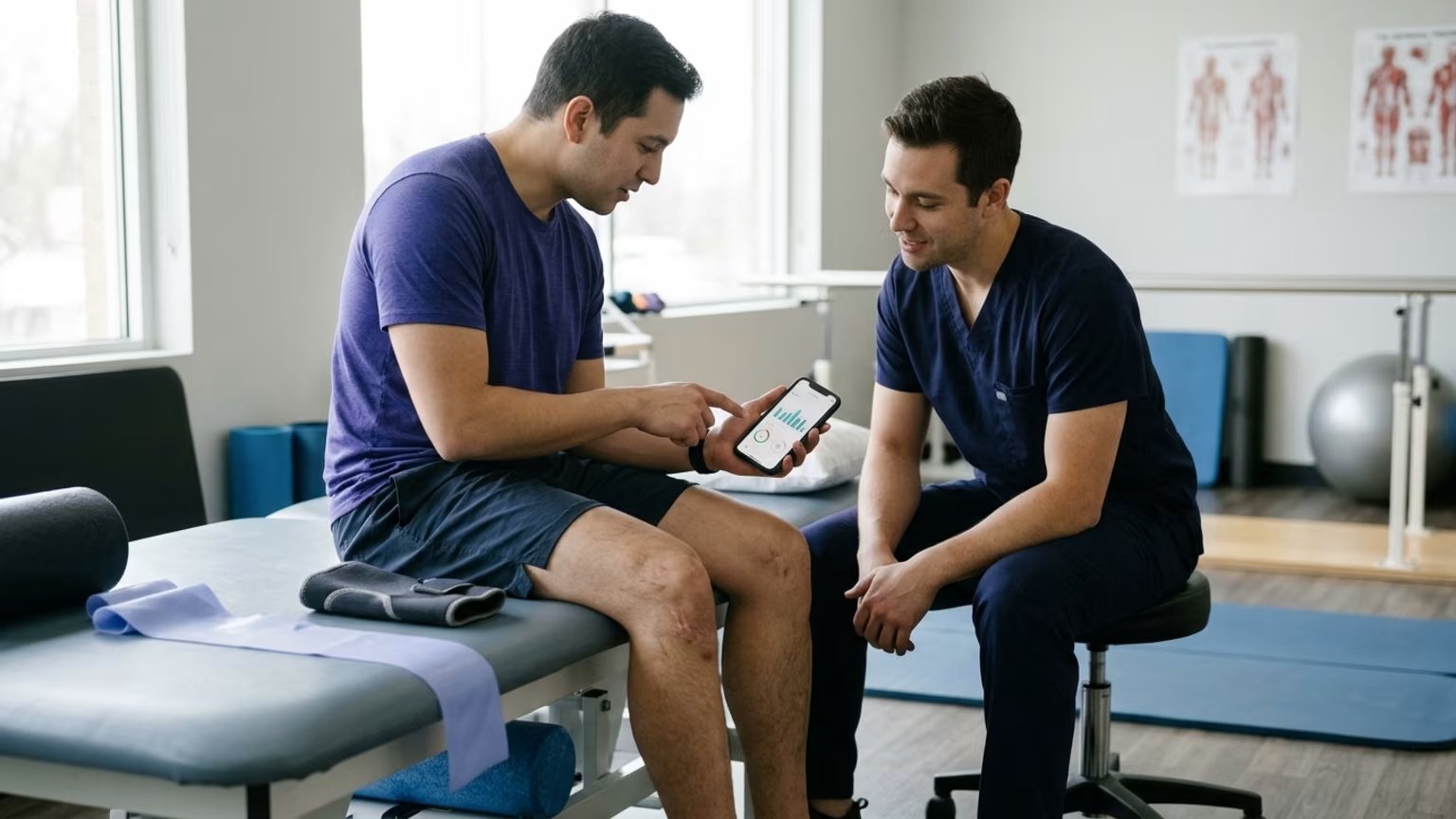

A study linked smartphone steps with reported ACL recovery outcomes. Learn what the findings mean and why they do not establish a walking goal.





On October 28, 2026, ReachMD reported that higher smartphone-recorded daily steps were associated with better reported knee function, better quality of life and less pain after ACL reconstruction. The cross-sectional study involved 120 adults at one outpatient orthopedic and sports rehabilitation clinic.
A familiar number on a phone screen was being compared with how people described their recovering knee. Researchers examined everyday movement records alongside symptoms and rehabilitation needs. People with more recorded steps generally reported better outcomes.
For readers tracking their activity after surgery, the finding raises an important question: how much meaning should a daily step count carry? The answer depends on understanding what the researchers measured and how the study was designed.
The evidence context begins with the measures used to describe recovery. According to ReachMD, researchers compared phone-derived movement data with knee pain, KOOS function scores and ACL-related quality of life. They also included psychological measures.
Those comparisons matter because the phone count was not being examined in isolation. The researchers were asking how recorded movement related to people's reports about symptoms and daily function. The study authors describe smartphone monitoring as a possible complement to clinical assessment.
Smartphone research also includes approaches that differ from passive activity tracking. On October 15, 2026, Trials published a randomized-trial protocol for a smartphone-delivered rehabilitation program after total knee arthroplasty. That paper describes a planned test of an intervention after knee replacement.
A protocol is a study plan rather than evidence that the program improves outcomes. The ACL report asks how recorded mobility and recovery measures relate to each other. The Trials protocol sets out how a phone-delivered rehabilitation program will be tested after a different operation.
ReachMD reports that investigators examined more than daily step totals. Their measures included step variability, active minutes and walking-bout measures. This allowed them to consider patterns of recorded movement as well as the overall amount.
The analyses adjusted for age, sex and body mass index. They also accounted for graft, surgeon and time since surgery. These adjustments addressed several recorded differences among participants.
For each additional 1,000 smartphone-recorded daily steps, the adjusted results showed:
These were associations between recorded activity and questionnaire scores in the study sample. The study authors cautioned that the differences per 1,000 steps were unlikely to be clinically meaningful on their own. In plain language, the numerical differences were not necessarily large enough to matter by themselves in someone's daily recovery experience.
The researchers also compared mobility profiles. ReachMD reports an average pain rating of 5.01 in the low-activity profile versus 1.72 in the high-activity profile. The low-activity profile also reported poorer daily function and quality of life.
Reported unmet rehabilitation needs showed another contrast. They were present in 56.8% of the low-activity profile compared with 5.3% of the high-activity profile. Physiotherapy use was also more frequent in the low-activity profile.
These findings put the activity patterns alongside people's experiences of recovery. The lower-activity group was not simply a group with a smaller number on a screen. It also contained more people reporting pain and unmet needs.
Fear of movement differed across the profiles. Differences in depression and anxiety symptoms were not statistically significant. For related context, ReboundBody discusses how psychological measures fit into ACL recovery.
The study population was specific. Participants were between 18 and 45 years old and were 3 to 12 months after primary unilateral ACL reconstruction. That means the research concerned a first ACL reconstruction affecting one knee.
Participants supplied smartphone-only mobility records covering at least 14 consecutive valid days in the preceding month. Having adequate phone-derived monitoring was therefore part of being included in the study.
For ReboundBody readers in midlife and later life, the age range is especially relevant. The findings do not directly establish the same relationships in adults older than the studied group. They also do not describe the earliest period after surgery or recovery beyond the studied postoperative window.
The described profiles were not evaluated for revision surgery, complex multiligament injuries or bilateral lower-limb surgery. They were also not evaluated for people with major conditions affecting mobility. Those boundaries matter when considering whether this sample resembles a particular recovery situation.
The practical value of the report is not a new walking prescription. It is a way to think more carefully about information a phone may already be recording.
The study used a 6,000-step threshold as a practical marker of relative activity within its own cohort. ReachMD's coverage makes clear that this was not an established ACL recovery target. It should not become a daily requirement simply because it appeared in the study.
A phone count is also not a stand-alone measure of tissue healing, knee strength or readiness to return to sport. It describes one part of everyday movement. Those broader recovery questions require qualified clinical assessment.
If recorded activity appears low or is falling, the research supports bringing that pattern into a discussion about symptoms and rehabilitation needs. It does not support treating the count as proof that someone is doing too little or recovering poorly.
Useful questions for that discussion include:
The focus is on understanding the record rather than competing with it. A clinician can consider the activity pattern alongside the person's recovery experience without turning the number into a treatment plan.
ReboundBody's discussion of how exercise progression is considered after a setback offers broader context for those conversations. Any decision about changing an individual's activity belongs with the qualified professionals overseeing that recovery.
The study's cross-sectional design is the central limit on interpreting the association. It cannot establish whether more walking improved knee outcomes or whether people with better knee outcomes were able to walk more. It also cannot predict later recovery or show that treatment guided by the mobility profiles improves results.
That distinction keeps the reported score differences from becoming promised benefits. They are not estimates of what would happen if an individual added a particular number of steps to a routine.
The recording method adds a separate uncertainty. Differences between phone platforms may have affected the measurements. People in the low-activity profile also carried their phones for less time, which may have affected how they were classified.
A smartphone's longest detected inactivity interval is not the same as a person's total sedentary time. Time when the phone is not being carried can affect what the device records. A gap in phone-detected movement therefore needs context before it is interpreted as inactivity.
The mobility profiles have not been externally validated. The study also did not establish that the phone measures add clinical value beyond patient-reported measures. The authors call for standardized prospective follow-up to assess usefulness over time.
For now, the sensible reading is to keep the recorded pattern and the person's account together. The phone screen offers a movement record that may help frame questions. The recovery discussion still needs the symptoms and experiences behind that number.
The daily count on the opening phone screen now has a clearer context: it accompanied people's recovery reports in this study. Its possible value lies in starting a better-informed conversation, not in making the number larger for its own sake.
The team overseeing ACL rehabilitation handles questions about walking and knee symptoms; ReboundBody adds plain-language context for understanding the research behind those conversations. Its evidence-aware articles help active adults in midlife and later life sort through conflicting exercise and recovery-tool claims while preparing informed questions about their recovery.

Follow ReboundBody for practical articles on injury recovery, rehabilitation, mobility and rebuilding strength. New posts turn research into clear ideas for the road back to activity after injury or surgery.


Read practical guidance on injury recovery, rehabilitation, mobility and rebuilding strength as you work your way back to activity.
Explore Resources