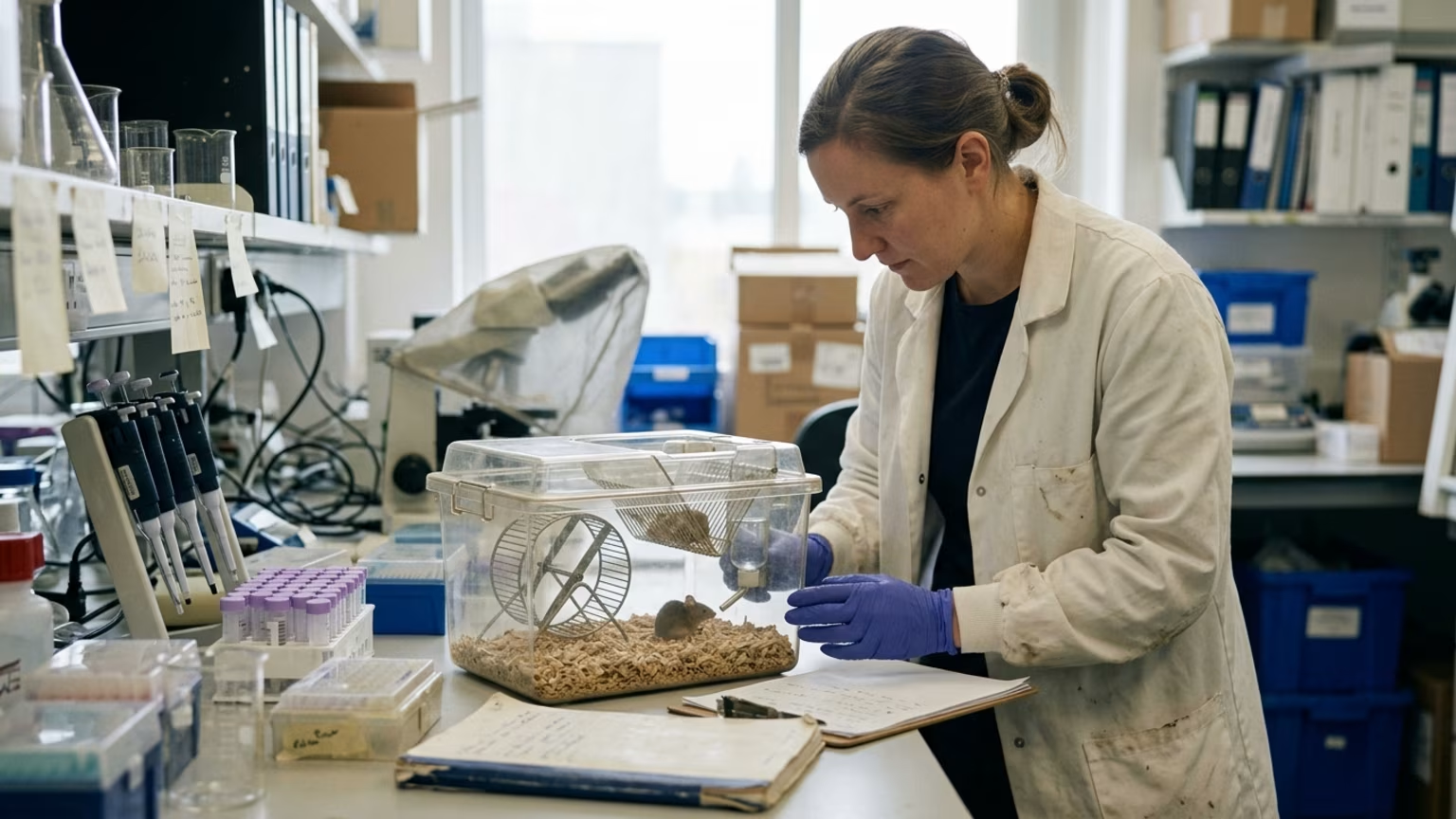

Researchers report early animal evidence that cells retain exercise adaptations during breaks. Learn what these mouse findings mean for physical rehabilitation.





Recently, researchers shared details about how cells might remember past physical activity. Diego Hernandez-Saavedra and Yi-Heng Huang authored a first-person article in The Conversation. Both are identified with the University of Illinois Urbana-Champaign. They detailed an animal study focused on physical training interruptions.
The researchers describe an ON-OFF-ON mouse exercise protocol to test their cellular concepts. This biological process started with an initial four-to-eight-week physical training period. A period of detraining with absolutely no exercise followed this initial phase. Finally, the mice completed a second targeted training bout.
This sequence allowed the authors to observe biological changes across multiple stages. The authors report that retrained mice developed larger muscles than mice with no prior training history. They noted that the individual muscle fibers grew as well. These observations point toward a lasting physical record of earlier efforts.
The authors also report that retrained muscle matched energy production to demand more effectively. The authors say this capacity persisted without further exercise. Based on these observations, the researchers explicitly propose that every cell in the body remembers exercise. They present this idea as a proposal rather than a settled scientific rule.
Stepping away from a physical routine is a common experience for many active adults. An orthopedic injury or a scheduled surgery often forces a complete pause in normal activity. During this time, individuals frequently worry about losing their physical capacity. The fear of starting over can make the recovery process feel incredibly daunting.
Historically, the transition from rest back to movement has focused heavily on visible changes. People often notice a decrease in overall muscle size after a long break. They might also feel a drop in basic stamina during daily tasks. These physical changes can make it seem like all previous effort has vanished entirely.
However, the visible loss of fitness does not always mean a complete loss of adaptations. Rehabilitation professionals often emphasize a structured return to physical activity. Still, the underlying science of how tissues retain past conditioning has remained complex. The biological mechanisms that preserve earlier gains are difficult to measure in a clinical setting.
Understanding the cellular basis of recovery helps inform how we approach physical setbacks. When active adults know their past efforts might exist at a microscopic level, the prospect of rebuilding changes. A foundational understanding of these processes can help ease the anxiety of a long layoff. The challenge has always been proving exactly how long these unseen benefits last.
Readers looking for practical steps often seek guidance on how to properly organize a return to exercise after a physical break. While structured frameworks provide behavioral guidance, cellular research provides the biological context. The latest findings offer a unique glimpse into what happens beneath the surface during periods of complete inactivity.
The account from Hernandez-Saavedra and Huang adds specific biological details to the conversation. Beyond mere muscle size, the researchers looked closely at how tissues manage energy requirements. They report that retrained muscle matched energy production to demand more effectively. This efficiency suggests that previous training leaves an operational blueprint behind.
The researchers also detail unexpected findings related to the liver. After the mice trained, stopped, and restarted, their livers showed distinct chemical changes. Specifically, the livers released higher levels of carboxylesterases. The article describes carboxylesterases as a family of enzymes.
These enzymes play a specific role in how the body processes fuel. They are described as breaking down circulating lipids into a form muscle can take up and use. This biological mechanism suggests a complex relationship between different organs during physical retraining. The liver appears to assist the muscular system by providing highly accessible energy.
The authors note this process helps support the body when rigorous activity finally resumes. The liver essentially acts as a supportive partner to the skeletal muscles. This organ coordination might help explain why rebuilding strength sometimes feels different than building it initially.
Additionally, the article notes a fascinating detail about dietary influence. The article says the reported muscle memory persisted even when mice ate a high-fat diet. This suggests the cellular adaptations might be robust enough to withstand certain dietary variables.
These findings provide an encouraging perspective on long-term tissue adaptation. The researchers are describing a supportive physiological environment that lingers after a prolonged break. This cellular environment may help active adults understand their baseline physical potential.
It is vital to identify exactly who and what this scientific evidence applies to. The detailed findings regarding muscle growth come specifically from an animal model. The muscle-growth comparison described is strictly between retrained mice and mice without a training history. Readers should keep this specific population in mind.
The article does not report an equivalent human muscle-growth trial. We cannot automatically assume human tissues will behave in the exact same manner during a layoff. The timeline of cellular changes in mice often differs significantly from those in older human adults. Applying animal timelines to human orthopedic recovery often leads to massive misunderstandings.
The authors do mention that the liver finding was observed in both mice and people. However, the article supplies no human sample size for these specific enzyme measurements. It also lacks details on the study design used for the human participants.
Furthermore, the authors do not provide a complete paper citation for the human data. Because of this missing information, the clearest applications remain limited to the studied animal population. The human observations remain an interesting footnote rather than a thoroughly documented clinical outcome.
Readers should interpret these findings as early laboratory observations rather than absolute rules. Transferring results from an ON-OFF-ON mouse protocol directly to human rehabilitation requires much more rigorous testing. Until extensive human trials are published, the precise physical effects on active adults remain theoretical.
For adults rebuilding their capacity, these findings offer a highly supportive concept. The idea that cells might retain a biological record of prior training provides a helpful mental framework. It suggests that a carefully staged return may not require rebuilding every single adaptation from zero. This knowledge can encourage patience during the earliest phases of physical rehabilitation.
The authors explicitly discuss the possible relevance to people who experience physical interruptions. This includes breaks caused by an orthopedic injury or a joint surgery. Knowing that your tissues might hold onto past training can encourage a measured approach. It aligns well with the principles found in planning a gradual comeback after an injury.
However, the researchers provide a very clear and critical boundary for this information. The authors explicitly caution that nothing in their data suggests the effects of past training can substitute for present training. You still have to do the physical work to regain your former capacity. Cellular memory is an advantage, not a free pass.
This means the fundamental rules of physical recovery remain completely unchanged. A person cannot rely on cellular adaptations to skip the necessary phases of progressive loading. Past fitness simply does not replace current effort when you are trying to restore normal joint function.
It is also helpful to review how strength and fitness parameters change during an exercise break to maintain realistic expectations. Understanding what you might lose helps you appreciate what you might actually retain. The combination of structural guidelines and cellular insights creates a balanced view of recovery.
Ultimately, these animal findings should simply encourage you to stay the course. The road back to physical activity requires consistent dedication and careful progression. Your body might remember the work you did before, but you still have to show up today.
Several important clinical details remain unknown regarding this specific research account. The article does not identify the specific peer-reviewed paper underlying the laboratory findings. It also lacks a journal name, a formal DOI, and a complete author list. Without this critical information, independent experts cannot fully evaluate the precise scientific methodology.
Furthermore, the article does not provide the detailed scientific methods behind the reported outcomes. For instance, the duration of the detraining period in the described mouse protocol is not specified. We do not know exactly how long the mice remained inactive between their exercise bouts.
The authors themselves state that how long exercise memories last remains an open question. It is unclear if these cellular records persist for a few weeks, several months, or multiple years. This timeline is a critical factor for anyone facing a long recovery from surgery.
The lack of human clinical data leaves a significant gap in practical application. The article does not provide an injury-rehabilitation protocol or clear medical clearance criteria. It also provides no evidence that prior training memory makes a return inherently safe.
Because these variables are undefined, no one can determine a safe exercise intensity from this report alone. The findings do not dictate physical therapy timelines or address specific reinjury risks. As always, determining how to safely scale activity requires personalized guidance from a qualified healthcare professional.
The body often remembers what we ask of it in ways we cannot easily see. Even when movement stops entirely, the quiet cellular echoes of past effort may patiently wait for our return.
Misinterpreting preliminary animal research on cellular memory as proof that physical rehabilitation can be skipped is a frequent error. ReboundBody addresses the fear of reinjury or doing too much too soon, helping active adults understand realistic timelines. We explain strength rebuilding and recovery habits through evidence-aware content, so you can safely transition back to normal activity. Browse Resources

Follow ReboundBody for practical articles on injury recovery, rehabilitation, mobility and rebuilding strength. New posts turn research into clear ideas for the road back to activity after injury or surgery.






Read practical guidance on injury recovery, rehabilitation, mobility and rebuilding strength as you work your way back to activity.
Explore Resources