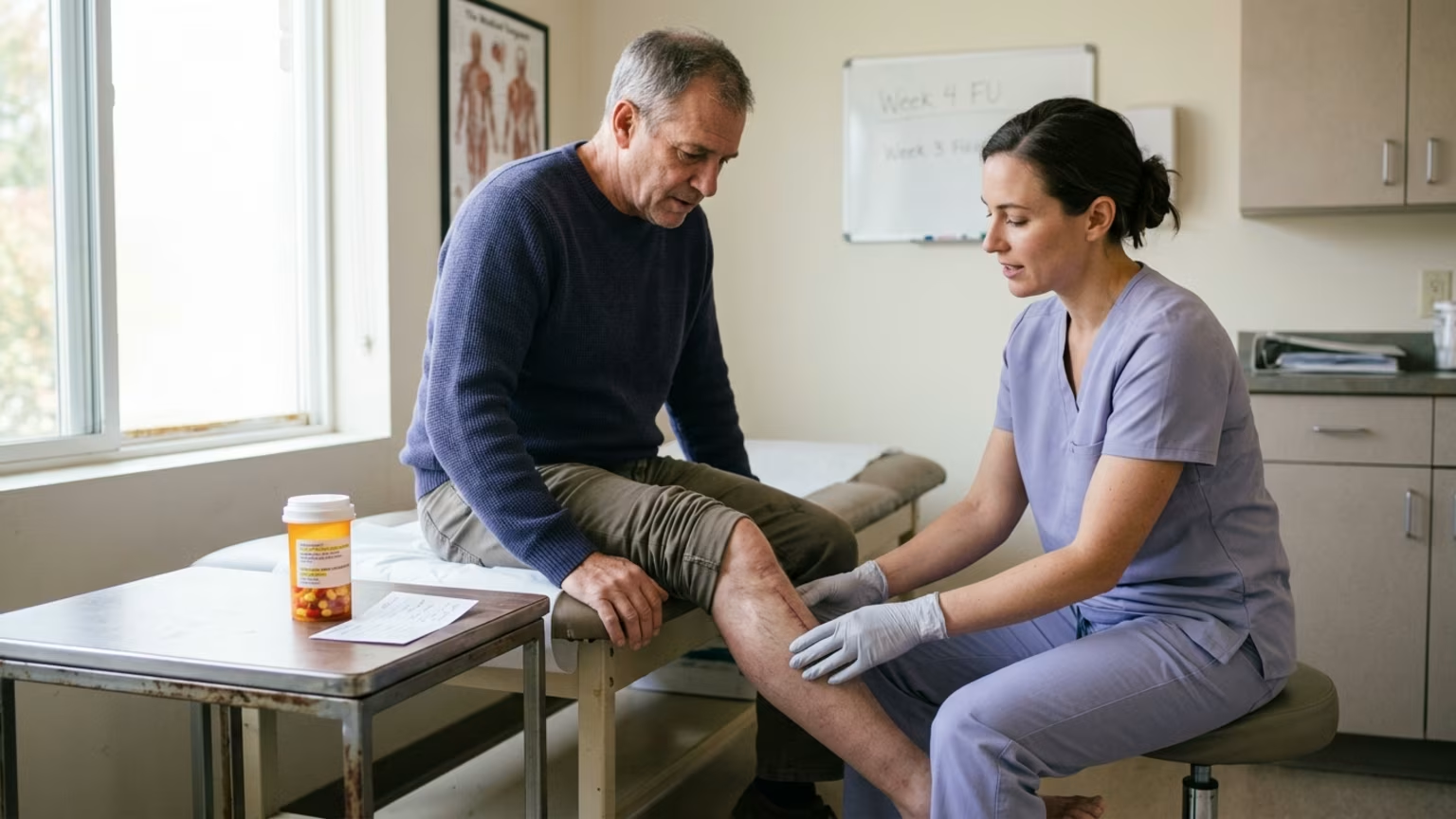

Learn how the SOLARIO trial found a short systemic antibiotic course was noninferior to a longer regimen after orthopedic infection surgery with a local carrier.





In September 2026, a significant update for orthopedic recovery was published in the New England Journal of Medicine. The medical abstract is available on PubMed. The report details the results of the SOLARIO trial. This study focused on adults recovering from surgery for an infected bone.
The trial evaluated how long patients should take systemic antibiotics after an operation. Researchers found that a short course of systemic antibiotics lasting 7 days or less was noninferior to a course of 4 weeks or more. This outcome was specific to patients who also received a local antibiotic carrier during their surgery. This development offers new evidence for teams planning post-surgical care.
Navigating the first weeks after a major procedure requires clear information. Patients often face complex medication schedules. The SOLARIO trial highlights how surgical techniques and medication plans work together. When surgeons implant an antibiotic carrier at the site of the infection, the need for long systemic medication courses may change.
For many years, treating a bone infection involved lengthy medication protocols. Coverage of the trial describes a longstanding practice of giving systemic antibiotics for at least four weeks after surgery. These medications were often administered by an intravenous line. Such extended treatments can place a heavy burden on a recovering patient.
Managing recovery in the first weeks after orthopedic surgery is already a challenging process. Adding four weeks of strong intravenous medication only increases that complexity. Patients often received these long medication doses while trying to manage physical therapy simultaneously. The routine of managing an intravenous line at home can heavily disrupt daily life. It often limits a person's ability to move comfortably or sleep well.
Martin McNally is the lead investigator of the study from the Oxford Bone Infection Unit. He was quoted in coverage regarding this historical approach. McNally noted that long antibiotic courses had been preferred in orthopedics for years without good evidence that they benefit patients. This observation reflects a common challenge in medical care.
Sometimes, standard treatments continue simply because they have been the norm for decades. Before this trial, patients and doctors had less data to challenge that standard. A four-week course of antibiotics was largely seen as a necessary precaution. It was designed to ensure the bone infection was fully cleared. However, long courses of medication can introduce their own complications.
The new evidence comes from a multicenter, randomized, open-label, noninferiority trial. The acronym SOLARIO stands for Short or Long Antibiotic Regimens in Orthopedics. The study randomized 500 patients in total. Out of that group, 475 patients were included in the primary analysis.
The researchers divided these patients into two specific groups. One group received systemic antibiotics for 7 days or less after their surgery. The other group received systemic antibiotics for 4 weeks or more. The primary endpoint measured definite treatment failure by 12 months.
In the short-course group, treatment failure occurred in 11.1 percent of patients. That represents 26 out of 234 individuals. In the long-course group, treatment failure was seen in 14.1 percent of patients. That translates to 34 out of 241 individuals.
The risk difference between the two groups was negative 3.0 percentage points. The 95 percent confidence interval for this difference was negative 9.0 to 3.0. This result successfully met the prespecified noninferiority margin of 10 percentage points for the trial. In clinical research, noninferiority means the shorter treatment met the study criterion for not being unacceptably worse than the longer course.
It is important to note that the numerically lower failure rate does not establish that shorter treatment is more effective. It simply shows it performs similarly well under these specific conditions. The trial also looked at symptoms potentially related to treatment by six weeks after surgery. These were reported by 17.2 percent of the short-course group and 45.2 percent of the long-course group.
This represents a difference of negative 28.0 percentage points. The 95 percent confidence interval for this symptom difference was negative 36.4 to negative 19.6. This data gives doctors clearer expectations about the side effects of prolonged medication. It highlights the potential physical toll that longer systemic regimens can take on recovering adults.
Lowering the rate of medication side effects is a valuable goal in post-surgical care. When a patient experiences fewer symptoms related to their treatment, they often find it easier to engage with daily movement. However, applying these numerical results to everyday care requires careful attention to the study parameters. The noninferiority finding relies entirely on the specific surgical methods used in the trial.
It is crucial to understand exactly who was studied in this trial. The results should not be generalized to every bone or joint infection. The enrolled group specifically consisted of adults who had surgery for an orthopedic infection. Crucially, these patients also had a local-antibiotic carrier implanted at the surgical site.
The tested approach paired surgical management directly with this local antibiotic therapy. Because of this, the study does not directly establish that a short course of systemic antibiotics works when no local carrier is used. Patients who only receive standard surgery without an implanted carrier may still require traditional medication lengths. The findings are strictly tied to the combination of these two specific treatments.
Applying medical research safely means respecting the boundaries of the studied population. This trial provides valuable data for a very specific subset of surgical patients. It is not a broad rule for all orthopedic procedures or all types of infections. The presence of the implanted carrier is the key factor that makes the shorter systemic course viable in this context.
Understanding these boundaries prevents false expectations during recovery. An active adult reviewing this study might assume that all antibiotic regimens can now be cut to one week. That is an incorrect interpretation of the clinical data. Careful attention to these clinical details ensures that individuals do not misinterpret their own care plans.
For someone recovering after surgery for a bone infection, this study offers new points for discussion. The actionable takeaway is to discuss the plan with the treating surgical and infectious-disease teams. A patient should never decide to stop or shorten prescribed antibiotics independently. Managing recovery correctly means working closely with your healthcare providers.
Patients can use this information to ask more specific questions during their follow-up appointments. Useful questions include whether a local antibiotic carrier was used during the procedure. You can also ask whether your specific infection and surgery resemble the trial population. Finally, it is helpful to discuss what specific factors in your personal case affect antibiotic duration.
Navigating medication safety after orthopedic surgery requires open dialogue with your clinical team. It is also vital to recognize what this study does not cover. This research is strictly about infection treatment protocols. It does not concern a return-to-exercise timeline or a general rehabilitation protocol.
It provides absolutely no evidence for changing weight-bearing limits, mobility work, strength rebuilding, or sport progression. Patients must still follow their standard physical therapy guidelines. You can learn more about restoring mobility after orthopedic surgery by focusing on established physical therapy principles. The SOLARIO trial improves our understanding of biological repair environments, but it does not alter the physical work required to regain movement.
While the SOLARIO trial offers strong data, several questions remain open. The trial was conducted as an open-label study. This means that both the patients and the clinicians knew which assigned treatment group each person was in. This specific trial design can influence how subjective experiences are recorded.
It matters especially when interpreting patient-reported symptoms that are potentially related to treatment. To help balance this known limitation, the researchers used a separate clinical end-point committee. The members of this primary outcome committee were unaware of the treatment assignments when they judged the cases. This step helped protect the primary finding of treatment failure from potential bias.
Another area of uncertainty involves the timeline of the observed results. The reported primary endpoint for this trial was treatment failure by 12 months. The available abstract does not establish what happens beyond that 12-month follow-up period. It remains unknown if any differences between the short and long courses emerge several years down the line.
Finally, it is worth noting the organizational support behind this large trial. According to the PubMed record, the study was funded by the European Bone and Joint Infection Society and others. As clinical practices continue to adapt, ongoing studies from similar groups will likely help clarify these remaining open questions. The medical community will need more data to see if these protocols evolve further.
Staying informed about the latest clinical research helps you ask better questions during your medical visits. Healing from an orthopedic setback requires careful attention to both the clinical science and your daily physical efforts.
Assessing a clinical trial on post-surgical medication requires clear context, and ReboundBody delivers independent editorial guidance without medical promises. By addressing the confusion about recovery timelines and what normal variation can look like, we prepare an active adult to grasp their specific situation and make more informed decisions with qualified healthcare professionals.

Follow ReboundBody for practical articles on injury recovery, rehabilitation, mobility and rebuilding strength. New posts turn research into clear ideas for the road back to activity after injury or surgery.






Read practical guidance on injury recovery, rehabilitation, mobility and rebuilding strength as you work your way back to activity.
Explore Resources