

University of Kentucky grants support knee-arthritis MRI research and ankle-fracture guidance studies. Learn their aims and limits for recovery care.





On Oct. 15, 2026, the University of Kentucky College of Health Sciences reported two grants totaling $4.6 million for research on knee arthritis and ankle-fracture recovery. The funding supports work led by Brian W. Noehren, the college's associate dean for research and director of its Biomotion Laboratory.
One project is investigating whether rapid MRI measurements of muscle composition could help guide exercise choices for people with knee arthritis. The other aims to develop treatment guidance for longer-term recovery after ankle fractures.
The shared theme is a familiar rehabilitation question: how should care be matched to the person? These projects approach that question from different directions. Their importance lies in the decisions they are designed to study.
The knee project starts within an existing body of exercise research. An American Family Physician summary of a Cochrane review reports findings from 139 randomized trials involving 12,468 people with knee osteoarthritis. Compared with no treatment or usual care, exercise improved pain and function.
The summary also reports improved patient-reported treatment success compared with control or placebo. For that outcome, it reports a relative risk of 1.46 and a number needed to treat of 8. These figures describe a review comparison, not the outcome of either newly funded study.
Guidelines already support exercise as well. A 2026 review of osteoarthritis rehabilitation reports that the American College of Rheumatology/Arthritis Foundation strongly recommends exercise for knee, hip and hand osteoarthritis. The same review reports that NICE recommends individually tailored therapeutic exercise and suggests supervision when appropriate.
That review also notes that evidence does not establish one universally optimal exercise prescription. Supporting exercise in general is a different task from choosing the right approach for an individual. The Kentucky imaging project is aimed at that second question.
According to the university, the knee-arthritis project uses MRI scans lasting five to 10 minutes to analyze muscle composition. It is supported by the National Institute on Aging at the NIH. The research is developing noninvasive muscle-imaging biomarkers.
Here, a biomarker means a muscle measurement the researchers hope could inform care. The proposed role is to give clinicians additional information when considering exercise options. The practical question is whether that information helps them match a program to a patient's needs.
Noehren uses aerobic exercise and strengthening as examples of how exercise needs might differ between people. These examples describe the project's rationale. They are possibilities being investigated rather than instructions for readers to choose one approach over another.
In this project, the scan is a proposed input to exercise planning. The exercise program remains the decision the researchers want to inform. That distinction keeps the technology in its intended role: a possible aid to clinical judgment rather than a stand-alone answer.
The second project addresses the longer-term effects of ankle fractures. The university says it is funded through a War Department Congressionally Directed Medical Research Program grant. Its goal is to develop guidance for patients who lack a standardized recovery pathway.
That is a different kind of research problem from measuring muscle composition. The ankle project is concerned with treatment guidance itself. The MRI project asks whether a particular source of information could support more individualized exercise choices.
Read together, the projects put two parts of rehabilitation under study: the information used to make decisions and the guidance used to organize care. Both are relevant to personalized rehabilitation, but they should not be treated as the same investigation.
The university announcement concerns people with knee arthritis in the imaging project and people recovering from ankle fractures in the other project. It says the ankle study is open to civilians as well as having military relevance.
The broader exercise evidence is more specific about diagnosis and age. The Cochrane review summarized by American Family Physician included participants aged 41 to 81 with knee osteoarthritis. That overlaps with many readers in midlife and later life, but it remains evidence about knee osteoarthritis.
The review's exercise findings should not be transferred automatically to ankle-fracture rehabilitation or to every cause of knee pain. Likewise, the ankle project's goal of developing guidance does not describe a pathway for every orthopedic injury. A shared funding announcement does not make the patient groups interchangeable.
For someone receiving knee osteoarthritis care, the useful distinction is between support for exercise and the choice of exercise. Existing research supports exercise as a potentially helpful part of care. The imaging project is investigating an additional way to inform the selection process.
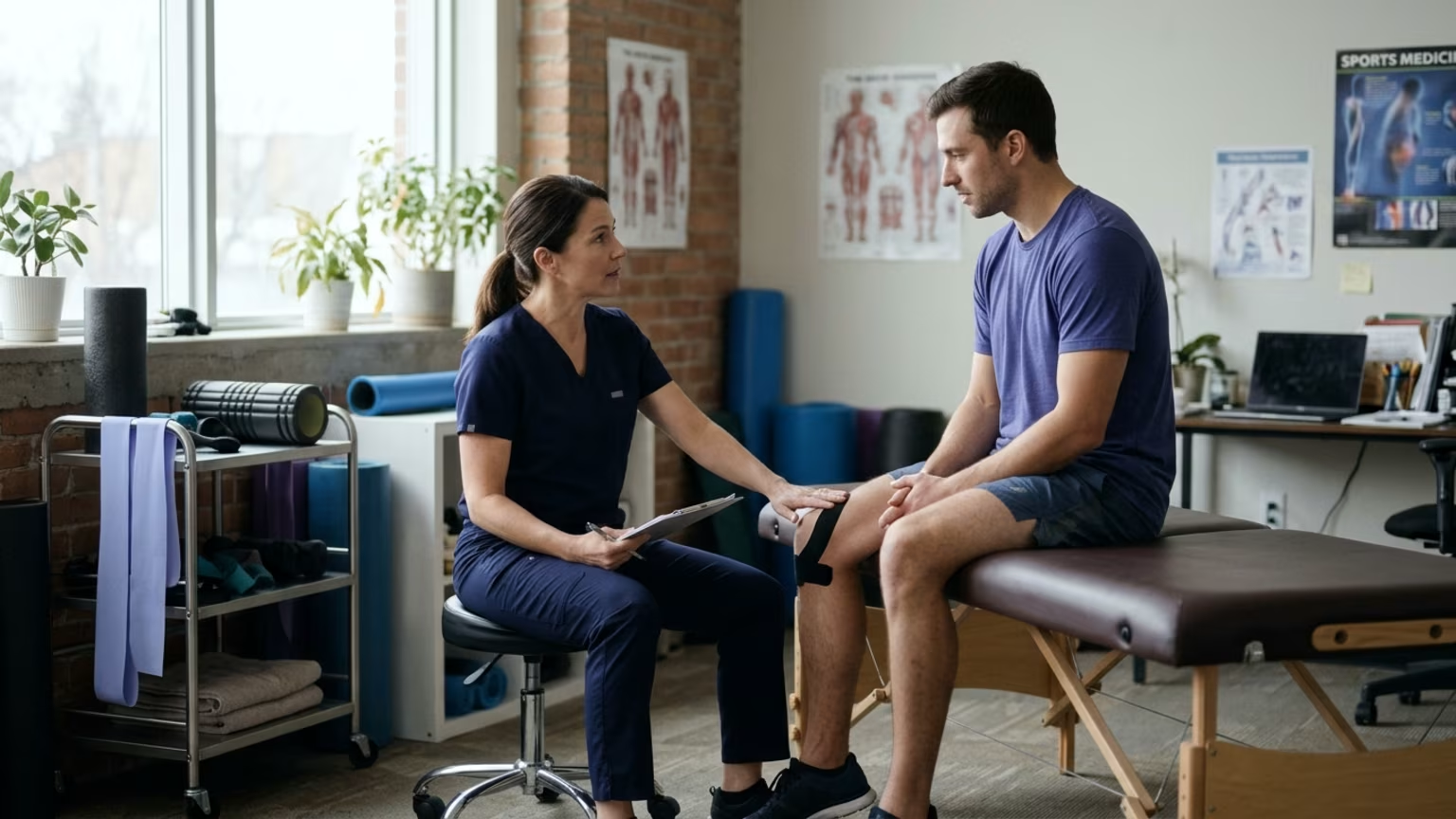
The practical message is to discuss exercise choices with a treating clinician rather than turn the announcement into a personal plan. Questions can focus on the purpose of the current approach and the information behind it:
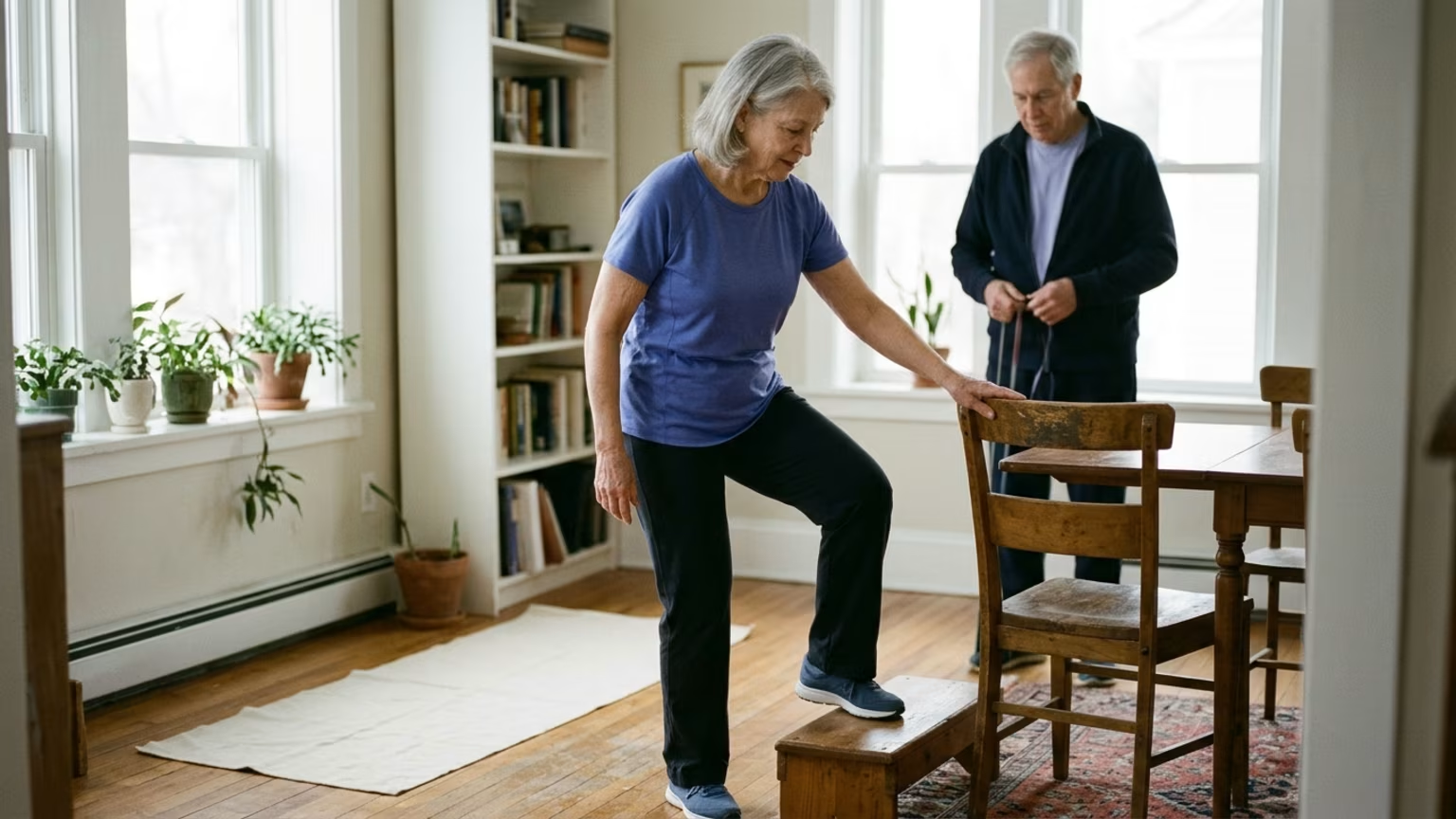
For someone recovering from an ankle fracture, the project draws attention to the need for clearer guidance beyond the initial injury. The useful conversation is about the goals of the person's own rehabilitation plan. Questions for that discussion might include:
Related reading on rehabilitation milestones and calendar expectations offers context for discussing how progress is described.
Keeping the focus on the person's current care also separates research interest from treatment decisions. Language about tracking symptoms during strength rebuilding may help make those discussions easier to follow. Neither a funding announcement nor a general review replaces the judgment of the qualified professionals responsible for that care.
The university announcement reports no outcomes for either project and gives no timeline for clinical adoption. For the MRI work, it does not establish a validated screening test or show that muscle measurements can identify the most effective exercise program. A short scan describes measurement time rather than proof of better recovery.
For the ankle project, the announcement does not report enrollment or eligibility criteria. It also leaves out treatment groups and follow-up duration. Those details matter when judging whom future findings apply to. The announcement therefore offers no basis for predicting an individual's recovery time or choosing a rehabilitation plan.
The university article also reports that approximately 50% of people with ankle fractures develop chronic pain. It does not give an underlying study citation or method for that estimate. The figure should be read as part of the announcement's rationale, not as an individual prognosis.
The exercise review also needs careful interpretation. American Family Physician reports low-certainty evidence for pain improvement and moderate-certainty evidence for improved function compared with no treatment or usual care. Certainty varied across outcomes and comparisons. That distinction concerns confidence in the findings rather than a forecast for any one person.
The next meaningful development will be evidence about the questions these grants support. For now, the announcement shows where research attention is being directed. The promise of more personal rehabilitation rests on the usefulness of the answers, not simply on the detail of the measurements.
Separating a proposed MRI aid from the evidence behind exercise choices is where ReboundBody brings independent editorial context. Readers facing conflicting claims about rehabilitation tools and treatment options can better understand the research through explanations grounded in realistic limits, without medical promises or a personal care plan.

Follow ReboundBody for practical articles on injury recovery, rehabilitation, mobility and rebuilding strength. New posts turn research into clear ideas for the road back to activity after injury or surgery.




Read practical guidance on injury recovery, rehabilitation, mobility and rebuilding strength as you work your way back to activity.
Explore Resources