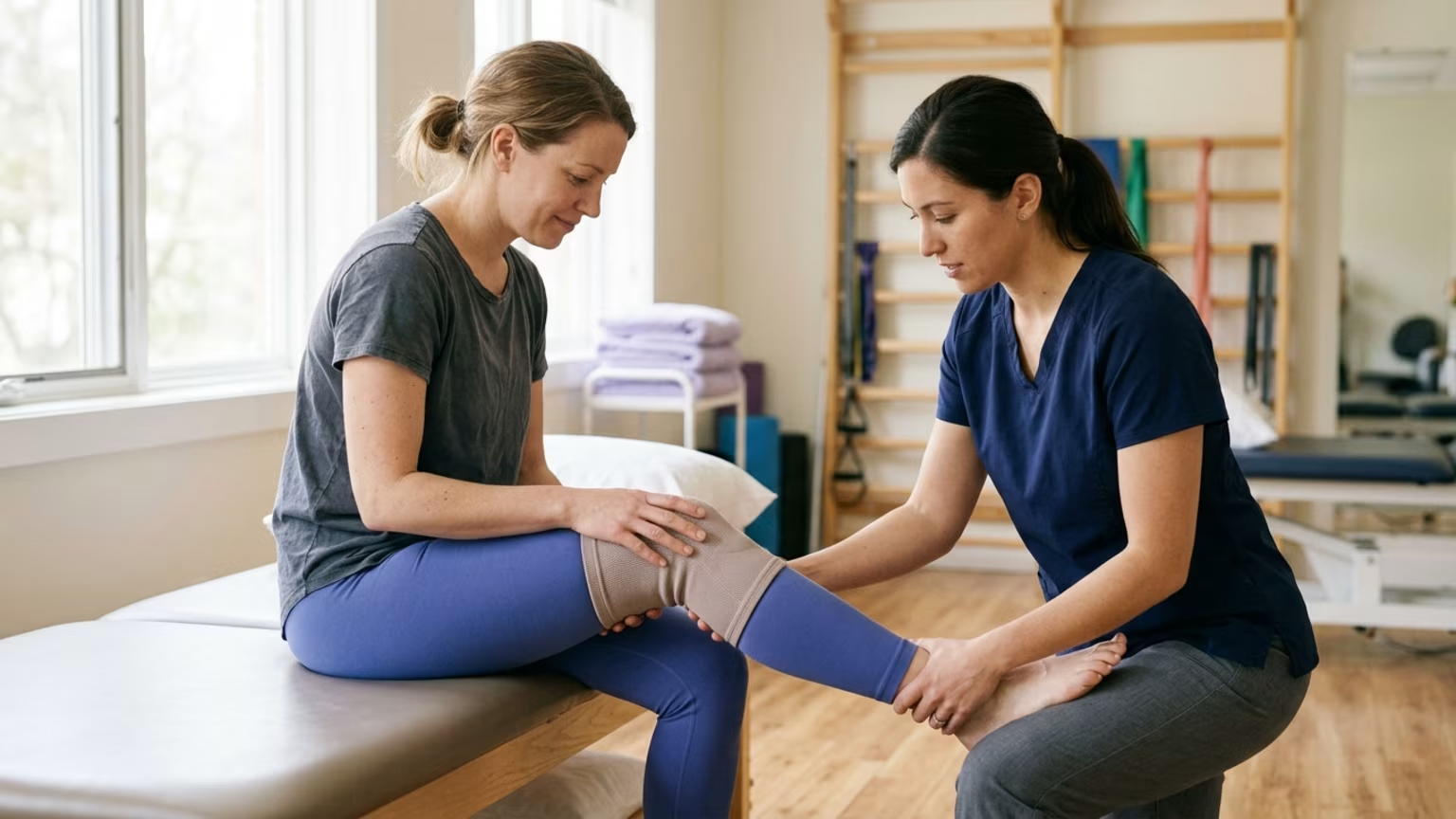

Understand why orthopedic recovery is better guided by physical milestones like strength symmetry, movement quality, and subjective readiness than by rigid calendar dates.





A 2026 review reports that only 42.7% of patients formally tested for return-to-sport clearance after ACL reconstruction passed the recommended criteria. This single statistic illustrates a fundamental truth about physical rehabilitation. A calendar alone cannot predict when a body is fully ready for demanding activity. Real recovery depends on achieving objective physical capacity rather than simply checking off weeks on a post-surgical schedule.
Orthopedic recovery is best understood as a series of physical milestones rather than a fixed end date. After an injury or surgery, people naturally want to know exactly when they will be fully healed. However, biological repair and the return of strength do not follow a strict timetable for everyone. Tissues heal at varying rates based on age, baseline fitness, and the specific nature of the trauma. A 2026 review on anterior cruciate ligament (ACL) reconstruction explains that progression should depend on objective and subjective criteria rather than elapsed time alone.
This means that moving to the next stage of activity requires meeting specific physical benchmarks. Clinicians look for acceptable strength and normalized movement patterns before clearing a patient for heavier loads. The exact timeline for reaching these functional milestones varies widely among individuals. While doctors provide general estimates for early healing, the actual pace of recovery is dictated by how the body responds to daily rehabilitation.
Trying to force a joint to meet a calendar deadline often leads to unnecessary frustration. When an active adult expects to resume full workouts at a specific week, they might ignore physical warning signs. Standard timeframes offer a helpful rough outline for the months ahead. However, true readiness is measured by what the joint can safely handle on any given day.
Several factors influence how quickly a person moves from basic healing to active strength rebuilding. The 2026 review identifies strength, hop performance, movement quality, and psychological readiness among the key factors used to assess progression. Each of these variables develops at a different rate depending on the individual. Someone might regain their range of motion quickly but need significantly more time to build symmetrical muscle strength.
The traditional approach to rehabilitation often relied on rigid phases based on weeks post-surgery. However, the same 2026 review cites recent work proposing overlapping, adaptive rehabilitation blocks instead. In this modern model, clinicians adjust load and movement complexity as the person's status changes. This adaptive approach accounts for individual differences in tissue healing and motor control.
Psychological readiness also plays a major role in how recovery timelines vary. Regaining physical strength is only part of the process for an active adult. The review notes that psychological readiness must be considered alongside physical performance when evaluating a patient. Fear of reinjury can slow progress, requiring extra time to build movement confidence before advancing to higher intensity exercises.
Finally, the specific surgical procedure dictates different starting points and restrictions. The criteria for ACL reconstruction are highly specific to that joint and cannot be universally applied to a hip replacement. Individual variations in swelling response and baseline fitness further shape how smoothly someone moves through these rehabilitation blocks.
Looking at ACL reconstruction provides a clear example of how functional milestones structure the rehabilitation journey. The 2026 review describes ACL rehabilitation as prehabilitation followed by postoperative phases focused on impairments, sport-specific training, and return to play. Each distinct phase has physical goals that must be met before advancing. Prehabilitation prepares the joint before surgery, while impairment phases tackle immediate post-surgical deficits.
For the return-to-sport phase, that review reports specific minimum criteria. These include passing at least nine months after surgery and achieving 90% quadriceps strength symmetry compared to the uninjured leg. Patients are also expected to score 90% on all hop tests. These objective numbers give physical therapists a clear way to measure true readiness.
Subjective feedback is equally important in these functional assessments. The review notes that patients should score 90% on the Knee Outcome Survey for Activities of Daily Living. Additionally, they should reach 80% on the ACL Return to Sport after Injury scale. This combination of strength tests and self-reported confidence creates a comprehensive picture of injury recovery milestones.
It is crucial to understand that these specific numbers apply strictly to ACL recovery and return to sport. They are not a universal checklist for every orthopedic procedure or everyday fitness goal. However, they perfectly illustrate the concept of using concrete data to guide the safe resumption of physical activity. Focusing on these metrics shifts the mindset away from waiting for a specific date.
Pain and swelling are direct indicators of how a joint is tolerating the current level of activity. A 2026 narrative review of ACL reconstruction readiness says running is generally introduced when pain and joint effusion are minimal. Effusion is the clinical term for swelling inside a joint space. If swelling increases significantly after a new exercise, the joint may not be ready for that specific load.
Before introducing a high-impact movement like running, clinicians look for several other markers alongside low pain levels. The narrative review summary notes that range of motion must be near symmetric and gait must be normalized. Objective strength criteria must also be acceptable before progressing. These physical signs tell the care team that the joint can handle the repetitive stress of running without breaking down.
Monitoring these symptoms helps prevent setbacks during the transition from basic physical therapy to independent exercise. A summary of the 2026 narrative review states that shared decision-making should consider the swelling response alongside sport demands and strength symmetry. If pain spikes or swelling returns, the rehabilitation plan may need temporary adjustments. Learning to read these physical cues is an essential skill for long-term joint health.
Active adults must pay close attention to these signals when rebuilding fitness after formal therapy ends. Ignoring increased swelling just to stay on a predetermined timeline can irritate healing tissues. Adjusting the daily workload based on the body's actual response is a core principle of safe recovery.
Reaching a functional milestone is an excellent sign of progress, but it does not remove all risk. The 2026 review cautions that passing criteria does not eliminate reinjury risk entirely. Even among the patients who passed the rigorous return-to-sport criteria, 14.4% sustained a second ACL injury. This fact highlights the ongoing vulnerability of healing tissues even after significant strength has returned.
Because risk remains, the transition back to full activity must be highly deliberate. The review says return to competition should be stepwise rather than an abrupt jump from rehabilitation to full play. This principle applies just as strongly to recreational athletes returning to a demanding hiking trail. Gradually increasing the intensity allows the body to adapt to unpredictable real-world forces.
Furthermore, the criteria themselves are not perfect predictors of success. The 2026 review emphasizes that return-to-sport criteria and testing batteries vary across the literature and are not applied consistently. It also characterizes evidence for prognostic factors associated with return to sport as very low certainty. This means the scientific community is still refining the best ways to measure true physical readiness.
Ultimately, clearing a test is a green light to start the next phase of cautious progression. It means the body has the baseline capacity needed for the specific task at hand. Maintaining that capacity requires continued attention to strength, movement quality, and careful load management over time.
Navigating the shift from early healing to active rebuilding requires clear communication with your orthopedic surgeon or physical therapist. Since the 2026 narrative review highlights that shared decision-making should consider relevant surgical factors, your team's guidance takes absolute priority. Every surgery has unique tissue healing constraints that influence the rehabilitation plan. Do not change your activity levels without their explicit approval.
During your appointments, ask what functional milestone you are working toward next and how it will be assessed. You can inquire about the specific objective and subjective criteria they use to evaluate your daily progress. It is also helpful to ask what symptoms or changes, such as new swelling or localized soreness, you should report immediately. Understanding basic orthopedic recovery terms makes these clinical conversations much more productive.
Finally, discuss your specific goals and ask which restrictions still apply to your individual procedure. What does returning to your daily tasks, preferred exercise, or recreational sport actually require? Having your clinician map out the physical demands of your specific goal helps set realistic expectations for the months ahead. It shifts the focus from waiting for a date to working toward a physical target.
Recovering from a major orthopedic event is a dynamic process shaped by objective physical milestones. The research clearly shows that progression should be based on factors like strength symmetry, movement quality, and psychological readiness, rather than just elapsed time. While standard timeframes provide a helpful rough estimate for early healing, the true measure of recovery is the functional capacity of the joint. Moving forward safely requires meeting the criteria for each new stage.
An adaptive approach that respects individual differences leads to a more realistic and sustainable rehabilitation journey. Recognizing that setbacks can occur and that reinjury risks remain helps active adults make smarter choices about their daily activities. Adjusting loads based on pain, swelling, and strength ensures that progression matches the body's actual readiness. This mindset builds physical resilience and reduces frustration.
The work of restoring movement extends long after the early clinical milestones are met. Real healing asks for steady patience, measuring progress not by the pages of a calendar, but by the quiet return of physical trust.
Accepting that healing follows unpredictable physical milestones rather than a fixed calendar can be frustrating, and ReboundBody works within this reality to clarify your next steps. We address the confusion about recovery timelines and what normal variation can look like, helping active adults build a realistic framework for regaining strength safely.

Follow ReboundBody for practical articles on injury recovery, rehabilitation, mobility and rebuilding strength. New posts turn research into clear ideas for the road back to activity after injury or surgery.


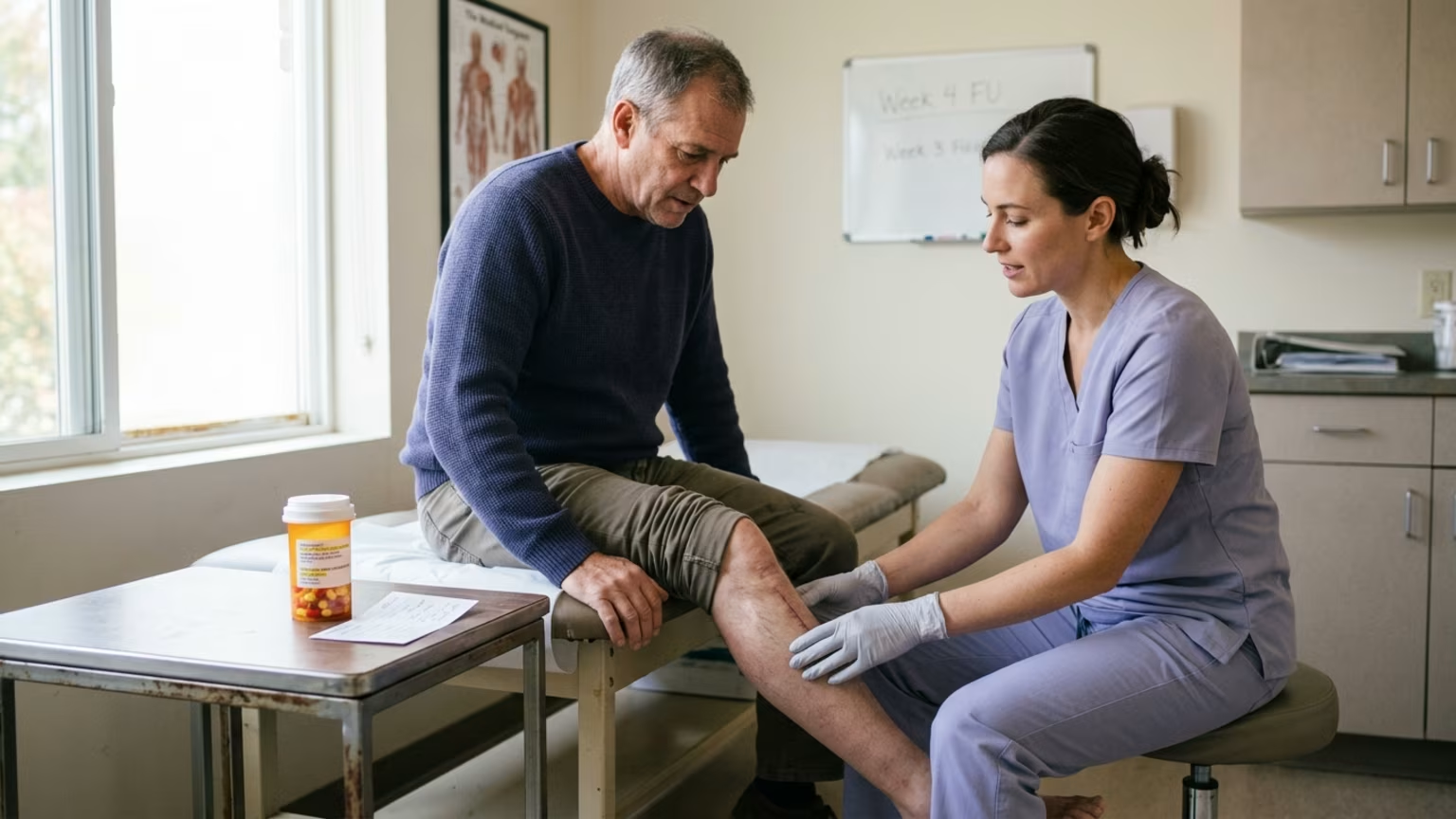



Read practical guidance on injury recovery, rehabilitation, mobility and rebuilding strength as you work your way back to activity.
Explore Resources