
A physiotherapist’s ankle advice pairs strength with balance. See how it fits broader fall-prevention evidence and where questions remain.





On November 19, 2026, Fit&Well published ankle-exercise advice from physiotherapist Will Harlow, who specializes in helping people over 50. Reported by Rosie Fitzmaurice, the article brings together calf raises, toe raises and single-leg balance as complementary parts of ankle training.
A wall or worktop features in Harlow’s instructions. He describes holding one for support during calf raises and keeping a worktop nearby during single-leg balance. That supported setting is part of his advice alongside making the exercises gradually harder.
The central message is that ankle function involves more than calf strength. In Harlow’s explanation, the calf muscles contribute to walking push-off while the shin muscles lift the foot. Balance practice addresses the ankle’s ability to react.
For adults thinking about staying active or rebuilding movement, that distinction offers a useful way to understand the advice. It also raises a broader question: where does ankle-focused exercise fit within fall prevention?
The World Health Organization’s falls guidance, dated October 21, 2026, provides the broader evidence context. It recommends tailored exercise that challenges balance and improves functional strength for older people living in the community. Regular progression and sufficient duration are part of that guidance.
WHO reports that a Cochrane review found exercise reduced the overall rate of falls by approximately 23% in trial populations. That finding concerns the exercise programs studied in those trials. It gives context for why balance and strength appear together in prevention advice.
This is a broader approach than focusing on a single muscle group. WHO’s guidance concerns how exercise matches a person’s needs and develops over time. The particular movement names are only part of that picture.
WHO also places exercise within a wider fall-prevention approach. Its guidance includes attention to home hazards and other contributors to risk. That background matters when reading an article centered on the ankle: the exercise discussion sits within an existing prevention framework rather than replacing it.
Harlow’s contribution is a practical way to organize ankle training around different jobs. His exercise choices distinguish pushing off from lifting the front of the foot and responding to changes in balance.
Harlow describes calf raises as rising onto the balls of the feet and lowering with control. His instructions include holding a wall or worktop for support.
He describes a progression from using both legs to using one leg and then performing the movement on a step. These are the progression examples in his advice, rather than separate findings from exercise trials.
The useful distinction is the movement’s purpose within his explanation. Calf work addresses the push-off part of ankle function. It is one component of the routine alongside foot lifting and balance practice.
Toe raises are also called tibialis raises in the Fit&Well article. Harlow describes a wall-supported position with the feet forward. The movement involves lifting the toes and front of the feet before lowering them with control.
This is a different action from rising onto the balls of the feet. Harlow includes it because his explanation of ankle function gives the shin muscles a separate role: lifting the foot.
Readers seeking background on these movement roles can use ReboundBody’s guide to how ankle motion and strength relate to walking.
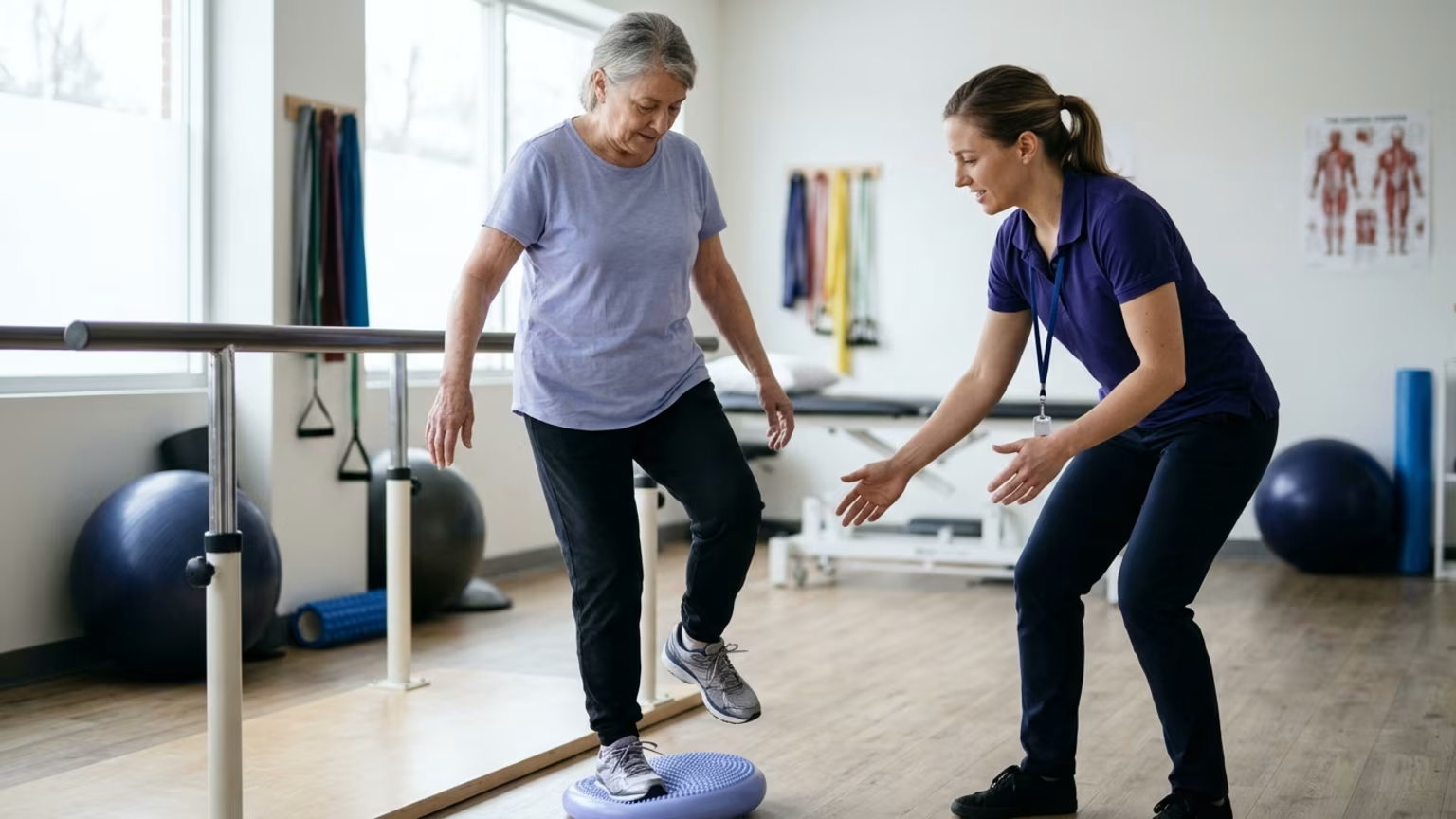
Harlow’s balance exercise involves standing on one leg beside a worktop. He describes balance practice as a way to train rapid ankle reactions.
He also discusses neuromuscular control. In plain language, this means sensing the ankle’s position and responding. Harlow identifies poor control as relevant to repeat ankle sprains.
His proposed balance progressions involve changes to vision or the standing surface. Slowly turning the head is another example he gives. The organizing idea is that balance practice adds a reaction-based element alongside the two strengthening movements.
Harlow’s stated area of practice is helping people over 50. That is the audience focus of the Fit&Well article. WHO’s recommendations address older people living in the community and draw on exercise evidence from older trial populations.
Those scopes are relevant to active adults in midlife and later life. They should remain visible when interpreting the advice rather than turning it into a claim about every age group or recovery situation.
For readers returning to movement after a fall, WHO makes an additional connection. Its guidance includes injury management and rehabilitation to regain function. It also includes reassessment aimed at reducing future risk.
That places recovery and prevention within the same broader discussion. Regaining movement after an injury and considering future fall risk are related concerns in WHO’s approach. The ankle article addresses a narrower part of that discussion through strength and balance exercises.
For readers, the clearest use of this article is to separate the movement functions under discussion. Push-off strength is one topic. Lifting the front of the foot is another. Balance reactions add a further topic for a conversation with a qualified healthcare professional.
This vocabulary can make an exercise plan easier to discuss. Instead of treating “ankle strength” as a single task, the conversation can identify which function a particular movement is intended to address. ReboundBody’s overview of the relationship between strength and balance provides related educational context.
Useful questions raised by the article include:
The last two questions widen the discussion beyond the ankle. WHO includes home-hazard assessment and modification for people at increased risk. It also includes reviewing medicines that may raise fall risk.
Other factors in WHO’s guidance include vision and footwear. Dizziness and mobility limitations also receive attention. These belong in the wider assessment rather than being treated as problems that ankle exercise alone will resolve.
Medication review is a matter for qualified healthcare professionals. The practical takeaway is to recognize it as part of the prevention conversation, not to change medicines in response to an exercise article.
For a broader view of that conversation, ReboundBody’s resource on balance work and safer surroundings covers the wider prevention theme. The ankle advice offers a focused entry point into that larger picture.
The Fit&Well story is practitioner guidance rather than a new clinical trial or published clinical guideline. It does not identify a study testing Harlow’s exact combination of exercises. The specific frequency and progression sequence are his recommendations rather than an established fall-prevention program tested as a whole.
The broader exercise evidence reported by WHO therefore does not validate this particular routine. The article does not establish that the combination itself prevents falls or ankle sprains. How much this ankle-focused approach adds to a wider prevention program remains unanswered by these sources.
There is also a separate question about personal suitability. The article does not provide individualized guidance for people with pain or recent surgery. It also does not establish which progressions suit an ankle injury or substantial balance difficulty.
For people in those situations, exercise selection and progression belong in a discussion with the professionals overseeing their care. The same applies when recurrent sprains are part of the history. WHO’s emphasis on tailoring exercise provides the broader principle for that discussion.
The wall or worktop in Harlow’s article is a useful image to return to. It represents support within a focused exercise suggestion. Seen within the wider evidence, the important question is how that ankle work belongs within the person’s overall recovery and prevention plan.
Deciding where ankle exercises belong within recovery requires separating general prevention advice from personal rehabilitation choices, a distinction ReboundBody helps readers understand through its editorial coverage. ReboundBody publishes evidence-aware explanations of mobility and strength rebuilding for active adults navigating orthopedic setbacks, with realistic expectations about the path back to activity.

Follow ReboundBody for practical articles on injury recovery, rehabilitation, mobility and rebuilding strength. New posts turn research into clear ideas for the road back to activity after injury or surgery.






Read practical guidance on injury recovery, rehabilitation, mobility and rebuilding strength as you work your way back to activity.
Explore Resources