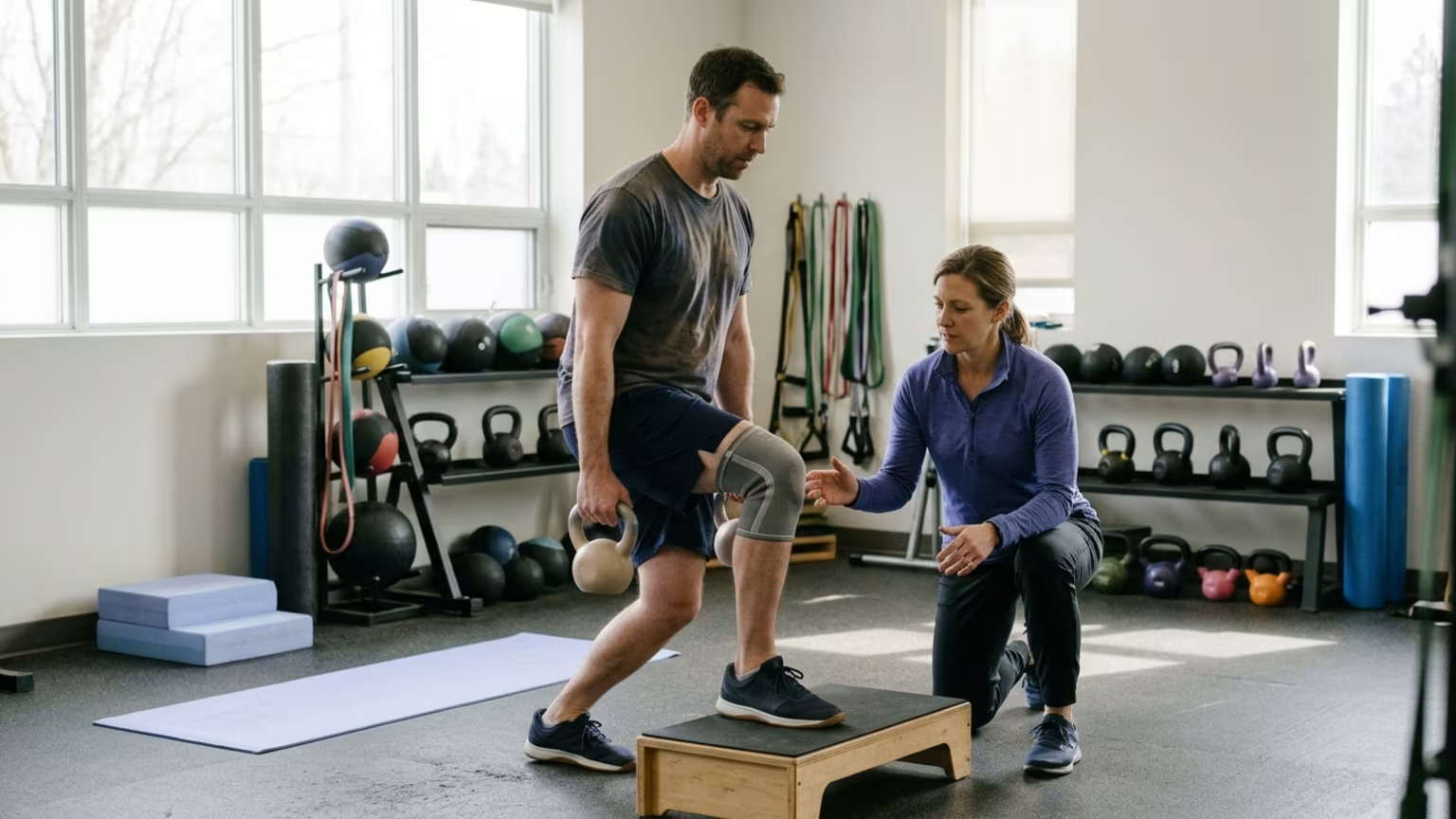

Learn how progressive loading describes changes in activity demands, why progression varies and what to ask your clinician before returning to activity.





In a 2026 International Journal of Sports Physical Therapy consensus on athletic hamstring injuries, 54 of 60 statements reached agreement. Its recommendations include progressive loading: gradually bringing back the physical demands needed for everyday activity or sport. This gives recovery a direction, but the right next increase depends on the injury and the person's current abilities.
Progressive loading is not simply adding weight to an exercise. It can mean spending longer on an activity or working toward a more demanding movement. The key question is what demand is being added and how readiness for that demand is assessed.
The starting point and the destination both matter. A return to ordinary movement poses a different question from a return to full sprinting. Even within the same diagnosis, progression needs to account for how the person currently functions.
The hamstring consensus recommends combining several kinds of information when deciding whether rehabilitation should advance. These include the injury classification and functional presentation. Symptom response and objective testing also matter, along with sport demands and the athlete's confidence.
In plain language, the decision is about more than how long someone has been recovering. It also considers what they can do and what the next activity will require. A calendar date does not answer all of those questions.
The recommendations reflect expert agreement rather than a trial proving that one progression plan is better. They concern athletic hamstring injuries and should not be treated as a protocol for joint replacement, fractures or other post-operative recovery. Their exercise stages and progression decisions belong to that injury context.
The useful broader idea is to connect each increase with a clear purpose. Is the next goal more time moving, greater effort or a more demanding task? Naming that purpose makes the recovery discussion more specific without turning a general concept into an individual prescription.
That distinction also helps when reading about how gradual activity increases are described. Understanding the concept is different from deciding which increase fits a particular diagnosis.
Load describes the demands of an activity, not just the weight being lifted. The hamstring consensus addresses tissue loading alongside running duration and intensity. It also considers agility and sport-specific workloads.
Several everyday labels can help describe what changed:
These are ways to describe activity, not a validated formula for managing every injury. The consensus explicitly addresses running duration and intensity alongside agility and sport demands. It does not establish a single progression schedule covering all four labels for all patients.
This vocabulary helps clarify what “doing more” means. A session can become longer without becoming faster. A movement can become more complicated without using a heavier weight.
That matters when discussing a return to normal routines. Saying that an activity “felt harder” leaves several possible meanings. Describing whether it involved more time or greater effort makes the conversation more precise.
The same distinction applies to the activity goal itself. “Return to exercise” is a broad destination. Identifying the actual task gives the discussion a clearer focus, as this explanation of starting with the activity someone wants back describes.
Changing several demands at once can make a response harder to interpret. As a practical tracking point, a clearly described change gives the person and clinician a more focused starting point for discussion. That is not the same as proving that only one demand should ever change.
The research assembled here does not directly test whether changing one variable at a time reduces flare-ups or improves recovery outcomes. It supports symptom monitoring and attention to functional demands. The tracking idea should therefore remain an aid to communication rather than a treatment rule.
Consider the difference between describing a session as “more exercise” and describing it as longer and faster. The second description identifies separate changes. If agility work was also added, that is another part of the account.
A useful activity description might distinguish:
These details organize a conversation. They do not establish which change caused a symptom response or whether the activity was appropriate for that person's injury.
A flare-up should not be treated as proof of new damage. Its meaning needs to be considered alongside the diagnosis and the wider clinical picture. The practical question is what the response means for the existing plan, not which general internet rule seems to fit.
The panel's emphasis on symptom response supports making that discussion part of progression. Agreeing with a clinician on what to monitor gives those observations a purpose beyond simply recording whether a session felt good or bad.
Readiness involves more than elapsed time. In the hamstring consensus, progression and return-to-sport decisions draw on strength testing and sport-specific workloads. Symptom response and athlete readiness are also part of the assessment.
This is where progressive loading connects with the demands of the eventual activity. The question is not only whether an exercise can be completed. It is how the current findings relate to the movement demands that come next.
The hamstring example makes that connection concrete. The consensus describes early mobility and movement-control work followed by more demanding loading and later ballistic exercises. It also supports gradually increasing running duration and intensity toward full sprinting.
Those recommendations describe a progression in demands. They are not simply a list of exercises to finish. Running and agility are part of preparing for the sport-specific workloads identified by the panel.
The panel also supported incrementally increasing return-to-sport workloads. That keeps the destination visible throughout rehabilitation: the person is working toward the demands of the activity itself rather than an isolated exercise result.
For someone approaching the end of formal rehabilitation, this suggests a useful discussion about the gap between current ability and the intended activity. What has already been assessed? What demands remain to be considered by the treating team?
Confidence belongs in that conversation too. The consensus includes athlete confidence among the factors used in progression decisions. It sits alongside physical findings rather than replacing them.
This broader view of readiness beyond the calendar can help frame questions about the transition out of supervised care. The purpose is to understand how the decision is being made, not to turn a single test or a good session into personal clearance.
The most useful questions connect the next activity with the diagnosis and the current findings. They also clarify what information should lead to a review of the plan.
Questions to discuss include:
The answers provide context for an individual plan. They also make it easier to distinguish the purpose of a progression from the details of how it will be carried out.
Progressive loading means gradually reintroducing demands with a clear activity goal in view. The hamstring consensus illustrates how symptoms and objective testing can inform those decisions alongside functional demands and confidence.
The central question is not simply, “Am I doing more?” It is, “What demand is changing, and what supports that change?”
The agreement behind those 54 statements points toward this more structured way of thinking. The value lies in the questions guiding progression, not in treating expert agreement as a timetable to copy.
Strength measures and activity milestones give this recovery question a concrete focus, and ReboundBody explains the research behind rehabilitation in plain language. For midlife and older adults uncertain about resuming normal movement after formal care, its independent articles clarify recovery concepts and realistic limits to support informed discussions with the clinicians involved in their care.

Follow ReboundBody for practical articles on injury recovery, rehabilitation, mobility and rebuilding strength. New posts turn research into clear ideas for the road back to activity after injury or surgery.






Read practical guidance on injury recovery, rehabilitation, mobility and rebuilding strength as you work your way back to activity.
Explore Resources