

Learn how to safely progress physical activity without the boom-and-bust cycle. Understand practical frameworks for managing effort and rebuilding capacity.





A recovery day often begins with reduced symptoms and a burst of motivation. People take advantage of a good day by doing extra work or extending an exercise session. By the next morning, usual activities become much harder. This pattern represents the boom-and-bust cycle of physical rehabilitation.
The boom-and-bust cycle happens when people rapidly increase physical demands on days they feel well. This sudden spike in activity often leads to a sharp increase in symptoms the following day. Herefordshire and Worcestershire Health and Care NHS Trust recommends breaking demanding tasks into smaller portions and avoiding a burst of activity that makes usual activities harder afterward. Instead of dramatic jumps, recovery requires starting with a manageable amount of activity.
You can gradually build capacity as your body adapts over time. Herefordshire and Worcestershire Health and Care NHS Trust advises starting with a manageable amount of activity and building gradually, rather than waiting to be completely pain-free. Many musculoskeletal problems naturally improve over 6 to 12 weeks. Some conditions take longer, and good and bad days are a completely normal part of recovery.
Treating progress as a flexible process helps prevent major setbacks. The goal is to establish a consistent baseline of movement. Once that baseline is manageable, you can begin to add small amounts of challenge. This gradual process replaces the erratic spikes of the boom-and-bust pattern.
Progressive activity frameworks appear across various orthopedic rehabilitation contexts. An AAFP review reports that, in the evidence it summarizes, rehabilitation programs allowing some pain had outcomes equivalent to pain-free programs for pain and return-to-play clearance. The AAFP review identifies slow-resistance exercise as part of treatment for patellar and Achilles tendinopathies. However, specific treatments are condition-linked rather than universal progression schedules for everyone.
A calf-injury clinical review describes progressing demands in stages and basing advancement on function and response to loading, not elapsed time alone. Advancing activity based on elapsed time alone is rarely sufficient. These principles help individuals progress rehabilitation without rushing through the necessary stages of healing.
Broader health guidelines also encourage steady movement for active aging. NIH’s general healthy-aging guidance recommends 150 minutes of moderate activity weekly and strength work at least two days per week, while advising people recovering from injury or illness to consult a doctor before beginning a new routine. These targets describe longer-term goals rather than an immediate recovery quota.
Progressing activity safely relies on small adjustments rather than sudden leaps. The Trust describes frequency, intensity, time, and type as ways to think about activity, and suggests changing one variable at a time. Changing only one variable at a time can help people build activity gradually.
To make a session more manageable, you can reduce repetitions or exercise duration. You might also choose an easier movement or take more frequent breaks. When the modified activity becomes easier, you can slowly build the challenge back up. Breaking demanding tasks into smaller portions helps balance activity with necessary rest.
Tracking how activity affects symptoms is a key part of this process. The Trust’s guidance describes 0 to 4 as a comfortable exercise pain range, while emphasizing adaptation if pain is higher. This scale provides practical guidance rather than a universal clearance rule for every situation. The goal is to monitor symptom responses rather than mandate completely pain-free sessions.
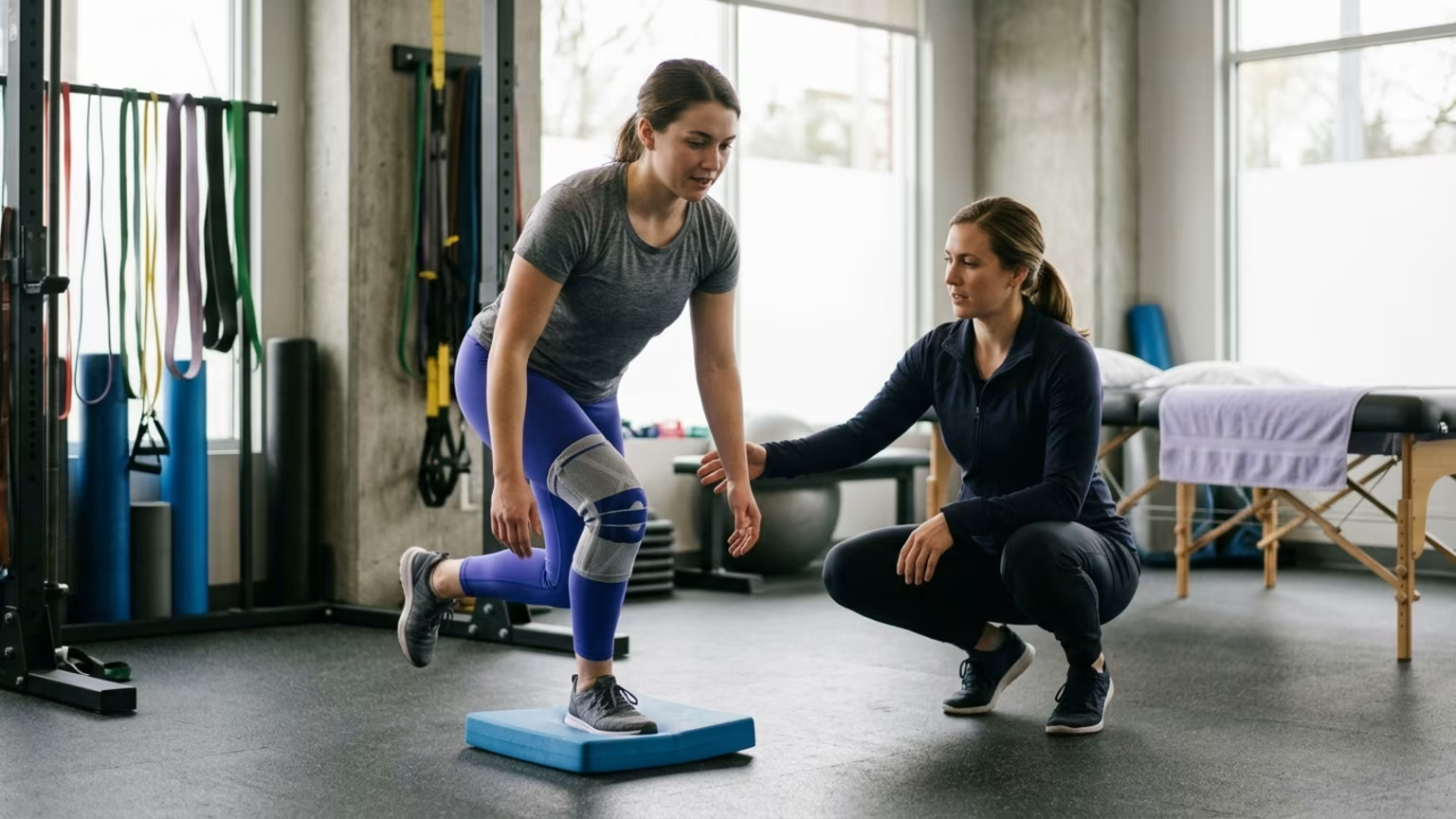
Adjusting the difficulty of an activity involves several practical options. The calf injury clinical review describes progressive loading through specific mechanical changes. A person might move from bilateral exercises to unilateral tasks. Working one side at a time naturally increases the physical demand.
They could also progress from supported positions to unsupported movements. Changing the range of motion from partial to greater distances is another reliable option. Modifying the speed of force production from slower to faster can also alter the challenge. These adjustments allow the body to adapt to new demands without a dramatic jump in weight.
Early loading should not be interpreted as aggressive loading. The calf injury review advises against increasing running volume and intensity simultaneously early in rehabilitation. Focusing on one type of progression prevents the physical overload that triggers the boom-and-bust cycle.
The appropriate pace of activity depends heavily on the individual and the specific condition. There is no single amount of exercise that suits everyone. If symptoms worsen significantly or become highly unusual, it is time to stop the activity. A clinician can help align your exercise plan with your actual physical capacity.
People recovering from illness or injury should check with a doctor before beginning a new routine. Medical consultation ensures that your chosen activities are appropriate for your specific stage of recovery. Professionals can also help determine if your good and bad days fall within normal expectations.
Progressing physical activity requires a flexible approach to effort and recovery. Treating rehabilitation as a series of small adjustments helps prevent the boom-and-bust cycle. You can build capacity slowly by modifying time, effort, and movement difficulty.
Individual recovery choices always depend on the specific condition and clear clinician guidance. Consistent, small adjustments build lasting physical capacity far better than occasional bursts of extreme effort.
Determining how to safely progress daily physical activity without triggering a symptom flare-up requires clear guidance. ReboundBody addresses the conflicting online claims about recovery tools, exercises, nutrition and treatment options. We help active adults interpret physical milestones along the return-to-sport continuum. We translate medical consensus statements into objective guidance so you can make more informed decisions with your healthcare team. Browse Resources

Follow ReboundBody for practical articles on injury recovery, rehabilitation, mobility and rebuilding strength. New posts turn research into clear ideas for the road back to activity after injury or surgery.





Read practical guidance on injury recovery, rehabilitation, mobility and rebuilding strength as you work your way back to activity.
Explore Resources