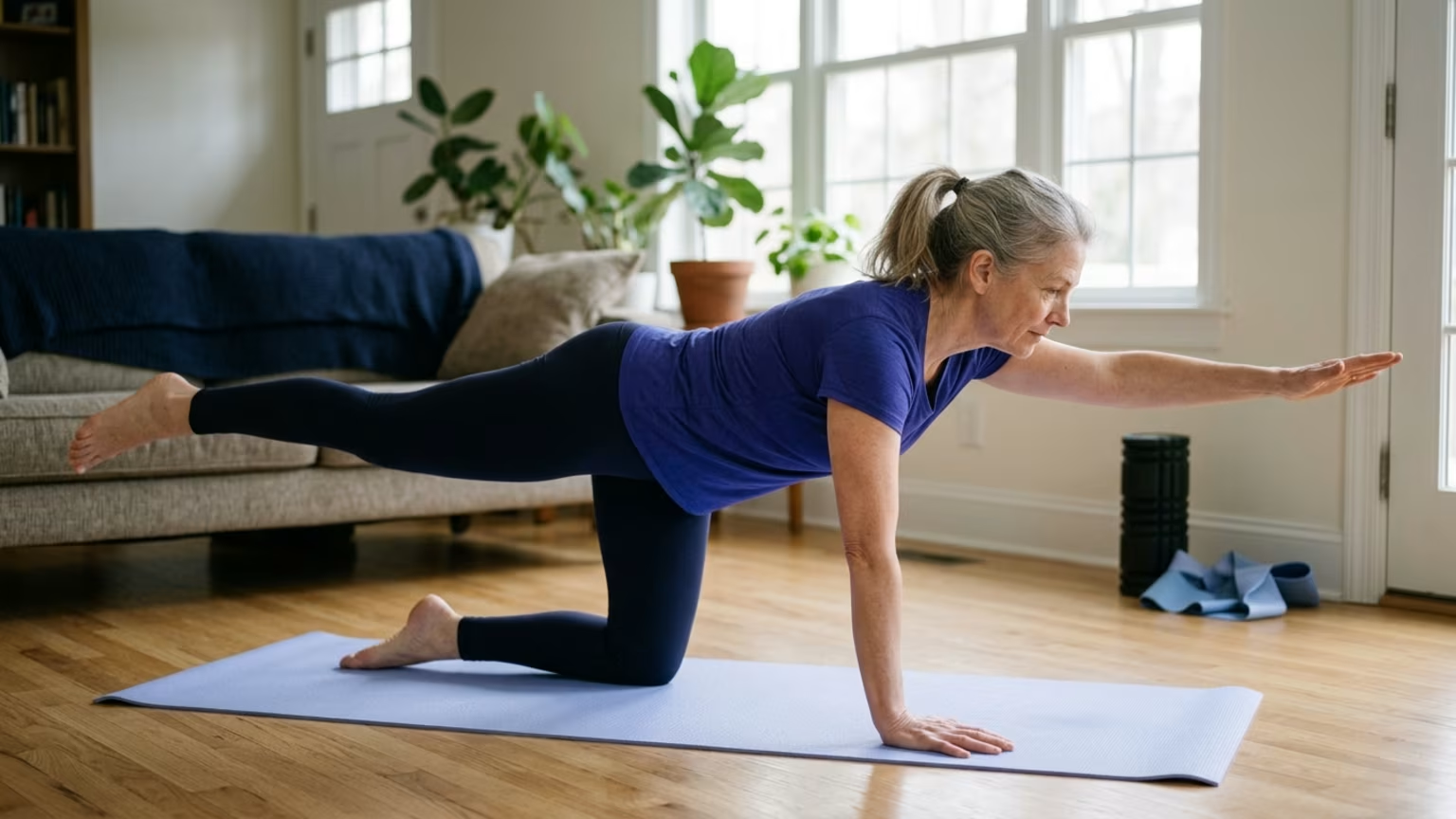

A midlife core workout emphasizes technique before pace. Understand its place in balance guidance and the unanswered questions for recovery.





On October 1, 2026, Women’s Health UK published Hannah Bradfield’s feature on a core workout for midlife fitness. The article presents six no-equipment core exercises from personal trainer Caroline Idiens, whom it describes as 54 and the founder of Caroline’s Circuits.
Idiens’ central advice is to learn the movements and establish technique before increasing pace or volume. She also recommends warming up, starting slowly and building gradually. That progression message is the most useful part of the update for readers sorting through claims about core exercise and balance.
The feature gives a concrete workout example rather than simply praising core strength in general. For an adult returning to movement after a setback, the important task is placing that example in the wider recovery picture. Workout content, balance guidance and personal rehabilitation decisions serve different purposes.
Before considering the featured exercises, it helps to start with the broader guidance already available. NIH describes physical activity, strength exercise and balance exercise as parts of fall prevention. Its guidance also includes managing medicines, checking vision and making the home safer.
NIH says balance exercises can improve stability and help prevent falls. It lists yoga, Pilates and tai chi as activities that can improve balance and muscle strength. It also suggests weights or resistance bands for building strength.
NIH’s page relays general activity guidance of at least 150 minutes per week and muscle-strengthening activity on at least two days a week. Those figures describe broad adult activity guidance, not a schedule attached to the Women’s Health workout. They belong to the wider context in which the feature is being read.
That context matters because a core routine and a fall-prevention plan are not the same category of advice. The NIH framework addresses both exercise and other factors in daily life. A workout feature focuses on a much narrower set of movements.
For readers concerned about staying steady, this broader view keeps the discussion from centering on one body area alone. ReboundBody’s overview of balance, strength and safer surroundings provides related reading on that wider recovery topic.
The Women’s Health feature names the following six no-equipment exercises:
The article assigns 30 seconds to five movements and 20 seconds to the straight-leg oblique tap. Those intervals are part of how the published routine is presented. The timing is less important to understanding the feature than its message about progression.
The progression advice comes from Idiens: warm up and begin slowly, then learn the movements before increasing pace or volume. Her recommendation is to build gradually rather than rush the progression. This is the trainer’s advice as reported in the feature.
The article also gives form cues. These include keeping the back down and supporting the head as needed without pulling on the neck. The guidance is about learning how to perform the movements, rather than making the circuit faster at the outset.
Taken together, the feature offers a sequence of exercises and a progression principle. The principle deserves at least as much attention as the exercise names. The editorial takeaway is to notice how the trainer frames learning, rather than judge the routine only by how much activity fits into each interval.
The feature is aimed at readers interested in midlife fitness and activity in older age. It profiles a trainer and describes her workout. It does not describe an enrolled group of people recovering from orthopedic injury or surgery.
The exercises are performed lying on the floor. Across the routine, the movements include trunk rotation and leg extension. Some also involve lifting the head and shoulders. Those details help identify the type of workout being discussed.
For ReboundBody’s audience, the distinction is relevant to the stage of recovery. A person rebuilding activity after surgery has a different information need from someone looking for another general fitness option. An exercise name by itself does not describe that person’s current restrictions or goals.
The phrase no-equipment describes the routine’s equipment needs. It does not supply information about a reader’s individual circumstances. ReboundBody’s plain-language discussion of core strength and daily movement offers broader context for understanding the topic without making the featured circuit the center of every recovery decision.
The practical relevance is to recognize the workout’s role before deciding whether it belongs in a personal plan. NIH recommends an exercise program suited to the individual. That makes personal circumstances part of the discussion, rather than something to infer from a magazine’s exercise list.
After an orthopedic setback, the routine is best understood as an optional fitness idea alongside the reader’s own recovery plan. A feature should not override post-operative restrictions or guidance from a treating professional. Pain or a conflict with those restrictions is a reason to bring the exercise question back to qualified care.
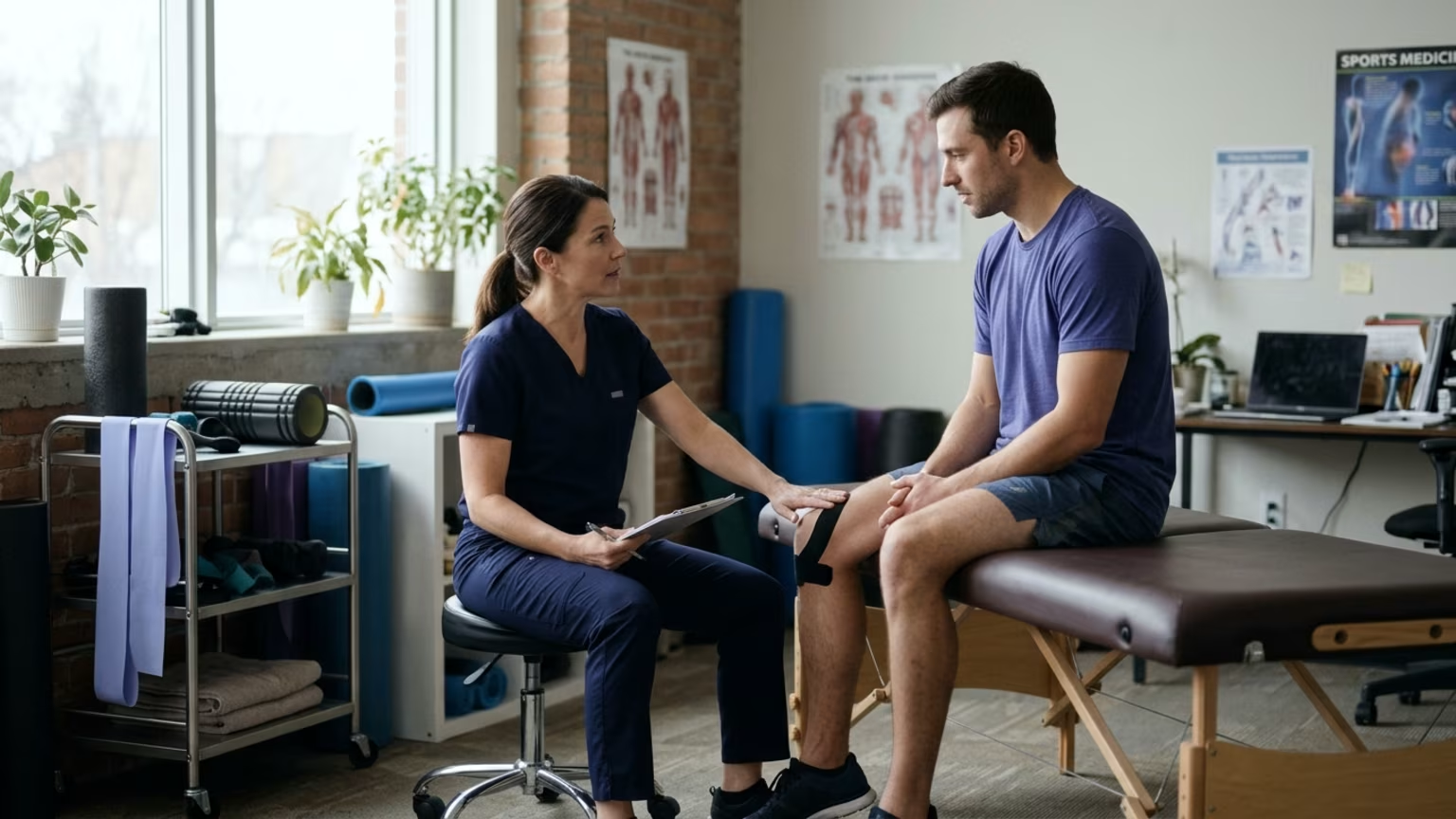
NIH advises people with chronic balance problems to discuss exercise safety with a doctor. It also notes that a vestibular rehabilitation therapist can develop an individualized treatment plan. Physical or occupational therapists can help people assess and safely use assistive devices. These are distinct forms of support for needs that a workout description does not address.
For a care-team discussion, the article raises questions about the goal of the exercise and the place of core work alongside other activity. Considering those questions does not require an immediate change in routine.
For readers moving from formal rehabilitation toward recreation, the question is where a proposed exercise fits within that transition. The feature’s progression message can inform that conversation without setting its timetable. ReboundBody’s guide to reconnecting rehabilitation with enjoyable activities covers that broader return-to-activity theme.
Published intervals are not personal recovery deadlines. The useful discussion is about the reader’s goals and the exercise plan suited to them. That shifts attention from finishing a timed circuit to understanding why a particular kind of movement is included in an individual plan.
The largest unanswered question is what this particular routine changes in health or function. Women’s Health discusses possible support for balance and stability, as well as back protection, pelvic-floor health and lower injury risk. However, the feature reports no measured balance gains or reductions in falls or injuries from this six-exercise sequence. It also provides no recovery outcomes for orthopedic conditions.
The feature refers to a systematic review and meta-analysis that reportedly found balance improvements after core training in older adults. It also mentions a study of more than 5,000 women. Neither reference is identified well enough in the article to evaluate its methods or findings independently. That leaves the research claims separate from verified evidence about Idiens’ own routine.
A reported improvement from core training in general does not identify which movements were used. Nor does it show that the same finding applies to this particular set of exercises. The missing training details matter as much as the missing headline result.
Another open question is suitability for specific recovery situations. The feature does not assess these movements in people with particular diagnoses, surgical restrictions, pain or mobility limitations. Its form cues therefore do not settle which exercises fit an individual’s clinical needs.
More informative evidence would identify who completed the routine and what outcomes were measured. It would also describe the training approach clearly enough to connect the results to the exercises being discussed. Without those details, the value of this report remains its workout description and progression message.
For recovery readers, the pace of a workout is only part of the story. The larger question is how that movement fits the life being rebuilt.
Core-workout choices after an orthopedic setback are matters for the reader’s care team, while ReboundBody takes on the separate editorial task of explaining the research. By separating exercise claims from established findings, the site helps people returning to activity understand conflicting online advice with realistic expectations and a clearer basis for personal healthcare discussions.

Follow ReboundBody for practical articles on injury recovery, rehabilitation, mobility and rebuilding strength. New posts turn research into clear ideas for the road back to activity after injury or surgery.




Read practical guidance on injury recovery, rehabilitation, mobility and rebuilding strength as you work your way back to activity.
Explore Resources